I went to my first live concert in the early ’80s, and sound systems have changed radically in the last 40 years. Today’s systems are smaller but more efficient, and they give an engineer more flexibility and choice. These are some of the technologies that have most shaped that transition. Some of them are obvious changes that everyone has seen, but some are hiding behind the grille covers!
Powered Speakers with Lightweight Amps
Powered PA speakers have actually been around since the ’80s, but nothing has revolutionized their deployment like Class D amplifiers. Linear amplifiers (like Class A, B, and AB) suffer from inefficiencies in power transfer that require large heat sinks, and this means extra weight. A great-sounding speaker may seem considerably less attractive if it weighs over 70 pounds — requiring regular visits to a chiropractor!
Class D amps have practical efficiencies of over 90%, which means that only 10% of the power is bled away as heat. The main evidence of this is active PA speakers with high output and low distortion. Speakers like the JBL EON series and the Electro-Voice ZLX series can output more than 120dB of SPL and weigh less than 40 pounds. Smaller speakers and less weight mean less strain on your back!

Figure 1: The E-V ZLX line offers a 15″ powered speaker that weighs less than 40 pounds!
Rare Earth Magnets
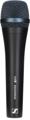
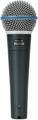
Alloys made with materials like neodymium, beryllium, and samarium-cobalt have revolutionized transducers at both ends of the signal chain. Neodymium magnets in microphones like the Shure Beta 58A and the Sennheiser e935 allow higher output and extended high-frequency response. This allows rugged dynamic microphones to perform similarly to their studio condenser cousins on the road.

Figure 2: The Sennheiser e935 uses a neodymium magnet to keep it stable in any climate.
Those same rare earth magnets have enabled driver technologies that output more level with less weight. This is another element that manufacturers have used to trim more precious ounces off the weight of their speakers.
Line Arrays
If you have been to a large concert in the last decade, then you have probably seen a long series of speakers hanging from the trussing, which has replaced the traditional huge stack of speakers on the stage. These hanging speakers are often pulled back in a J-shaped curve. This is a line array.
Once you have turned a speaker up to its maximum output level, the only real option to make it louder is to double the number of speakers you are using. With traditional point-source speakers, this can get messy very quickly, as their coverage patterns will start to interact with one another in both constructive and destructive ways. This makes the sound experience vary greatly as you move around to different listening positions in a venue.
A line array is specifically designed to allow you to add additional speakers and ensure that the combination of sound is always constructive. This makes them far more predictable, and they focus more of the audio energy forward than traditional point-source speakers do.
There are few times in life that you actually get to cheat physics, and for sound engineers, the line array has become one of our key opportunities to do so. A point-source speaker drops 6dB in level every time you double your distance from it. This loss can add up quickly since max SPL is typically measured at 1 meter. This means at 4 meters (a normal close-listening distance), you are already down 12dB. Across the shorter dimension of a basketball court, your speaker is already down almost 24dB. That is a lot.
A line array (which usually requires three to four boxes to truly create this effect) only loses 3dB per each doubling of distance, which would make your system only drop by 12dB across a basketball court. This makes planning for different-sized shows far simpler. As long as you have several identical speaker boxes, you just take out as many as you need based on the show requirements.

Figure 3: JBL VRX speakers are popular for touring.
Digital Snakes
Digital consoles have caused such a paradigm shift in live sound that we really have to break down these changes into sections. One of the first is the transport of signals from the stage to front of house (FOH).
A 32-channel analog snake, such as the Pro Co Roadmaster Stage Snake, can easily weigh over 60 pounds all by itself. A 200-foot length of Cat 6e cable is just over 60 ounces! If you are beginning to guess that reduced weight is a theme of progress, you are spot on.
Major protocols like Dante, AVB, and AES50 can travel over industry-standard twisted pair cables. These platforms not only allow use of cheap and light cabling for transport of massive numbers of channels (up to 512 x 512), but they also greatly increase flexibility. Making a duplicate split of your inputs for a monitor desk or a broadcast feed is now done in software rather than by buying tons more hardware. This flexibility also makes implementation of personal in-ear mixing systems like the Behringer P16M or PreSonus EarMix quick and easy to implement.
Virtual Soundcheck
If you have ever waited an hour past call time for a band to show up for soundcheck, then I don’t have to tell you about the value of a virtual soundcheck. Record the soundcheck the first night, and you can use it to get the hall mostly rung out before the band even gets there.
High-end consoles often have this feature built in, but its value has seen it added to more mainstream consoles like the PreSonus StudioLive Series III, as an option to Behringer/Midas consoles via the Klark Teknik DN32-Live, or with any analog console via the JoeCo BlackBox. Of course all of these options also let you record the show in multitrack so you can prep a live recording for your adoring fans!
Wireless Mixing
The mixer position at a show is often not at the best place to hear, but it is where you are listening to set your levels, EQ, and ring out the monitoring system — certainly not ideal.
Being able to walk the hall with an iPad and make tweaks to things while you are standing where you need to hear correctly is a significant tool that can make an engineer’s life much easier. This approach has so revolutionized mixing that now there are frequently times when a performer doesn’t even know where the engineer is — which might be just the way they like it.

Figure 4: Yamaha’s software is able to offer remote control of their QL consoles.
Portable Plug-ins
It used to be true that you couldn’t take it with you, at least as far as studio plug-ins go. But over the last decade those rules have changed. Avid launched the concept of taking your Pro Tools configurations out of the studio and onto the stage with the launch of their live consoles.
Even if you don’t have one of those consoles, now products like the UAD-2 Live Rack and the Waves SoundGrid Server allow you to take your favorite studio plug-ins on the road with you.
But even if you don’t opt for one of these add-on options, the profusion of modeling-based processing has found its way into lots of consoles’ internal processing blocks. This means you can have that studio goodness right at your front of house position on consoles like the Yamaha CL1 and even rackmount mixers like the PreSonus StudioLive 16R.
While this is just a taste of the things that have changed in live sound, I am relieved that things have gotten lighter, louder, and more flexible! It will be interesting to revisit this idea in another decade and revel in the relentless pace of progress.
If you want to know more about any of these technologies, or any of the other wide range of PA equipment we carry, give your Sweetwater Sales Engineer a call at (800) 222-4700.