

With all of the cool amp modeling apps, new plug-ins, and standalone boxes available to the discerning guitarist, you may think that the old-school approach of simply plugging your guitar into an amp and sticking a microphone in front of that amp is passe. Yet in studios all over the world, guitarists still lug their amps into the studio, engineers still put mics in front of the amps, and great recordings are still being made every day! While there’s a certain elegance in putting a Shure SM57 up against the grille of a vintage Fender Vibrolux, there are other approaches to miking amps that are worth considering.
Record the Room
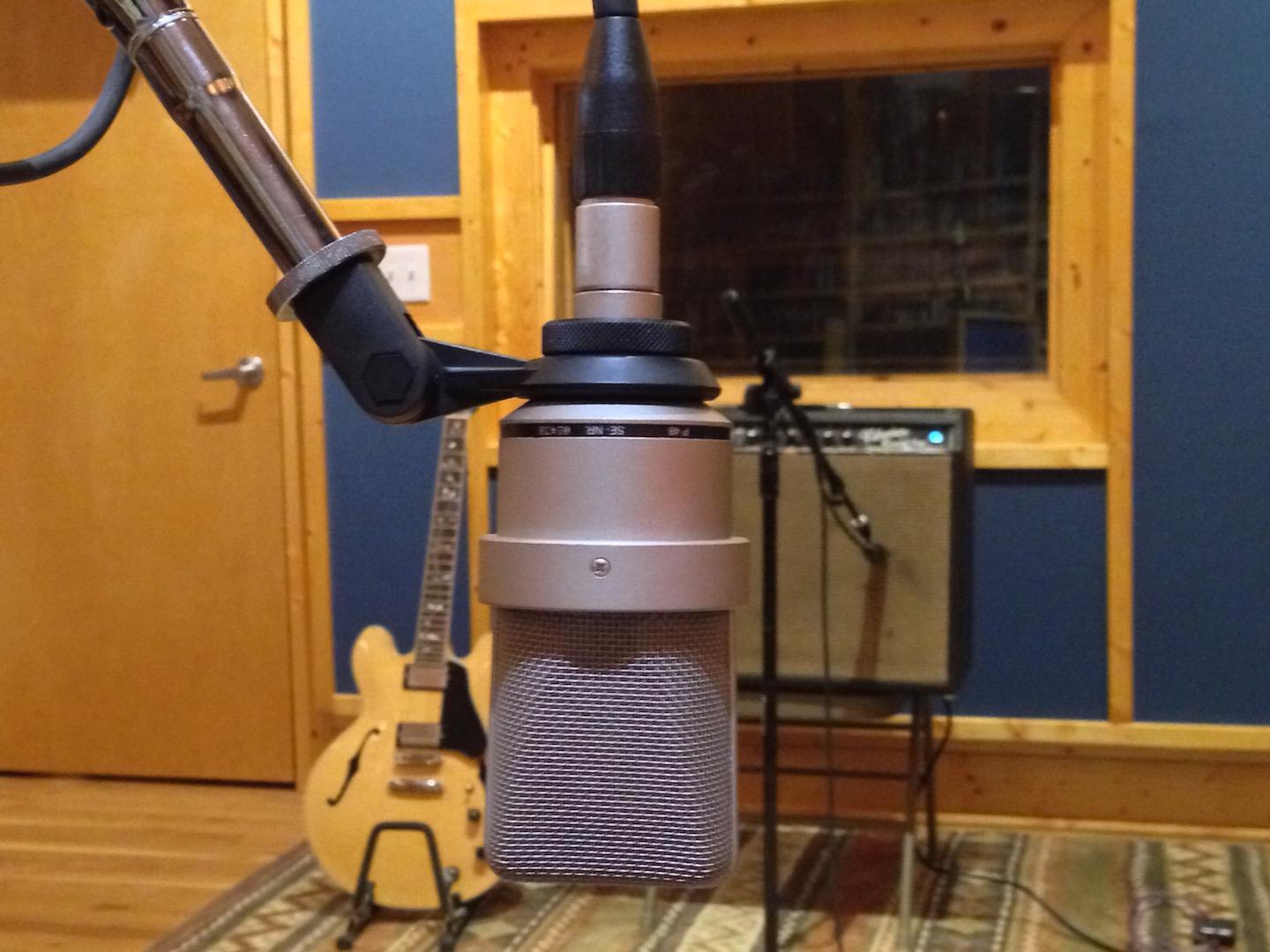
While the SM57 mentioned above is a time-tested approach, it’s not the only way to capture a guitar tone. Try setting up a second microphone, anywhere from three to 15 feet in front of the amp, and blend the two signals to taste. The distance depends on a couple of things; if you’re going for a fairly quiet clean sound, you may want to be a bit closer to the amp, while a big distorted sound can benefit from the sound of your room as well as the ambience that comes from distance.
Record the Back of the Amp
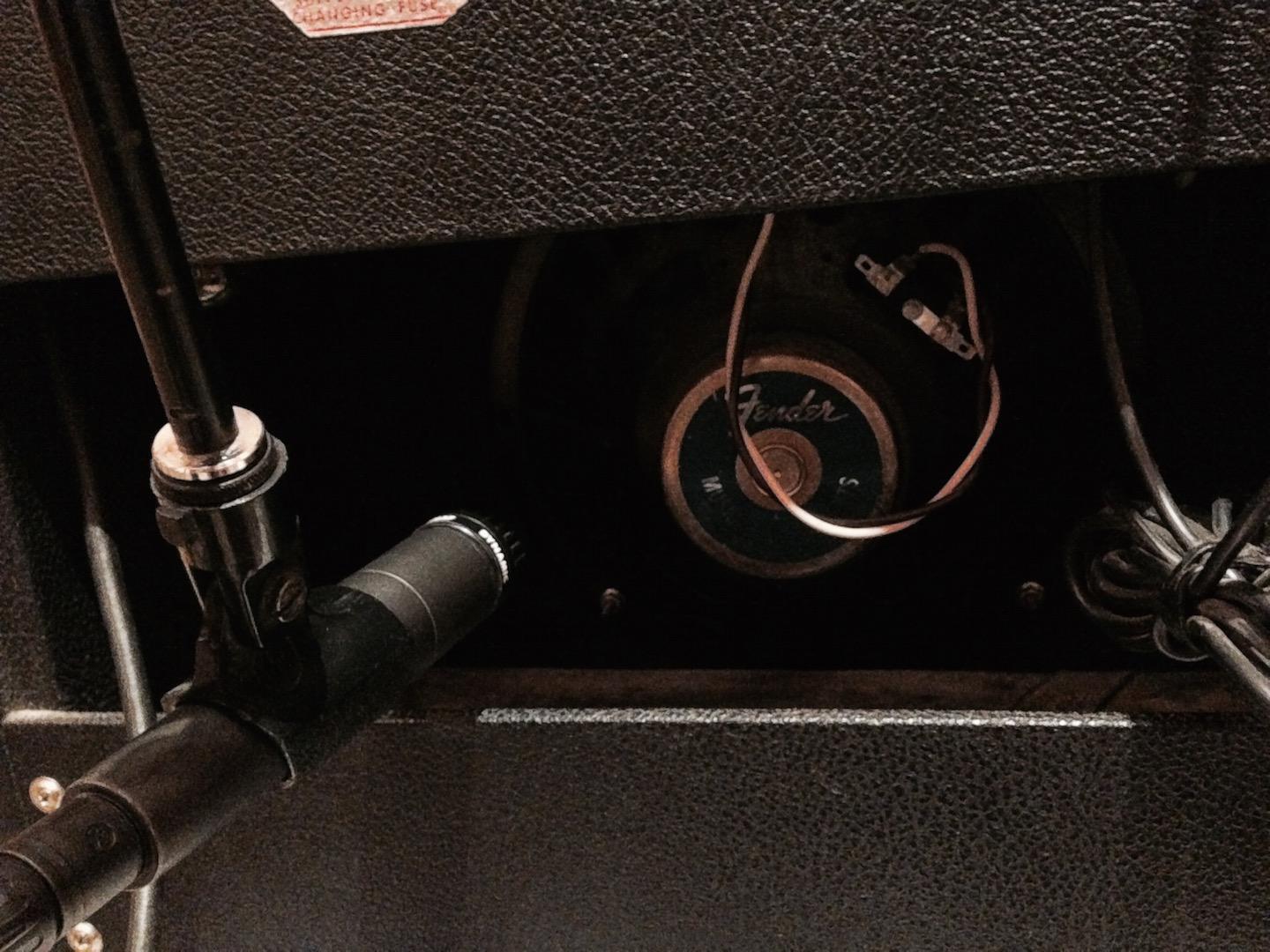
Open-back cabinets allow access to the back of the speaker — try placing a second microphone on the rear speaker along with the one in the front. There can be phase issues when doing this; careful mic placement (and reversing the phase of the rear microphone) can lead to very interesting results.
Raise the Amp
Getting the amp up off of the floor eliminates low-frequency coupling from the floor as well as minimizing phase cancellations from reflections off the floor. Raising the amp even by sitting it on a chair or a road case — will make the amp sound less bassy without the need to roll off low frequencies either at the amp or at the mic pre.
Use More Amps
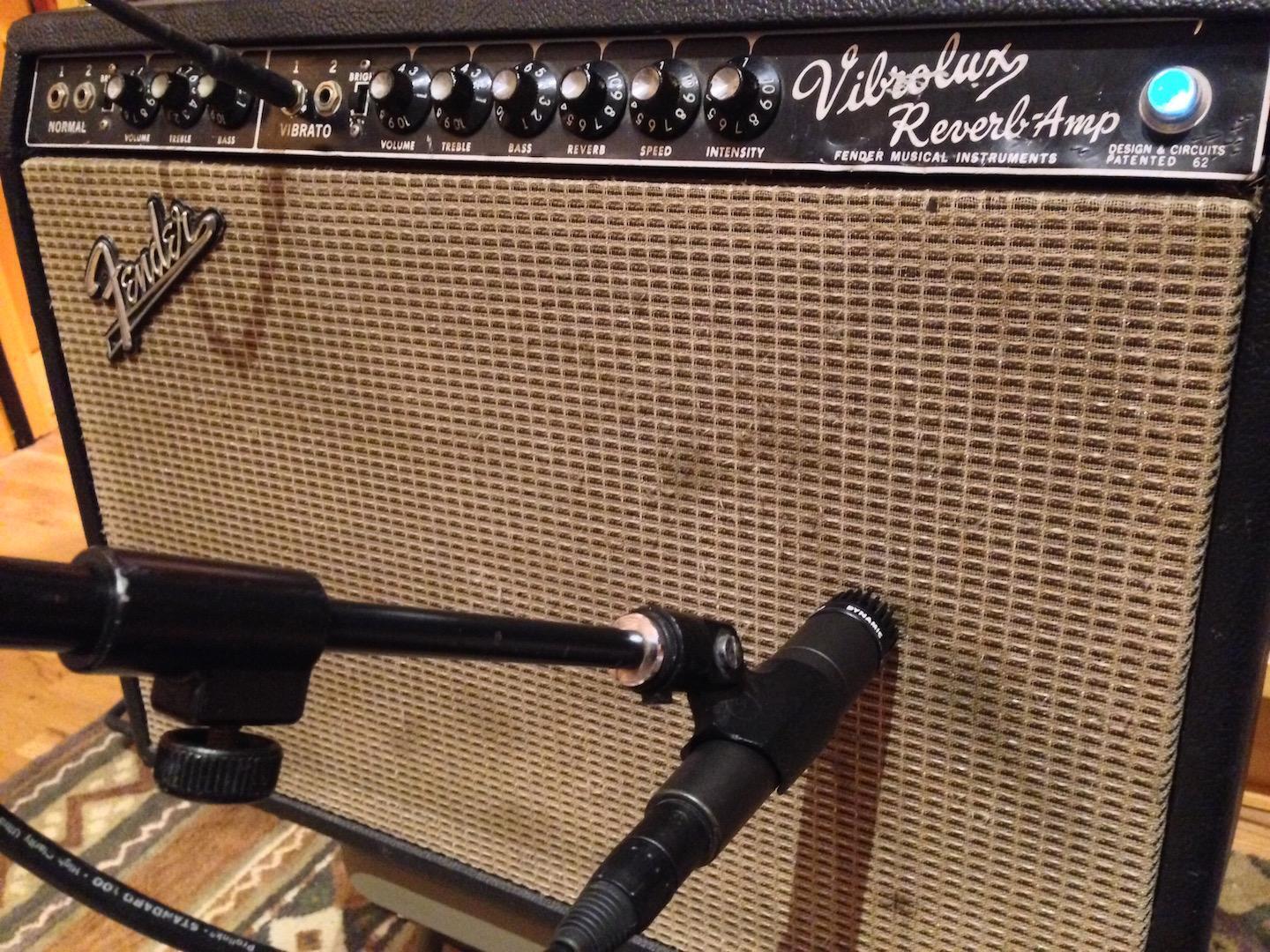
If you’re not sure of the sound you want to have on a given track — for example, you don’t know whether the finished track will need a Fender sound or a Marshall sound — why not play through (and record) both the Fender and the Marshall simultaneously? That way, you can make your final decision when mixing the song. You can use one signal or the other, or blend both to taste. An easy way to help the listener differentiate between different sections of a song or to increase excitement or build a song, is to use multiple amps to multiple tracks. Then, simply by muting (or unmuting) the appropriate track(s), the guitar sound changes.
Use More Mics
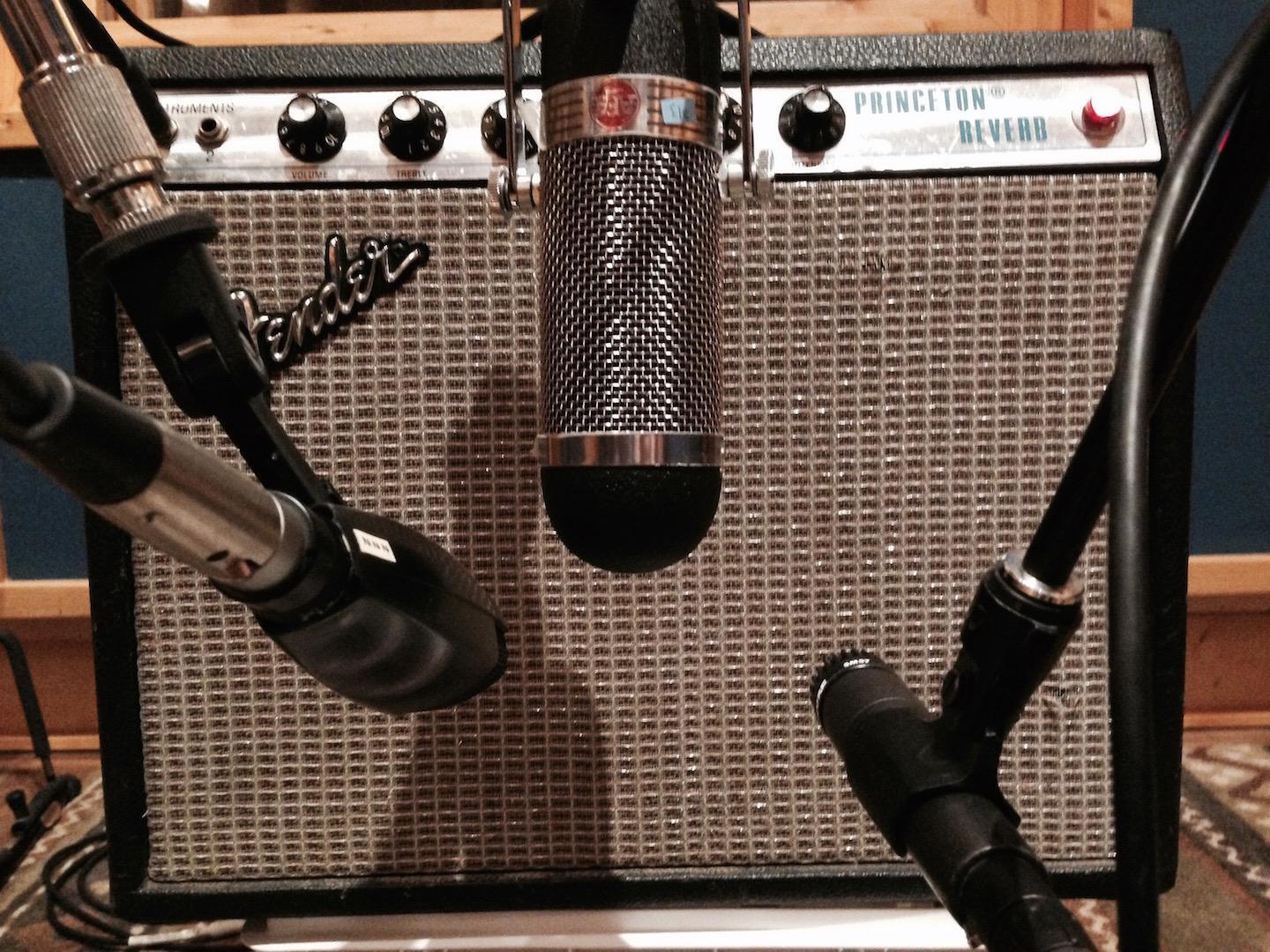
Though one microphone on a speaker is the most common approach, there’s no reason not to use different kinds of microphones on the same source simultaneously, if you’re not sure which sound you prefer. For example, put a dynamic microphone (like the ubiquitous SM57 or a Sennheiser 421) four inches from the grille, then place a condenser or a ribbon mic at approximately the same position; the two microphones will have different frequency responses and sensitivity so the two tracks will sound different (not necessarily as striking a difference as using two separate amps, but a difference nonetheless). As mentioned above, recording each microphone to a separate track allows you to change the tone of the guitar in the mix by switching and blending among microphones for different sections of the song.
Move the Microphone
Though most folks will place the mic halfway between the center and the edge of the speaker and pointing directly at the speaker, try placing a directional mic (for example, one with a cardioid polar pattern) so that it doesn’t point directly at the speaker; a little bit off axis — or a lot off axis. The frequency response of the mic changes as you turn it farther off axis, so this allows for further tonal exploration.
Another area ripe for experimentation is distance from the speaker; a microphone placed up against the grille cloth sounds different than a microphone placed six inches away from the grille; place the mic a foot away for yet another sound. Use your ear to determine which one is appropriate for your guitar recording.
Experiment with different miking techniques — the experimentation can yield superlative results, when you take the time to learn what works for you and what doesn’t. That’s part of the fun of recording!