Ten years ago, EDM was an acronym that a handful of people used to describe the whole of electronic dance music — techno, house, drum, bass, and the like — but in recent years, it’s developed a much more focused meaning. Now, many people take EDM to refer to the festival-style, larger-than-life, hard-hitting electronic stylings of artists such as Hardwell, Skrillex, Steve Aoki, and deadmau5.
While EDM still refers to more than one genre of electronic music, what EDM tracks share is a general production style that is most easily described by what it does: it smacks you right in the face with no apology for its bluntness or simplicity. It makes for great music to dance to. Today we’re going to explore a few of the definitive sounds of modern EDM and how to re-create them.
Let’s lead with the – lead
If big-room EDM has one hallmark, it may be the larger-than-possible lead sounds that grace the breakdowns between the drops. One of my favorite sounds in this category is the supersaw lead inspired by euphoric trance music of yesteryear. This archetypical sound is wide, thick, and sweeping. A great example of this can be heard on the track “Fifteen – Hardwell Edit” by Blasterjaxx and Hardwell.
Take a listen to the track at the 2:08 marker:
To capture this sound, we’re going to use one of my new favorite synths, Spire, by Reveal Sound. Spire has a unique capability of being a very aggressive and up-front synth without leaning too hard toward either a glassy digital sheen or a saturated analog character. Interestingly enough, the factory-preset LD X-Lead brings you within a stone’s throw of nailing the Hardwell/Blasterjaxx tone, so we’ll give you a taste of that and then show you how to build it from scratch with some tweaks.
Speaking of bass…
EDM is geared toward the dance floor, specifically huge dance floors backed up by PAs with a whole lot of bass on tap. As such, a healthy dose of deep, deep bass is in order.
For many EDM styles, specifically the “mainroom” or “bigroom” sound that many people equate with EDM, producers rely on a sub bass sound layered with a really punchy kick drum to get them that gigantic 4-to-the-floor thump.
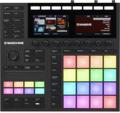
While there are many ways to skin a cat, we find that we can get rapid results from Native Instruments’ Maschine library and Massive, an industry-standard softsynth that happens to be included with Maschine.
I admire your pluck
In acoustic music, “pluck” means one thing. In electronic music, it means a percussive and melodic category of sound that’s widely used by EDM producers from deadmau5 to Major Lazer.
The fun thing about the EDM pluck, and frankly most sounds in EDM, is that it’s simpler to cook up than you might think. Oftentimes the more complicated the patch gets, the more it loses its punch and presence. We’re going to explore how to create a pretty nice “pluck” sound once again using Spire from Reveal Sound.
Another great thing about the “pluck” sound is that there’s no one right way to do it. If it has impact and sounds cool, it works.
Make some noise
Your mom says that all EDM is noise. In fact, some of your friends probably say the same thing. But to the initiated, noise is simply a tool we use, a color in the palette. “What do you mean, noise?” Well if you watch this video, you’ll understand.
Sidechaining
Maybe you’re familiar with this tactic. Maybe you’re not. Sidechaining is standard practice in a lot of EDM styles, and there are an infinite number of ways to employ it.
Sidechaining is far from new; engineers have used this technique for decades. In rock ‘n’ roll, it was used to keep the kick drum and bass guitar from overpowering the mix, and it helped glue those two elements together. Frequency-specific sidechaining was (and is) also used to help “de-ess” vocals and remove sibilance.
In electronic music, sidechaining allows producers to add power to the kick and to add excitement to the mix. When you listen to tracks such as Benny Benassi’s 2003 track “Satisfaction” and Justice’s 2005 record Cross, you can hear how the compressor sidechain evolved into an instrument itself over the course of a few years in electronic music. For the ultimate over-the-top example of how the “sidechain pump” became standard practice in electronic music, reference the chorus in David Guetta’s 2011 pop/EDM crossover smash “Titanium.”
Every year, EDM producers find more creative and interesting ways to make the mix “breathe” using sidechaining techniques. Let’s explore a few right now so you can give your tracks that instant EDM vibe.
Final thoughts
In every genre of music there are techniques that are part of the standard practice. Blues is built on a library of licks that have been recycled and refined by generations of musicians. Rock ‘n’ roll calls on a library of tropes that have been used and reused for more than 50 years. EDM has a variety of techniques that, when employed well, make your creations instantly sound credible, and it’s important to learn these techniques so you can start exploring where they work, where they don’t, and where you can start making your own rules.
So we leave you with (we hope) a greater understanding of a few of these hallmark techniques that make “the sound” of EDM. For help with the software and hardware you’ll need to employ these techniques, give your Sweetwater Sales Engineer a call (800) 222-4700!