Is your amp a fire-breathing monster that sounds amazing when its volume is loud enough to be heard from orbit? Do the neighbors fear for the safety of their small pets when you play guitar? Or maybe your issues are less extreme. Do you prefer the sound of your amp on 7, but you have to play it on 3 to keep the singer happy? Perhaps you’re in need of a silent solution for recording, practice, or a silent stage?
Here are four amp-tamers — the Universal Audio OX, BOSS WAZA Tube Amp Expander, Tone King Ironman II, Two Notes Torpedo Captor X— that can do all that and more, each with their own unique qualifications. These units tame your amp by placing a “load” on the output of the amplifier, which is normally the job of the speaker cabinet.
Each of these four units are also designed around a “reactive” load, which responds to the input it’s given, much like a speaker does. So, when you play, it will sound — and just as important —feel right. These options all offer volume attenuation from full power to silence and have speaker-compensated direct outputs. This means the full sound of your amplifier, including its power section, is captured and available at any volume level.
IMPORTANT: If you play through your amp without speakers or a dummy load, you can possibly fry your output transformer, along with a bunch of other nasty stuff. Tube amplifiers are most susceptible to this. If you’re unsure, check with the manufacturer. The safest method is to always have a load connected to the output of your amplifier.
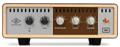
Universal Audio OX

The Universal Audio OX starts with amp attenuation and adds UA’s Dynamic Speaker modeling technology, which gives you dozens of amazingly accurate mic and speaker cabinet emulations in a virtual studio space. Connect the OX over Wi-Fi to your computer or iPad and you can tweak all the parameters on screen to choose the best speaker cabinet, the right mic (or mics), and put them in the perfect place in the room — there are even parameters to control the reflections in the room. UA also included some of their legendary EQ, compression, delay, and reverb effects. All these parameters can be stored as presets in the OX app for Mac, Windows, and iOS. You can also use the OX without a computer or iPad because any six of the presets can be stored internally and accessed via the Rig control on the front panel.
There are separate controls on the front panel for Speaker Volume that feeds your cabinet, Line Out that controls the level of the direct outputs, and a separate Headphone Level. The OX can be used with or without a speaker cabinet, and the direct line-level signal is fully independent. With both analog and digital outputs, OX excels at delivering a complete, controllable, polished guitar tone using just your guitar and amplifier. Here are some audio samples that demonstrate the amazing sounds that are possible (and easily achievable) with the OX.
Hear the OX
Double Thick preset
Connie Blue Comp preset
Creepy Radio preset
DI with Amp Swell Cleans preset
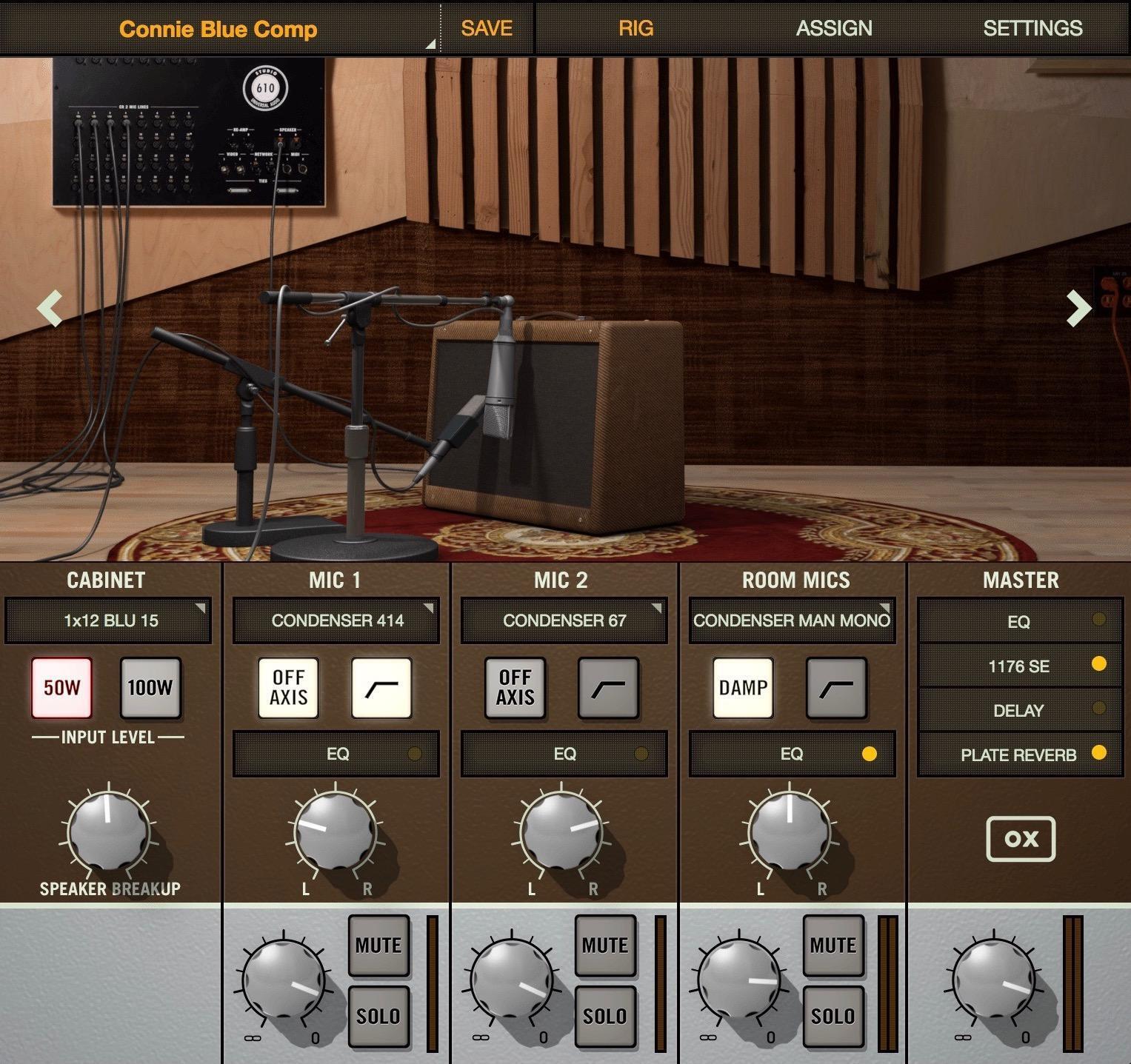
For these sound samples I started with a Fender Telecaster plugged into a Fender 65 Deluxe reissue head. I used the same amp and guitar settings, plugged into the OX, and from there into a pair of Rupert Neve Designs Shelford 5052 mic preamps. The only tonal differences you’ll hear are from the OX: compression, EQ, delay, reverb, and the changing of mics and speaker cabinets. All of the sounds are presets on the OX app with a few tweaks. The differences may sound subtle, but to me, that’s the point. The sounds on the OX offer the same experience as a studio full of mics, cabinets, and outboard gear.
BOSS WAZA Tube Amp Expander

BOSS went in a different direction with their Tube Amp Expander by adding a 100-watt, Class AB amplifier. All the power and fury of your amp is captured and reproduced at line level, and then the internal, neutral-sounding power amp drives your speakers at whatever volume you need.
BOSS has also added two controls, Resonance-Z and Presence-Z, that allow you to fine-tune the overall response of the internal reactive load. Amps respond differently to different speakers and configurations, and these controls allow your amp to “see” the impedance load it needs to perform at its best.
There are analog and digital outs with your choice of seven different speaker cabinets and five microphone emulations, plus you can load four of your own impulse responses to customize the response. BOSS also added 10 internal effects and an effects loop for patching in your personal favorite effects. All of this can be edited and saved in the editor app, and 10 presets can be loaded directly onto the Tube Amp Expander.
Aside from delivering a great-sounding direct version of your amp miked up through a cabinet, the Tube Amp Expander allows you to use your amps in many different scenarios. Of course, you can control the volume of a loud amp, but you can also bring your favorite small amp up to stage volume — you can also add an effects loop to your favorite amp! Do you want to hear a Fender Princeton through a 4 x 12″ cabinet, or a Friedman BE-100 cranked through a 1 x 10″ cab? With the Tube Amp Expander, wattage and ohm load are no longer barriers. It’s also a MIDI hub and has a 32-bit/96kHz USB output that connects directly to your DAW. The Tube Amp Expander is definitely aptly named. Take a listen.
Hear the WAZA TAE
Fender Champ – 4×12 cabinet, WAZA TAE with the output set at 12 o’clock
Fender Champ – 4×12 cabinet, WAZA TAE with the output knob set at 2:30
Fender Champ – 4×12 cabinet, WAZA TAE output knob set at 2:30 plus internal effects
No WAZA TAE, Fender Champ through its internal 8″ speaker only
These four sound samples were all played on a Gibson Les Paul through a Fender ’57 Custom Champ, turned all the way up. The first three utilize the WAZA Tube Amp Expander connected to a 4×12 Marshall cabinet with Celestion Greenback speakers. All effects are from the TAE. The TAE’s Reactive Load was set to L-Mid on both the Resonance-Z and Presence-Z. The fourth example is the Champ and its internal 8″ speaker, as a point of reference. All four examples were recorded in Sweetwater Studio B with two mics, a Telefunken M80 and a Royer 121, through a pair of Rupert Neve Designs Shelford 5052 mic preamps with high-pass filters at 80Hz.
Tone King Ironman II

The Tone King Ironman II takes attenuating your amp seriously. How seriously? Tuned-reactive load and transformer-coupled attenuation seriously. More than fancy words or over-engineering, these two attributes ensure that every nuance of sound and feel are translated at every level of volume attenuation, regardless of the amp, settings, or speakers. The load that a speaker puts on an amplifier changes drastically, depending on the frequency being applied to it. For example, the impedance of an 8-ohm speaker can be as high as 60 ohms at its resonant frequency. Depending on what you’re playing, the load the speaker places on the amp is constantly variable. The Ironman II’s reactive load matches the impedance curve of a speaker in use, so it feels and sounds like your amp.
Transformer-coupled attenuation preserves tone in two ways: first, a transformer — as opposed to a resistor ladder — will not be seen as an extra load on your amp’s output; and second, it will prevent a voltage divider from being formed between the dividing network and your speaker, so your speaker’s frequency-dependent variables remain intact. More than just an attenuator, the Ironman II can serve as a silent dummy load with excellent- sounding analog cabinet simulation and an XLR out. There’s also a line output that is not speaker compensated, so you can chain to a different amp. There’s a Presence control and an intelligently designed, foot-switchable solo boost mode. Separate impedance switches for the amp and speaker allow you to safely mismatch impedances between the two. Take a listen to how well the Ironman II can reduce your volume while not sacrificing your tone.
Hear the Ironman II
50-watt Marshall, 4×12 cabinet, Ironman II at 0dB
50-watt Marshall, 4×12 cabinet, Ironman II at -8dB reduction
50-watt Marshall, 4×12 cabinet, Ironman II at -15dB reduction
To show you just how similar the three previous samples are, we strung all three examples together back-to-back, and then level matched them in ProTools. We were surprised at how nearly identical they sounded, even while drastically reducing the volume.
Level-matched versions of Ironman II at 0dB, -8dB, and -15 dB.
I played all the Ironman II sound samples on a Gibson Les Paul into a 50-watt Marshall 1987X, through an Ironman II connected to a 4X12 Marshall cabinet with Celestion Greenback speakers. The first three audio examples are progressively lower settings on the Ironman II. The fourth example is all three examples back-to-back, level matched in ProTools to compare the sounds equally. All of the examples utilize the same amp and guitar settings and were recorded in Sweetwater Studio B using two mics, a Telefunken M80 and a Royer 121, into a pair of Rupert Neve Designs Shelford 5052 mic preamps with high-pass filters at 80Hz.
Two Notes Torpedo Captor X

The Torpedo Captor X expands Two Notes’ stellar lineup of products that help achieve great-sounding, controllable guitar tone at any volume level. The Captor X starts with a reactive load — 8 ohms, 100-watts RMS — sends that signal to a speaker-cabinet output — with three levels: Home, Club, or Stadium — and simultaneously to the Virtual Cabinet simulator and a myriad of options.
Included in the Captor X are 32 virtual cabinets, eight rooms, and eight mics. The process used to capture and re-create the details of the cabinets, mics, and rooms is far beyond IRs, and the results are stunning. All of the sounds have amazing depth and detail. The mics can be moved around the room independently; you can change the axis and pickup pattern; and you can use either the front or back of the mic.
To further dial your sound, the Captor X has powerful post-mic processors: EQ, Enhancer, Reverb, Noise Gate, and Twin Tracker. The Twin Tracker is more than a doubling or delay effect. It’s designed to sound like another guitar playing with you. The result is a depth in the stereo field that sounds and feels very broad in the mix. The external connectivity is really flexible. The two outputs can be routed out three ways: stereo, dual mono (for processing each output differently), and dry/wet.
The Captor X’s editing is controlled by the Torpedo Wireless Remote for iOS and Android via Bluetooth or by the Torpedo Remote for Mac and PC. Make presets, audition and purchase 300+ cabinets, load 3rd-party IRs, or make your own “cabinet blends” with Two Notes’ Blend IR software. The Captor X works as a standalone, as well, and has a dedicated headphone out, so it’s great for practice. The fact that it’s so small and lightweight makes the Captor X ideal for stage, studio, or home.
Hear the Captor X
For these examples, I used my trusty ’87 Fender American Standard Strat with Seymour Duncan Classic Stack pickups and a Mesa Boogie Roadster head. I used channel 3 in Vintage mode, Tube Rectifier, and the 100-watt setting. The EQ controls were at 12:00, the Gain was at 1:00, and the channel Master and overall Master volumes were at 11:00. The “Heavy Dry” and “Twin Tracker” examples were on the bridge pickup, and the “Twin Lead Reverb” and “Clean Blues Single-coil” examples used the neck pickup. The only other changes were in the Captor X.
Heavy Dry


Twin Tracker


Twin Lead Reverb


Clean Blues Single


Whatever your needs for taming your amp, these four units offer amazing tone and flexibility, each in their own way. If you need more help figuring out which one is right for you, please contact your Sweetwater Sales Engineer at (800) 222-4700, or visit us online at Sweetwater.com.