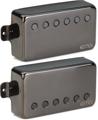
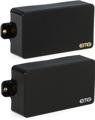
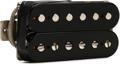
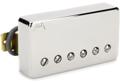
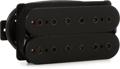
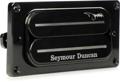
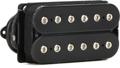
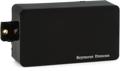
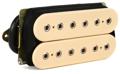
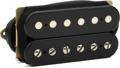
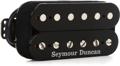
Of all the things you can do to your favorite electric guitar, the most effective way you can dramatically impact its intrinsic tonal personality is this: change the darned pickups! It’s also pretty quick, easy, and cost-effective.
Why Pickups Matter
The pivotal importance of the pickup’s role in the signal chain cannot be overstated. After all, the pickup is the device that captures the magical vibrations of the strings and then transforms them into the electric signal that gets amplified. Furthermore, it does so before any stompbox, amp, tube, or speaker gets to lay a hand on your all-important sound. Consequentially, what comes out of your pickup is of vital sonic significance as it quite literally “sets the tone” for the rest of the signal path… awful pun intended!
As Larry DiMarzio, the founder of the groundbreaking replacement pickup company that bears his name, once told me many moons ago: “Pickups are the most flexible tone-modifying element in an electric guitar. A pickup isn’t designed to have a flat response — it’s designed to add color and excitement to what’s already there. I mean, you can’t double a guitar’s output or put a peak in its sound at say 650Hz by changing the bridge, but you can do both with a pickup.”
At this point, I should point out that while a pickup change can have a significant, positive impact on a guitar’s intrinsic sound — it can only work with the acoustic (unamplified) sound of the axe in question. No matter how good a pickup is, it can’t fix a guitar with tonal dead spots (e.g., no low end) or poor sustain (unless instigated via feedback from the amp — which is not the same thing!). Make sense? Detour over, back to the plot.
Mr. DiMarzio put the very first replacement pickup on the market back in the early 1970s, and everything started to change. As a result, today there is now an overwhelming number of pickups to choose from. And, of course, each and every one of ’em offers a unique way to strengthen and shape your axe’s unamplified sound before it ever hits your stompboxes or your amp. Yes sir, the number of replacement pickup options available today is not only confusing, but it can often be downright intimidating.
Pickups for Metal
As one might expect, there’s an impressive number of pickups aimed specifically at us metal-loving guitarists. And not surprisingly, a bunch of them are artist-signature models. James Hetfield, Kirk Hammett, Dimebag Darrell, Dave Mustaine, Kerry King, Zakk Wylde, Jim Root, Mick Thomson, Jeff Loomis, Mark Holcomb, Mark Morton, Stephen Carpenter, and Jake Bowen all have signature pickups — to name but 13! It truly is a list that’s as impressive as it is long. So, if you’re in the market for a new “made-for-metal” pickup, and you really like the way one of these guys sounds, their signature model could well prove to be your no-brainer choice. Nice.

Obligatory Disclaimer
The following 14 high-output* bridge pickup choices from the vast Sweetwater menu cover a pretty wide variety of metal styles and should give you a pretty good idea of what’s out there. While the title of this article boldly proclaims that these are the “14 best,” there’s really no such thing. When it comes to a topic that’s as subjective and personal as tone, the old adage “one man’s meat is another man’s poison” applies 110 percent. Thus, IMHO, the pickups I’ve, er, picked should be considered as a “here’s a good place to start looking” list, rather than the “top 14.” The only thing I can say with absolute certainty is this: all of them are serious metal weapons with which you can arm your axe for battle. Now that I’ve offered my qualifier/disclaimer, let’s look at some of the hardest-hitting pickups out there.
IMPORTANT NOTE! While the 14 pickups we’re looking at here are all considered “high output,” please don’t think that high-output options are the only way to go. I’ve heard plenty of amazing metal tones (old and new) created with “medium-output” and even “low-output” (sometimes referred to as “vintage output”) bridge pickups.
DiMarzio Super Distortion

When this bad boy was unleashed in 1972, it was not only the first replacement pickup ever offered, it was also the world’s first high-output pickup. It was designed to hit the front end of an amp really hard, thus coaxing more overdrive out of it. At the time, Marshall stacks didn’t have Master Volumes yet (read: no gain control — shock, horror! The game-changing Marshall 2203 didn’t hit until 1975), so the extra drive the aptly named Super Distortion added was an instant hit with hard rock guitarists such as early adopter Ace Frehley of Kiss. Some 50 years later, the Super Distortion remains a best-selling benchmark, and its many users include the likes of Adrian Smith of Iron Maiden.
DiMarzio’s secret recipe for this punishing pickup includes:
- Using a ceramic magnet instead of the Alnico (Aluminum, nickel & cobalt) magnet most other pickups typically used at the time (1972), which adds a powerful yet articulate punch.
- Increasing the number of winds on the coil (a process commonly called “overwinding”), thus increasing the pickup’s output.
Sheer power aside, one of the things that makes the Super Distortion such a staple is its thick midrange and fat bass.
Strat Relief: If your favorite axe is a Strat with a single-coil bridge pickup but you lust for a Super Distortion, don’t stress — you don’t have to have your axe re-routed or your scratchplate recut. DiMarzio offers the Super Distortion S — a “stacked humbucker” that’s a drop-in replacement for a single-coil. And, if you’re a Tele owner, the Super Distortion Tis just for you. Result!
DiMarzio Titan

This powerful pickup was designed with Jake Bowen, who is part of Periphery’s renowned triple-axe attack. In keeping with his progressive metal band’s signature “djent” (pronounced “gent”) sound, Bowen’s Titan delivers tight, aggressive, palm-muted crunch that cuts without getting abrasively harsh. It is also dynamic and articulate, making single notes stand out and open chords ring out “very nicely,” according to Jake. Not surprisingly, the Titan is a good fit for both standard and drop tunings. It is also available for 7 stringers as the Titan 7.

Other artists that have high-powered signature DiMarzio pickups with metal-friendly tonal characteristics well worth investigating include: Revocation’s Dave Davidson (Imperium), Steve Vai (Evolution), and John Petrucci (Illuminator — also available for 7-string as the Illuminator 7). Now, I know that some of you might understandably be thinking: “Hold on a second. Vai and Petrucci are great players, but they’re not really metal, they’re shred.” I hear you, but the tight, punchy aggression that these pickups emit may both surprise and delight you.
DiMarzio Tone Zone

The first three pickups we’ve looked at all boast ceramic magnets. Time for a subtle change as the Tone Zone’s magnet is an Alnico V, which is known for a warm tone with a nice, fat low end. As well as being in the high-output family, this pickup is extremely dynamic and responds well to subtle picking nuances. It also has a lot of bass and low-mid “oomph,” which gives chords a fat, full punch. Thanks to DiMarzio’s patented dual-resonant coils, the Tone Zone also kicks out some nice harmonic overtones as a bonus.
Strat Relief: The Tone Zone S is a stacked-humbucker, single-coil-sized version of this popular pickup.

WHAMMY USERS’ NOTE: All of the DiMarzio bridge humbuckers we’ve just looked at are available in two pole-piece spacings: “regular” and the slightly wider “F-spaced.” F-spaced is for tremolo-bridge guitars. If you have any doubt, ask your Sweetwater Sales Engineer.
Seymour Duncan Distortion Bridge

Let loose in 1980, the Duncan Distortion was an instant hit with the metal-loving masses, thanks to its rich harmonic content and cut. This overwound, high-output brute is armed with large ceramic magnets. It produces an aggressive, high-gain crunch that cuts through any mix, thanks to its full-bodied sound bristling with extra upper midrange. It is vacuum wax potted to ensure it is squeal-free even on the loudest stage.
Strat Relief: If you want a hot-rodded Duncan sound in a single-coil-sized humbucker, the Hot Rails Strat will tick that box for you.
Seymour Duncan JB

Designed to push amps over the edge, this musical-sounding monster was set free in 1976. It was Seymour Duncan’s first offering, and it remains a best-selling favorite to this very day. Built around an Alnico V magnet, the JB kicks out fat lows, crisp highs, and a crunch-inducing hump in the upper midrange. Scott Ian of “Big Four” thrashers Anthrax has employed the JB’s driving edge for many, many years.
Strat Relief: If you want the JB sound in a single-coil size, the JB Jr. does the deed.
JB Mega-Note: If you’re a fan of Dave Mustaine’s thrashing tone on Megadeth’s acclaimed Rust in Peace album, read on. The guitar Dave used to record it had a JB that he maintains had tighter lows, slightly scooped mids, and more aggressive highs than an “off-the-shelf” version. So, Duncan and Dave worked together to duplicate said tone. The result? The Dave Mustaine Thrash Factor.
JB Trivia: Although many people believe that JB stands for Jeff Beck, according to the fine folk at Duncan, it’s actually an acronym for Jazz/Blues. The reason for the former? Apparently, the prototype JB bridge pickup was made by Seymour for the now legendary “Tele-Gib” he built as a gift for Jeff Beck in the mid ’70s. “What on Earth is a Tele-Gib?” you may understandably ask? It’s a “butchered” Fender Telecaster that Seymour repaired and then loaded with two damaged PAF pickups he gleaned from “an old, smashed ’59 Gibson Flying V.” Mr. Duncan had to rewind the PAFs and ended up using fine wire on the bridge pickup so he could increase the output by increasing the number of winds. And so, a legend was born… and so was the “what does JB stand for?” mystery!
Seymour Duncan Dimebucker

In the darkened domain of metal, the late, great Dimebag Darrell is rightfully considered legendary in terms of both talent and tone. So, if you’re a fan of his unique, signature sound and would like to emulate it, the Dimebucker is obviously a good starting point since it was designed to meet his demanding specs. This blazing, twin-blade, ceramic cauldron is about as subtle as the proverbial bull in a china shop and is not for the faint of heart. As you’d expect, its EQ curve is mid-scooped. What does it sound like? According to Duncan: “Beef. Crunch. Edge.” So, it definitely covers three of Dime’s essential food groups!
Seymour Duncan Mark Holcomb Omega

Yep, we’re back with those modern, progressive-metal mavens, Periphery, again. This popular, punchy, and percussive pickup was designed and voiced with Mark Holcomb from the band. While not as hot as many on this list with regard to output, the Omega is as aggressive as it is articulate. By successfully combining low/mid growl with bright highs, it sits well in even the densest of mixes.
In addition to being totally at home with the lowest of tunings, the Omega is also available for 7-string and 8-string axes. FYI, it has a signature neck partner named the Alpha.
Seymour Duncan Black Winter

As its Norse-like name suggests, this pickup exists for extreme metal styles such as black metal and death metal. Comprising three large, ceramic magnets and overwound coils specifically designed to deliver thick, boosted mids with focused lows and clear highs, the Black Winter is perfect for lower-than-low tunings and aggressive palm muting. As you’d expect, this pummeling pickup is also available for 7- and 8-string axe wielders.
WHAMMY USERS’ NOTE: All of the Duncan bridge humbuckers (except the Dimebucker, as it has blades, not pole pieces) we’ve just surveyed are also available as Trembucker models — namely with pole pieces perfectly spaced for tremolo-bridge guitars. As always, if you’re in any doubt, just ask your Sweetwater Sales Engineer.
Seymour Duncan Blackouts

With this entry, we enter into the realm of active pickups. Thus far, all we’ve looked at have been passive. What’s the difference? Simply put (very simply), an active pickup has built-in amplification circuitry that requires external power in order to work, typically a 9-volt battery. A passive pickup doesn’t — it’s ready to rock at all times.
An often-voiced, and perhaps unfair*, umbrella con of active pickups is that some folk consider them to sound somewhat “sterile” or “cold” due to them having a lower dynamic range (not to be confused with sonic detail or articulation) than passive pickups. One definite pro to active pickups, though, is that they are easily capable of extremely high output with minimal noise — making them perfect pickups for metal mayhem.
*NOTE: The reason I say “unfair” is because, when it comes to active pickups, I’ve seen countless concerts and own many albums featuring them in which the guitar tones are anything but sterile.
I’d love to get into more specifics about the pros and cons of both passive and active pickups right here, right now, but this piece is already beyond long enough. So, I’ll address that in the future. Cheap plug over, back to the Blackouts…

Made with the modern metal player in mind, Duncan’s goal here was to meld the high output of an active pickup with the more open, organic feel of a passive. They subtly scooped the mids while extending the range of the lows and highs. The magnet involved? Ceramic. The resulting powerful, detailed drive has made the Blackouts a favorite with many metalheads, including the ever-growing down-tuning tribe. The signature Jeff Loomis Blackout is also very popular and available for 7-string, too.
EMG 81 & 85

I’ve lumped these two together as one. Why?
Established in 1976 and the brainchild of Rob Turner, EMG was the first company to marry passive pickup technology with an onboard preamp powered by a battery — thus creating the revolutionary active guitar pickup. In 1981, the company unveiled the EMG 81 and EMG 85, and it wasn’t long before metal giants such as Metallica and Slayer were (ab)using these pickups, due to their tremendous output and clarity coupled with minimal noise. The EMG 81 is typically used in the bridge, while the EMG 85 is used in the neck position. “Hold on, I thought you said this article was about bridge pickups only,” do I hear you justifiably cry? Let me explain.
While the EMG 81/85 pairing is indeed the bridge/neck pickup of choice for many modern metal guitar heroes, the 85 also happens to be a fine bridge pickup too, and some prefer it, as it has more lows and less highs than the 81. It also has slightly less gain and a different “voice” than the 81 because the 85 employs Alnico V magnets while the 81 uses ceramic.
Talking of the 81/85 combo — several artists have signature sets of this pairing, including Zakk Wylde (EMG ZW Set) and Kerry King (EMG KFK Set). And if you need a “wafer-thin mint” more output (© Monty Python), Mr. King’s set includes a switchable PA2 20dB booster! “None more gain,” indeed.
EMG “Het” Set*

When it comes to jaw-dropping metal rhythm chops and tone, James Hetfield is rightfully heralded as a true master all over the world. For over three decades, he has been synonymous with the aforementioned EMG 81/85 setup. Then he asked EMG the question: “Why can’t I get the clarity and punch of a passive pickup and the fat wall of sound of an active 81?” He also requested a “stealth” aesthetic. Mr. Turner and company rose to the challenge, and the result is the EMG JH James Hetfield “Het” Set. Having played the ESP LTD James Hetfield Iron Cross SW, which features the “Het” Set, all I can really say is “Seek and Destroy? Mission accomplished.”
NOTE: Yep, I know — it’s a set, but it’s been included in this “high-output bridge pickup” piece for the following two reasons: 1) you can’t buy them separately. 2) we’re talking about James Hetfield here! I rest my case…
Fishman Fluence Modern Ceramic

If you can’t decide whether to opt for a powerful passive pickup or an aggressive active one, the Fishman Fluence Modern Ceramic could well be the one for you. Why? Because it offers two switchable voices — active and passive! For the metalhead, the ceramic version is the way to go, due to the magnet’s rich, high-gain heritage. This Fluence’s powerful pair of selectable voices offers a modern, tight, high-gain, active sound as well as a powerful, preamp-pushing, passive punch.

PRS m/ (Metal) – Treble

Paul Reed Smith is no stranger when it comes to producing punishing, high-gain pickups — his popular HFS (Hot, Fat, Screaming) humbucker has been around for ages. In 2013, Paul and Co. released the m/ pickup, which was specifically designed “with the metal community” in mind. This high-output, ceramic-magnet pickup is both aggressive and articulate, and it cleans up nicely when you roll back your guitar’s volume pot. The Treble (bridge) m/ has a Bass (neck) partner too, in case you want a pair.
EVH Frankenstein

While a lot of folk would never dream of describing Van Halen as a “metal” band, when it comes to a guitar sound that’s as huge as it is iconic, Edward Van Halen’s tone is rightly worshipped by many. And, the influence of both his playing and his sound on the metal community is equally huge. So, there’s no way I couldn’t include an EVH replacement pickup in this roundup, and the Frankenstein is perfect. Described by some as having “an overwound PAF vibe,” the Frankenstein retains a vintage-like Alnico smoothness and warmth while being aggressive at the same time. “Unchained” indeed…
Conclusion
“14 down, 150 to go!” Yep, as stated at the very start of this piece, due to the sheer number of high-output pickups available right now, we’ve only just scratched the surface. That said, I hope this piece will prove to be a useful starting point for your quest and give you a good idea of the wide variety of options that are available. There’s a bunch more brands and pickups to consider. Good hunting, my friend!
WARNING! BEWARE OF ADJUSTING A HIGH-OUTPUT PASSIVE PICKUP TOO HIGH!
Simple logic dictates that the closer a pickup is to the strings, the louder the resulting sound will be. So, the temptation to raise a pickup as high as possible is understandably massive. Guilty as charged! That said, beware.
An inevitable prerequisite of very high-output passive (not active) pickups is a very strong magnetic field. In fact, you can literally pick up a Seymour Duncan Invader (a brutally high-output beast!) with a screwdriver by only touching two poles, as shown below!
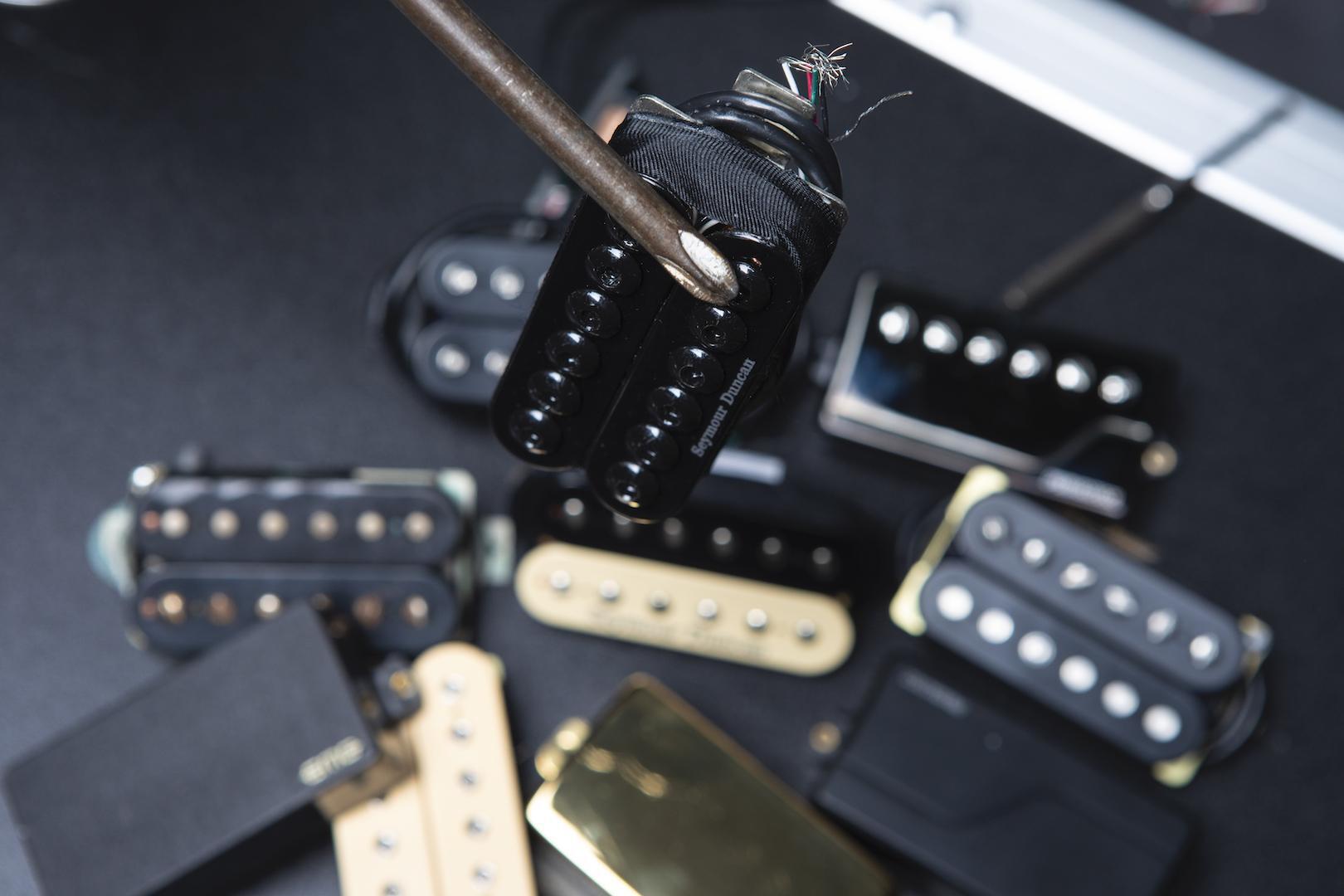
So, as your guitar strings are ferromagnetic (i.e., highly susceptible to magnetism), it doesn’t take a rocket scientist to realize that when a strong magnetic field gets too close to them, it’ll definitely interfere with your string’s vibration… and not in a good way! So, when adjusting the height of a high-output passive pickup, please let your ears decide — not your eyes! As Nigel Tufnel so wisely observed in the classic metal movie, This Is Spinal Tap, “there’s a fine line between clever and stupid!” Amen to that.
Need help finding the perfect metal pickup for your axe? Our metalheads are standing by to help. Give us a call at (800) 222-4700.