

So, you’re thinking about getting an electric guitar — welcome to one of the most exciting journeys in music! Let’s say this right up front: choosing an electric guitar should feel fun and exciting, not overwhelming.
Yes, there’s a sea of shapes, colors, brands, configurations, prices, and opinions out there. And if you’re new, then it may sound like a foreign language at first. This electric guitar buying guide is here to cut through the noise and help you focus on what matters: how the instrument feels in your hands, how it sounds through an amp, how it looks to you, and ultimately, whether it inspires you to play.
We’ve helped players at every level — from first-time buyers to lifelong collectors — find guitars that fit their hands, their sound, their goals, and their life! The right choice isn’t about memorizing specs. It’s about confidence. The goal of this guide is to give you that confidence. With that confidence comes fun, inspiration, and a lifetime of enjoyment. By the end, you’ll understand the major electric guitar types, what distinguishes them, and how to narrow your options without second-guessing yourself.
- How to Choose an Electric Guitar
- Electric Guitar Types: Three Bodies, Three Sounds
- How Pickups Shape the Sound of Your Electric Guitar
- Iconic Designs & What They Represent
- What to Look for in an Electric Guitar
- Ownership & Longevity
- Electric Guitar Buying Guide FAQs
How to Choose an Electric Guitar
Choosing an electric guitar isn’t about finding the “best” model. It’s about finding the right fit for you: your style, your comfort level, and the kind of music that makes you want to plug in and play.
There are a handful of core factors that shape the experience:
- Body type influences the feel, the way it vibrates (a.k.a. its resonance), and how the guitar responds to strumming, picking, and the amplification you’re plugged into.
- Pickups shape the tone to be bright and clear, warm and full, or something in between.
- Neck shape and scale length affect feel and playability.
- Construction and hardware influence tuning stability and long-term reliability.
- Aesthetics reflect the overall style of the guitar and how it fits your style. Let’s face it, this matters!
You don’t need to master every technical detail. You only need to understand how these pieces work together. Once you do, the field narrows quickly, and the decision becomes much clearer.
So, let’s begin with the most obvious component: the body.
Electric Guitar Types: Three Bodies, Three Sounds
Most electric guitars fall into three main body types: solidbody, semi-hollowbody, and hollowbody. These are the primary types of electric guitars, and the body style lays the foundation for how the instrument feels and responds.
Each body type has its own personality.
Solidbody Electric Guitars

Picture a classic electric guitar in your mind. Chances are you’re thinking of a solidbody.
Solidbody guitars are carved from two or more pieces of wood glued together (typically no more than four) with no “holes” and no large internal chambers. This design makes them stable, durable, and resistant to feedback at higher volumes, which is important if you plan on playing loud. They’re incredibly versatile and work in pretty much every genre — rock, pop, blues, country, metal, jazz, and many more. Like most creative endeavors, there are no rules to how you make music. Think of the guitar as a tool to accomplish your musical objectives.
How They Feel
Balanced. Predictable. Comfortable with a strap. Closer to your body; your strumming/picking arm stays close, too. Most beginners find solidbody guitars easiest to manage because they’re straightforward and consistent. Many experienced players started with solidbody guitars and stayed with them as their main instrument.
How They Sound
Focused and controlled. The exact tone depends on pickups, which we’ll cover shortly, but solidbodies tend to deliver clarity and sustain without excessive resonance.
If you’re unsure where to start, then a solidbody is often the safest and most flexible entry point. You’ll always have a use for a solidbody electric guitar.
Links to solidbody electric guitars:
Semi-hollowbody Electric Guitars
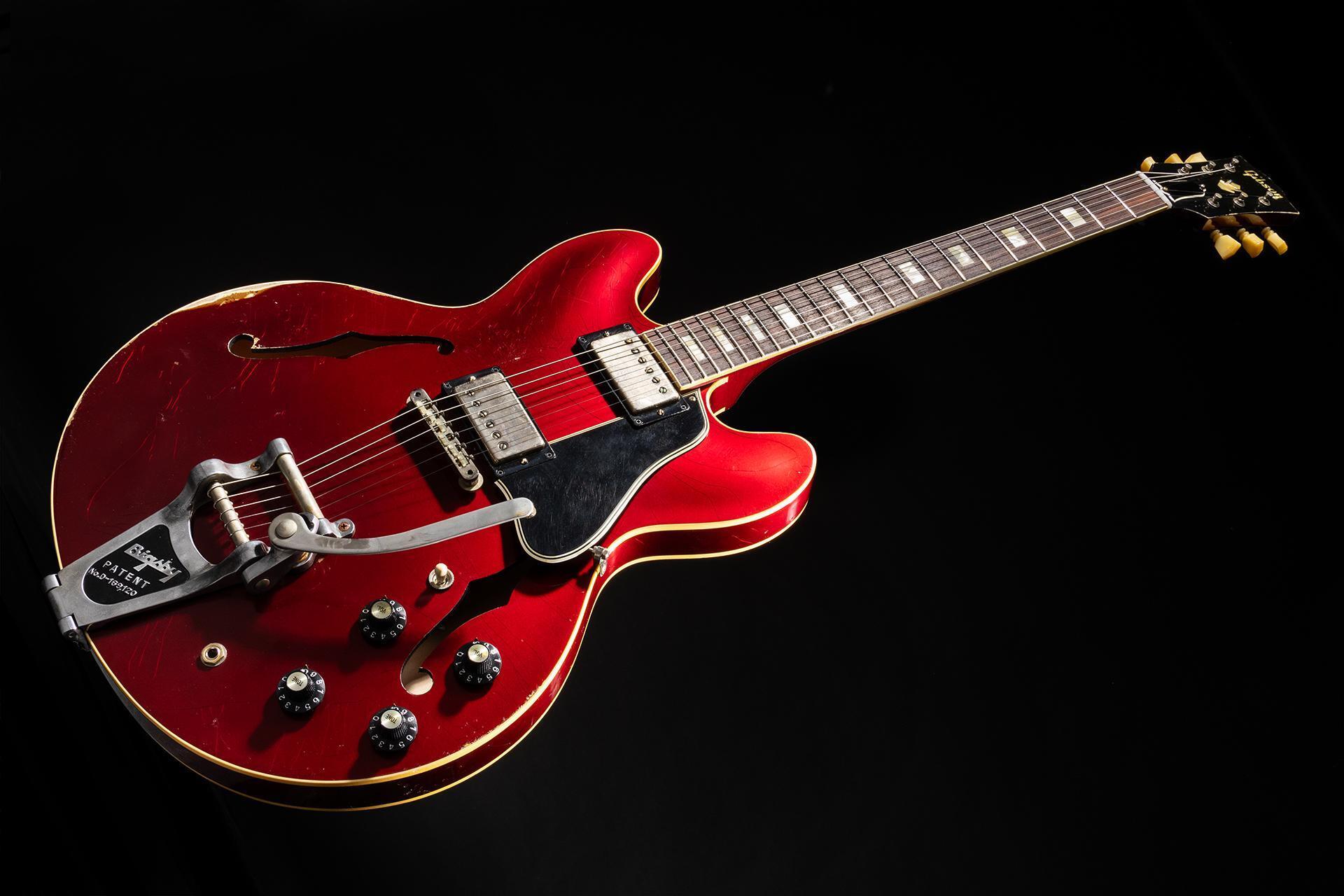
Semi-hollow guitars blend solid construction with hollow chambers inside the body. They usually feature a solid center block with hollow “wings” on either side. One telltale sign is the presence of F-holes on one or both sides of the guitar’s top. F-holes resemble the lowercase letter f, and they’re what you see on violins, violas, cellos, and upright basses.
This gives them a slightly more open, resonant character (a little bit like an acoustic guitar with its soundhole in the center) while still maintaining good control of feedback at higher volumes, though slightly less than a solidbody.
How They Feel
A bit livelier against your body. You may feel the instrument resonate slightly more when you play.
How They Sound
Airier and more like an acoustic guitar than most solidbody guitars. There’s more air moving from the vibration of the body, which is usually deeper than that of a solidbody. There’s air in motion from within the guitar. So, it’s no surprise that when not plugged in, they’re slightly louder than a solidbody.
Semi-hollows are popular in practically every style of music, including blues, indie rock, alternative, and jazz styles. They’re not typically the choice for metal and heavily distorted music. That said, they absolutely can handle overdrive and distortion. They just respond differently. Again, there are no rules on what kind of guitar you have to use. Just know that one type of guitar may achieve the sound in your head better than another.
Hollowbody Electric Guitars
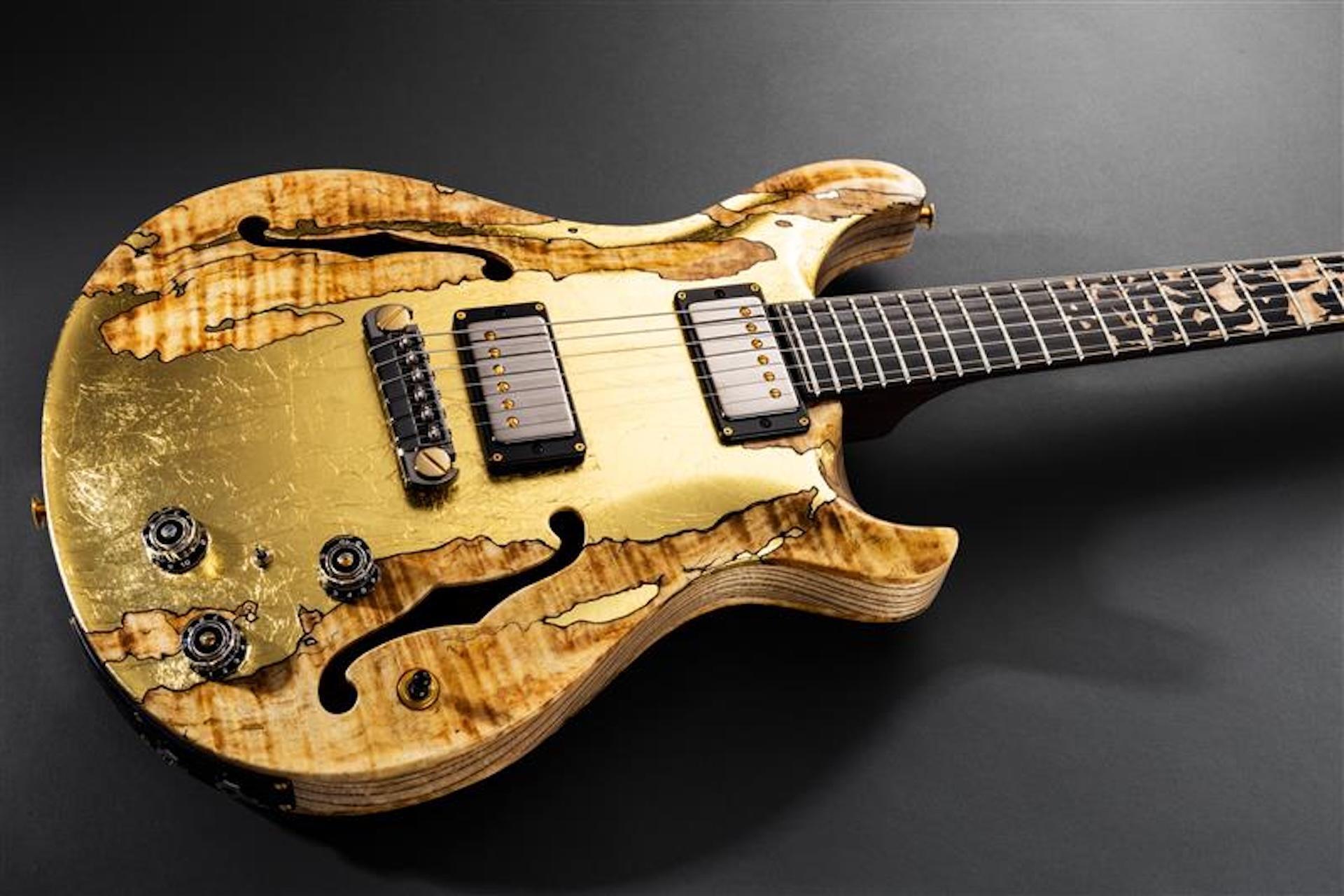
Hollowbody guitars are fully hollow inside, much like acoustic guitars but with pickups designed for amplification. They tend to be larger in size and visually striking. Like semi-hollowbody guitars, they typically have F-holes.
How They Feel
Lightweight and resonant. You’ll often feel the body vibrate more when you strum. When not plugged in, they tend to be slightly louder than a semi-hollowbody guitar. Sometimes hollowbody guitars are larger and deeper; the greater depth puts your strumming/picking arm farther away from your body, not unlike an acoustic guitar.
How They Sound
More like an acoustic guitar than solidbody and semi-hollowbody guitars. There’s even more air moving from within the guitar, so they sound even more like acoustic guitars than semi-hollowbody guitars do. When paired with humbucking pickups (we’ll talk about these next!), they sound warm, round, and expressive, especially with clean tones. They’re closely associated with jazz, classic rock, and vintage style.
At high volumes, hollowbodies can be more prone to feedback than solid or semi-hollow designs. For certain players, though, that vibration — that resonance — is exactly the appeal.
If you’re looking for maximum versatility and broad genre coverage, then solidbody electric guitars are often the most adaptable choice. If you’re drawn to warmth and character — especially for cleaner styles — semi-hollow and hollowbody electric guitars offer a different kind of inspiration.
Body style shapes the feel of the instrument. But tone? That’s where pickups come in.
How Pickups Shape the Sound of Your Electric Guitar
If body type shapes how a guitar sits against you, balances, and vibrates, then pickups shape how it sounds through an amplifier. They are a major contributor to the texture of your sound.
Pickups are the magnetic components under the strings that convert string vibration into an electrical signal. But you don’t need to think about wiring diagrams. What matters is the personality they give your sound.
Broadly speaking, most electric guitars use one of two pickup types: single-coils or humbuckers. Each has a distinct voice, and that voice often defines the instrument.
Single-coil Pickups: Clear & Bright
Single-coil pickups are known for their clarity and articulation. They tend to sound bright, snappy, and detailed. If you like hearing every nuance of your picking, the subtle snap of each note, then single-coils deliver that.
Single-coil pickups are commonly associated with:
- Clean, chiming tones
- Funk rhythm work
- Country twang
- Blues and classic rock sparkle
- Indie and alternative textures
The tradeoff? Traditional single-coils can produce a slight background hum at higher gain levels. This is referred to as 60-cycle hum. Many players don’t mind it — it’s part of the classic sound — but it’s worth knowing about. There are hum-canceling versions of single-coil pickups available on some guitars or as an aftermarket purchase.
When you think of a Fender Stratocaster or Telecaster (or similarly styled guitars from other brands), you’re usually thinking of single-coils.
Humbucker Pickups: Full, Warm & Powerful
Humbuckers (a.k.a. humbucking pickups) were designed to reduce the 60-cycle hum from single-coils, hence the name. They use two coils instead of one, and they’re wired in a way that cancels out noise and produces a thicker, more powerful tone.
Humbuckers tend to sound:
- Warmer, fuller (more low and low-mid frequencies)
- More “high-output” (louder and more powerful)
- More overdriven through an amplifier (one of the reasons players like them)
They’re closely tied to:
- Rock
- Blues
- Metal
- Big, sustaining lead tones
- Jazz
It may sound counterintuitive to group jazz among these, but even though humbuckers are higher output, when played though a clean amp (meaning no overdrive or distortion), they produce thick and warm tones with great detail. This is a quintessential jazz tone.
When you picture a Gibson Les Paul (or similarly styled guitars from other brands), you’re usually thinking of humbuckers.
Hybrid Configurations: The Best of Both Worlds
Many modern guitars blend pickup types — for example, putting a humbucker in the bridge and single-coils in the middle and neck is often called an HSS setup. Another common configuration is HSH, putting humbuckers in the neck and bridge positions and a single-coil in the middle.
These hybrid configurations offer tonal versatility; however, they will typically only be found in a solidbody electric guitar. The benefit is that you get the brightness of single-coils for clean work and the thickness of a humbucker for heavier tones all in one instrument.
If you’re new and unsure what direction you’ll lean musically, then this kind of layout can be a smart middle ground to start on.
Iconic Designs & What They Represent
Certain electric guitars have become visual and tonal shorthand. You don’t have to memorize their histories — but understanding their general personalities helps narrow your choices quickly.
Stratocaster Guitars

Typically equipped with three single-coil pickups, Strat-style guitars are known for their versatility and expressive range.
They’re comfortable, beautifully and ergonomically contoured, and widely used across genres.
If you want sparkle, chime, clarity, and a broad tonal palette, then this guitar style is often a strong starting point.
Players known for using a Stratocaster to express their songs include Jimi Hendrix, Eric Clapton, David Gilmour, Nile Rodgers, Stevie Ray Vaughan, the Edge, and John Frusciante.
Telecaster Guitars
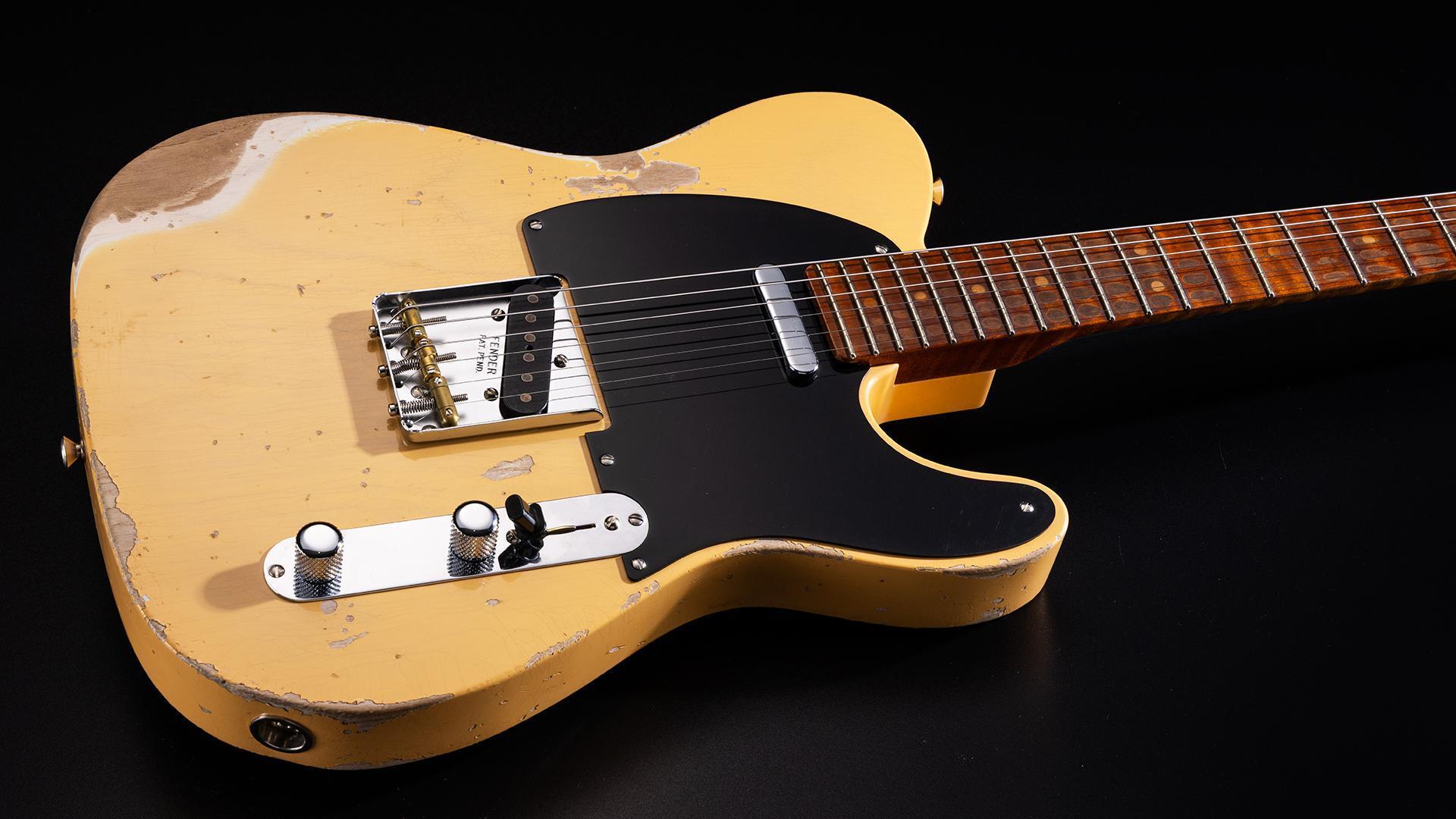
Tele-style guitars are a simple design, often featuring two single-coils and a straightforward control layout. Some players gravitate to this simplicity; the guitars have everything you need and nothing you don’t need.
Teles are known for their punchy, bright, articulate tone — especially on the bridge pickup — and their ability to cut through a mix. Some jazz players have an affinity for the overall simplicity of the instrument as well as for the beautiful clarity and warmth of the Telecaster’s neck pickup.
Often a favorite of country players, they also shine in classic rock, indie, and rhythm-focused playing.
Players who are closely associated with the Telecaster are Brad Paisley, James Burton, Jeff Buckley, Joe Strummer, Ted Greene, Julian Lage, and Bill Frisell.
Les Paul Guitars
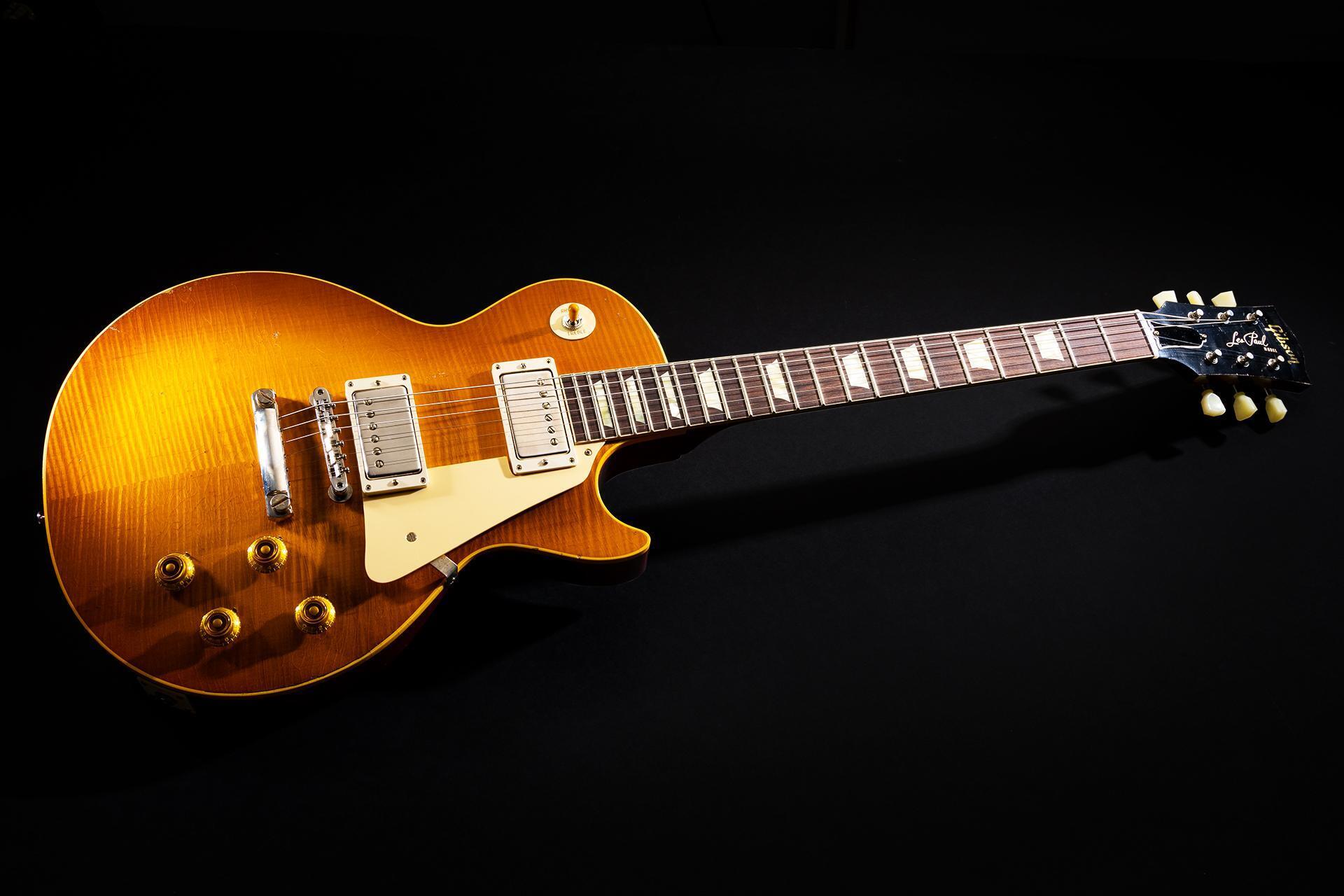
Les Paul–style guitars usually feature dual humbuckers and a solid, substantial body. Their body construction tends to make them heavier, and that weight contributes to some cool attributes: sustain, warmth, and powerful lead tones. If you’re drawn to thicker rock sounds or expressive blues leads, then this guitar style delivers a strong, confident voice.
Because Les Paul–style guitars tend to feel heavier than Strat- or Tele-style guitars, some players pay close attention in comparing the actual weights of these instruments during their search.
Besides Les Paul himself, players known for their prominent use of Les Paul guitars include Slash, Jimmy Page, Paul Kossoff, Joe Bonamassa, Michael Bloomfield, Peter Green, Billy Gibbons, and Duane Allman.
Other Iconic Electric Guitars
We’d be remiss if we didn’t mention some guitars that have stood the test of time over the decades and are also quite popular now. These are great for players who want something that’s a proven music maker but distinct from the guitars we’ve referenced above.
The Important Takeaway
Pickup configuration is another big reason electric guitar types feel and sound distinct. Two guitars may look similar in shape, but their pickups can dramatically change how they respond through an amp.
If you’re unsure which direction to go, then ask yourself a couple of simple questions:
Do you imagine your sound as bright and articulate or thick and powerful? Is there an artist whose guitar sound really appeals to you?
There’s no wrong answer. There’s just the tone that makes you want to keep playing.
Next, we’ll bring this all together and talk about what really matters when you’re ready to choose: comfort, reliability, inspiration, and long-term satisfaction.
What to Look for in an Electric Guitar
At some point, your research will turn into a decision.
Here’s the good news: the “best” electric guitar isn’t the most expensive one or the one with the longest feature list. It’s the one that feels right in your hands, fits your style, and makes you want to pick it up again tomorrow.
When you’re narrowing your options, you’ll want to focus on four things.
Comfort & Feel
This matters more than almost anything else.
How does the neck feel in your hand? Is it slim and fast or full and substantial? Does the body sit comfortably when you’re standing with a strap? Is it balanced, or does the neck dip downward? How does it sit on your lap? Can you get your arm comfortably around the body to strum chords and pick notes?
For new players especially, comfort influences practice time. If a guitar feels awkward or uncomfortable, then you’ll play less. If it feels natural, then you’ll reach for it more often.
Scale length and neck profile can subtly affect this. Players with smaller hands — including young players — may prefer slimmer necks or shorter scale lengths. Scale length is known as the “speaking length” of the strings, measured from the nut to the saddles. Scale lengths don’t differ widely; generally, they run from 24.75 inches to 25.5 inches. Not a huge difference, but it’s a difference you can feel and one that doesn’t have to be dramatic to matter.
Trust your hands. They usually know.
Sound Flexibility
Think about the kind of music that excites you, the artists that inspire you, the sounds they get from their instruments.
If you’re drawn to bright cleans and rhythmic clarity, then single-coil pickups may inspire. If you imagine heavier riffs or smooth, sustaining leads, then humbuckers may align better.
If your tastes are broad or still forming, then a hybrid configuration (such as an HSS or HSH layout) can offer a wider tonal range without complicating things.
The goal isn’t to predict your entire musical future. It’s to choose something that supports where you are now and leaves room to grow.
Reliability & Tuning Stability
This is where build quality quietly matters. A well-made electric guitar should:
- Stay in tune reasonably well
- Feel solid and stable
- Have smooth tuning machines
- Have cleanly seated frets
- Be properly in tune along the neck
You don’t need an expensive instrument to get these attributes. Many guitars at accessible prices offer excellent reliability, especially when they’re properly set up. Guitar manufacturers and great retailers alike understand that the playing experience needs to be exceptional if you’re going to keep playing regularly.
A guitar’s “setup” makes a bigger difference than many players realize. The same guitar can feel dramatically different depending on how it’s adjusted. String height, neck straightness, and intonation (the guitar’s ability to sound in tune across the entire neck) all influence playability.
In other words: don’t judge a guitar only by its specs. Judge it by how it feels and responds. And it’s okay to judge it by how it looks, too . . .
Inspiration & Aesthetics
This one is easy to overlook, but it matters.
Electric guitars are visual instruments. Shape, finish, color, and overall vibe play a role in how connected you feel to it. Sight is the first of your senses that’s engaged with an instrument.
It’s not shallow when a guitar makes you smile when you open the case. That’s motivation! When you’re learning something new, motivation is everything.
Guitars are made to look beautiful or striking, and we all have different ideas of how this is defined. The guitar is a very personal instrument. We wear them closely, like clothing. And we tend to choose clothes that fit our style. So it is with guitars.
Here are some examples of visually striking electric guitars. You may sacrifice playing comfort, and you may even need to play only in a standing position with a guitar strap, but if it’s your style and it keeps you coming back day after day, then it’s the right choice for you.
What Should a Beginner Spend on an Electric Guitar?
This is one of the most common questions, and it deserves a calm answer.
A solid beginner electric guitar typically falls into an accessible price range that balances affordability with reliability. You want an instrument that stays in tune, feels comfortable, and won’t fight you as you learn. You don’t need a top-tier model to get there.
There are many capable guitars below $1,000 — even below $500 — that are wonderful beginner instruments. They’re not “starter toys.” They’re real guitars that can carry you through years of playing.
What matters more than hitting a specific price is choosing a guitar that’s well built and properly set up.
If you’d like a curated list specifically for first-time players, then our “Best Electric Guitars for Beginners” guide dives deep into beginner-friendly models and setups.
Remember, wherever you land, the goal isn’t to spend the most. It’s to choose confidently.
An electric guitar isn’t just a purchase; it’s something you’ll live with. And that brings us to the final piece of the puzzle.
Ownership & Longevity
A good electric guitar should last a long time. Some of the most valuable vintage guitars built in the ’50s and ’60s are still regularly used today by pro players and collectors.
With basic care and occasional setup adjustments, most well-built guitars can stay reliable for decades. There’s also a widely held belief that the more a guitar is played, the better it sounds. It’s one of the reasons why vintage guitars are considered to have magical tone; they have been played for decades. So, remember: Better care means better playability and tone. Better playability and tone mean you’ll want to play more. Playing it more means the guitar will sound better over time!
Keep in mind wood is an organic material, and it naturally responds to changes in temperature and humidity. This means seasonal adjustments are rather standard. A small tweak to the truss rod (a steel rod that runs beneath the length of the fretboard) or the bridge can keep the instrument feeling comfortable and playing cleanly.
Strings wear out. Tuning machines may need tightening. String height (a.k.a. string “action”) may need slight adjustment from time to time. None of these is a flaw — each is a part of owning a wooden instrument that responds to its environment.
One important thing to understand: setup quality makes a real difference. Remember when we said the same guitar can feel dramatically different depending on how it’s adjusted? Proper string height, neck straightness, and intonation affect comfort and playability more than many players realize.
If you’re investing in a guitar, then it’s worth making sure it’s properly inspected and adjusted before it reaches your hands. A well-set-up instrument makes learning easier and playing more enjoyable.
And once you own it, simple habits such as storing it in a case when not playing, keeping it clean, and replacing strings regularly go a long way.
If you want deeper guidance on guitar setup, care, and maintenance, then our guitar care and maintenance guides walk through practical steps and advice to keep your instrument in great condition.
An electric guitar isn’t disposable. It’s something you grow with.
Next, we’ll answer common questions players have when deciding between electric and acoustic, budgeting for their first instrument, and figuring out where to start.
Electric Guitar Buying Guide FAQs
Is It Better to Start on Acoustic or Electric?
There isn’t one “better” choice for everyone. It depends on what kind of music excites you and what will keep you motivated.
Acoustic guitars are simple and self-contained. Just pick them up and play. They’re great for singer/songwriter styles, folk, and unplugged settings.
Electric guitars are often a little easier on the fingers because the strings are typically lighter and the necks slimmer. They’re ideal if you’re drawn to rock, blues, pop, metal, or any style that relies on amplified tone and effects.
The best choice is the one that makes you want to practice. Motivation matters more than tradition.
How Much Should a Beginner Electric Guitar Be?
A beginner electric guitar should be affordable, comfortable, and reliable, but it doesn’t have to be expensive.
There are many well-built guitars at accessible prices that stay in tune, feel good to play, and won’t hold you back. In fact, many players start with instruments below $1,000, even below $500, and use them for years.
The most important factors are proper setup and overall build quality. If a guitar feels good in your hands and responds well when you play, then it’s enough to begin.
How Expensive Are Electric Guitars?
Electric guitars cover a wide range of price levels.
At the more accessible end, you’ll find solid, dependable instruments designed to be affordable and playable. In the midrange, you’ll often see upgraded hardware, improved electronics, and refined construction.
At higher tiers, pricing reflects premium materials, craftsmanship, and brand heritage. Some players value that refinement and long-term ownership experience.
You don’t need the most expensive guitar to learn or perform well. But investing slightly above the absolute minimum can provide a better playing experience as well as pride of ownership.
Should I Buy an Electric Guitar First?
If the music that inspires you is primarily electric — rock, alternative, blues, metal, pop — then starting on electric guitar makes perfect sense.
You’ll be practicing the sounds and techniques that motivated you in the first place, which makes it easier to stick with it.
As long as you have a way to hear yourself clearly, such as a small practice amp or headphones, there’s no disadvantage to choosing electric guitar as your first instrument.
Can a Beginner Start with an Electric Guitar?
Yes, absolutely.
Many new players find electric guitars easier to begin with. The strings are typically lighter, and the action (the distance between strings and fretboard) can be set lower, which makes fretting notes and chords more comfortable.
The only extra piece of equipment required is amplification — even a small, simple practice amp of headphone setup works.
Comfort and playability matter far more than features. If the guitar feels good and stays in tune, then it’s a perfectly solid place to start.
Choosing an electric guitar doesn’t require mastering every technical detail. It just requires understanding what matters and trusting your instincts.
A Confident Place to Start
Choosing an electric guitar isn’t about finding a perfect spec sheet. It’s about finding an instrument that feels natural in your hands and sounds like the music you hear in your head.
You don’t need to know everything. You just need enough clarity to move forward without hesitation.
Whether you choose a versatile solidbody, a vibrant semi-hollow, or something that simply looks and feels right, the goal is the same: to pick it up, plug in, and play.
If a guitar inspires you to practice tomorrow, then it’s the right place to begin.
And that’s what matters most.