

Marching Tenor Care and Maintenance Guide
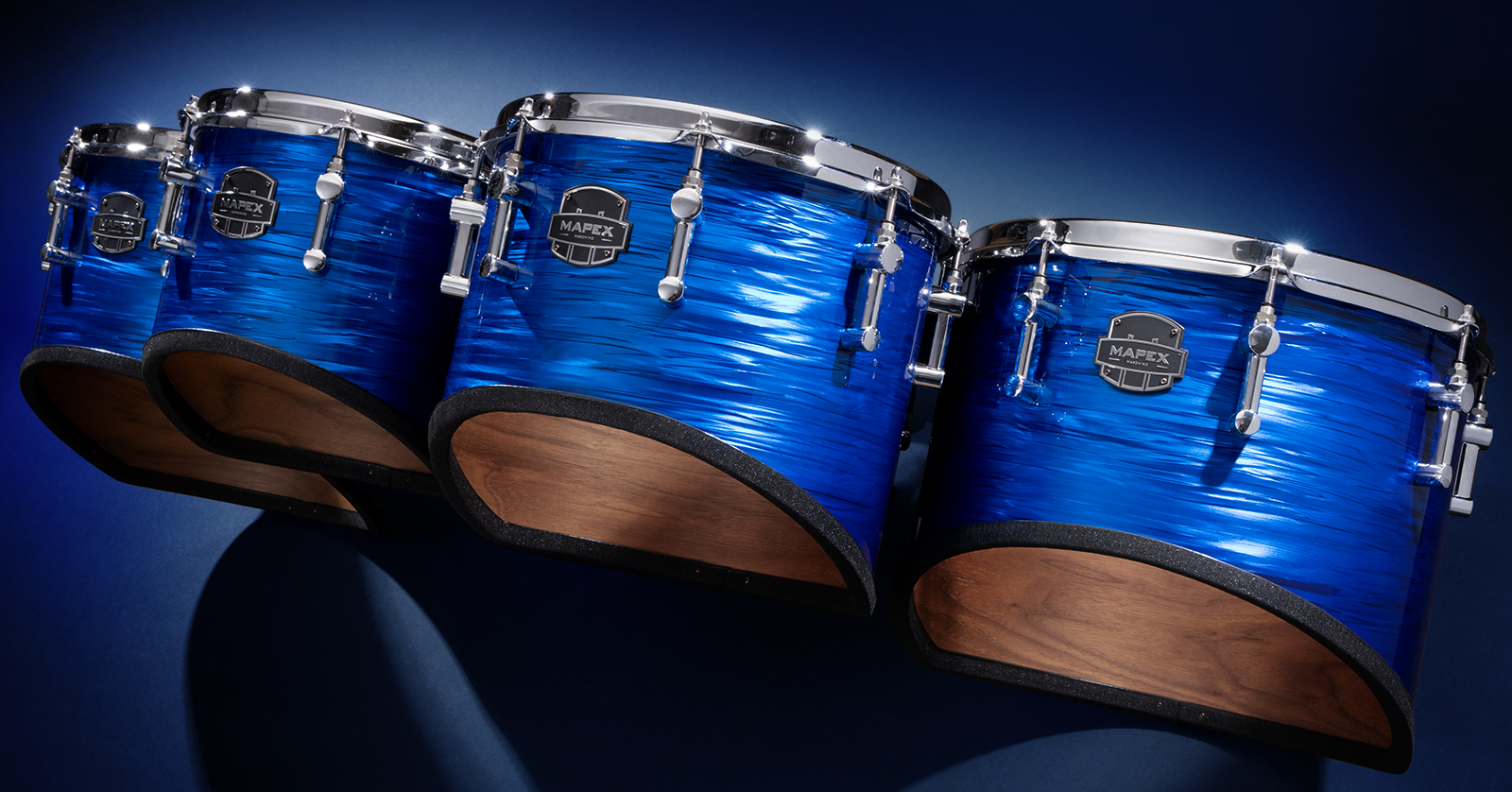
Marching tenor drums are the voice of the drum line. Keeping them in immaculate shape all year round will ensure they sound and look pristine for years to come, so in this guide, we will show you how to take care of your marching tenors. Let’s get started.
- Basic Care and Maintenance
- In-season Care and Maintenance
- Off-season Care and Maintenance
- Take Care of Your Body
Items you’ll need
You’ll need a few things to take care of your marching tenors. Sweetwater carries many of the items, but you may have to get a few things you can find at any local hardware store. Microfiber cloths are great for cleaning and polishing and won’t leave any scratches behind, but if you don’t have any available, you can use any cloth that’s soft and nonabrasive.
- Microfiber cloth
- Marching tenor drum cover
- Marching tenor drum case
- High-tension drum key
- Bearing edge conditioner
- Towels
- Drum polish or window cleaner
- White lithium grease
Basic Care and Maintenance
No matter the time of year, you always need to perform basic care and maintenance to prolong the life of your marching tenors.
Drumheads
When replacing the drumheads, wipe down the bearing edge, the hoop, and inside the shell to remove any wood, dust, or stick tape collected within it. Many tenor players will use paraffin wax, beeswax, or Chapstick in a pinch, but we recommend applying bearing edge conditioner. This helps ensure a smooth tuning process and keeps the tone lively. This is also an excellent time to inspect the bearing edges for any chips that may be present.
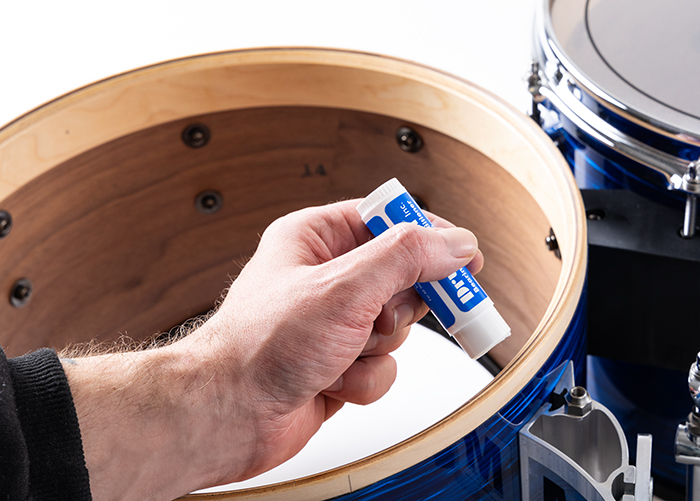
Apply bearing edge conditioner to the tenor drum bearing edge.
When you replace marching tenor drumheads, place a small amount of white lithium grease on the tip of each tension rod (between four- and five threads’ worth). This helps ensure the tension rods and the threads inside the lug are lubricated. Don’t forget to wipe off any excess!

Apply a small bit of white lithium grase to the tip of the tension rod
How often should I change my marching tenor drumheads?
One question commonly asked is how often someone should change their marching tenor drumheads. The answer is that it depends. You’ll want to change them frequently if you’re in a competitive corps or line. Keeping them fresh will ensure they sound great. If you’re in high school and mainly play at football games and at parades, twice a season is usually fine (once at the beginning and once at the end).
Ultimately, it comes down to budget. Tenor drumheads can be costly, making frequent changes more difficult for music programs with small budgets. If your program cannot afford multiple sets of tenor heads twice a year, it’s still recommended to have one set of backups in case a head breaks.
Hardware
Here are a few simple tips that will keep your tenor drum hardware looking nice and prolong its life.
- Use a soft microfiber cloth to wipe down all the hardware.
- If your drum has a wrap finish, use some drum polish to keep the shell nice and shiny. If you don’t have any polish available, you can use standard window cleaner.
- Play with proper technique and use the correct type of sticks.
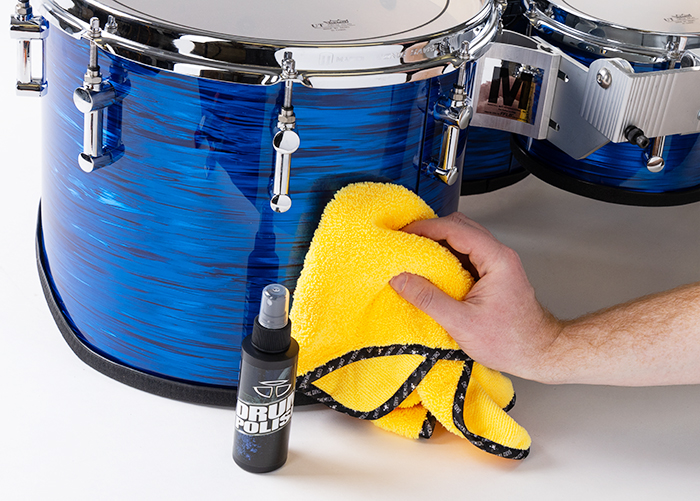
Polish and wipe down your tenor drums with a microfiber cloth
In-season Care and Maintenance
The marching season can last a while. From competitions to parades and football games, you always need your tenors in top-quality condition.
- Always use marching tenor drum cases. Make sure they’re secure when traveling.
- Tenor drums have protective rubber at the bottom of each drum, so if you don’t have a tenor drum stand, at least make sure your drums are laying upright. Don’t flip them on their sides or lay them face down, as that will cause scratching!
Weather
TIP: If you have a hair dryer or if your location has large fans, set the drums in front of them to speed up the drying process.
No matter what season you’re playing, you will encounter the elements at some point. This can cause serious issues, so you must be prepared when that time comes.
- Check the weather forecast in the days leading up to your performance. Knowing what you’re dealing with beforehand is your first line of defense!
- Always use marching tenor drum covers to protect the shells.
- Bring plenty of dry towels! If you’re in the stands and don’t have covers, wipe the shells down frequently, especially after you get off the field from your performance.
- If possible, take tenors inside, wipe them down thoroughly, and let them air dry. Leaving drums damp will cause long-term damage.
- If you have an away competition or game, thoroughly wipe the shells and hardware down and place them in a dry case. Once you get home, take them out of the case to let them air dry.
- Don’t put wet marching tenors in cases! Leaving them in for too long can warp the shell or cause corrosion.
Off-season Care and Maintenance
Even though the marching season may be over, you still need to take care of your marching tenors!
- Inspect the tenors. Take note of everything that may need repair or replacement. This includes bent or rusting tension rods, chipped bearing edges, and bent hoops.
- Thoroughly wipe down the shells and hardware using a microfiber cloth.
- Reduce the tension of the heads by half. This keeps the tension rods in place while keeping some pressure off the tenors and their heads.
- If the drums are disassembled while in long-term storage, the shells may become out of round, causing irreparable damage.
Taking Care of Your Body
While staying in shape is essential for any player in the drum line, it’s most important for the tenor line. Marching tenor drums can be heavy. Most weigh between 30- and 40 pounds! The weight is distributed almost two feet across, so it can take a toll on your body, especially if you’re marching. So, one of the most important things you can do is take care of your body.
- ALWAYS lift the tenors with your legs and not your back!
- Don’t slouch when playing or marching. Always stand straight up with your chest out. Slouching will put unnecessary strain on your back muscles.
- Work on your core muscles. Exercises like sit-ups, crunches, and planks can do wonders!
- Do some leg exercises, focusing on your hamstrings and glutes. This is especially true because there will be times when marching drills require you to go long distances in a limited number of steps.
- Also, do back exercises like deadlifts, pull-ups, and rows.
- Stretch for five- to 10 minutes before suiting up. Playing while you’re loose will significantly reduce the risk of pulled muscles.
Related Articles
When you need help, Sweetwater has the answers!
Our knowledge base contains over 28,000 expertly written tech articles that will give you answers and help you get the most out of your gear. Our pro musicians and gear experts update content daily to keep you informed and on your way. Best of all, it’s totally FREE, and it’s just another reason that you get more at Sweetwater.com.