

Beginner’s Guide to Installing Acoustic Treatment
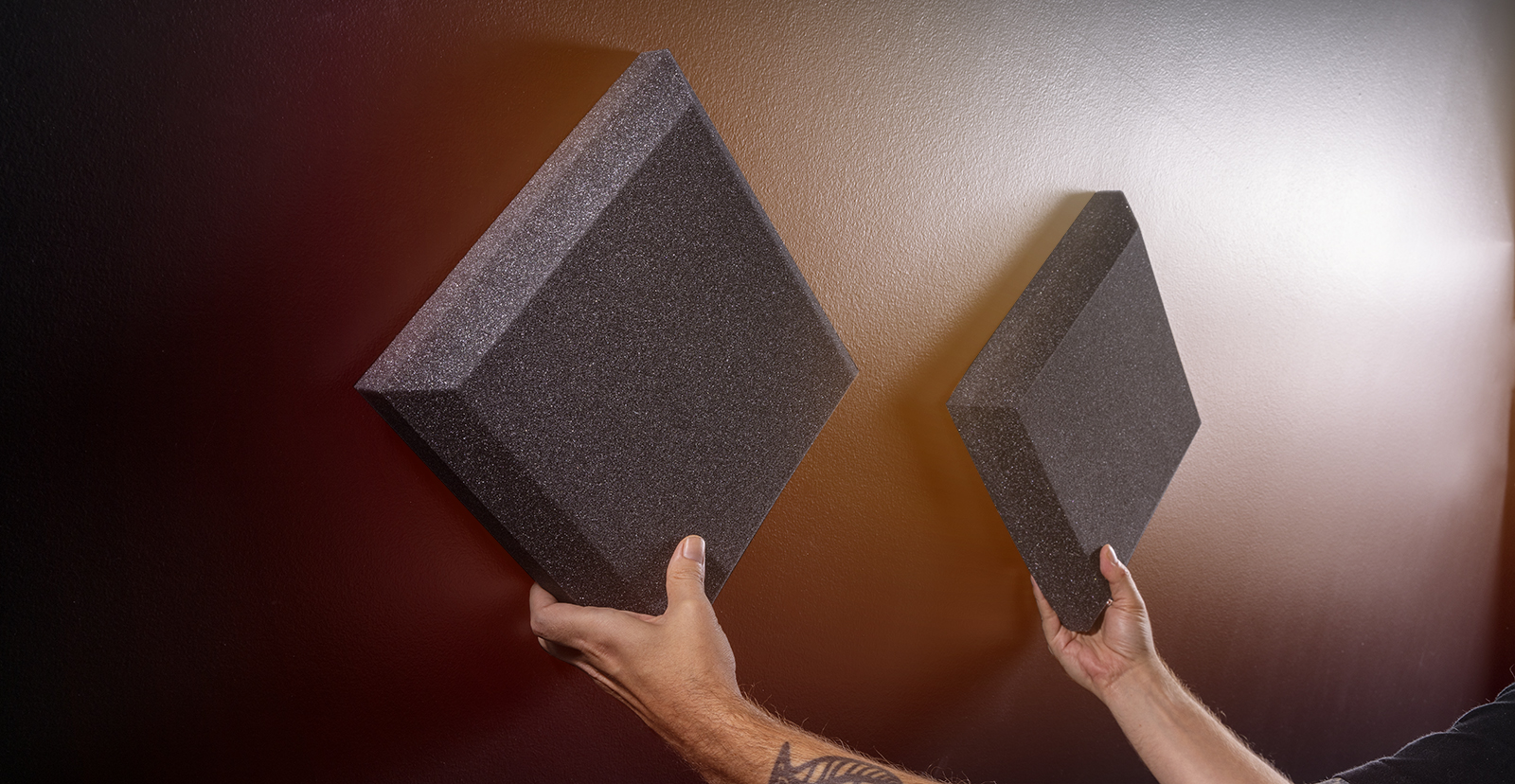
Acoustic treatment is a critical component of your home studio, and placing treatment in the right location will set you up for success. While room correction software can help, it can’t control natural reflections of sound waves, so in this guide, we’ll talk about the ins and outs of acoustic treatment, so you get the best-sounding room possible.
- Types of Acoustic Treatment
- Monitor Placement and Listening Position
- Where to Place Acoustic Treatment
Types of Acoustic Treatment
Acoustic treatment comes in all shapes and sizes, and each plays a pivotal role in making your studio (and ultimately your mix) sound fantastic. Depending on your application and the size of your room, you’ll require two different types of acoustic treatment: absorbers and diffusers.
Absorbers
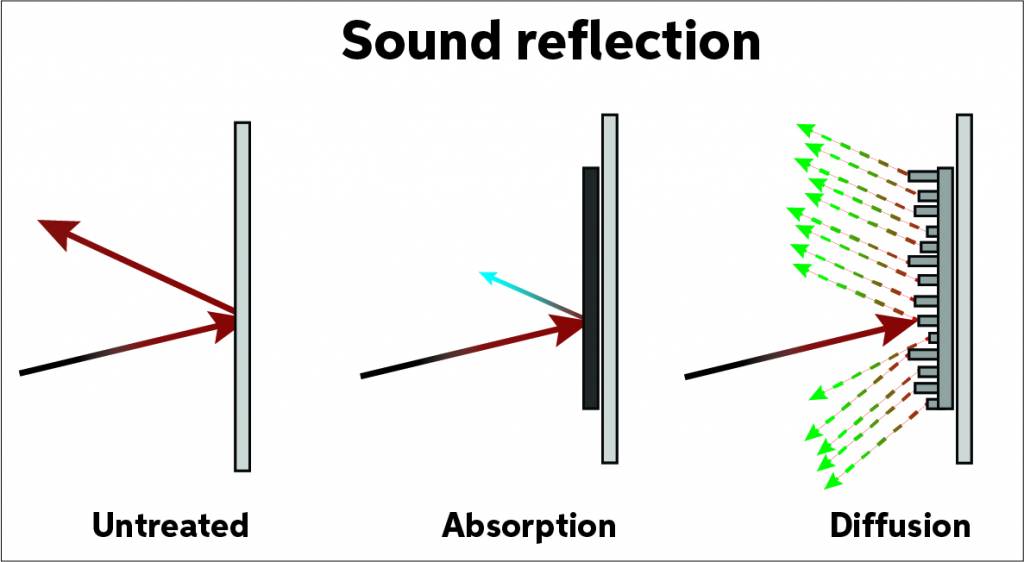
Sound naturally bounces off every surface in your room, which is not desirable when recording and mixing. This is especially true for rooms with a lot of reflection, such as rooms with brick, wood, concrete, or plaster.
If you don’t have a room measurement mic (something every studio should have on hand), clap your hands. The more echo you hear, the higher reflection your room has. Too much reflection often results in excess mid and high frequencies, which can cause fatigue on your ears and affect the overall mix.
As the name implies, absorbers help counteract this reflection, as the porous material will “soak up” the sound before it bounces off the reflection point.
Bass traps
Bass traps are a type of absorber, and due to their unique shape, are made specifically for low frequencies. Low frequencies have much longer wavelengths and are more omnidirectional, making them very difficult to control. This can result in a muddy mess, especially in the corners of your room. This is why they are commonly in the shape of a triangle.
What Is a Bass Trap?
Diffusers
While absorption is good for acoustic treatment, your mixes will sound unnatural and dead if there’s too much of it. This is why you want at least some sort of reflection. Due to their unique shape, diffusers help provide that reflection but will disperse it in many different directions, making your recording livelier while providing a natural stereo field without dealing with the undesirable echo in your room.
- Please note that vocal booths are typically the exception to diffusion, especially if you’re aiming for a clean, dry track. Reflections in a tiny room (especially a smaller-sized room like a vocal booth) will often muddy the track and be challenging to fix in your mix.
Monitor Placement and Listening Position
Before installing any acoustic treatment, make sure you’re at the correct listening position and that you set up your studio monitors correctly. If they’re not evenly placed, you’ll get a less-than-desirable sound. So, before we go further, check out our article to learn more about studio monitor placement!
Where to Place Acoustic Treatment
IMPORTANT: Make sure absorbers are at or very slightly above ear level, typically two feet above the floor, as placement affects reflection points. It’s also important to note that absorption is more about surface area than it is about angle.
The critical component of acoustic treatment is placing it where the sound reflects. Think of your studio as a pool table: the ball is your monitor, and the path it travels is the sound. The reflection point is where the ball hits the side of the table. So, just like hitting a pool ball correctly, installing acoustic treatment in the correct spots the first time will save you the time and headache of having to remove the panels and correct the position.
Absorbers
TIP: Upholstered furniture can also act as an absorber, so you may want to take that into consideration when treating your room.
- When placing absorption foam or panels, start from the front of the room and work your way to the back. This is critical, especially if you have a limited amount of foam or panels, as early reflection points can cause the most significant issues.
- Place absorption behind your monitors to soak up any early reflections.
- Starting from your mixing desk, have a friend hold a mirror against the wall at listening height, have them slide it until you see the monitor, then mark that position. This is where your reflection point is located. Once that has been marked, slide the mirror until you see the opposite monitor.
Acoustic foam placement
If you’re using wedge-shaped foam absorbers in a checkerboard pattern, it doesn’t matter what position the wedges face (up-down or left-right), as it covers the same amount of surface area.
Acoustic panels placement
Have the center of the panel as close to ear level as possible. This will help ensure there’s equal coverage from above and below your listening position.
Bass traps
Installing bass traps is very easy. Always start from the top corner, as the sound rises and then reflects. If you have multiple pieces, separate each piece by a few inches.
Diffusers
TIP: Bookcases filled with books can also be used for diffusion. To get the best results, have the book spines at different distances from the front lip of the bookcase.
You will typically want the diffusers at or slightly above listening height. This is particularly true if you have seating on the back wall, such as a chair or couch.
- If your mixing room is smaller than eight feet or so, it may be better to install a small bit of absorption instead.
Design Before You Install
Our friends at Primacoustics have created a great tool that allows you to recreate your room and give you an idea of what it will look like after you’ve installed your acoustic treatment. Check out their Room Designer to begin!
The Importance of Placement of Auralex Acoustical products
Related Articles
When you need help, Sweetwater has the answers!
Our knowledge base contains over 28,000 expertly written tech articles that will give you answers and help you get the most out of your gear. Our pro musicians and gear experts update content daily to keep you informed and on your way. Best of all, it’s totally FREE, and it’s just another reason that you get more at Sweetwater.com.