

Bass Guitar Care and Maintenance Guide
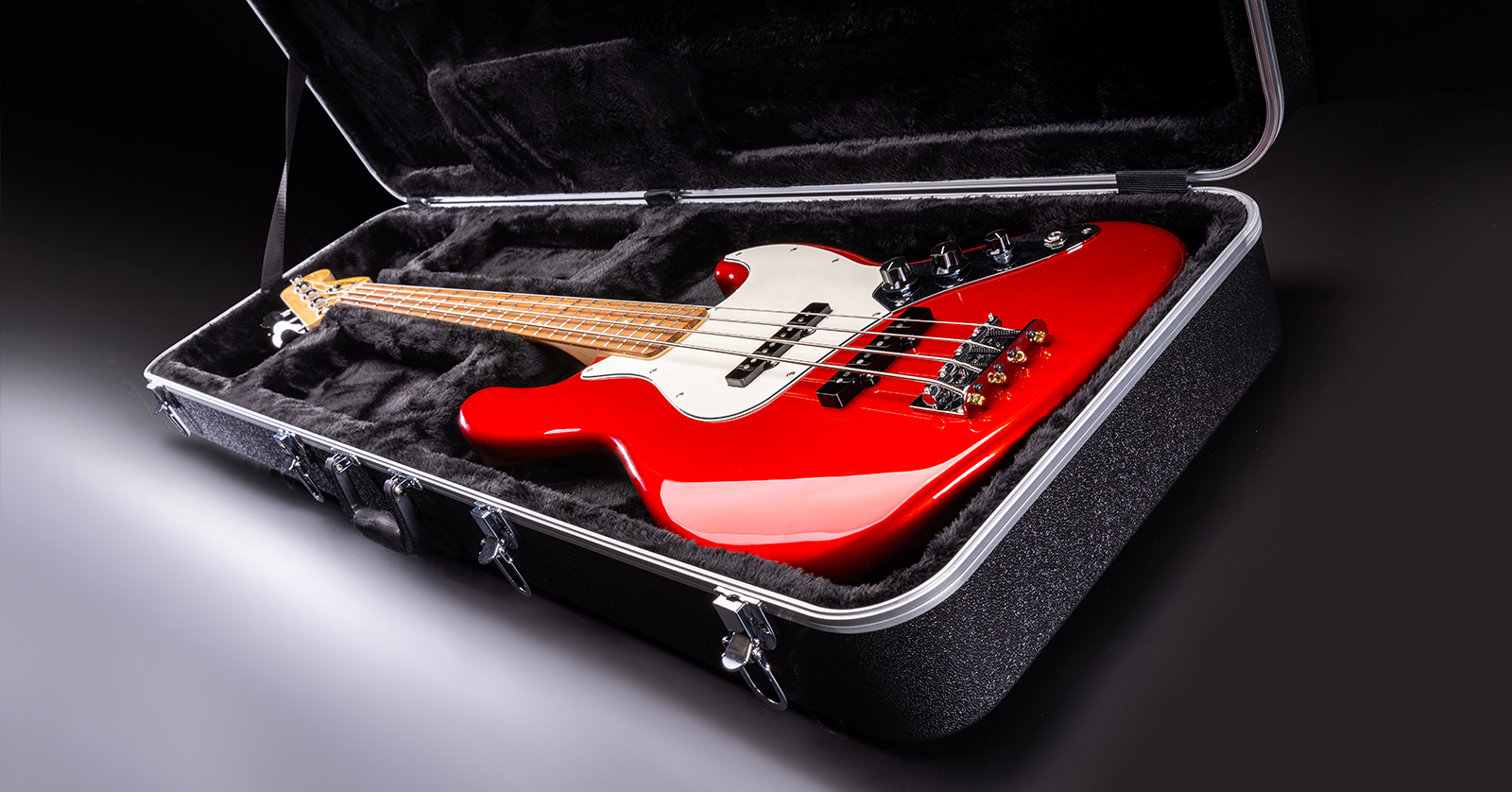
In this guide, we will discuss how to care for and maintain your bass guitar. You’ll learn how to keep your bass guitar safe during temperature and weather changes and how to keep it looking good and sounding great. Follow the sections below to get started.
- How to Store a Bass Guitar
- Bass Guitar Accessories
- Temperature and Humidity Are Key
- How to Clean a Bass Guitar
- How to Change Bass Guitar Strings
- Annual Maintenance: Get a Setup
How to Store a Bass Guitar
Keeping your bass safe and in good condition is about what you do when you’re not playing it. It’s fine to park it on a guitar stand, but you will also need a quality bass case or padded gig bag. Place the bass guitar back in the case overnight and when you are not playing it.
- A hardshell bass guitar case provides the best protection for transportation.
- A bass guitar gig bag is adequate if you carry your instrument yourself, as long as it has foam padding and protects the headstock and tuning machines.
Bass Guitar Accessories
Cases and gig bags also provide compartments where you can keep essentials, like a spare set of bass guitar strings, a string-change kit, a clip-on tuner, a polishing cloth, and a guitar humidifier.
Temperature and Humidity Are Key
Bass guitars are made of wood, and wood expands and contracts with changes in temperature and humidity. You need to protect your bass against drastic changes. Among other problems, your bass neck can shift and warp if it is exposed to these changes. This can alter the action, making the instrument harder to play, causing buzzing, or preventing it from playing in tune throughout its range of notes. Fixing this may require taking it to a professional for adjustments and calibration, called a setup, or it may require more expensive repairs.
How to Protect Your Bass Guitar from Temperature and Humidity Extremes
A simple rule is to keep your bass guitar in the same environment you keep yourself and your family. You need heating in the winter and air conditioning in the summer.
When you transport your bass guitar, never leave it in a car in the summer. The heat that builds up inside a car will damage the instrument.
If you live in a cold climate, when you transport your bass guitar and bring it into a house or a building, the instrument will be cold. It’s best to leave the bass in its case for some time to let it gradually warm to room temperature before you take it out, tune it, and play it.
IMPORTANT: Never store a bass guitar in an attic, a basement, or a shed outside your house. One season of storage in extreme heat or cold, or dampness or dryness, can ruin the instrument.
Maintain Consistent Humidity
Although a bass guitar, made of solid slabs of wood, is not as sensitive to humidity as an acoustic guitar, it can still be damaged by changes in humidity. You may not be aware of how widely the humidity inside your home swings from season to season. Now that you own a bass, you need to know. Get a humidity meter (hygrometer) that displays humidity as a percentage.
If you live in a climate where humidity varies widely, you need to take measures to protect your bass.
A bass guitar, like any stringed instrument, should be kept in humidity between 40% and 50%. Outside of that, your instrument may suffer damage, particularly in low humidity. In deserts and northern climes during the cold months, the humidity will drop well below 40% indoors. That’s when the wood in your bass can dry out and crack. Your fingerboard can shrink, leaving sharp fret ends.
During these months, you need to humidify your bass whenever you are not playing it. You do this by putting it back in the case or gig bag with a guitar humidifier.
A basic guitar humidifier holds a sponge that you moisten with water. The water evaporates slowly and keeps the guitar humid. You must remember to check the sponge every few days to ensure it has not dried out. Keep your humidity meter in the case and check the readout periodically.
A more advanced option is to put a packet from a humidity control system inside your case. These packets add or subtract humidity to keep it within the required range. You still need to check periodically to see if the packet has dried out and needs to be replaced.
How to Clean a Bass Guitar
Cleaning your bass keeps it shiny and new. It can also prolong the life of your strings and prevent the hardware from tarnishing.
Daily Bass Cleaning Practices
Wash your hands every time before you play. Your hands give off dirt, oils, and sweat, so washing them prevents these from being deposited on your bass.
Keep a clean polishing cloth in your case so you can wipe down your guitar after playing. Wipe down the strings and the hardware where your hands touch the instrument.
Cleaning Potentiometers
The potentiometers, or “pots,” are the mechanisms underneath the volume and tone control knobs. When dust and grime accumulate in the potentiometers, you hear a scratchy sound. You can usually fix this by rapidly and repeatedly turning the knob back and forth until the scratching stops.
For worse cases, use contact cleaner spray on the shaft of the potentiometer.
If the sound does not go away, you may need to take the guitar to a repair technician.
Fretboard Maintenance
As often as you replace the worn-out strings on your bass guitar, remove all the strings and clean the fretboard.
If your bass guitar has a fretboard made of an open-pore, unfinished wood, such as rosewood, you should apply lemon oil or fretboard conditioning oil to clean and hydrate the fretboard. Apply a wet layer of oil all over the fingerboard, wipe off the excess, and let it dry.
If, however, your bass has a maple fretboard with a lacquer finish over it, or some other species of wood with a finish applied, such as on a fretless bass, don’t apply fretboard oil. Simply wipe it down with microfiber cloth. You can also use guitar polish or cleaner on the finished fretboard if you like.
Polishing Your Bass Guitar
First, use a microfiber polishing cloth to remove any dust, dirt, or fingerprints from the body of your bass so that there is nothing that can scratch the finish. Then, you can spray a cloth with guitar polish and, using circular motions, lightly wipe down and polish the finished wood surface of the bass. Be sure to get the back of the neck and headstock, too. Don’t use too much polish, and don’t leave residue behind.
If your bass has a satin or matte finish, don’t use the polish. Just wipe off the dust and dirt with a microfiber polishing cloth. These finishes may naturally darken over time; that’s part of their character.
How to Change Bass Guitar Strings
Changing strings is something you need to learn how to do. On rare occasions, bass strings can break, but even if they don’t, the whole set will eventually wear out and sound dull and will need to be replaced. How frequently you change strings depends on how often and how you play the bass and what kind of strings you use, roundwound or flatwound.
Here is our guide for how to change bass guitar strings.
While some professional bass players change their strings before every night’s performance because they demand the brightest sound, most of us will be content to keep using our strings longer.
Cleaning the strings each time you are done playing with them will prolong their lives, so you need to change them less often.
Here’s our guide for cleaning guitar strings, which also applies to bass strings.
Annual Maintenance: Get a Setup
A setup is the best thing you can do for your bass. It will be easier to play, will play more perfectly in tune, and will sound better.
Your bass guitar’s wood shifts and changes with temperature and humidity, both from day to day and throughout the seasons of the year. Even if you take good care of it to prevent damage, it’s normal to need some tweaking.
Once a year, it’s a good idea to take your bass to a professional luthier for a setup. This is a calibration of all the parts. It usually calls for installing a set of new strings and may also include maintenance on the electronics.
You can learn to make a few minor adjustments yourself or learn how to do your own full setup. It requires special tools and measuring devices. Here is Sweetwater’s guide on setting up and intonating a bass guitar.
Related Articles
When you need help, Sweetwater has the answers!
Our knowledge base contains over 28,000 expertly written tech articles that will give you answers and help you get the most out of your gear. Our pro musicians and gear experts update content daily to keep you informed and on your way. Best of all, it’s totally FREE, and it’s just another reason that you get more at Sweetwater.com.