Developing Leadership and Building the Right Team for Your Church
Currently serving as Director of Worship Leader Development at North Point Community Church in Alpharetta, GA., Todd Fields has always placed a premium on sharing experience. Since the mid-1990s, Todd has led worship around the country, including Louie Giglio’s “722” singles ministry and Billy Graham Association crusades. He settled in at North Point, led by Andy Stanley, son of prominent Atlanta pastor Charles Stanley. Todd’s calling to mentor other leaders continues to take him all over the U.S., as well as to international locales. He recently participated in Sweetwater’s Worship Connect event, where he provided insight and advice about leading and developing teams. Todd took some time to talk with us about his path, how North Point and its church network work together, technology in worship, and how building a solid team from the ground up pays dividends for any church, big or small.
How did you come to be the Director of Worship Leader Development at North Point Community Church?
Andy Stanley came to me years ago and said, “We need to bring more leaders in.” One of the values Andy continually repeats is “replace yourself”. When I initially heard the idea, it scared me: “Well that means I won’t have a job!” [laughs] I decided to go along with what he was asking, and we began attracting leaders and training them. More people heard we were looking for leaders and our campuses began to grow. I’ve tried to be faithful to what I feel God has called me to do for His Church. I have a real heart to help those who stand onstage week after week, and I understand the things we’ve struggled with and the things we just need to encourage one another in.
 North Point Community Church is a multi-site church with six locations around the Metro Atlanta area, an online ministry, with strategic and network partner churches all over the world. How do you keep up with all those worship teams?
We have strategic partners and now we have network partners. That’s a whole new thing that’s just come on this year, and they’re adding so many more of those. Some churches will have an idea of a central hub and they plan all the music and programs from there, then they disperse it to their multi-campus network. For a while I thought that might be the easiest thing to do, but one of the things I’ve seen in the easy model is that they’re just kind of replicating themselves and training up others, whether it’s lead pastors communicating or pastors to take on other campuses. We put together teams when we hire. We really believe that, if we hire the right people in the music team, they go into the role with the ability to create and do what needs to be done for their church — the way their church needs it to be done. There are some things in the North Point strategy where we all work hand in hand on big initiatives.
We have this thing called “aligned autonomy,” so we’re aligned in what we do, but we don’t mandate that everybody do the same thing every week.
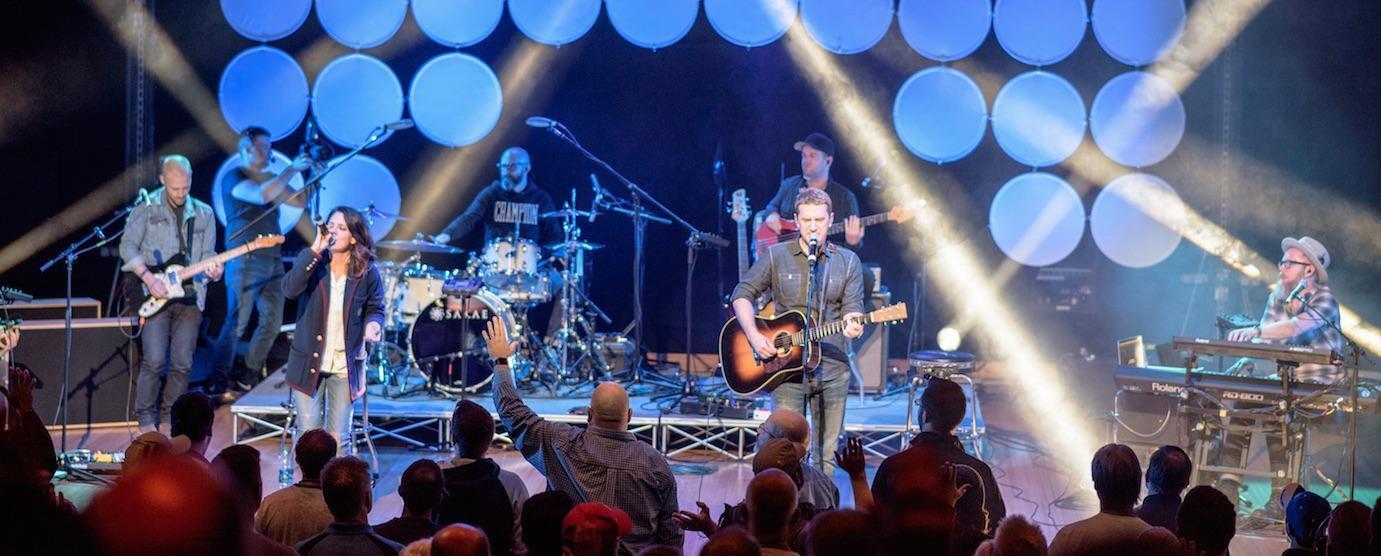
But with music, we’ve basically just set up each campus with the right team and the right leaders. We share ideas, and sometimes we do the same thing and sometimes we don’t. But I’ve just found that if you just say, “Hey, here are the songs you’re going to do,” something slowly dies in us when we don’t have the ability to really partner with the Holy Spirit as a team and pray about what’s best for our church and our campus. So we look at it a little more loosely; we want to learn from each other and we want to share ideas, but each week we want to dial in to what we really feel like God would have us do at our campus. By doing that, even though we’re one church, we’re multiple campuses. We have this thing called “aligned autonomy,” so we’re aligned in what we do, but we don’t mandate that everybody do the same thing every week. I keep in touch with our music directors at each campus. And we have worship leader gatherings once every four months or so, where we deposit something into the community and we invite all the musicians and all the worship leaders and music directors inside the campus. So, we keep keying together in that way — we remember that we’re one church, but we also encourage each other to go out and create and follow what they feel the Lord would have them do as far as songs, or genres for that week, or special music. At the end of the day, they need to be able to swim on their own, and there’s just a lot of life that comes from a team having some freedom to do that.
How have you seen this approach pay dividends?
I’ll give you an example of working together. We didn’t do it this Christmas, but because we have the campuses, the past two years we decided to put together bands that would go on the road and travel to each campus. We picked picked three genres and we assigned two bands each. We rehearsed a great set of music, including a Christmas special in that genre, in November — before December ever hit. So when December came, we had six bands that already knew their content, already knew their set, and instead of every campus having to program… “Oh, gosh, what are we going to do the third week of December?” All the music was done. They just had to receive the band that was already together rehearsing, turn the lights on and the production team would work with that band to set them up. All the music was done, all the songs, the arrangements were done, and everybody knew their material. The dividends were huge in having us work together, because it made the month of December a lot easier. We weren’t pulling our hair out trying to figure out what we were going to do. We made ourselves work on the front end, but we utilized the 6-campus model by sharing this band concept and traveling and we got to stay tight, and as musicians, get really tight with the music because we worked with the same people for three weeks in a row. We were firing on all cylinders, and it was just great.
The flip side of that is, when we let people kind of dream on their own, you have six campuses that are all in creation mode, and someone may write a new song or a chorus. There’s an opportunity there. Or they may come up with an opener that’s very engaging for people and another campus sees that and they say, “That was amazing. We need to do that.” That’s where keeping it a bit diverse sometimes allows us all to benefit. We have six opportunities to create and try something, and to learn from each other. Then a different opportunity is the Christmas thing, where we all come together, all hands on deck, and work together for the benefit of all six campuses.
What are you doing differently this year? Are you letting the campuses dream on their own?
I think what happened is that some of the campuses felt like, you know, all year, the worship team and musicians that they know are there. So, it’s kind of family. When this system was implemented, they wouldn’t get to see those teams but one week out of the month of December. Our teams have become a good bit more “campus specific,” so we encourage musicians in that family to plug into a campus. As a result, the campuses this year won’t have to say, “Okay, we know that works, but lets go back to us as individual teams seeing what we can do on our own.” It’s a little bit more autonomous this year. It’s working. I’m doing a thing this Sunday to open with a couple of looper boxes, and another campus heard about it and asked if I could come and do that next week. So there’s sharing. When we hear about something cool, we have the ability to try and be open handed. You have to be open handed with this model for it to be healthy, where we can learn and grow together and share.
I believe everyone, from leader to musician, has a sweet spot with what they bring to the table.
How do you use technology to enhance the shared experience, rather than distractions?
For me as a worship-leader coach, if it’s not happening in the heart and it’s not happening in the player’s desire to lead people, if we let the cart go before the horse with that, then we miss it. I believe everyone, from leader to musician, has a sweet spot with what they bring to the table. There’s synth stuff coming out galore, and some of our younger environments are leaning heavily into that. That’s not my thing — I grew up in the ’80s; it doesn’t match what I bring. I’m more about a rootsy/Americana/folk kind of thing. I remember one time, a track we were using was synthy. I was trying to lead and it just didn’t work. When the technology is mismatched with the authenticity of the musicians bringing it, then we’re stepping out of bounds a bit and it’s pulling us and we’re not pulling it. To the extent that the technology accents the heart and the style and the feeling the people leading and playing have, then it can be magical.
Years ago, this thing made it to YouTube and then they put it on the nightly news on some station. We did a thing with iPads. It was for Christmas. We all played instruments on our iPads and called it the “iBand.” The iPad had just come out. Eight of us are coming up with all these sounds and we basically did a Christmas mash-up playing iPad instruments. It went viral. We had millions of views on YouTube.
https://www.youtube.com/watch?v=F9XNfWNooz4
We took it to America’s Got Talent and did it at the Fox Theatre in Atlanta. It was one of those situations where the technology was a novelty, and it engaged people. If our goal is to engage people and get them to come back to church, then sometimes we’re going to do crazy stuff with technology that can be cool and fun. The flip side is, anything cool and fun that we do too much becomes rote. Again, it’s just one of the tools in the arsenal. We’ve got to be open handed about the things we can do to engage people. Our whole goal with our production is to engage someone who may be coming to church to just to give it the one shot and they’re going to walk in and go, “Wait a minute — that was pretty cool.”
How do you feel technology can be misused or used poorly?
Technology’s great. I love the fact that we can throw tracks in to accentuate bands — if the small band that’s using the technology knows how to play with it. If they don’t, it’s not helpful. To the extent that it doesn’t take away from the heart of the message and the heart to engage and to reach people for Jesus, then I say for it. There are so many cool things out there. One of the things that is great about technology that has become a crutch, and I’ll throw this in as a side note, my friends designed ProPresenter, and you have the confidence monitor now. There’s something that was meant to help, and it’s become a crutch. And it keeps us from internalizing stuff. Our singers might come in and just say, “Oh, I’ll just read it.” And I’ll tell them they have something to sing; it’s not the same. And it makes you look unprepared. But all technology, to the extent that we can use it without disrupting our ability to lead people well, can be used for great things.

Which areas would you like to see the church grow in terms of worship?
There are two. Practical and spiritual. One is practical: for us to play to our strengths while developing our options. What I mean by that is, I think some churches see other churches and what they do and say, “Oh, we need to do that to be successful.” Maybe not all the time. I also see churches that are trying to fill the stage with a ton of people, when they could probably pull off a better experience for the congregation by playing to the strengths of three or four people they have there. Let’s say you have a great worship leader with a piano. Let’s start with that. I feel like sometimes we’re scared to do that just by itself, because we think we need to have the whole arsenal and all the bells and whistles every week. Start with the strengths you have. Lean on the strongest players on your team and then build.
On spiritual growth, I work with a lot of worship leaders. I wrote down, “Remember that we can’t help anyone see or taste anything we haven’t seen or tasted.” So our goal is not just to play the song. That’s important, and we want it to sound great and do our best. When we come in as a team on Sundays, I want us to be carrying the thanks in ourselves that before we are players, we’re sons and daughters of God saying, “I can’t believe I’m alive.” And that comes out in the songs we choose, the way we play, the way we interact with each other, and the joy that’s coming from our faces. We’re making sure that we’re beginning with our awe of how merciful God has been to us and that is what causes us to respond in worship.
Can you address the needs of and challenges facing local churches?
The volunteer is always going to be needed. And finding and developing people in the music world is important — especially now that we’ve gone from a hymnal and a piano and an organ to involving a team of people. I get asked all the time, “What do we do? We’re starting from scratch and we need this person or that person.” I always say that I would rather have the right single person who has a pastor’s heart and the ability to take the people somewhere musically by themselves as a starting point. Then work over time to build a team and find the volunteers to help in the music. I would just say that if there are any pastors or churches reading and they say they need more musicians and want to know where they can find them, it’s about getting out there. Sometimes it means letting our pride down and calling other churches in the area, tackling it together. Sometimes it can even cross denominational lines. Just remember we’re all on the same team, even though some of our jersey colors are different [laughs]. There’s a way for us to come together to share and learn and network. Sometimes one church may have three of something and another church needs one of something, and there’s an opportunity there for maybe a musician who really wants to play and who’s good. That’s where networking might be a way to address a challenge.
You recently participated in our Worship Connect event at Sweetwater. How was that experience?
I walked away from that really excited, because it was in my heart and in the hearts of the guys in the band. You get to the point in your life where you’ve had a lot of years doing something to help lead people, and you’ve developed along the way. And there’s a lot of joy that comes from emptying what’s in your cup into the cups of others. It was a really great facility and an awesome group of people. Your teams were such servants. Anytime you can help people get better and help them learn from your mistakes, I call that a win.
Todd’s Tools
In addition to his duties as Director of Worship Leader Development at North Point Community Church, Todd Fields also frequently leads worship and composes and produces music. We asked him about some of his go-to gear for live performances, studio work, and podcasting.
“I’ve had a Martin D-28 Marquis for about 10 years now. I bought an L.R. Baggs Lyric pickup and soldered a Sunrise pickup into that pickup’s endpin jack, because it allows for two pickups. I also use a ’52 Gibson J-45. It’s got a Baggs M1 sound hole pickup.
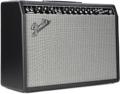
“As far as electric guitars go, I have a ’62 Tele reissue, a ’57 Strat reissue that I got when I was in high school, and a Music Man Axis that I use from time to time. I play through my Fender Deluxe Reverb amp a lot. Honestly, I don’t use a lot of effects; I’ll plug into a Line 6 M9 and that’s all I’ll use, because I’m not going to “tap dance” a lot.
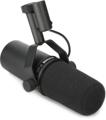
“I use an Apogee Duet, the iOS version, with my iPad Pro. I love that. For podcast interviews, I’ll use a couple of Shure SM7Bs with Cloudlifters. They’re amazing. I had a friend the other day who had never heard one, and I popped it inline. We were using the Apogee Duet for vocals, and I put the Cloudlifter on there. The difference was night and day. We’ve been working on getting a podcast going for another project I’m doing. For live vocals, the Beta 87 mic usually works best for my voice, but SM58s are fine too.”
Todd Fields is also co-founder of Worship Circle, an exclusive small-group mentoring community for worship leaders and worship pastors. It’s a place where worship leaders can circle up regardless of location to learn to lead better and form lasting relationships.