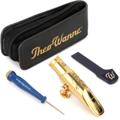
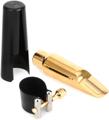
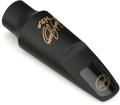
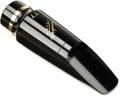
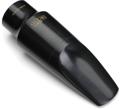
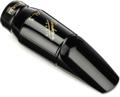
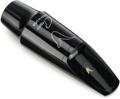
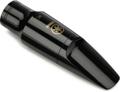
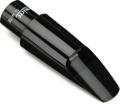
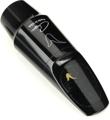
Dark or bright? Jazz or classical? Hard rubber or metal? These are the questions every sax player faces when choosing a mouthpiece. After all, it’s one of the most important pieces of gear in any saxophone setup.
Sax mouthpieces come in countless varieties that match any player’s needs. In this guide, we’ll cover the following topics:
- Saxophone Mouthpiece Components
- Saxophone Mouthpiece Materials
- Types of Saxophone Mouthpieces
Saxophone Mouthpiece Components
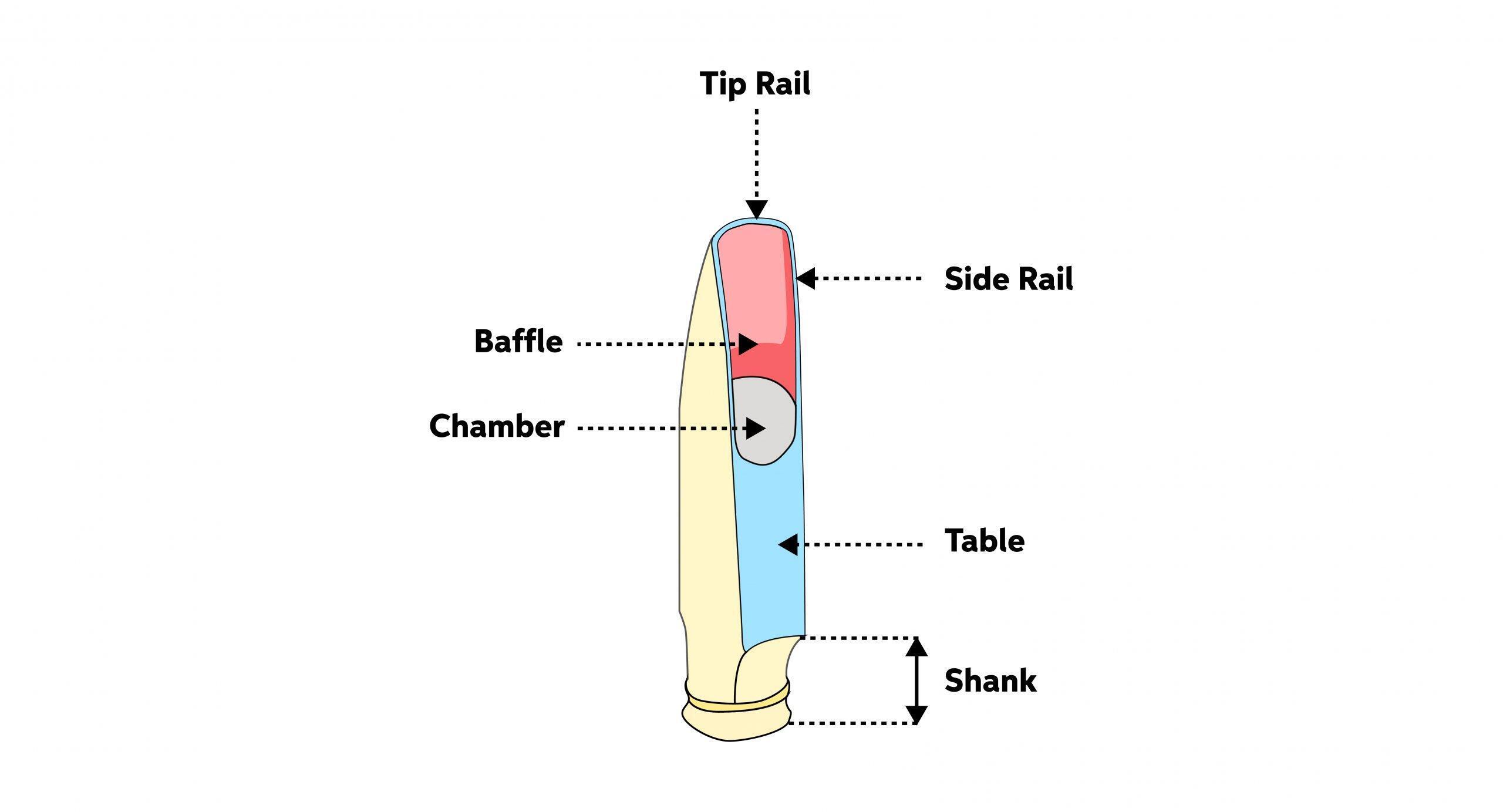
First, it’s crucial to know what the main components of a mouthpiece are and how they affect your sound. The four biggest determining factors for sound are the tip opening, facing, baffle, and chamber.
Tip opening
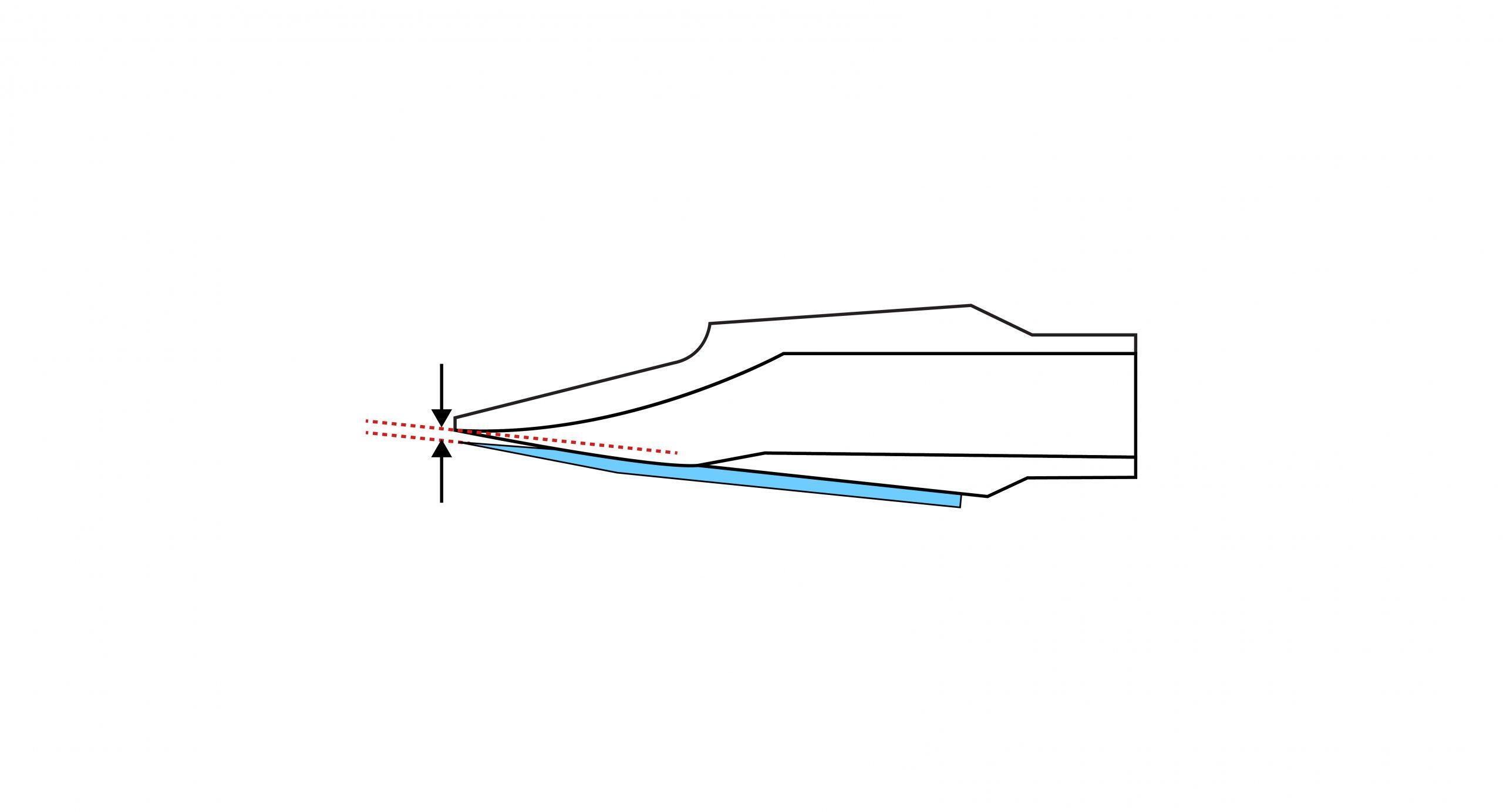
The tip opening is the gap between the reed and the mouthpiece tip. It determines how much air you can blow into the chamber and how widely the reed vibrates.
For the most part, mouthpieces with smaller tip openings are easier to play, which makes them ideal for student mouthpieces like the Yamaha 4C. Narrow tip openings also offer a more focused sound, making them perfect for classical sax mouthpieces like the Selmer S80 C*.
On the other hand, mouthpieces with larger tip openings let you push more air through the horn. As a result, you can play with more power and volume. That said, large-tip mouthpieces require more air, which may be difficult for some players.
Reed strength also plays a factor in how your mouthpiece responds. As a rule of thumb, mouthpieces with smaller tip openings balance well with harder reeds. Likewise, a softer reed balances well with wider tips. For a deeper explanation, check out our other article, “How Mouthpiece Tip Openings and Reed Strength Affect Tone.”
If you’re a beginner or out of practice, then we recommend trying a mouthpiece with a smaller tip opening. But, if you’re an advanced player who wants more volume, try a mouthpiece with a wider tip.
Facing
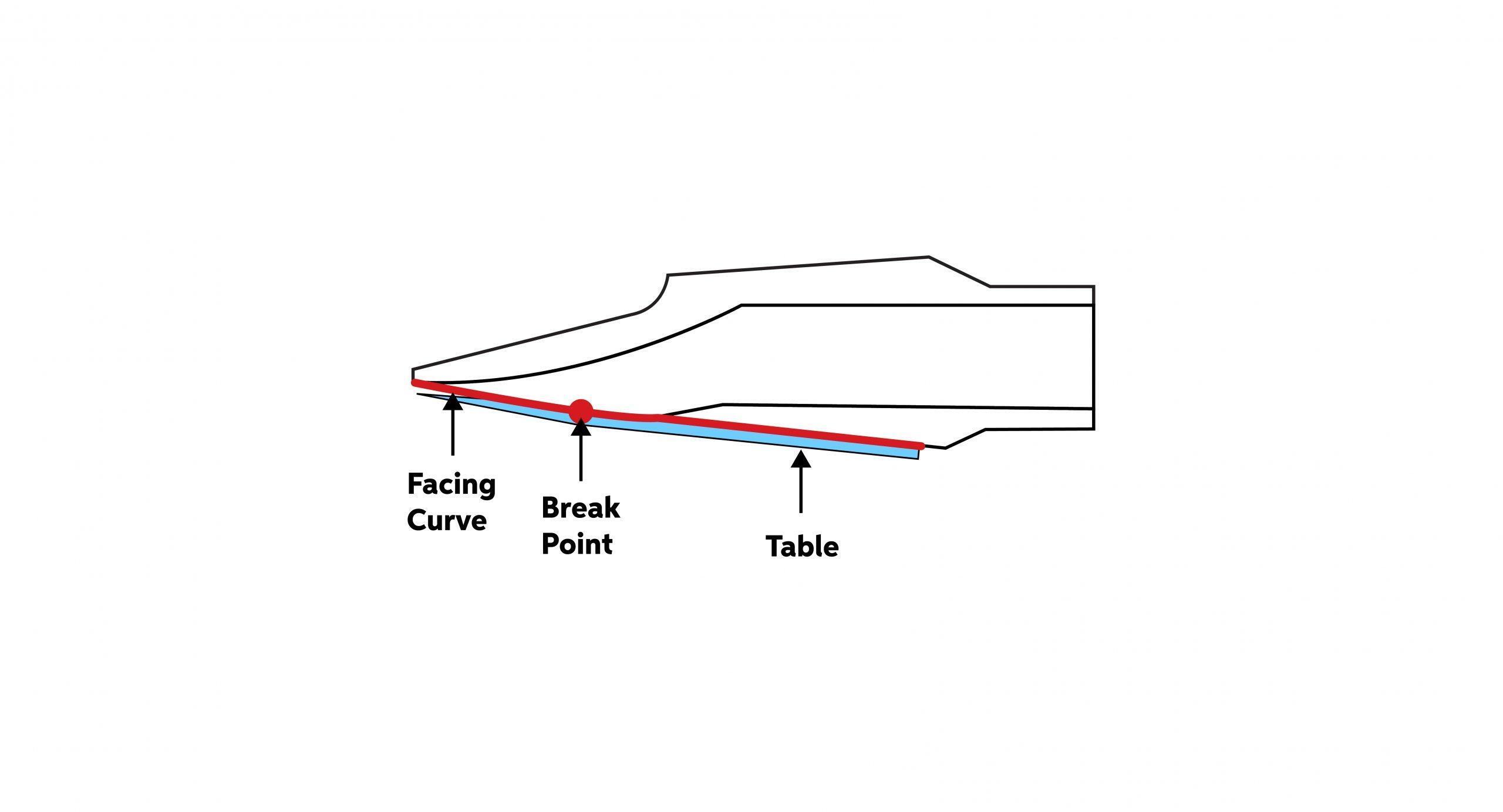
Tip openings are closely related to the facing, which is where the mouthpiece meets the reed. It dictates the mouthpiece’s resistance as well as its response throughout different registers of your instrument.
Longer facings have their break point further back on the table, allowing the thicker part of your reed to vibrate more. As a result, it’ll give your horn a lush, warm sound while bringing out the lower register.
That said, mouthpieces with longer facings tend to be more resistant and harder to play. If you’re trying one for the first time, then you’ll probably have to take in more of the mouthpiece than what you’re normally comfortable with.
On the other hand, shorter facings have the breaking point closer to the tip and only allow the thinner end of the reed to vibrate. Consequently, they offer a more free-blowing feel, have a faster response, and accentuate the sax’s upper register. However, short-faced mouthpieces are often harder to control. On top of that, some players find their lower-register notes might sound weak.
In many cases, tip openings determine the facing length. As such, you won’t need to worry about choosing the facing curve. That being said, some legacy manufacturers like Meyer and Berg Larsen offer mouthpieces with multiple facing options — usually short, medium, or long.
Baffle
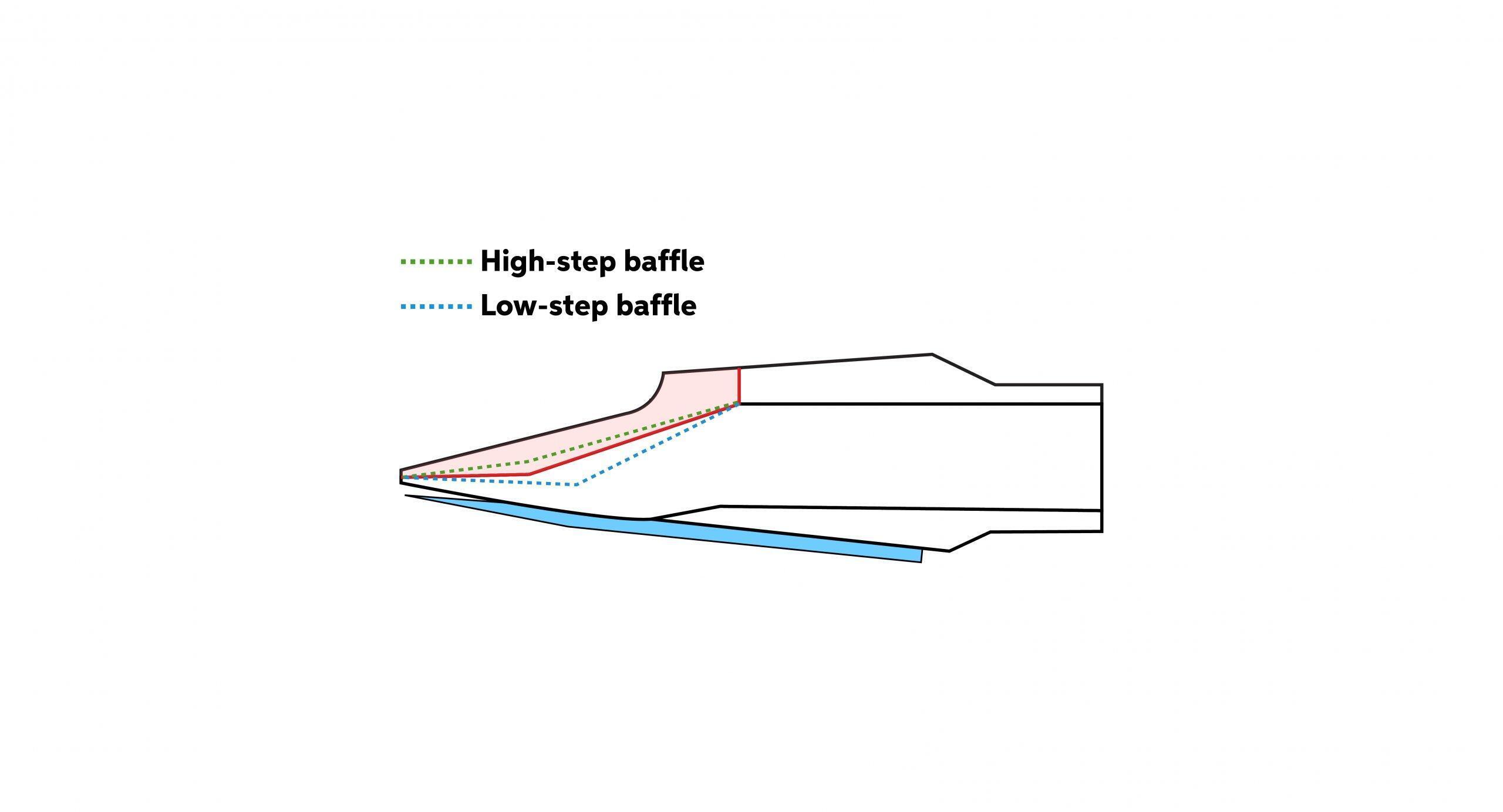
The baffle refers to the roof inside the mouthpiece directly behind the tip rail. It’s the most significant determining factor in tone quality. As the reed vibrates, it pushes air directly against the baffle and shapes the overall saxophone sound. If the space between the reed and baffle is smaller, then the air moves faster and creates a brighter sound. Likewise, if the space is larger, then the air moves a little slower and creates a darker sound.
Baffles can come in countless shapes and designs. The three most common ones are straight baffles, rollover baffles, and step baffles.
- Straight baffles: Sometimes called flat baffles, a straight baffle extends directly from the tip rail into the mouthpiece chamber. It helps create a thick, rounded sound but may not have strong projection. Many classical mouthpieces have a straight baffle.
- Rollover baffles: A rollover baffle has a short high section right behind the tip rail then rolls into a flat baffle that extends to the chamber. It provides a smoother transition of air going into the mouthpiece chamber. On top of that, a rollover baffle offers some extra edge to your tone quality. Many popular jazz mouthpieces have rollover baffles.
- Step baffles: As the name suggests, it looks like a stairstep. Step baffles have a high section from the tip rail then a drop-off into the chamber. This speeds up the airflow and creates a bright, powerful sound. Step-baffle mouthpieces are particularly well suited for pop, rock, and R&B styles of music.
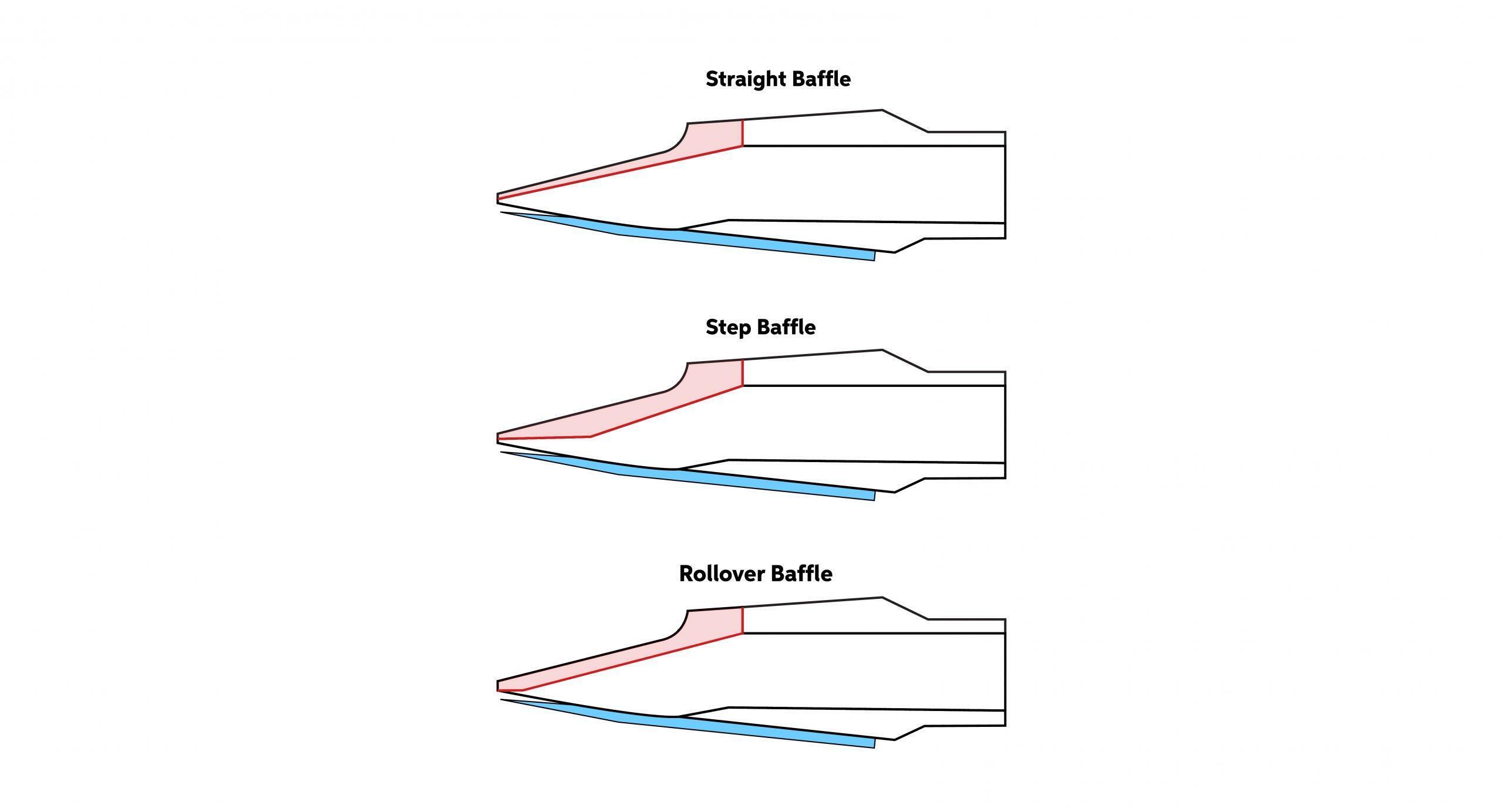
The baffle height also plays a critical role in shaping your sound. A high baffle (closer to the reed) results in an incredibly bright and powerful tone. But, as a downside, high-baffle mouthpieces are more difficult to control. Low baffles require more air but produce a darker tone than high baffles.
Chamber
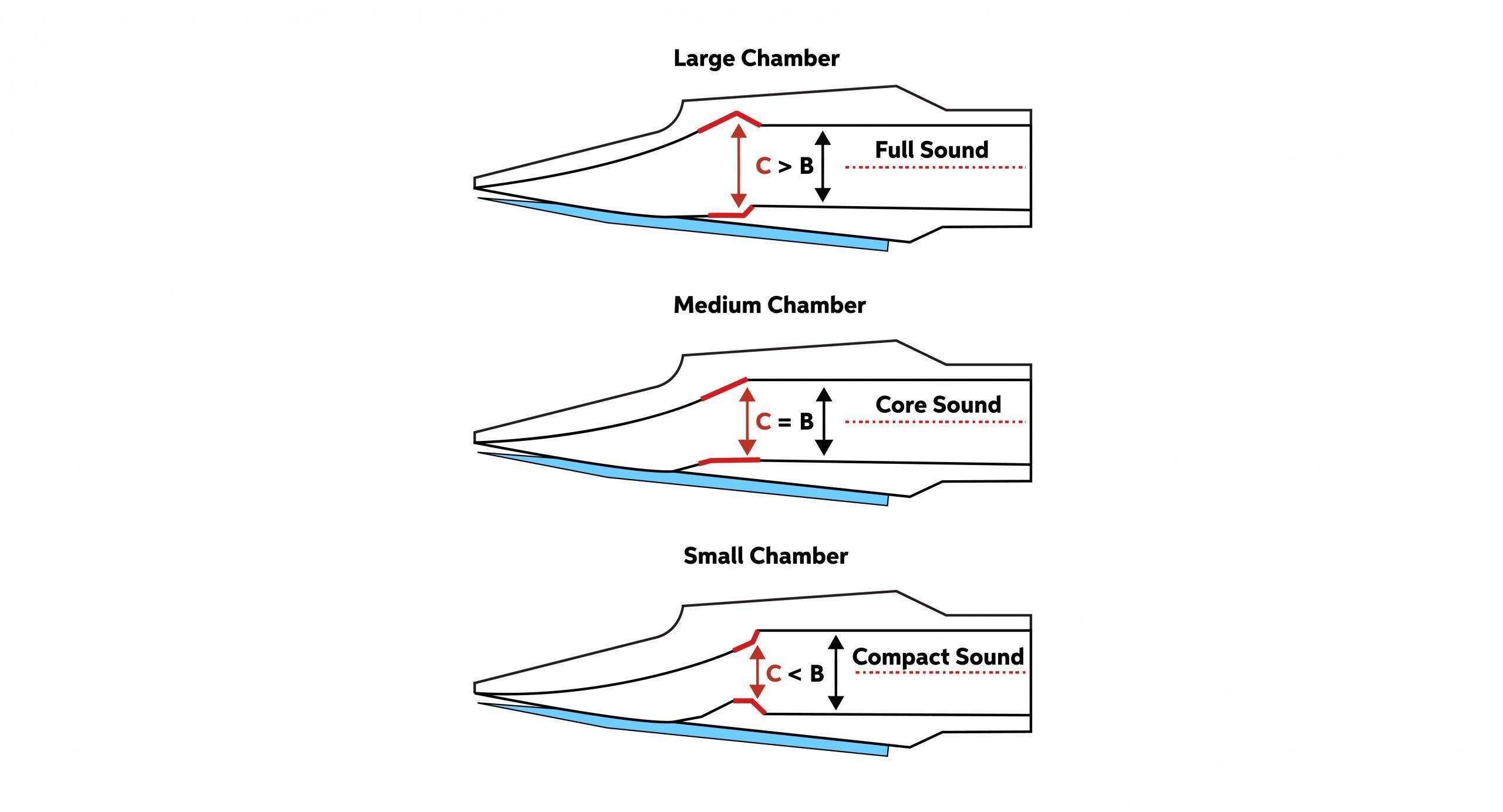
The chamber is the open area inside the mouthpiece directly before the bore. It largely influences the color and timbre of your saxophone sound. There are three common chamber types:
- Large: The chamber is larger than the bore, which causes the airstream to widen. As a result, a larger chamber amplifies low-end frequencies and leads to a lush, dark tone.
- Medium: The chamber is closer in diameter to the bore. It creates a consistent airstream and a strong core sound.
- Small: The chamber is smaller than the bore, causing the airstream to narrow. It helps create a focused sound.
Saxophone Mouthpiece Materials
The material used to make a mouthpiece also affects sound quality and projection. Most sax mouthpieces are made from one of three types of materials: plastic, hard rubber, or metal.
- Plastic: Plastic is relatively inexpensive, durable, and easy to produce. This is why it’s commonly used to make student mouthpieces. That said, some high-end jazz mouthpieces are made of plastic.
- Hard rubber: Also known as ebonite, hard rubber is the most common material used for both classical and jazz mouthpieces. Hard rubber mouthpieces typically have a wide-spreading sound that’s adaptable to most settings.
- Metal: Metal saxophone mouthpieces offer more power and projection than plastic or hard rubber. Brass is the most commonly used metal and often comes in silver- or gold-plated finishes. But some manufacturers offer mouthpieces made from other metals like bronze or stainless steel, which have different sound qualities than brass.
It’s a common misconception that “metal = bright” and “hard rubber = dark.” Whether a mouthpiece is dark- or bright-sounding has more to do with its internal geometry than anything else.
Types of Saxophone Mouthpieces
Your mouthpiece selection will largely depend on the type of sound you’re looking for and what style of music you want to play.
Student saxophone mouthpieces
These are pretty standard mouthpieces designed for beginners. They’re made to be affordable and easy to play. Regarding sound quality, most of them strike a decent balance between dark and bright. With some practice and experience, you can easily adapt them to either classical or jazz settings.
They’re a great starting point, but they won’t excel at any one style. After a while, a student mouthpiece might actually hold you back (like keeping training wheels on a nice mountain bike). Needs will vary from player to player. But, for most saxophonists, we’d recommend upgrading your mouthpiece at least 6–12 months after you start playing.
Classical saxophone mouthpieces
Classical mouthpieces are ideal for playing in concert bands, symphony orchestras, or chamber-music settings. Most of them are made of ebonite and tend to have a smaller tip opening with a straight baffle design. These qualities help you produce a more focused sound that’s darker and mellower. The warmer sound blends well with strings and other wind instruments.
Jazz saxophone mouthpieces
Jazz mouthpieces are an incredibly diverse group, coming in either ebonite or metal. They commonly have large tip openings and high baffles, which give them a punchier, fatter tone with plenty of sizzle.
Some hard rubber mouthpieces are incredibly versatile and can adapt to almost any playing situation. They can be dark and husky for traditional jazz playing or bright and edgy for more contemporary music. If you’re not sure what to get, then we have some recommendations for great all-around jazz mouthpieces that’ll work for most players on almost any sax.
Other sax players need something more powerful for playing rock, pop, funk, and R&B. For that, some mouthpieces produce higher overtones and can play at louder volumes. This helps them hold their own against electronic and brass instruments. At Sweetwater, we have plenty of options for powerhouse jazz mouthpieces.
Pick Up Your Next Sax Mouthpiece from Sweetwater
Whether you’re looking for your first mouthpiece or adding another to your arsenal, we’ve got you covered. Sweetwater has a legion of experienced sax players ready to help you with all your saxophone needs. Give your Sweetwater Sales Engineer a call at (800) 222-4700 to find the right mouthpiece for you.