Quite a number of people (some of whom aren’t even banjo players) consider the banjo to be the only truly American instrument. Though the roots of the American banjo are African (though, to be honest, drums with strings stretched over them can be traced to the Far East and the Middle East as well as Africa), its development into the instrument we know today certainly can be described as an American invention.
Banjo Styles
There isn’t a single “banjo” that is played the same way for all types of music. The tenor and plectrum banjos are 4-string instruments that are usually played with a pick; they were used in traditional Dixieland bands and later dance bands (before they were mostly supplanted by archtop rhythm guitars filling the same role) — and there were even classical music pieces written for banjo orchestras. The tenor banjo has a shorter neck than the plectrum banjo (and is tuned higher), but both are essentially strummed instruments.
The 5-string banjo, which is more familiar to folks these days, can have a closed back and a tone ring (which makes them both louder and heavier) or an open back. Open-backed banjos are more often used for frailing or clawhammer-style playing. This style is usually played without fingerpicks, and it’s not only quieter than the “Scruggs-style” bluegrass banjo, but it also has a gentler, less pointy tone.
Strummed Banjo
Because tenor and plectrum banjos are more typically used in “old-fashioned” music (Dixieland and traditional jazz), a nice approach to take with these instruments is a ribbon microphone. The instruments have enough edge (brilliance) that you shouldn’t miss the brighter sound that you can get from a condenser or even a dynamic microphone. Since strummed banjos can be quite loud (all banjos can be quite loud, even if they’re open-backed or are played clawhammer style), don’t be afraid to put a little distance between the instrument and the mic, even as many as 18–24 inches, and sometimes up to three feet will work, depending on the mic choice. If you keep in mind that these instruments can cut through a 24-piece big band, you’ll know that a lack of volume isn’t likely to be an issue when recording. Since I’m a big fan of Shure ribbon microphones, I would likely grab either a Shure KSM313/NE or a Shure KSM353/ED when recording a plectrum or a tenor banjo.
Open-backed Banjo
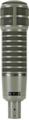
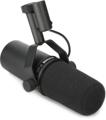
Banjos without a back don’t have the natural amplification that any instrument with a tone chamber exhibits, so they can be quiet and a bit thin sounding — at least when compared to the banjos most of us are familiar with. Most acoustic instruments have a body that resonates and amplifies the sound of the string vibrating. Guitars, violins, even ukuleles are, because of the resonant chamber, much louder than the string would be if vibrating in the open air. Open-backed banjos can be either 4- or 5-string, with 4-string open-backed banjos more likely to be strummed in traditional jazz or blues, while open-backed 5-strings, as mentioned earlier, are most often played in a frailing or clawhammer style. A good starting place when recording a strummed open-backed banjo might well be a large-diaphragm dynamic microphone such as an Electro-Voice RE20 or Shure SM7B, especially if recording the blues. I would typically put a small-diaphragm condenser, such as the Warm Audio WA-84, about eight to 12 inches in front of a frailed banjo.
Five-string Banjo
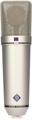
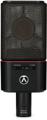
This is what most folks think of when they think of a “banjo” — the classic Earl-Scruggs-style bluegrass banjo — where the musician uses metal fingerpicks and a thumbick to generate that familiar rolling banjo sound. While a ribbon mic positioned two to three feet in front of the body of the instrument can work well on a banjo, I’ve often used a large-diaphragm condenser, such as a Neumman U 87 Ai or Austrian Audio OC18, positioned 12 to 18 inches from the instrument; they do an excellent job of capturing the excitement of the 5-string.
Other Banjo-based Instruments
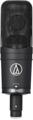
In addition to the banjos already mentioned, other members of the banjo family exist. The “guit-jo” (or “banjitar”) is essentially a guitar neck attached to a banjo body. Besides allowing guitarists the opportunity to get banjo sounds without having to learn how to play in banjo tuning, the guit-jo has the same range as a guitar, almost an octave lower than a banjo. Though the instrument has been around for more than a century, contemporary pop and country musicians only seem to have discovered them in the last decade or two. Try putting a large diaphragm condenser microphone, such as a Shure KSM44A or Audio-Technica AT4050, around 10 inches from the body of the guit-jo.
A banjo-mandolin has four pairs of strings like a mandolin attached to a banjo body. A “banjolin” is a variant that uses four strings (tuned like a mandolin) rather than eight strings. The sound is much pointier (and much louder) than a mandolin, though it still has a little mando character mixed in with the banjo character.
Yet another banjo variant is a banjo-ukulele, which has a small open-backed body and is strung with nylon strings tuned like a soprano ukulele. There’s even a banjo bass; vintage models have huge bodies, though companies such as Gold Tone are currently producing a bass banjo with a smaller body. Given the great number of variants that exist, the best way to choose a microphone is to listen to the specific instrument and the music to be recorded and choose the mic based on the sound of the instrument.
Don’t Be Afraid of Multiple Microphones
While the above examples suggest a single microphone, I will often use a couple of different mics when recording a banjo. While you can put up a spaced pair of identical mics, it’s fun to use unmatched microphones in different locations. One of my favorite approaches is to put a large-diaphragm condenser about a foot away from where the neck meets the body and a ribbon microphone about a foot away from the bridge. Or you can reverse that, with the ribbon on the neck, and the condenser aiming at the bridge. For that matter, try a small-diaphragm mic combined with a large-diaphragm mic — in other words, experiment! Each of the mismatched mics will have a different sound, and the difference in the placement of each mic will enhance that difference. Once you reach the mixing stage, you’ll have some interesting options: you may decide to use one mic or the other, you can use both mics panned to the same spot (if there are no egregious phasing issues), or you can try my favorite — use both and try new panning positions (remember that there are options other than hard left and right).
One last thing . . .
Finally, when you’re recording a banjo player, I’d recommend against sharing your repertoire of banjo jokes during the session. They’ve heard them all, and it might make them cranky.