

Often imitated but never outdone, Paul Reed Smith guitars have a reputation for creating some of today’s most eye-catching designs. When they first hit the market, PRS offered their guitars in a total of three colors: red, yellow, and blue. Over the years, they’ve added more and more finish options, so every musician can find the perfect guitar for their eyes and ears. Today, we’re diving deep into all the reasons PRS’s finishes are so great. Primarily, we’ll be focusing on their USA-made, maple-topped examples. Still, we’ll touch on the other finish types along the way.
It All Starts with the Wood
Ask anyone at PRS, and they’ll agree: a spectacular finish starts with beautiful wood. PRS has strong relationships with their tonewood distributors, which gives them consistent access to fine specimens. Before we talk about the finishing process, it’s important to note that every piece of wood is unique, displaying subtly different grain patterns, varying weights, and hardness. Therefore, putting color on wood simply isn’t the same as putting paint on canvas. No two finishes will look exactly the same, even if applied by the same person in the same way. With that in mind, every PRS guitar is its own unique piece of art.
A Consistent Canvas
A smooth, consistent surface is paramount, whether the guitar will be painted a solid color, sprayed with a burst, or stained to perfection. With that in mind, PRS spends extra time in the woodshop, making sure every guitar and bass they build is free from bumps and valleys. Once a guitar passes the final woodshop quality control inspection, it’s ready to receive its finish.
Spectacular Stains
Figured maple and stains go together like a tube amp and a tube screamer. In fact, most maple-topped PRS guitars get stained before hitting the paint booth. The company offers a range of spectacular stains and patterns for customers to choose from.
PRS Stain Patterns
Standard
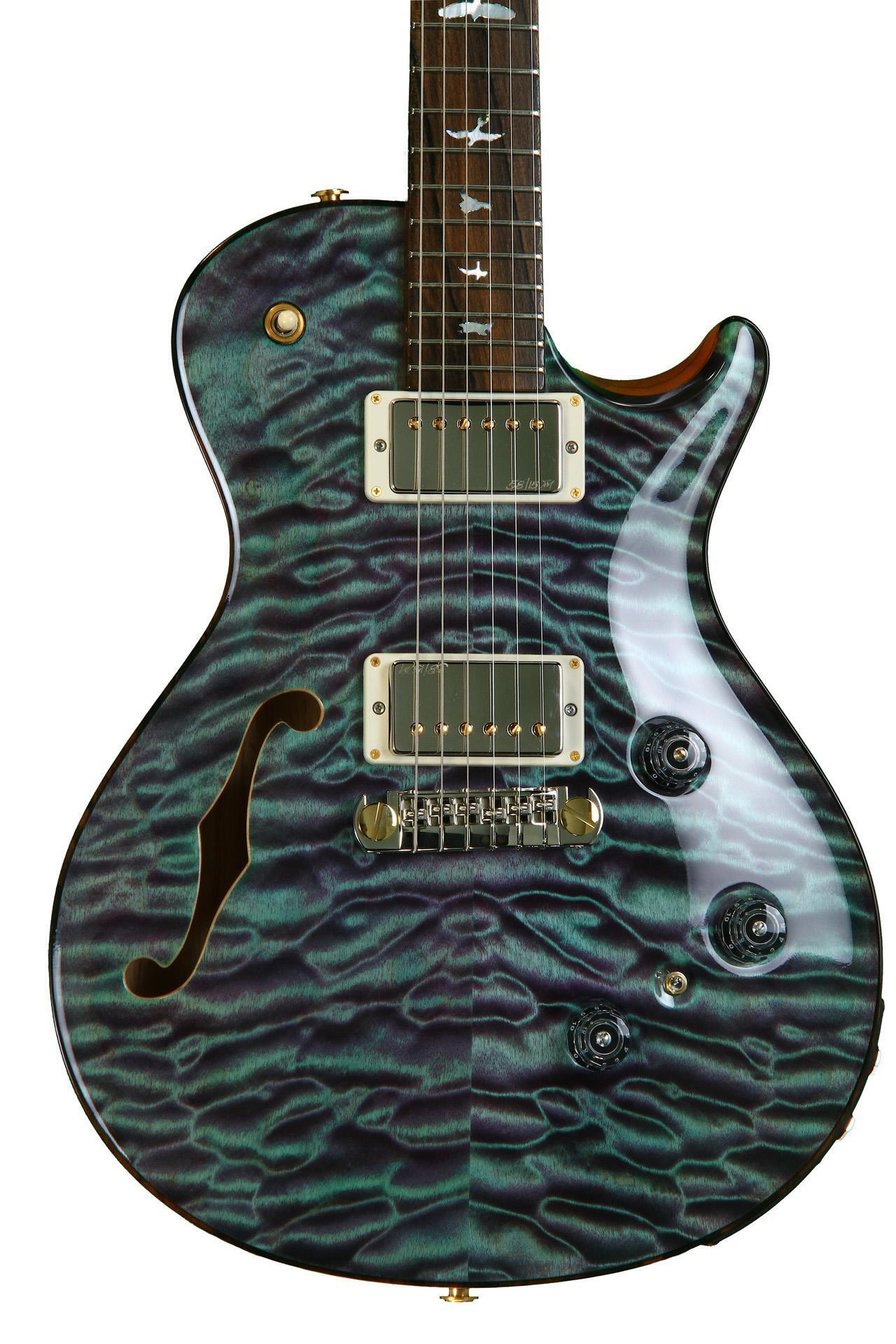
PRS’s standard stain pattern is one consistent color across the entirety of the guitar, whether that stain consists of a single color, like Charcoal, or a three-color stunner like Copperhead. Layered stains of this type showcase surprising and unique color combinations in different lights and viewing angles.
Glow
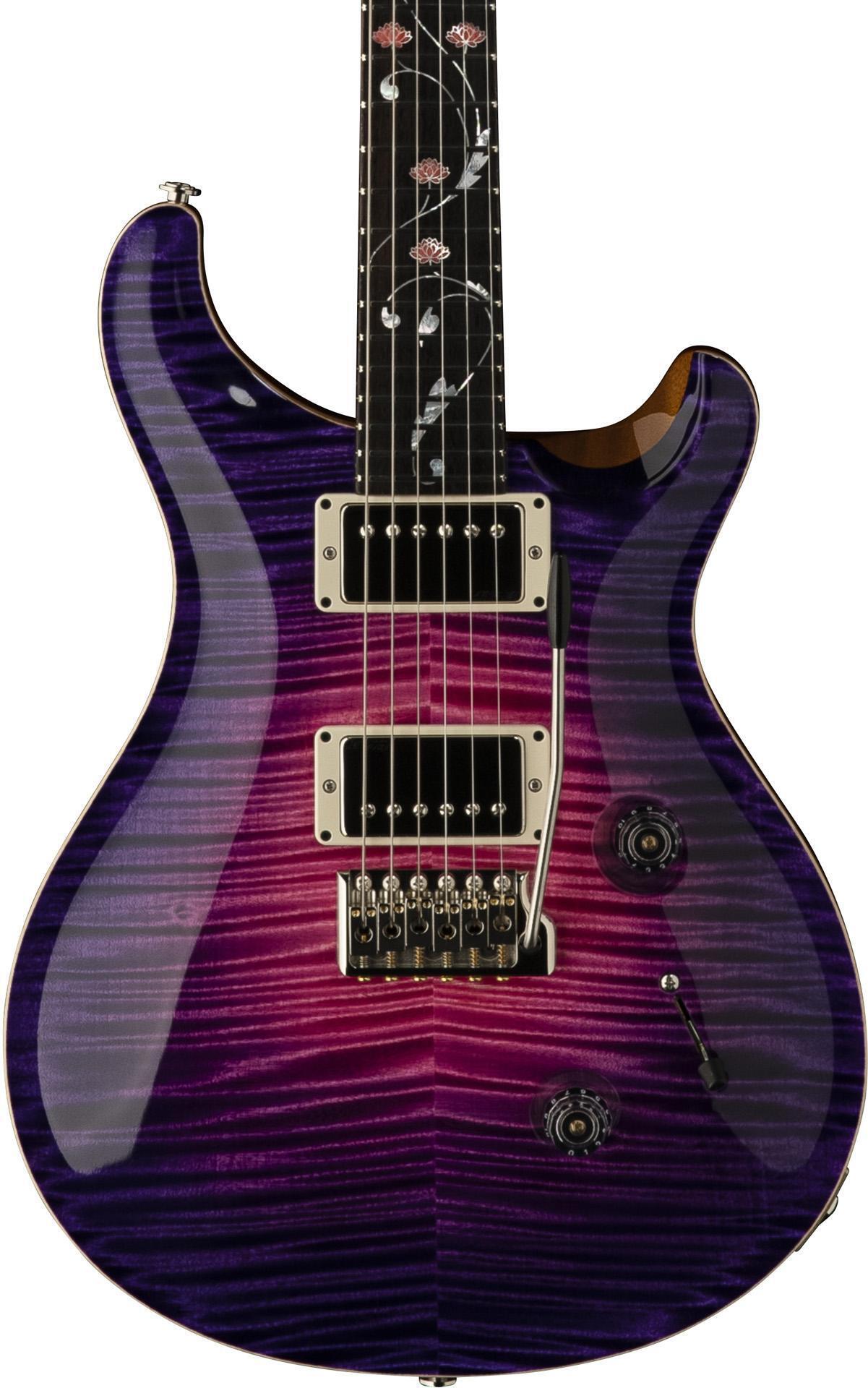
According to PRS, the Glow stain pattern is a stained version of a burst. It’s lighter in the center and darker on the edges. Glow stains come in various colors, with some of the most striking examples utilizing colors from the same family, like Orianthi’s custom finish, Blooming Lotus Glow.
Dragon’s Breath
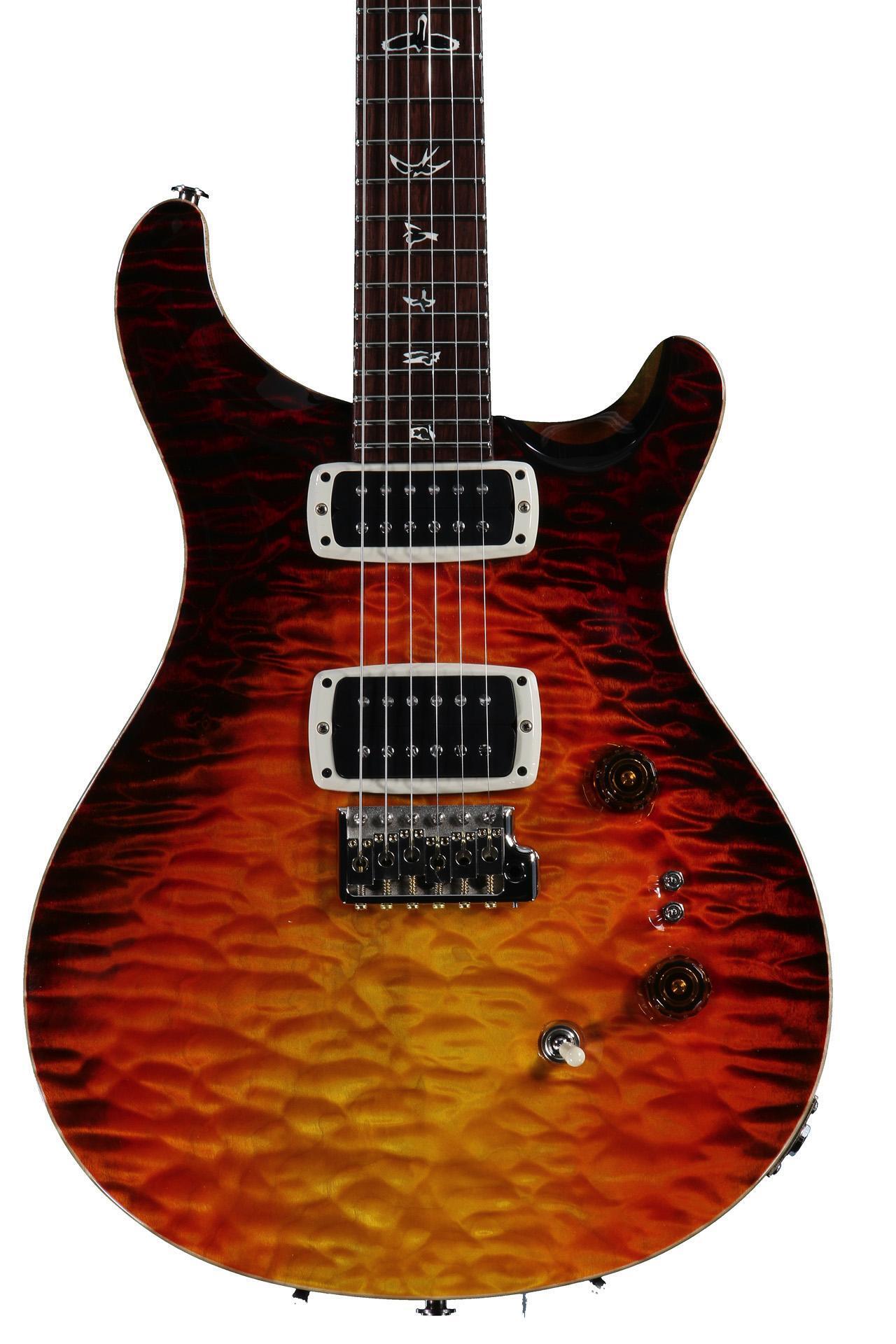
Next up in the staining lineup comes Dragon’s Breath. Dragon’s Breath is a “shifted” glow finish. Instead of locating the brightest colors in the middle of the guitar, a Dragon’s Breath finish shifts the lightest parts of the finish behind the tailpiece. This creates an effect akin to a roaring pillar of fire emanating from the maw of a mighty beast. PRS currently offers Dragon’s Breath finishes on Private Stock instruments only. If you’re interested in getting one for yourself, call your Sweetwater Sales Engineer!
Fade
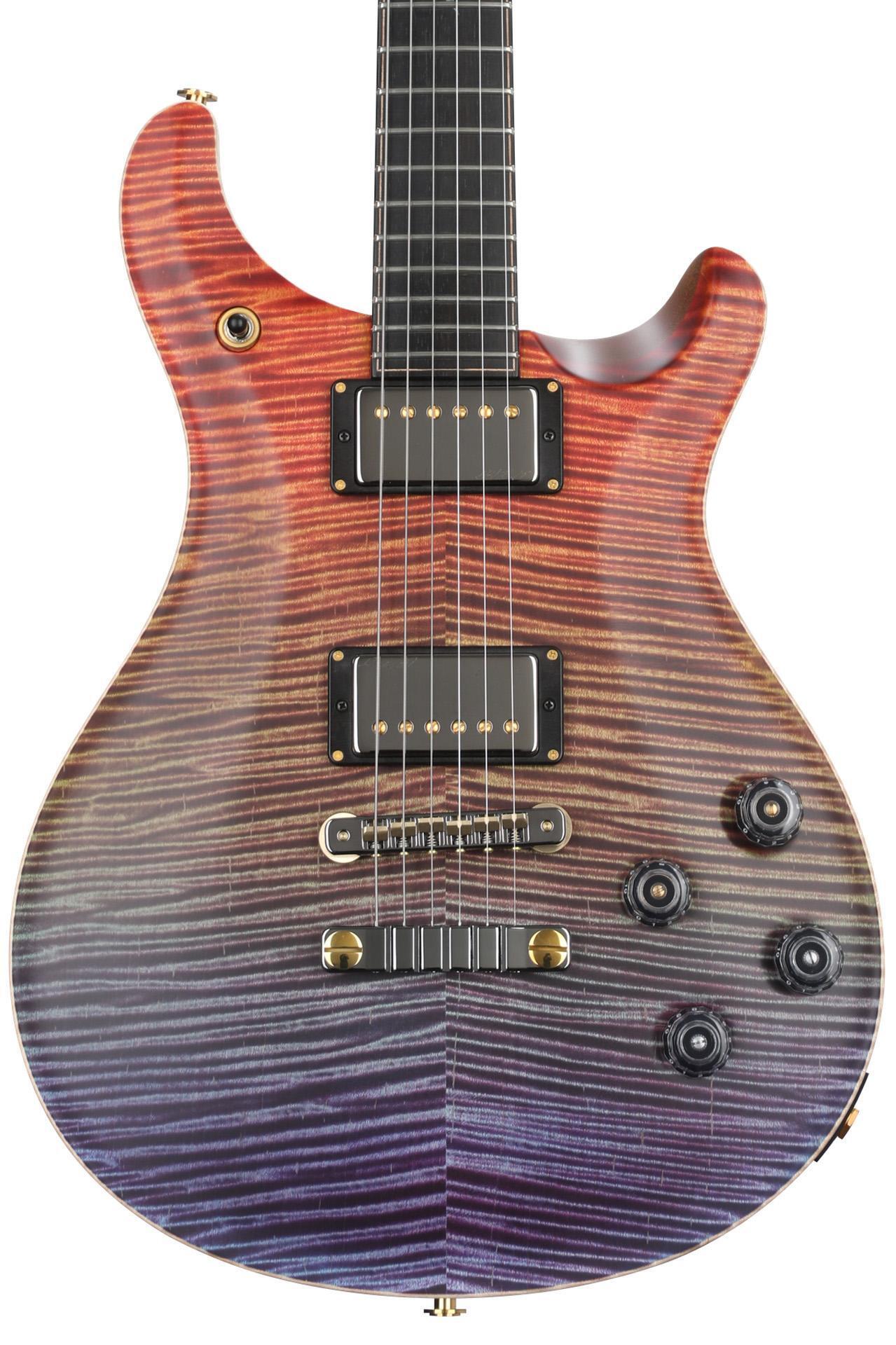
One of PRS’s most impactful stains is the Fade. Guitars with a Fade finish typically feature a darker color at the endpin that gradually lightens as it travels toward the fingerboard. Depending upon the exact color makeup of the Fade, each finish is achieved with upwards of five colors. PRS does not currently offer Fade finishes on their production model instruments. If you’re interested in purchasing a PRS with a Fade finish, call your Sweetwater Sales Engineer.
How Stains Are Applied
After a guitar leaves the woodshop and enters the finish area, it’s placed on an artisan’s workbench. Before staining, the guitar is cleaned and taped off to prevent the stain from bleeding into unwanted areas. The binding receives a coat of an isolator during this process too. Finally, the top is dampened with water to open the pores of the wood and ensure deep color penetration. Once all of this is complete, the guitar is ready for stain.
The base color, or first coat, gives the finish its tonal foundation. After the first coat is applied and dries, the artisan sands away part of the base color, leaving room for secondary and tertiary colors. Sanding between coats of stain also creates extra contrast and allows the color and grain pattern to leap off the guitar.
All the while, the artisan staining the instrument needs to be mindful of how much stain is being applied. If they’re not wiping off excess quickly, or they’re applying too much to the guitar’s sides, blotching and bleeding will occur, resulting in failed quality control tests. Due to the involved staining and finishing process, a PRS basecoat finish specialist undergoes anywhere from three to six months of training before being allowed to stain a guitar by themselves.
Sprays
After staining, some guitars move to the spray booth for a bit of extra flair. Whether they receive a solid back color, a vintage tint, or a smoky hint along the edge of the guitar, the spray department elevates the guitar’s aesthetic to a new level.
PRS Spray Types Explained
Wraps and Bursts
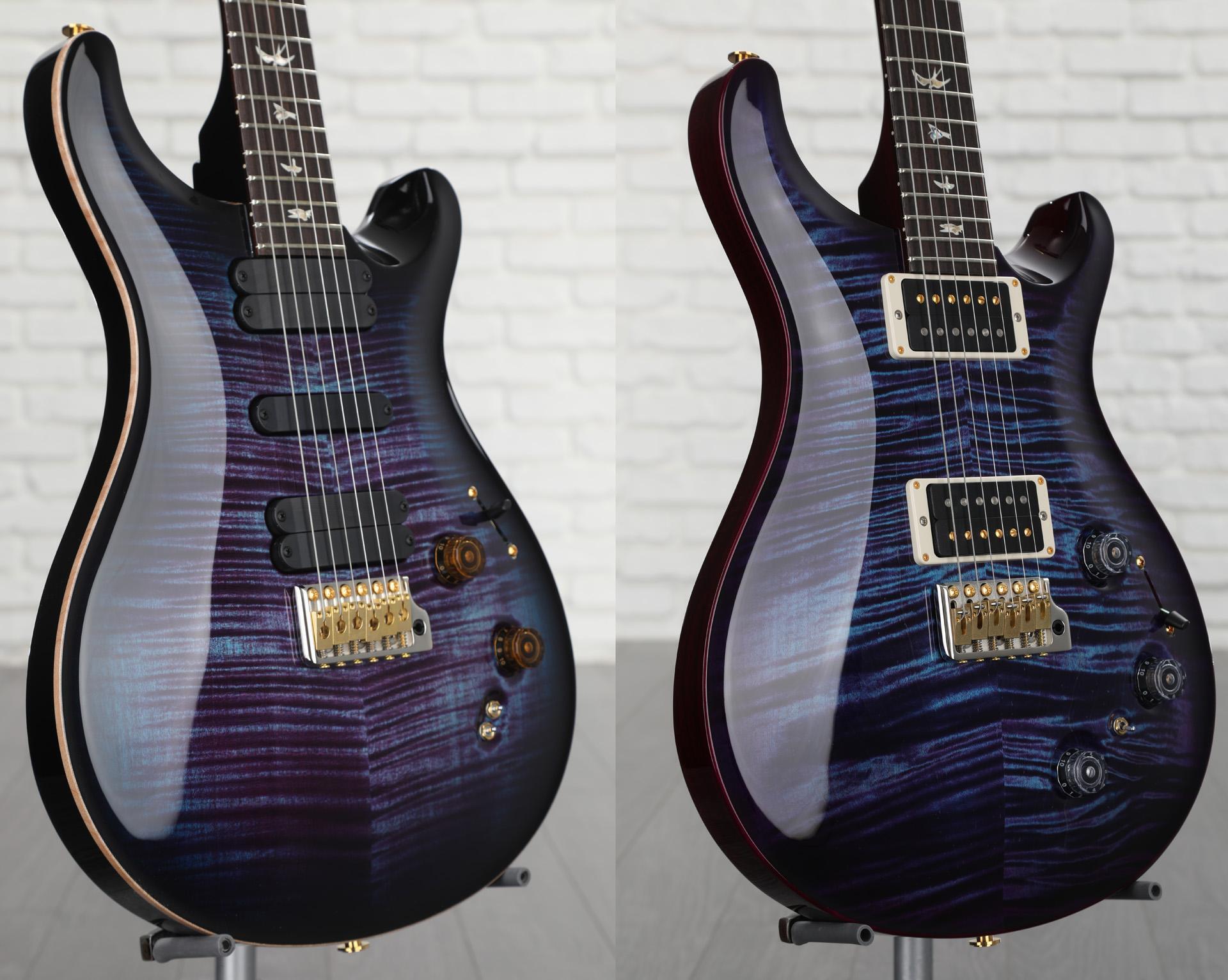
One of the most common questions we get at Sweetwater is, “What makes a Wrap different from a Burst finish?” Let’s walk you through the process. Both Burst and Wrap finishes are applied identically. The technician in the spray booth evenly applies a dark color around the edges of the guitar top. This is known as a Wrap. To create a Burst finish, another worker then scrapes the paint away by hand to reveal the natural maple beneath it. By scraping the paint away, the guitar appears to be bound with figured maple. Look closely at the accompanying image. Both guitars are finished in “Ultra Violet.” The left guitar features maple “binding,” making it a Smokeburst. On the right, the finish remains how it was sprayed, indicating that this guitar has a Smokewrap finish.
Microburst
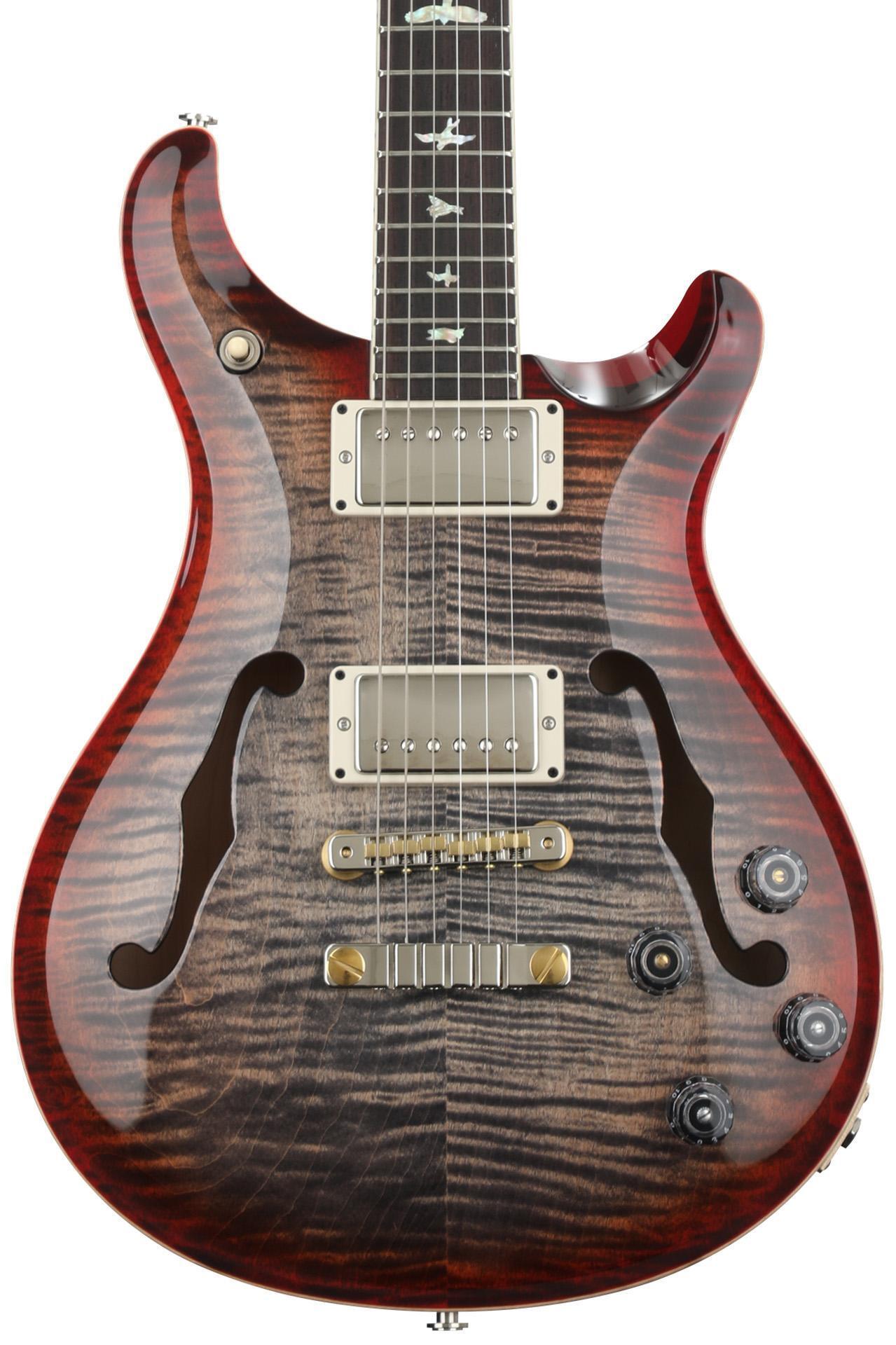
A Microburst finish is a variation on the Burst motif. It gives a guitar a hint of color around the edges. Microburst finishes are not just limited to black; they can use any color to accent the color of the top. Of course, a Microburst finish will feature exposed maple around the edges for eye-grabbing good looks. PRS does not generally denote if a guitar is a Microburst or standard burst, as the difference can be extremely subtle. A good rule of thumb for identifying a Microburst finish is this: the guitar likely has a Microburst finish if you can hardly see the burst effect.
Smokeburst
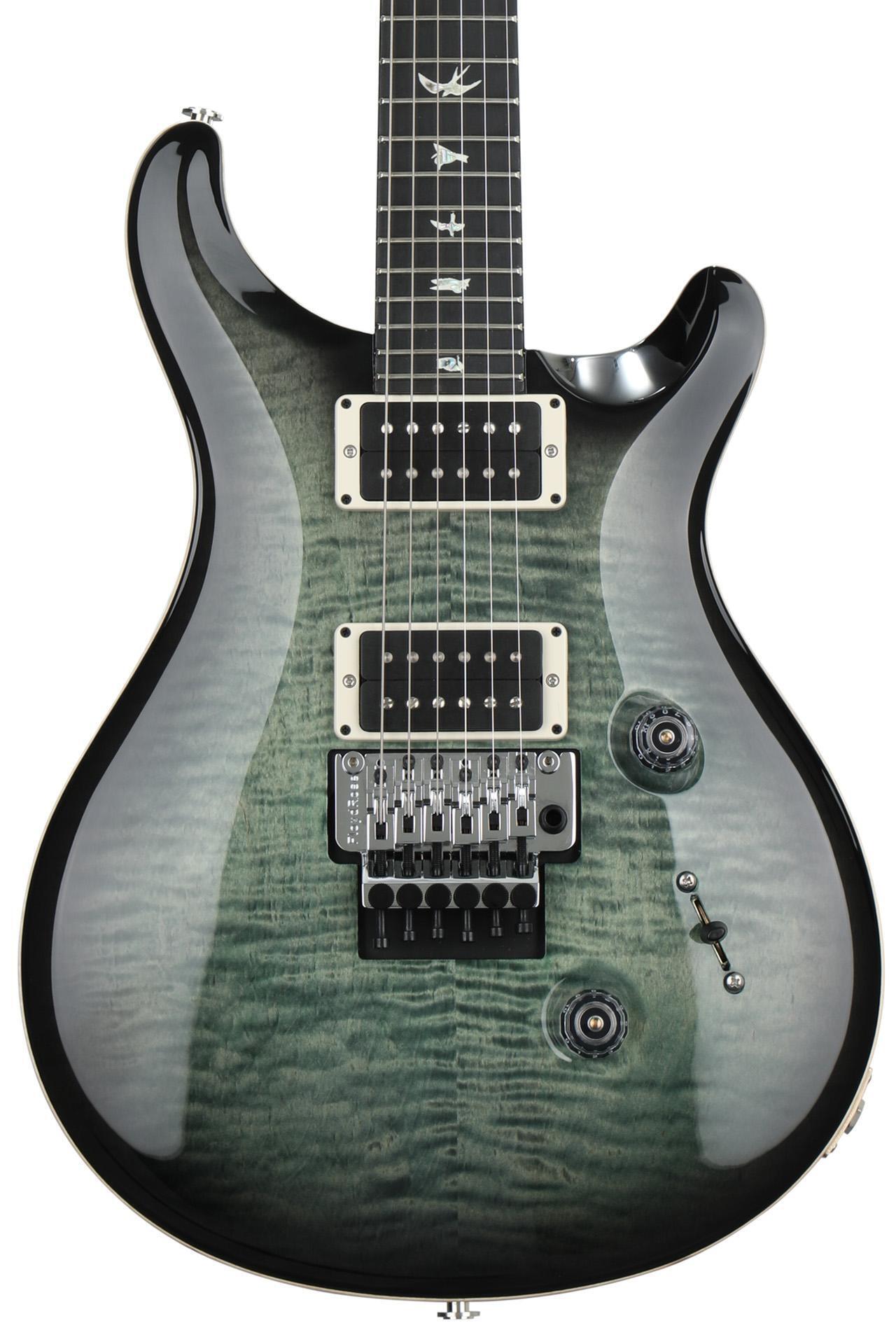
Like Microburst, a Smokeburst finish adds a smoky hint along the edges of the guitar. However, Smokeburst finishes always use black hues to achieve their look. Somewhat confusingly, Smokeburst guitars can feature both scraped and unscraped edges.
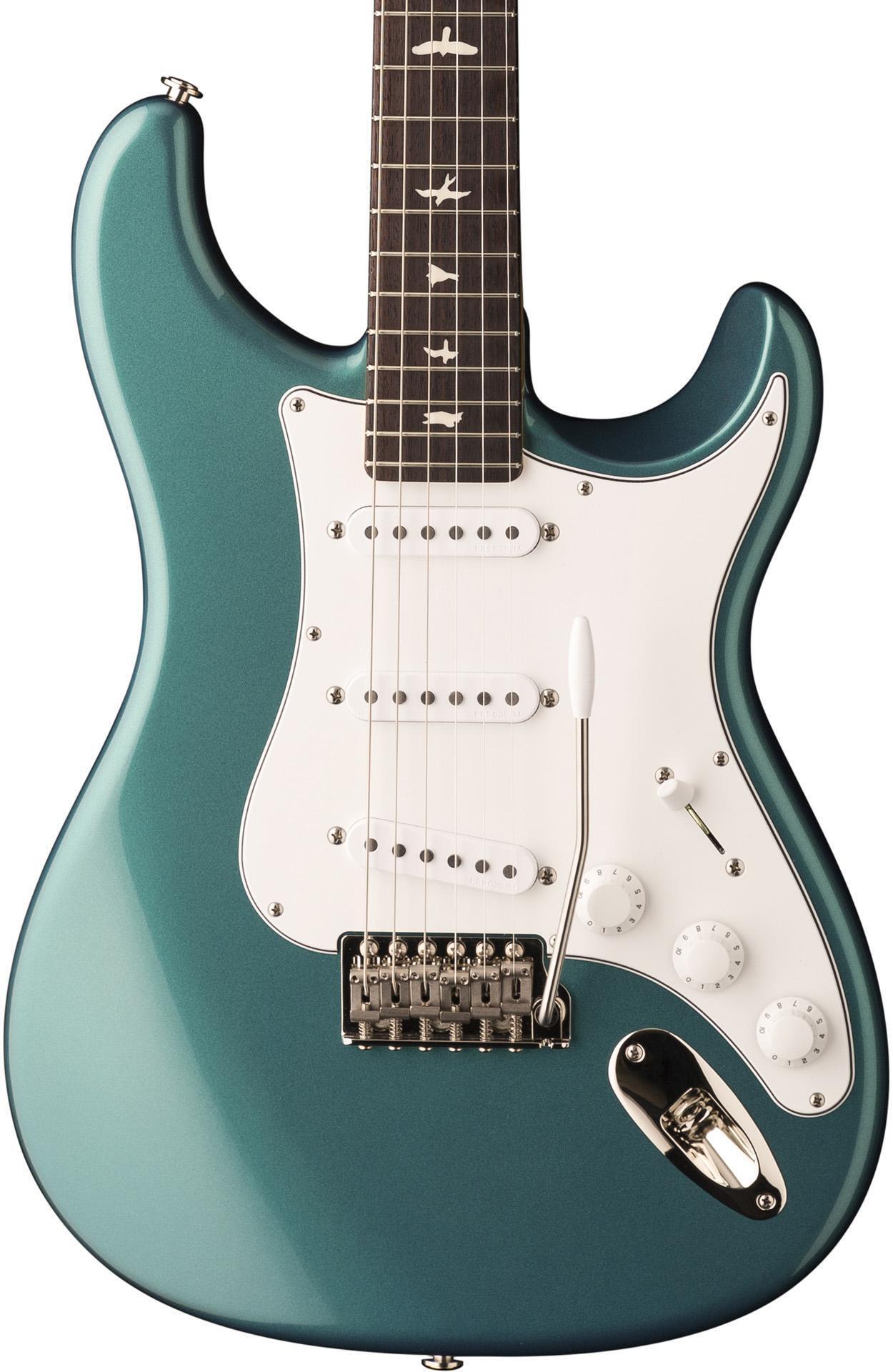
Of course, the artists at PRS don’t limit themselves to just bursts and wraps. Guitars like the Silver Sky and DGT come in solid colors with a beauty all their own.
The Finishing Touch
Before an instrument can leave the factory, it must receive its finishing touch — a clear coat. Currently, all US-made PRS guitars feature nitrocellulose lacquer topcoats. Aside from being a classic touch, nitro finishes allow the guitar to “breathe” in a way that the previous polyurethane finishes couldn’t. PRS currently offers a total of four clear coats: Gloss, Semi-gloss, Satin, and Vintage Gloss. Vintage Gloss stands out from the crowd because the formulation contains no elastomers. Elastomers add a level of elasticity to nitrocellulose that helps prevent lacquer checking. Guitars finished in Vintage Gloss will begin to check much faster than modern guitars, resulting in a lived-in feel.
Private Stock: Complete Customization
The finishes achieved on the factory floor are certainly impressive, but the luthiers in the Private Stock department are in a class all their own. From decadent inlay work to stunning stains, the Private Stock builders can fulfill any task they’re assigned. Here at Sweetwater, we’re constantly working with PRS to develop new and inspiring Private Stock models. So, if you’re ready to take the next step and customize your own guitar from the ground up, we’ve got you covered.
The Finest Finishes in the Game
What started as a three-color operation has expanded into a limitless universe of color combinations bound only by the imagination of the artisans at PRS. We hope this exploration into their finish process has armed you with a couple new fun facts to impress your friends! If you’re ready to shop for a new PRS or have a favorite finish option you like, give your Sweetwater Sales Engineer a call at (800) 222-4700.