Fender’s Precision and Jazz Basses rule the bass universe. This is quite evident when you browse through Sweetwater’s Guitar Gallery bass categories. You’ll lose track trying to count the instruments that owe their body shape, pickup configuration, headstock shape, or other design element to one of these two giants of the bass world. If you’re in the market for your first — or fifth — bass, you may be torn between these two iconic solidbody bass designs. In this article, we’ll examine the development and the unique features of both the Fender Precision Bass and Jazz Bass and what might make one more appropriate than the other for different applications — and hopefully help you decide which one is right for you.
Fender P Bass vs. Jazz Bass
Jazz or Precision — which one is better for specific music styles? There are no hard-and-fast rules here, more like broad guidelines. Obviously, either one can be deployed cross-genre. If you’re into jazz, fusion, or progressive metal — styles that often involve fast passages — the Jazz Bass may be your cup of tea. The solid fundamental delivered by the Precision Bass makes it a great choice for classic rock, country, punk, surf, and grunge. We would definitely recommend doing some research into what your favorite bassists are playing. You can also check out other bass-related articles and videos right here on inSync.
The Fender Precision Bass
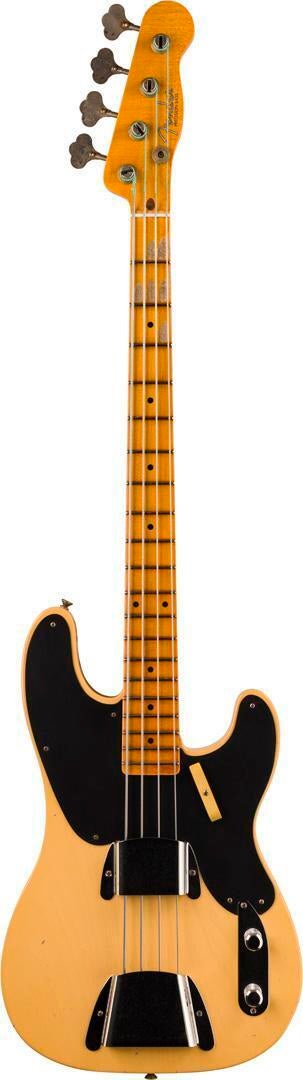
Fender Custom Shop ’53 Precision Bass Journeyman Relic
In the beginning, there was the Precision Bass, and it was good. When Fender brought the first production electric bass guitar to market in 1951, it revolutionized the music business. Before that, if you were a bassist, you played the upright double bass, a large, ungainly instrument that was difficult to amplify effectively onstage in order to both compete with electric guitars and meet the ever-louder demands of the burgeoning rock ‘n’ roll music scene.
Finally, a Gigging Bass!
The Precision was an instrument a bass player could carry over one shoulder and still be able to navigate crowded subways with at rush hour. As companies like Fender and Ampeg developed more powerful bass amplifiers, all the bass player had to do was tune up, plug in, and rock out. And, unlike an upright, the Precision had frets, so intonation was no longer an issue — which is why Fender called it the “Precision” Bass. It’s not too much of a stretch to say that the Precision Bass was the cornerstone of modern electric music. As proof, consider that well into the ’70s session sheet music for bass parts was labeled simply “Fender” — and that meant Precision. Even though the Precision had been joined by Fender’s deluxe Jazz Bass model in 1960, it was the Precision sound that most producers wanted — fat and punchy with a strong fundamental. That sound was largely a product of the instrument’s simple design and split-coil pickup. With only a volume and tone control onboard to shape the sound, there wasn’t a lot you could do to mess it up. The Precision Bass delivered great-sounding, reliable tone that sat well in the mix and worked in just about every musical context.

Fender Custom Shop 1958 Precision Bass Relic
The Precision Bass design went through several changes over the course of the 1950s; but, considering that Fender was creating a brand-new instrument category, it’s amazing how well they nailed it right from the start. They decided on a 34″ scale length and a one-piece maple neck/fingerboard that attached to the body with four bolts. Companies even had to develop strings for the new instrument (flatwound, like the upright bass used). In 1954, the Precision’s double-cutaway slab body was enhanced with comfortable forearm and torso contours like the Stratocaster, which had been introduced the year before. In 1957, its single-coil pickup was changed to the familiar split-coil design that has endured to this day. Not only was this new pickup better-sounding than the one it replaced, but it was also hum-canceling! The Precision also received a new one-piece pickguard assembly to which the electronics were fixed, and the Telecaster-style headstock was morphed into a more curvaceous, Strat-like shape. The Precision Bass as we know it had finally arrived.
Session King
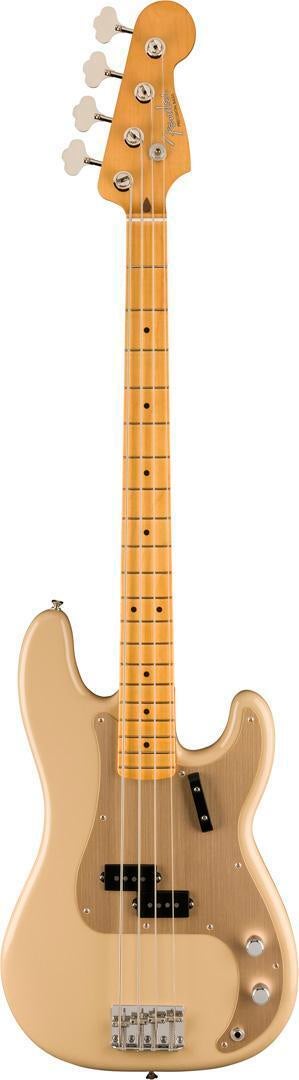
Fender Vintera II ’50s Precision Bass
The Fender Precision is behind the bass lines of some of the biggest hit records ever made. The ’60s were a typically prolific decade with the instrument in the capable hands of session bassists like LA Wrecking Crew stalwart Carol Kaye, who lent her Precision chops to countless iconic recordings such as the Beach Boys’ “California Girls” and “Good Vibrations.” Then there was bass legend James Jamerson, whose ’62 Precision (dubbed “the Funk Machine”) delivered the infectious bounce that buoyed a slew of Motown hits, including The Temptations’ “My Girl” and Marvin Gaye’s “What’s Going On.” Indeed, the Precision Bass was standard issue for Motown recordings. When bassist Bob Babbitt showed up for his first session with his ’61 Jazz Bass, management told him to “get a Precision,” which he did; and he stuck with it for the rest of his career. As the 1970s dawned, Fender’s Jazz Bass, with its unique playing feel and sonic versatility, was about to achieve parity with its older sibling, complementing rather than competing with its stablemate. Together, the Precision and Jazz Basses would go on to rule the bass world in the ensuing decades.
The Fender Jazz Bass

Fender Vintera II ’60s Jazz Bass
Back in 1960, when Fender launched their “Deluxe Model” bass, it was designed as a stablemate to the company’s upmarket Jazzmaster guitar that had been recently introduced. It was soon renamed the Jazz Bass, however, as Fender felt the instrument, with a thinner neck and greater tonal flexibility than the Precision, would appeal to jazz bassists. And indeed it did — as well as to rock, funk, and fusion bass wizards such as Led Zeppelin’s John Paul Jones; Sly and the Family Stone’s Larry Graham; and Weather Report’s Jaco Pastorius, who famously removed the frets from his axe, creating a new instrument category: the fretless Jazz Bass. As different as their music was, these musicians and countless others were drawn to the Jazz Bass for its fast, slender neck and the expanded tonal spectrum offered by its two single-coil pickups.
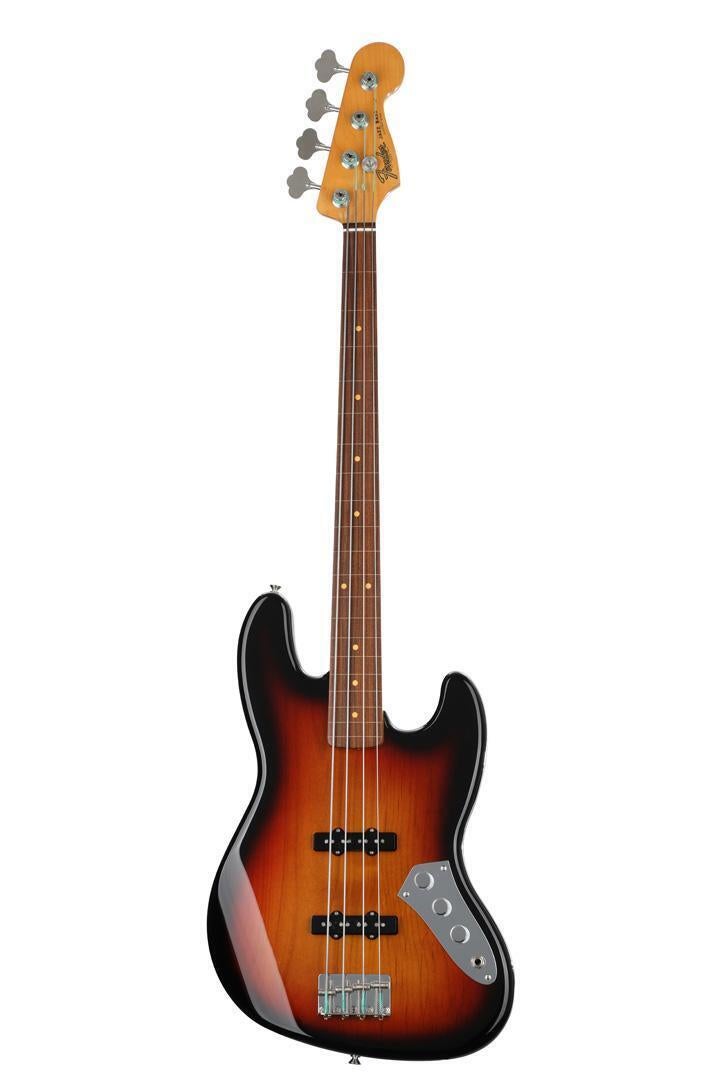
Fender Jaco Pastorius Fretless Jazz Bass
While the Precision Bass has but one pickup, the Jazz Bass has two, which can be blended to taste using their individual volume controls. With both pickups fully up and the instrument’s tone pot fully open, the Jazz Bass produces a wide-range, hum-cancelling signal that’s more complex than that of the Precision, with blooming lows, growling highs, and slightly scooped mids. It’s this sound that funk players exploited with the new playing techniques that emerged in the 1970s. One of the keys to this modern “slap and pop” electric bass tone was roundwound strings. An invention of the ’60s, roundwounds were brighter than flatwounds and became the strings of choice for bass players such as John Entwistle of The Who and Chris Squire of Yes. Jaco Pastorius, who played fingerstyle on his fretless Jazz Bass, also used roundwounds. The brightness of roundwound strings formed the basis for the inimitable “Jaco sound,” coupled with the fact that Pastorius only used the bridge pickup and often plucked near the bridge where the strings were tauter so he could work up his trademark blinding speed. Pastorius, who had previous experience on the upright, also transferred double bass techniques such as slides, artificial harmonics, and the use of open strings to his fretless Fender Jazz Bass.
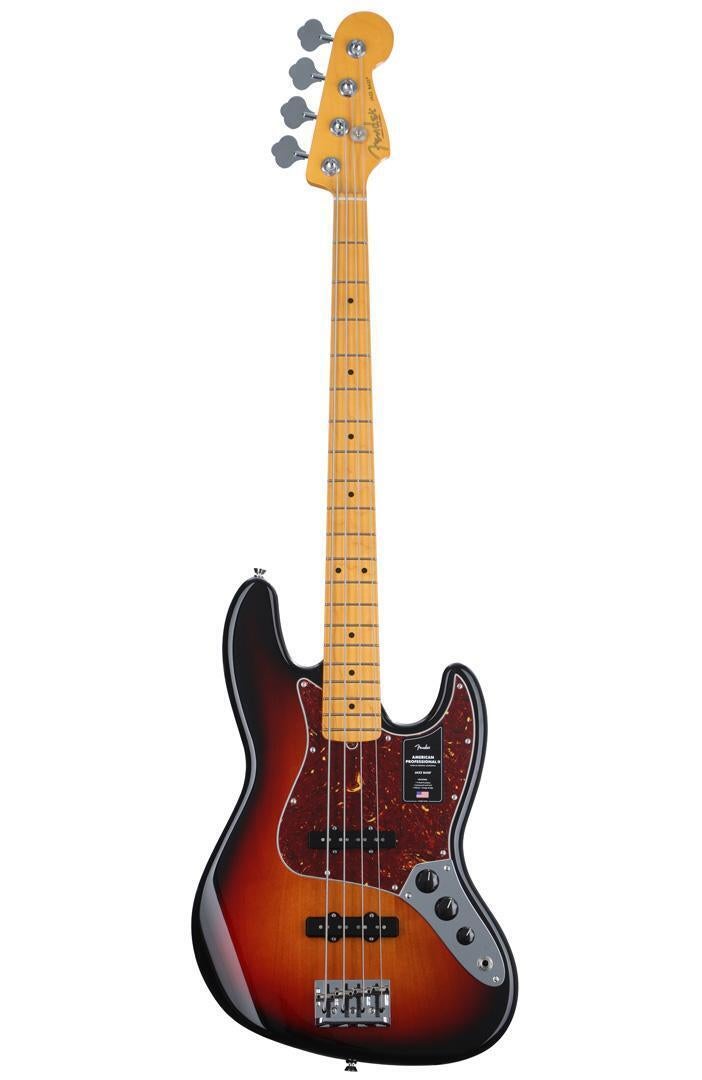
Fender American Professional II Jazz Bass
A Close Look at Precision and Jazz Basses
While more versatile, the more complex sound of the Jazz Bass has a downside: as compared to the Precision Bass, it can be harder to make it sit in a track. Also, if both pickups’ volume pots are not fully up, you will get hum, unless your axe has single-coil-sized stacked humbuckers, such as Fender’s Noiseless pickups. So, you may be wondering if you can make a Jazz Bass sound like a Precision; and the answer is that you can get close by using only the neck pickup and perhaps a judicious application of EQ and compression. Conversely, you’d be hard-pressed to make a Precision Bass sound exactly like a Jazz. This is why many bass players own both instruments.
Body Style: Balance and Comfort
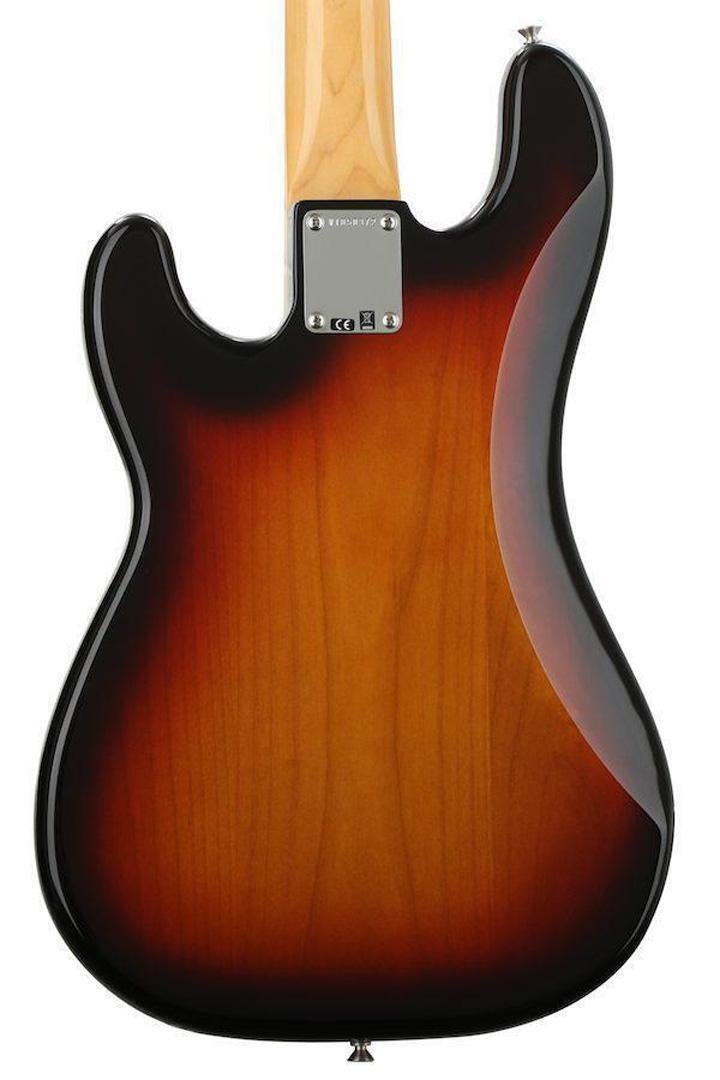
Precision Body Shape
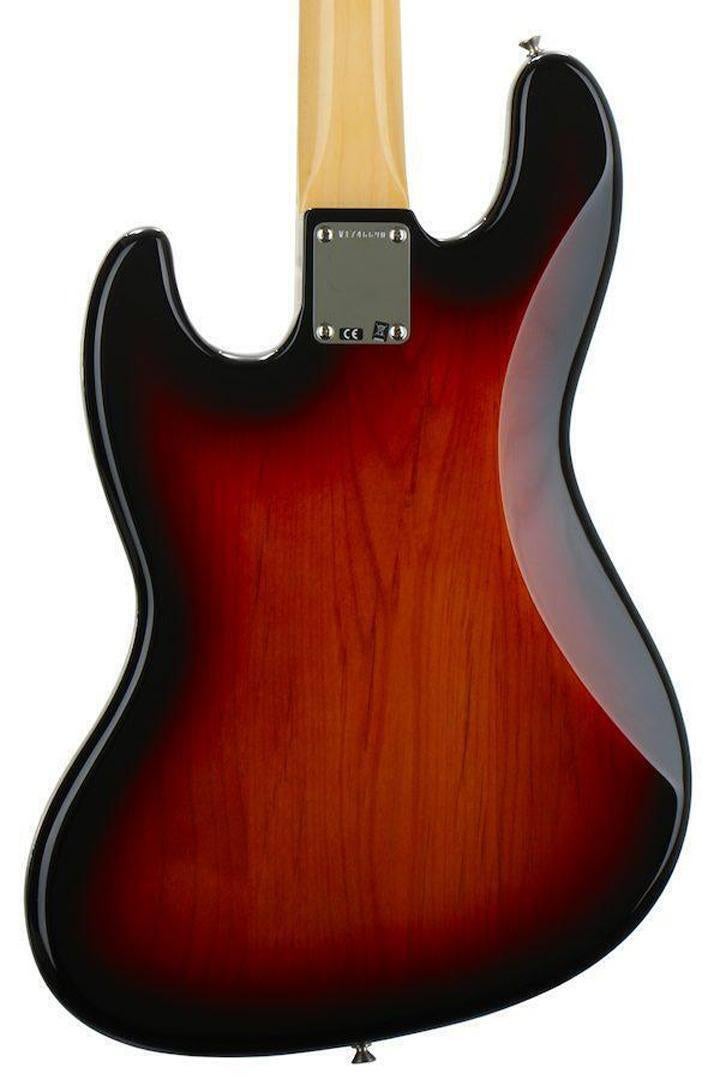
Jazz Body Shape
Although both instruments have similar body contours, one of their main differences is the offset waist on the Jazz Bass. Radical when it was introduced, the offset moves left-side body mass toward the neck in a way that aligns with the angle at which most bassists hold their instrument when standing. When playing seated, most right-handed players rest the guitar on their right thigh, and the offset design in this case moves the rear body contour toward your torso, closer to where it belongs. The downside to the offset body is that it makes the Jazz Bass more neck-heavy (and slightly heavier overall) than the Precision, which has a more symmetrical waist contour. Precision players often cite how “balanced” their instrument feels, whether they’re playing seated or standing.
Neck: The Wide and Narrow of It
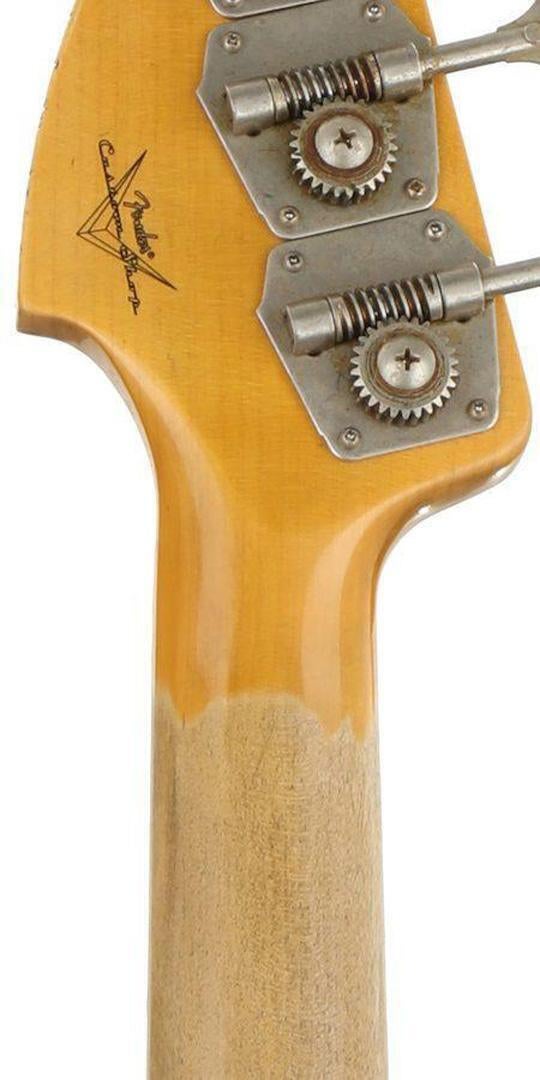
Precision Neck Shape
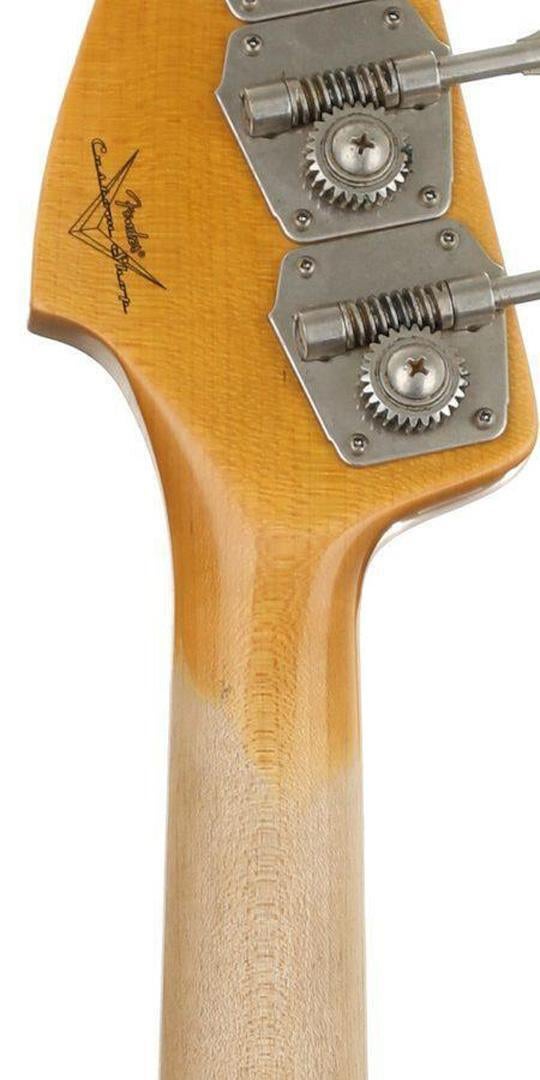
Jazz Neck Shape
The Bass of Your Dreams
Once you choose between Precision or Jazz, there are other options to consider. A fretless fingerboard would add yet another dimension to your sound, as would an added low B string. More subtle would be the sonic contribution from your choice of fingerboard woods. An instrument with onboard active electronics would give you a greater ability to shape your tone exactly how you want it. Given the myriad of options available to today’s bass players, we wouldn’t blame you if you were the slightest bit confused. But not to worry! Many of our Sales Engineers are bass players too, so by all means feel free to call us at (800) 222-4700 for some friendly, expert advice. You’ll soon be playing the bass of your dreams!