Today’s hyper-modern world is chock-full of headphones. They come with smart devices and computers, and they show off the user’s personality. But how do you know which pair of headphones to buy for yourself? Should you choose a chunky, yet stylish, design favored by athletes before games or the almost invisible earbuds worn by groups of teens at the mall? Unfortunately, as with most things in music, the answer lies in your personal preference. However, you can narrow down your options based on how you’ll use them.
You may be asking yourself, “Open-back vs. closed-back headphones… what’s the difference?” The difference is in the way their housings are constructed. For personal listening and professional applications where external noise or using your phone’s speaker is an issue, a closed-back design will be your best friend. For casual listening at home or behind closed doors, you may like a pair of open-backs. Take it from the audio professionals at Sweetwater; it pays to know the difference between closed-back and open-back headphones before dropping some cash for a nice pair.
Open-back Headphones

The basics
Open-back headphones have a similar design to closed-back headphones with an important distinction. The outer housing has built-in gaps that allow air and sound to pass freely through the earcup. A perforated housing eliminates pressure buildup and encourages a more natural sound that’s ideal for critical listening. They’re lightweight and incredibly comfortable to wear for long periods of time.
A brief history
In 1968, Sennheiser’s HD 414 headphones became the first open-back headphones to hit the consumer market. They were less boxy-sounding than closed-backs and featured a lightweight, low-profile design. Consumers and professionals immediately fell in love with the design, using them alongside the models of years past. Since then, brands like Beyerdynamic, Focal, and AKG have helped push open-back headphones to new levels of performance, affordability, and comfort.
Performance
The improved sound reproduction of open-back headphones comes at the expense of isolation. Open-back headphones will not block out any ambient noise, which means that anyone nearby will hear what you’re listening to. However, this lack of isolation delivers a listening experience in a class of its own. Instead of sounding like you’re in the isolation booth with a singer, they sound as if that singer is treating you to a private concert in the comfort of your living room. Open-backs are excellent for critical listening applications, mixing, and everyday use at home.
Key points
- Perforated housing lets air and sound travel freely in and out of the earcups
- Deliver a spacious, airy sound
- Provide no isolation
Closed-back Headphones
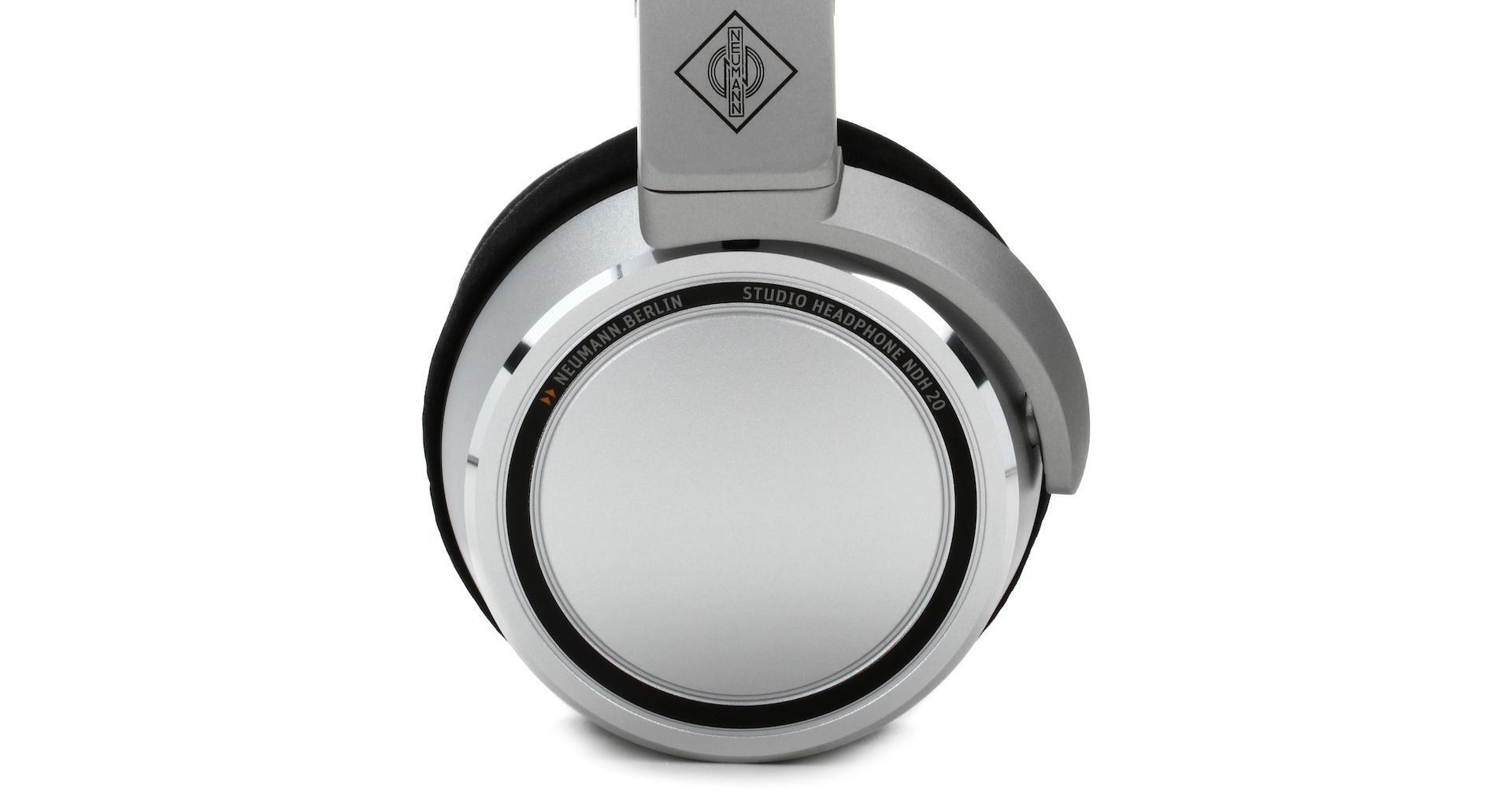
The basics
Closed-back headphones are built exactly how the name suggests. The housing of closed-back headphones is sealed to block any sound from escaping. This has the same effect on outside noise, as well, giving you impressive isolation. You’ll notice that these headphones can feel more substantial and chunkier than their open-back counterparts.
A brief history
Before 1937, closed-back headphones were mainly used by the military and radio/telephone operators. Seeing a gap in the market, Beyerdynamic introduced the DT 48 headphones — the first consumer-grade headphones. They became incredibly popular but could not play audio in stereo. By 1958, the first modern closed-back model, the Koss SP/3 stereo headphones, took the world by storm. Since then, manufacturers have been pushing the limits of headphone design to produce more realistic sounds and better isolation and to deliver active noise cancellation. As such, closed-back headphones have become some of the most popular models on today’s market.
Performance
Closed-back headphones are so popular because they shut out the world and let the music take center stage. You’ll notice a slight boost in the bass response and a certain amount of passive isolation. By providing passive noise cancellation, closed-back headphones make you feel as if you’re in the studio with those you’re listening to. This performance characteristic is excellent for occasions where focus and concentration are paramount. Closed-back headphones are the first choice for studio use, too. They let you track quiet instruments or voices without worrying that the sound from the headphones will get picked up by your mic.
Key points
- Closed housing seals to your head and prevents sound and air leakage
- Provide isolation from the outside world
- Enhanced bass response
What Headphones to Use in the Real World
Knowing how the construction impacts the overall sound is a great first step for choosing a new pair of cans. But, when it comes to the open-back vs. closed-back headphones debate, you need to know more. Here at Sweetwater, we know you’ll be using your headphones in the real world, so we decided to come up with some everyday listening situations and recommend the type of headphones we’d use.
Studio use
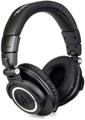
The studio is a place where you’re going to want a pair of quality headphones. For the most part, closed-backs are king. When recording quiet instruments and vocals, Audio-Technica ATH-M50x monitoring headphones are great for preventing click bleed. They may even save your ears when you’re ripping solos through a dimed Marshall.
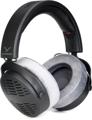
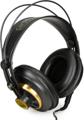
However, if you’re mixing and mastering at home and don’t have a pair of studio monitors, open-back headphones are the way to go. These generally have the flattest response of any headphones you’ll come across. Plus, they’re a great representation of how your tracks will sound coming out of your listener’s headphones. Sennheiser’s HD 490 Pro headphones are an excellent example, boasting a rich, balanced driver design and bundled DearVR MIX-SE software for dialing in the perfect soundstage. On the other hand, AKG K240 semi-open studio headphones offer dependable mix translation on a budget. For a step up in comfort and sound, see the Beyerdynamic DT 900 Pro X studio mixing headphones.

Listening at home
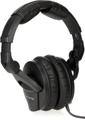
When you’re at home, you have the freedom to choose whatever pair of headphones you like. If you like open backs, then try taking Sennheiser’s HD 650 reference headphones for a spin. Fitted with modern acoustic silk, these ’phones are heralded as a benchmark in the world of hi-fi audio playback. Shure SRH1840 headphones are yet another option, given you’re alone or with someone who doesn’t mind hearing some faint music. If you have company spending the night or need some peace and quiet while your upstairs neighbors throw a rager, then Sennheiser’s HD 280 Pro closed-back headphones offer 32dB of isolation that will do you wonders.
Listening in public places
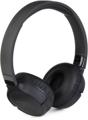
Subjecting others to your music in public isn’t always a good look, especially if you’re 30,000 feet in the air over the Pacific Ocean. While we agree that the Beastie Boys are awesome, the other people on your flight probably won’t. You’ll want to use closed-back headphones in any space where playing music on your phone’s speaker is inappropriate. For public transport and other situations, try out the JBL Tune 670NC on-ear Bluetooth headphones with active noise cancellation (ANC).
Listening in the office
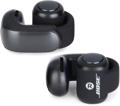
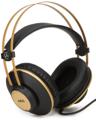
Unless you have a door, this one is simple: closed-back. Closed-back headphones ensure that nobody else can hear your music except for you. Take it from us; your neighbors will thank you for wearing a stylish pair of AKG K92 closed-back headphones. If your office is loud and you have a hard time concentrating, try a pair with active noise cancellation, such as the Bose Ultra Open wireless earbuds with charging case and OpenAudio technology.
Streaming
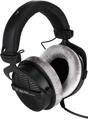
Whether it’s gaming, making music, or cooking, you’ll want headphones that are comfortable to wear for long periods of time. In this situation, the open-back vs. closed-back headphone choice is really up to you. If you’re streaming with noisy roommates or need to be laser-focused, then you’ll love closed-back headphones. If you need to hear what’s going on around you or keep your voice at a reasonable level, go with open backs. Even professional gamers such as Ninja have jumped on the open-back bandwagon. He wears Beyerdynamic DT 990 Pros on stream to keep track of his vocal volume.

Wrapping Up
When it comes down to it, every person has their preference. One person may prefer to use closed-backs no matter what they’re doing, while another may prefer open-backs. Ultimately, it’s your choice. However, your listening environment and purpose have just as much to do with it as personal preference. For loud environments, we recommend closed-back headphones. If you like to hear what’s going on around you while listening, then open-back headphones will be a great choice.
If you’re still on the fence about what headphones are best for you, call your Sales Engineer at Sweetwater, and they can help you decide. They have the experience and know-how to help you find the best pair of headphones for your situation and budget. Pick up the phone and call us at (800) 222-4700. If you’re leaning toward a closed-back design, then check out our picks for the best closed-back headphones and the best closed-back headphones for DJs. If you’re looking for a great pair of open-back headphones, we’ve got lots of great options for those, too.