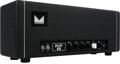
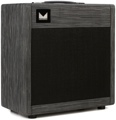
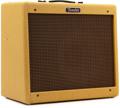
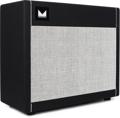
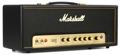
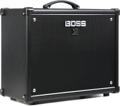
The crux of any craft is knowing the right tools for the job — not reaching for a sledgehammer when a finishing hammer will do. The same goes for guitar and bass. If you’re hauling amps every Friday or Sunday, then a reasonably sized combo amp — a self-contained amplifier with integrated cabinet and speakers — can be a lifesaver. On the other hand, if you find yourself needing added output and versatility for fly dates and studio bookings, then a separate amp head and speaker cab (called a stack) could be just what the doctor ordered.
Not sure whether to invest in a combo or a stack for your next amplifier? This list will present some guidelines for when to reach for one type over the other.
Combo Amps
Pros
Combos are great for grab-and-go needs
No amp is better suited for pickup gigs and impromptu practices than the humble combo. Your guitar in one hand, amp in the other, and perhaps a pedalboard bag slung over your shoulder are all you need to set up and play. It’s the single-tripper’s best friend.
Combos are closed systems
The combo paradigm allows amp designers to fine-tune the tone and response of all parts of the amp, marrying circuitry, speaker, and cabinet for ideal performance. This is especially true in top-tier combos where designers have the luxury of testing multiple speaker types for optimal sound and handling.
Combos make primo reverb platforms
It’s no coincidence that many players’ preferred reverb platform is the combo amplifier. According to this video by Mike Zaite of Dr. Z Amplification, combos can position their reverb tanks at the bottom of the cabinet, farther away from the amp’s power transformers. That results in lower-strength electromagnetic fields being picked up by the transducers in the reverb tank, which will provide the cleanest sound and lowest noise.
Cons
Combos can be cumbersome
Ever tried to play out with your all-tube Twin? It’s a choice not many of us make twice. Those large-magnet speakers, that solid wood chassis, and that heavy tube circuitry, housed together under one roof, can really pack on the pounds for any player who’s hoping to pack in on one trip.
Combos may not be as versatile
The same closed system that makes combos great out of the gate can leave players feeling “locked in” down the road. Sure, you can always replace the speaker or mod the amp to personalize your sound. But you’re still limited by the geometry and construction of the cab, which is a big contributor to tone.
Combos may be tougher on tubes
Combo amps are capable of producing big SPLs in small packages — which is a big reason why we love them. But those SPLs create vibrations that can rattle your tubes and every other component in the cabinet. Those mechanical vibrations can shorten a tube’s lifespan. If you’re a frequent combo user, then plan to replace your power tubes more frequently than in a separate amp head.
Combos are more inclined to rattle
Because all the components are in a single case, a combo amp is more prone to audible rattles than a head/cab. The speaker vibrates the chassis, and all kinds of stuff can come loose.
Amp Stacks
Pros
Stacks offer maximum output and versatility
Where amp stacks really have the edge is their modularity. Want to drive two speaker cabs onstage for maximum volume? Want to mix and match speaker types for a fuller sound? Stacks tend to make this operation much simpler. That’s not to say you can’t drive an extension cab from a combo and get similar results, but it’s just easier and more elegant from a standalone amp head.
Stacks can be better for studio settings
Recording enthusiasts have long preferred amp heads for their usefulness in tracking. Sweetwater Studios has entire racks of heads in our control room that can be routed to any number of cabs in our live room. This gives the player and the engineer the ability to compare amps and tweak settings from a comfortable, neutral setting. This arrangement also lets the player or the producer hear the amp and speakers just as the microphones do, which leads to a better performance and mix.
Stacking gives you more flavors for less dough
If you’ve already got a cab (or IR loader) you love, then stocking up on heads will give you access to more flavors for less money and a lot less space than combos will require.
Cons
Stacks may not vibe as hard
Some players may find that certain heads don’t have the come-hither vibe of their combo equivalents. Just picture Brian May onstage with his infantry of AC30s. Neil Young with his TV Panel Tweed Deluxe. Johnny Marr with his inseparable Jazz Chorus. There’s just something about the combo that the head version of the same amp may not communicate to the player, nor to the crowd.
Most stacks require a speaker cab
Unless you’ve got a newer head with speakerless operation or you’re willing to shell out extra for a reactive load box, chances are you’re always going to need a cab plugged in to run your amp head safely. And, though splitting up the amp and cab in a half stack splits up the weight compared to a combo, that adds another piece of gear to haul and keep track of. Also bear in mind that pairing your head with the right cab may require a bit of trial (time) and error (money) to find the best speakers for the job.
Running stacks means more gear to remember
If you’ve ever shown up to a gig and forgotten a piece of gear, then you know how maddening it can be to frantically hunt down a spare speaker cable, an IEC, or worse — the cab that was supposed to have made it onto the trailer but never showed up. Stacks just require a little more attention as far as getting out and gigging goes. Something to keep in mind.
Shop all Guitar Speaker Cabinets
To Boil It All Down
In summation: if you’re a club player who’s hauling gear every Friday night — or if you just want something that’s ready to rock at a moment’s notice — then you should strongly consider a combo for your next amp. If you need maximum output onstage and added modularity for the studio, then a separate head and cab stack is probably the way to go. Of course, there are no rules in rock ‘n’ roll, and the journey is half the fun, so play what works until it doesn’t. If there’s a particular amp you’re buzzing about, then give your Sweetwater Sales Engineer a call at (800) 222-4700 and let us know what we can do to make your combo and stack dreams come true.