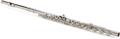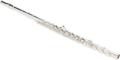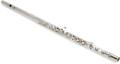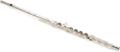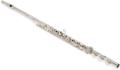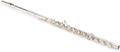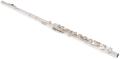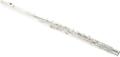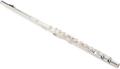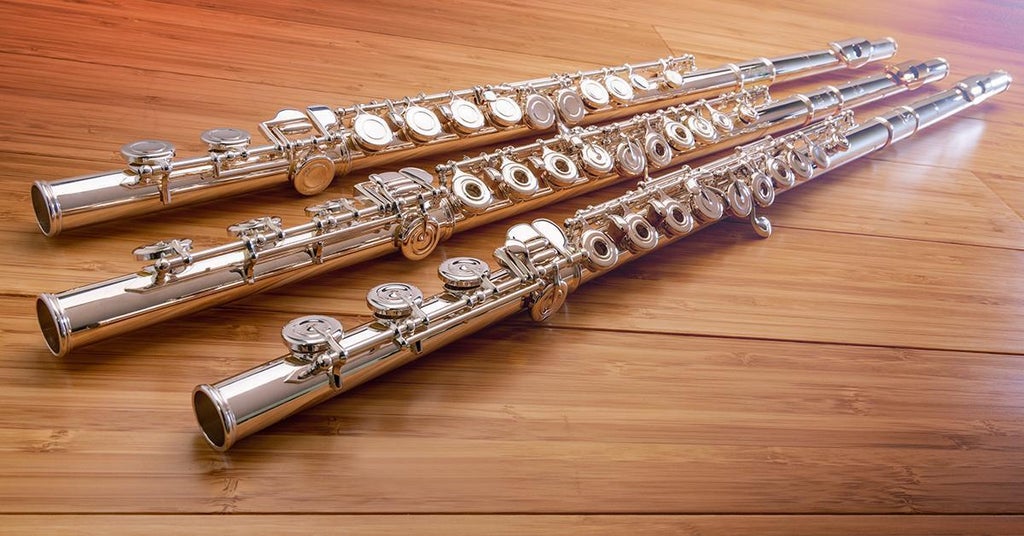
Regardless of whether you have been playing the flute for years and are ready for an upgrade or you are just starting for the first time, Sweetwater’s Flute Rental and Buying Guide can help steer you to the instrument that will work best for your needs.
Aside from the person playing, there are many elements that go into the tone that a flute produces. These include the material the flute is made of, the mechanics of the keys, and what type of flute it is. In this guide, we will cover these topics:
- What are the sections of a flute?
- What materials are flutes made of?
- What features and options are available for flutes?
- What other instruments are in the flute family?
- What are the differences between beginner and advanced flutes?
- FAFQs — frequently asked flute questions
- Flute Rental: Why and How to Rent a Flute
What Are the Sections of a Flute?
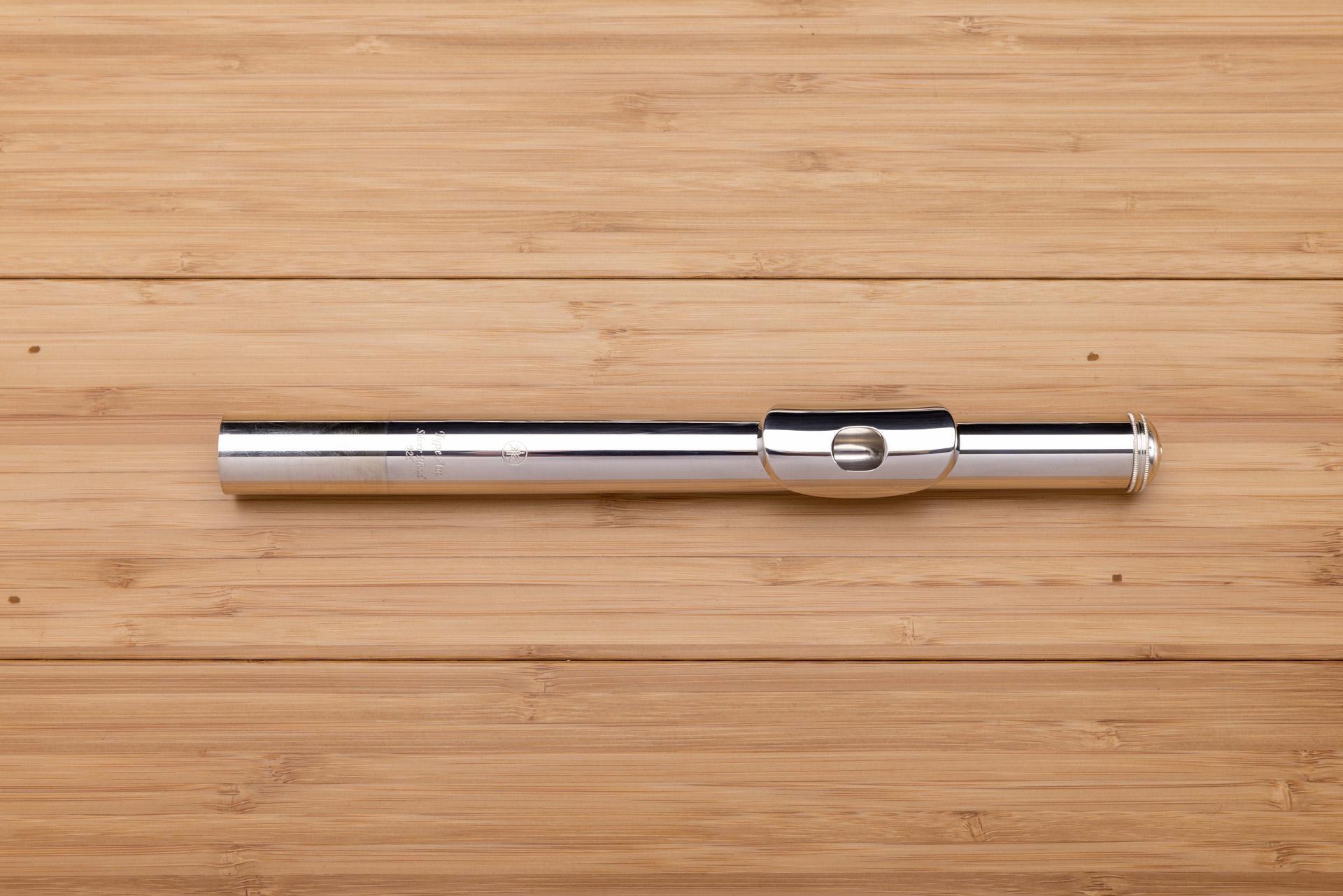
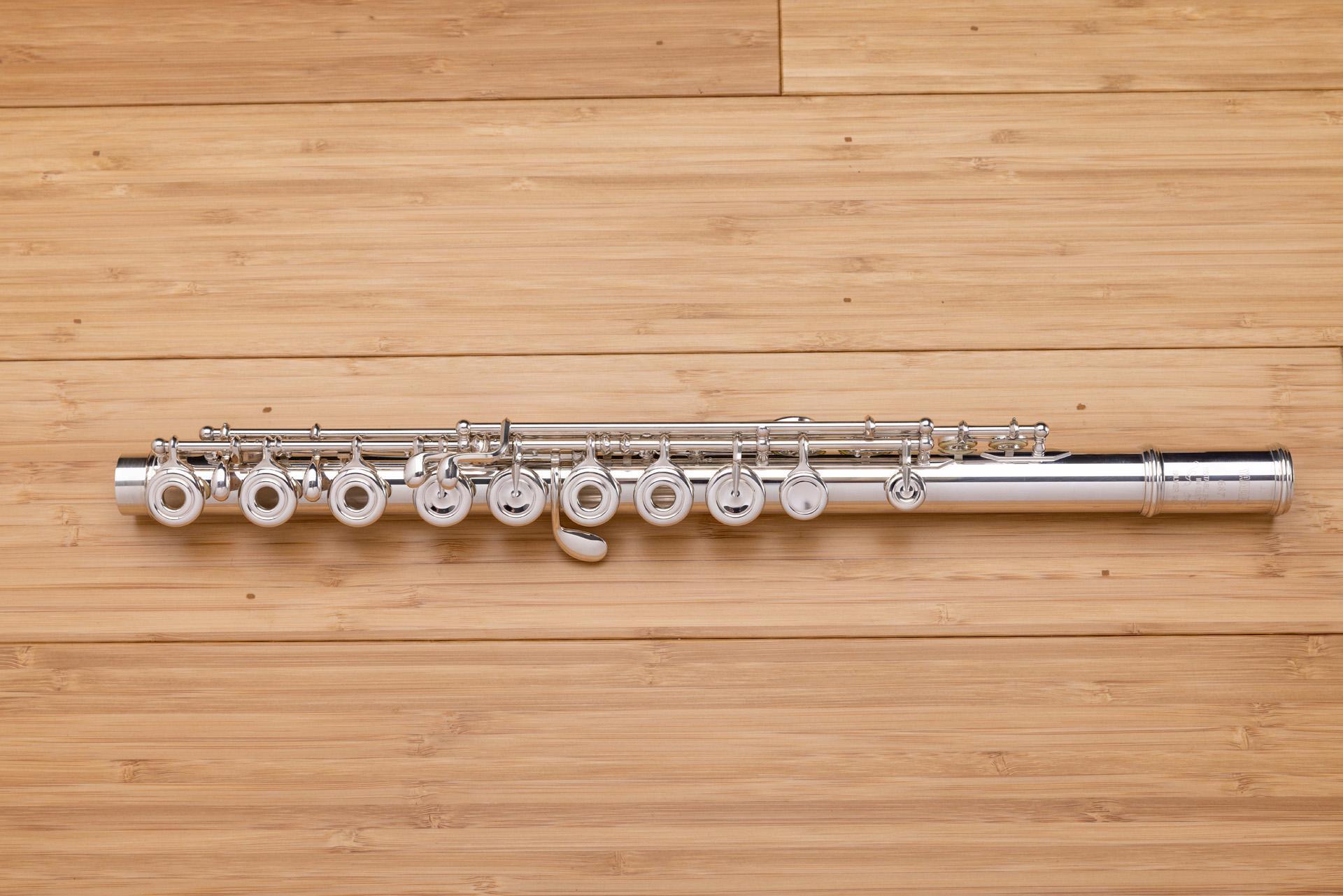
A standard concert flute comes in three sections: the headjoint, the body (middle piece), and the footjoint.
Headjoint
Unlike the other members of the woodwind family of instruments, the flute is an aerophone and does not produce sound with a reed. Instead, the player produces sound by blowing air into the embouchure hole found on the headjoint. The tone produced by the flute is greatly influenced by how the player is blowing air through the instrument as well as by what type of material the headjoint is made of. An adjustable cork at the end of the headjoint forces the airflow to move toward the body of the flute. A beginner headjoint is typically made of nickel silver, while more advanced flutes can be made of pure silver, sterling silver, gold, platinum, or wood. Advanced flute players may have multiple headjoints that they use, depending on what style of music they are going to be playing.
Body
The body of the instrument is the longest piece with the most holes and keys. The player changes notes by pressing down on different combinations of padded keys. A beginner flute will have closed-hole keys, while more advanced flutes will usually have open-hole options. An open-hole flute offers a wider range of extended techniques and tones that can be played.
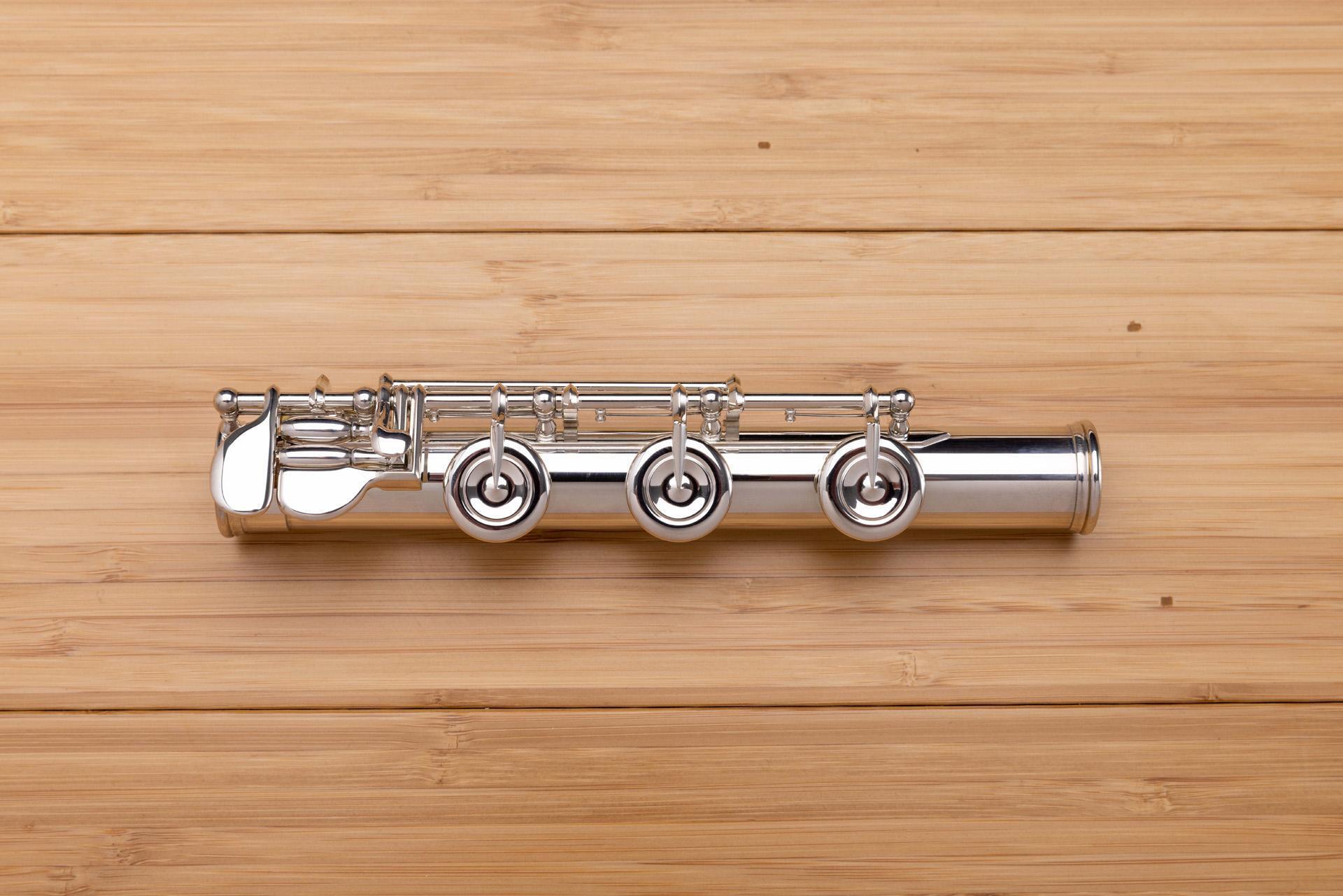
Footjoint
The footjoint is the shortest part of the instrument and is the farthest away from the player. It has the fewest number of keys, which are played by the right-hand pinky finger. Beginner flutes and some intermediate flutes have a C footjoint, while other intermediate and professional flutes offer a B footjoint, a longer footjoint that offers one additional key.
What Materials Are Flutes Made of?
Nickel silver
Nickel silver is composed of copper, nickel, and zinc. Beginner flutes are typically made of nickel silver because of its low cost, low density, and resilience. Since it’s a more lightweight material, it is easier to hold and easier to produce a sound. Some players may find they are sensitive to nickel but are not yet ready for an upgrade in material. Players can prevent skin contact and resolve this with a lip plate patch.
Silver
A silver flute (whether silver plated or solid silver) is usually the first material upgrade that most consider when they want to upgrade their flute. Silver-plated headjoints can add some of the tonal benefits of silver without the cost of a solid silver headjoint. Silver-plated headjoints may tarnish quickly if not cared for properly, but they can be polished back to their original state by a good flute technician. Many intermediate and professional flutes are made of solid silver to add strength to the instrument. Some flutes only have a solid silver headjoint with a silver-plated body and footjoint to help with affordability while still providing many of the sonic benefits of solid silver.
Gold
A gold flute is not only aesthetically pleasing, but the warmth of the tone also increases with the purity of the gold. Gold can be used in the makeup of the headjoint, for different parts of the flute body, or for the entire instrument. Each gold flute is unique as they are typically handmade.
Platinum
Platinum flutes are much heavier than gold flutes, and the material affects both the feel and the sound of the instrument. Platinum flutes are known for having a strong, dark, and deep sound. They can be more responsive to articulation and pushed further without notes cracking due to the resistance of the material. Typically, only professional flutes are made with platinum.
Wood
Before the 19th century, flutes were mostly made from wood — the most common types of wood being grenadilla or rosewood. Modern wooden flutes weigh about the same as a solid silver or gold flute. Wooden flutes produce a warm and natural tone, but that may go unnoticed by the untrained ear. Some players may choose to have a flute made entirely out of wood, while others may choose to only use a wooden headjoint.
Aurumite®
Aurumite® is a metal alloy that combines precious metals in layers (gold and silver). Aurumite is exclusive to the Powell Sonare flutes and offers a warm, rich, and resonant tone.
What Features and Options Are Available for Flutes?
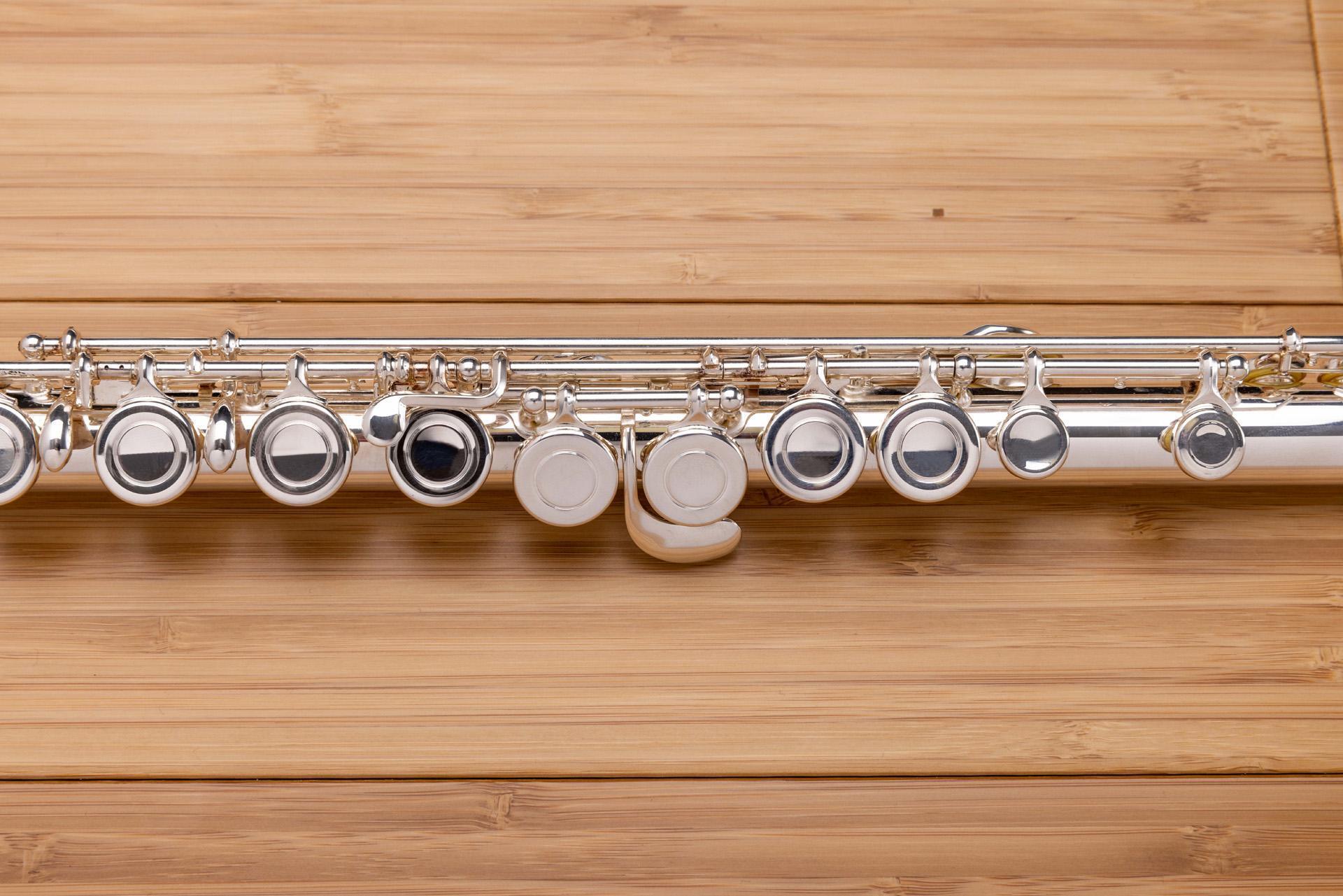
Offset or in-line G keys
The placement of the G key (the key directly to the left of the angled G♯ lever in the middle of the instrument) can be either in line or offset. Beginner flutes will have an offset G key to make it easier for the player to reach. Intermediate- and professional-level flutes come in both in-line and offset options. It should be noted that the placement of the G key does not affect the tone of the instrument.
Split-E mechanism
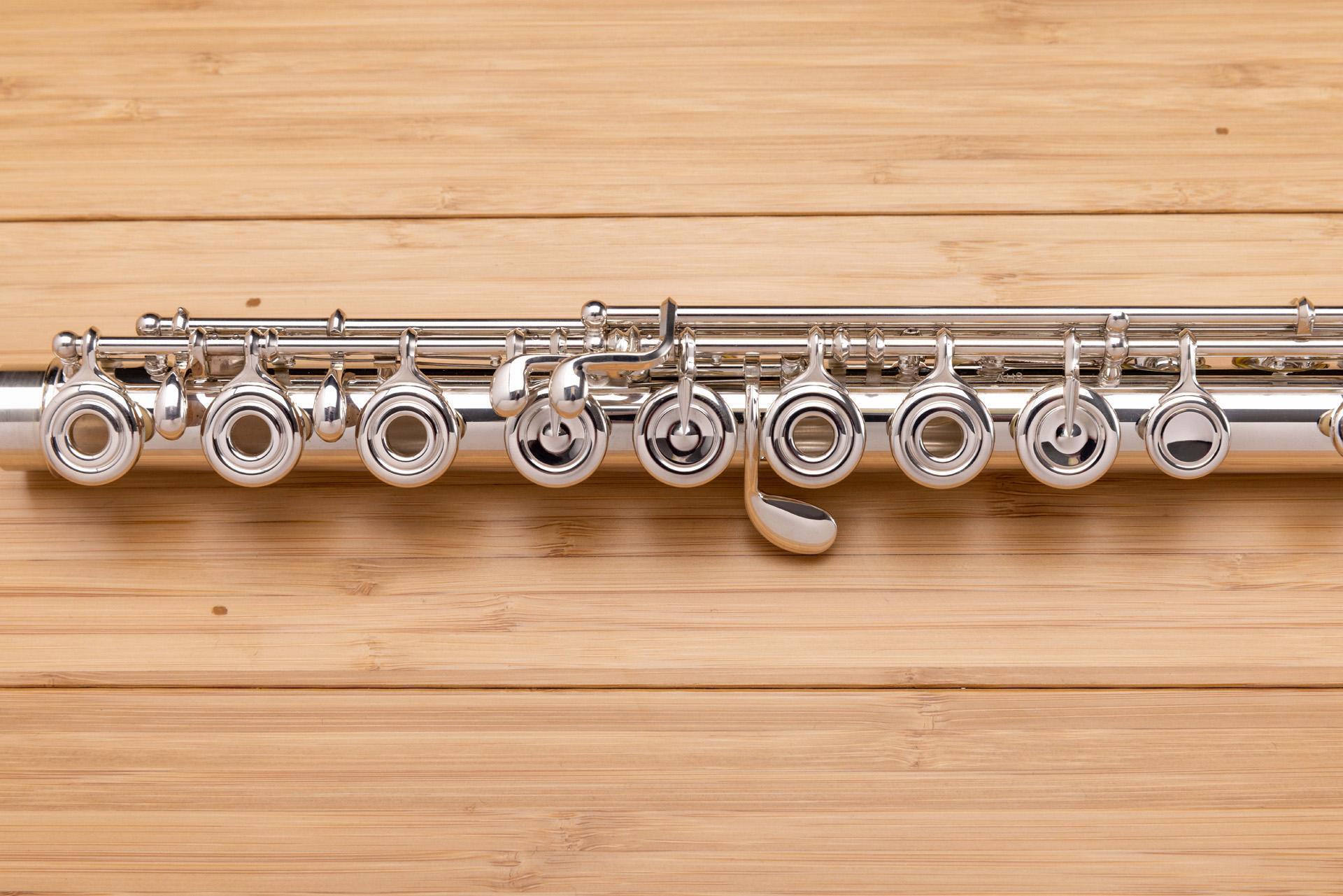
A split-E mechanism is a feature found on intermediate and professional models. It is an extra key that “splits” the two keys that close to play a G note so that the second key will also close when playing an E above the staff. This makes playing the third-register E more stable and less likely to be out of tune or to crack with dynamics changes.
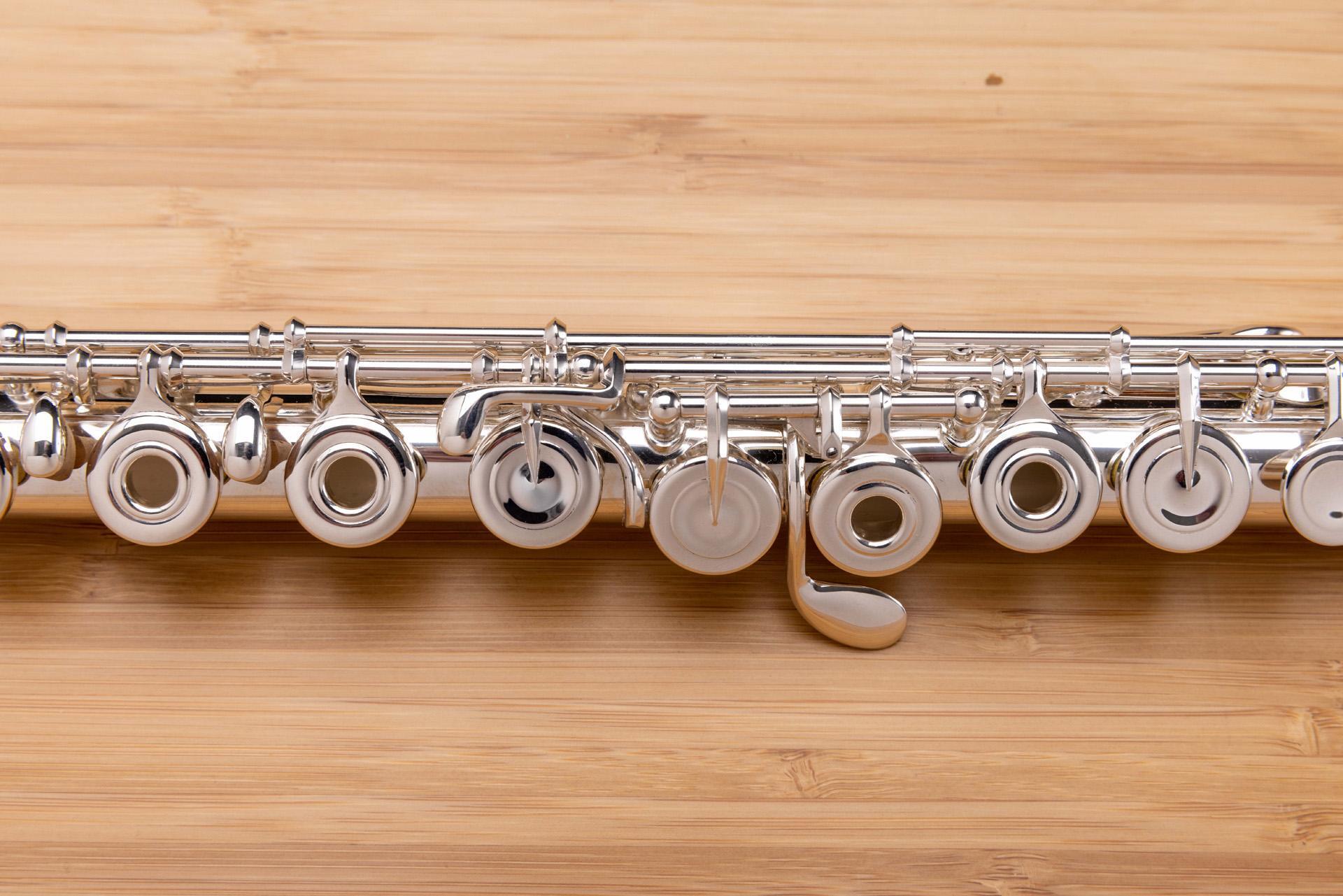
High-E facilitator
An alternative to a split-E mechanism is the high-E facilitator, sometimes called the “G donut.” It is a disk that is placed inside the tone hole directly to the left of the G♯ lever. The intent is to reduce the size of the tone hole and to alter the direction of the airflow. It is a simple and cost-effective way to help players with the third-register E.
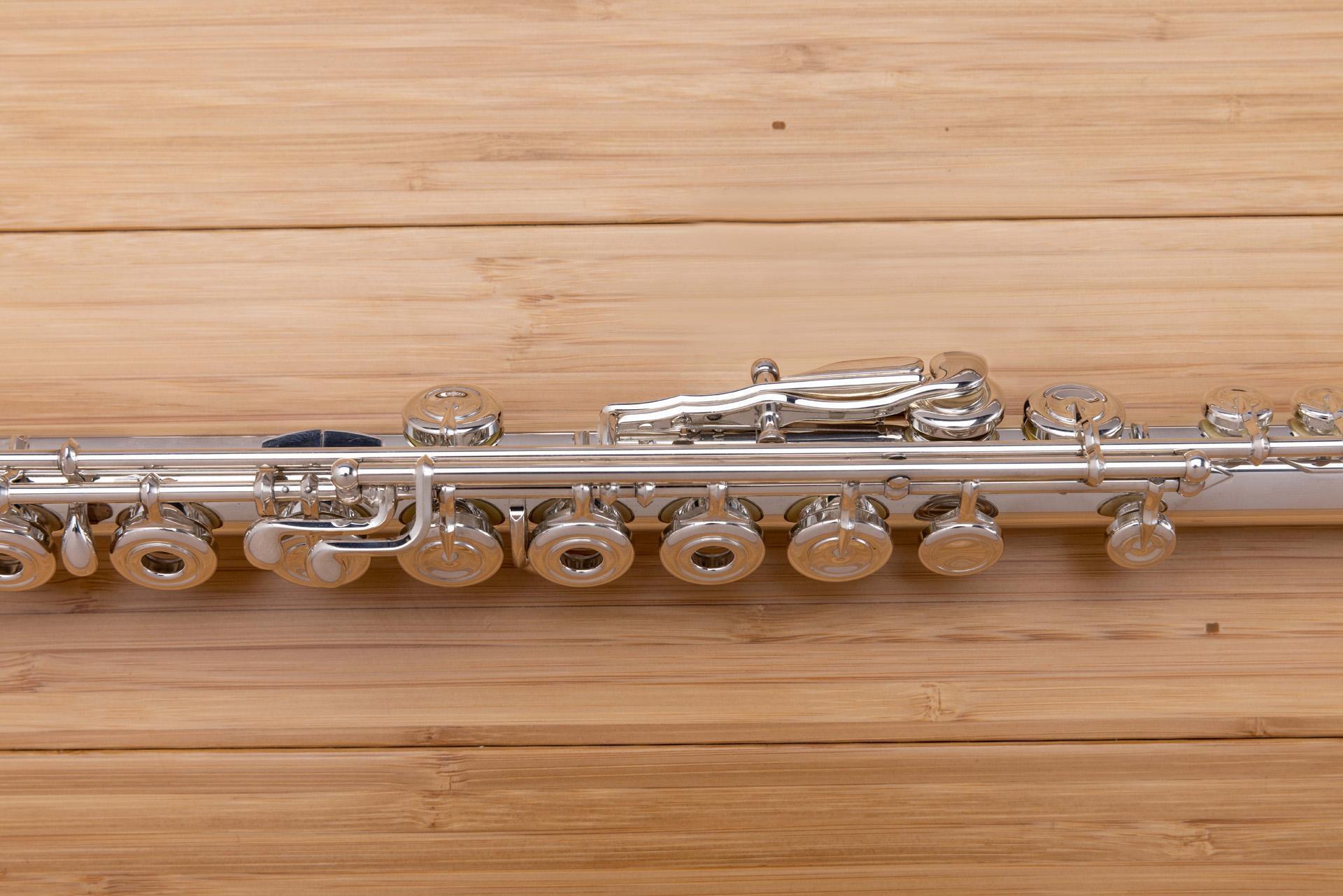
C♯ trill key
The C♯ trill key is a lever used by the first finger on the right hand to open a tone hole near the left-hand thumb key. It helps to ease awkward trill and tremolo fingerings and is preferred by many players when upgrading their instruments.
B key
The B key is found directly to the right of the roller key on the footjoint. It allows the player to close the low-B tone hole without closing the low-C or the low-C♯ tone hole. It can also be used to help facilitate the playing of the fourth-octave C.
Gizmo key
The Gizmo key is found on intermediate and professional flutes attached to the B foot. This key helps facilitate the fourth-octave high C.
Open hole vs. closed hole
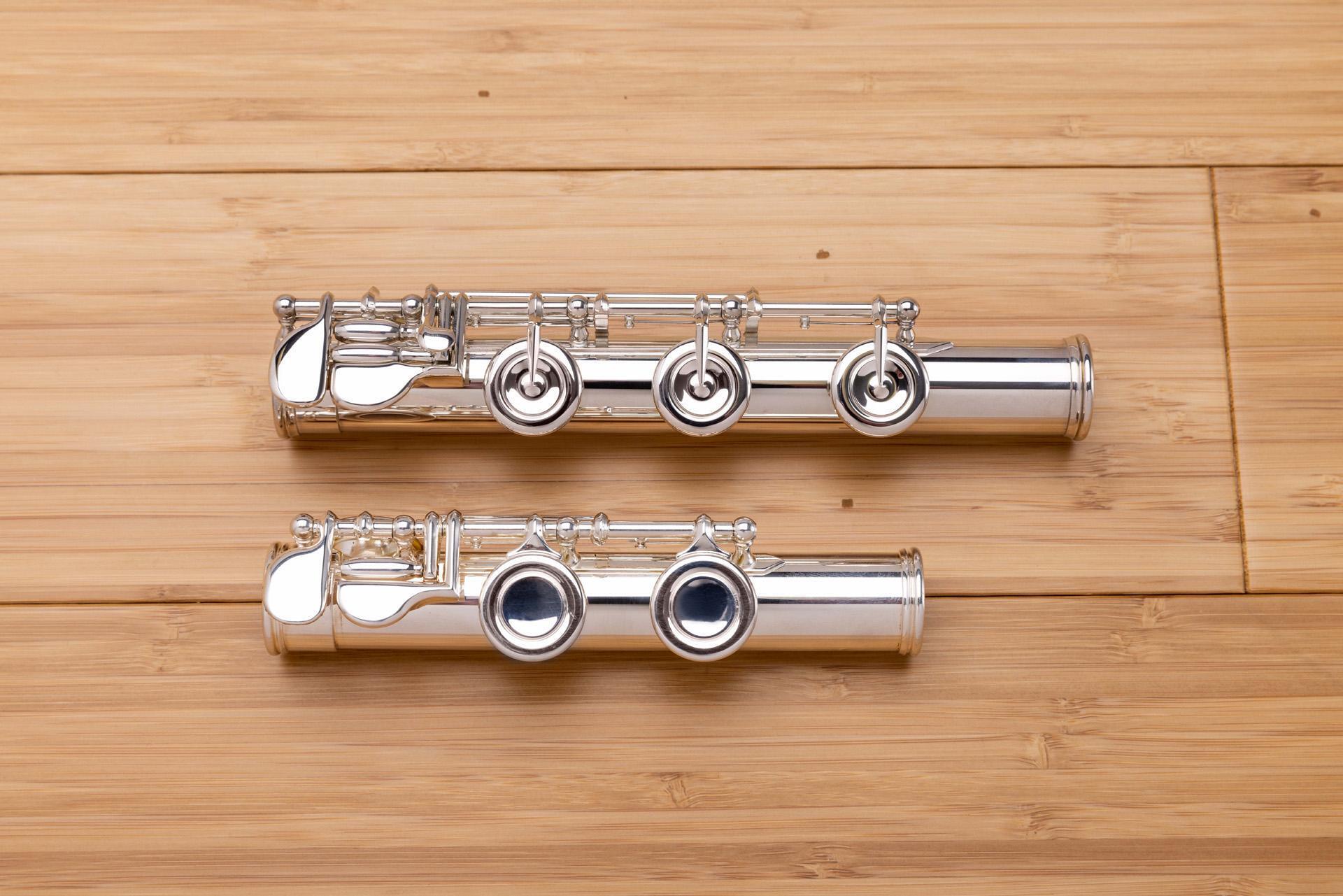
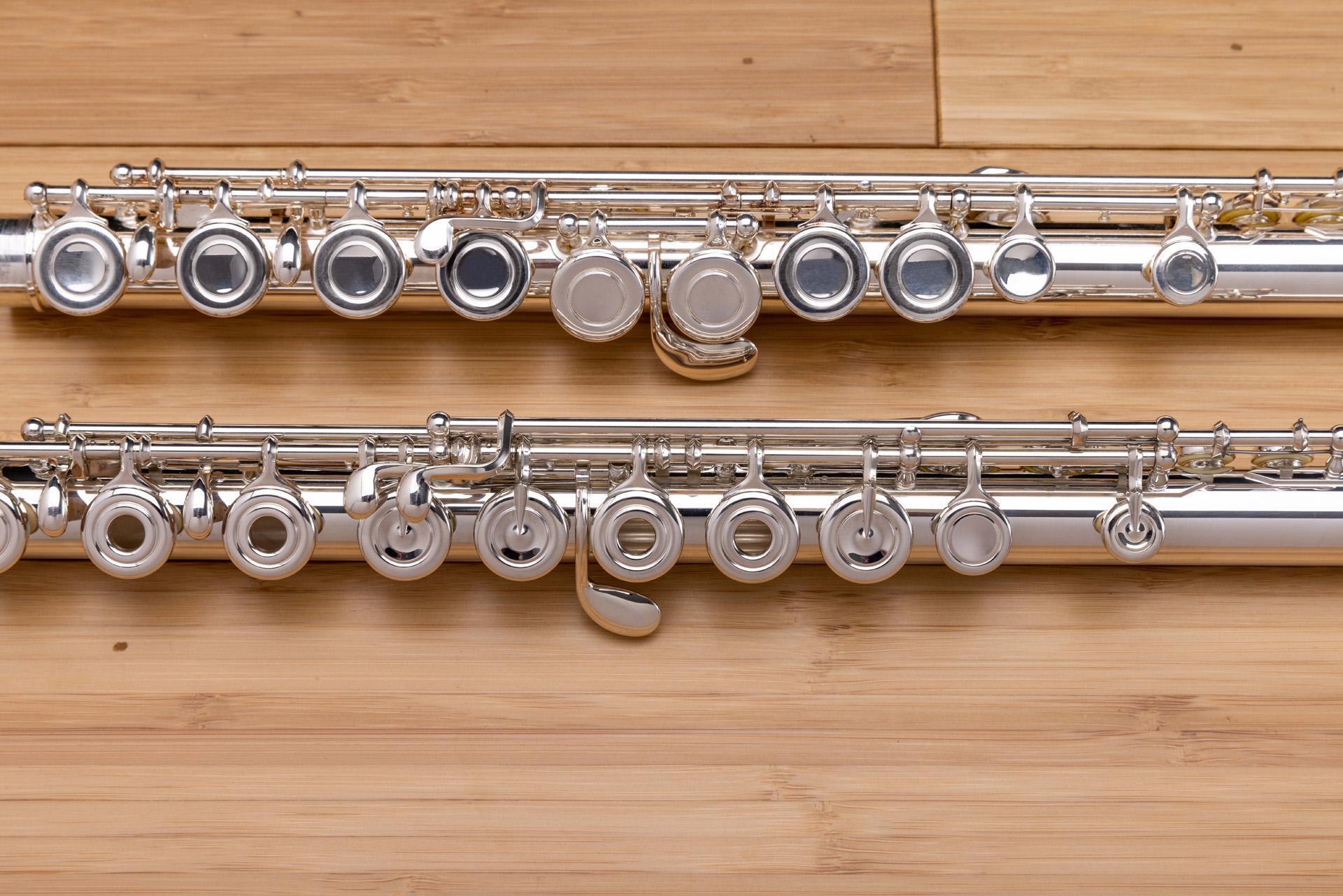
Closed-hole keys (also called plateau keys) are the standard for student-model flutes. Closed-hole keys ensure that a beginner learns the proper finger placement and is successful when playing since all holes are completely covered when the keys are pressed.
Open-hole keys (also called French keys) are often found on intermediate and professional models. Open-hole keys require the player to be precise with their finger placement so that the notes sound properly. When first transitioning from closed- to open-hole keys, it is recommended that the player remove the plugs that come with the instrument one at a time.
While there are no major differences between the fingerings on a closed-hole flute and an open-hole flute, the open-hole flute allows you to perform more extended techniques such as half tones, quarter tones, and glissandi.
Y arms vs. French pointed arms
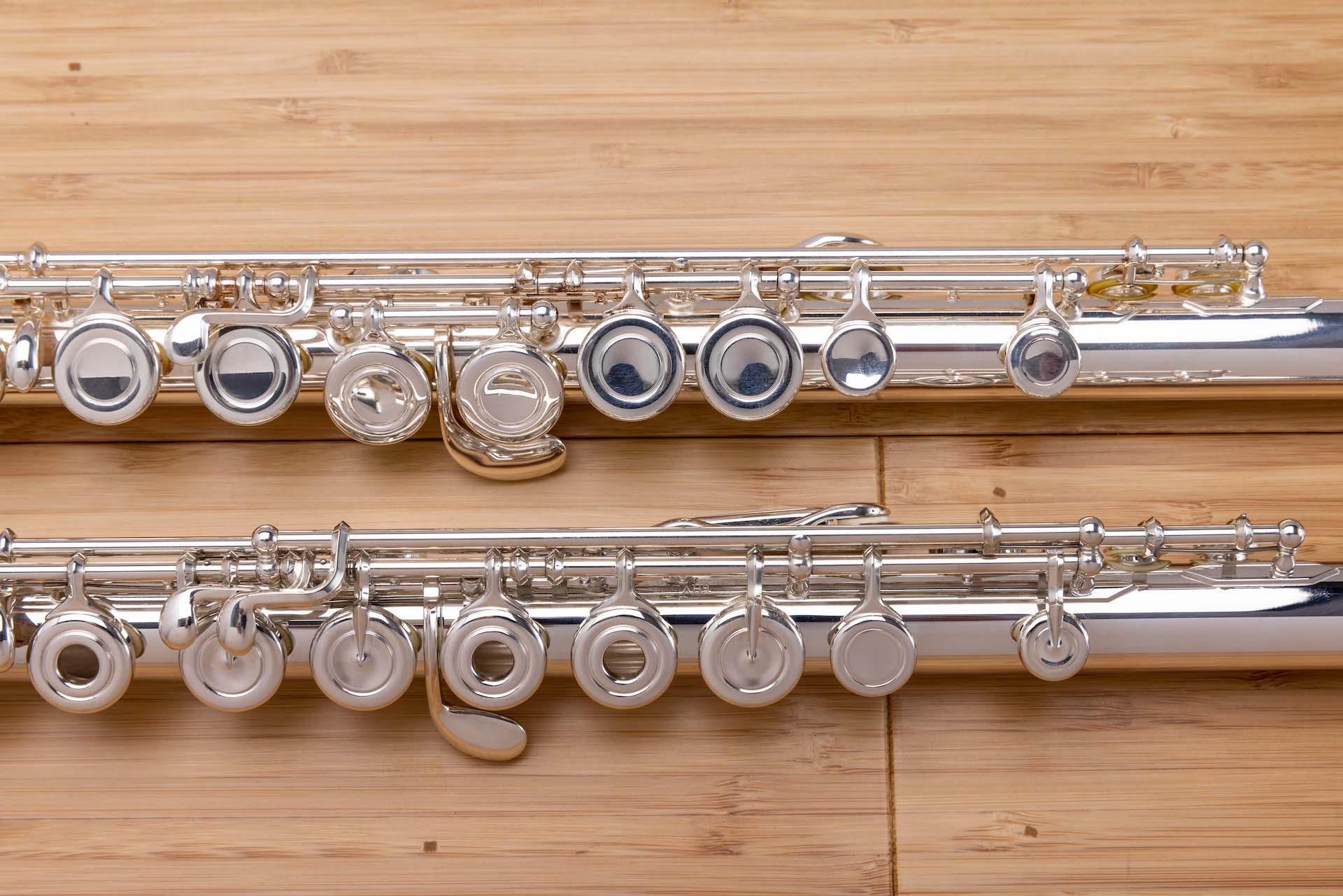
Y arms are standard on all student flutes and on some intermediate flutes. The arm is the part that connects the key to the main rod on the body or footjoint.
French pointed arms are standard on some intermediate flutes and on all professional flutes. The pointed arm extends to the center of the key. This makes for a beautiful cosmetic look, as well.
Heavy wall vs. standard wall
The thickness of the material(s) making up the flute tubing is sometimes referred to as the wall. Beginner flutes tend to have thinner walls since players are still learning how to move air through the instrument. A heavy wall tubing provides a darker and more powerful sound and is intended for players who can move a lot of air through the instrument or who use a fast airstream while playing. Each type of material will offer a different thickness of tubing.
What Other Instruments Are in the Flute Family?
Piccolo
The piccolo is the smallest member of the flute family. It is made of two parts, the body and the headjoint. It is voiced an octave higher than the C flute and has a range from D5 to C8. Piccolos can be made of wood, plastic, composite, or silver. Piccolos are often played in marching bands, concert bands, orchestras, and flute choirs. They can also be played in chamber ensembles or as a solo instrument.
C flute
The C flute is also called the concert flute, the most common flute in the flute family. The C flute is pitched in the key of C and has a range from C4 to C7. More advanced players can play up to D7, and flutes with a B footjoint can play down to B3. C flutes are made of nickel silver, sterling silver, gold, wood, platinum, or Aurumite. C flutes are played in marching bands, concert bands, orchestras, flute choirs, chamber ensembles, woodwind quintets, and sometimes jazz bands.
Alto flute
The alto flute is pitched in the key of G and sounds a perfect fourth lower than what is written in the music. The alto flute can have either a curved headjoint or a straight headjoint. It has a range from G3 to G6 and is typically made of nickel silver or silver. The alto flute is most frequently played in flute ensembles, orchestras, chamber ensembles, and as a solo instrument.
Bass flute
The bass flute is the most commonly played lower-voiced flute. It has a range from C3 to C6 and sounds one octave lower than the C flute. Due to its size, the bass flute has a curved headjoint and a thumb crutch for the left hand to make playing more comfortable. Bass flutes are played in flute ensembles, orchestras, jazz ensembles, and as a solo instrument.
What Are the Differences Between Beginner and Advanced Flutes?
Beginner flutes
Sometimes called student flutes, beginner flutes are designed with price, durability, and playability in mind. Many are made with nickel silver or silver plating and typically have closed-hole, or plateau, keys. The G key is offset, and the instrument will have a C footjoint. Beginner flutes are best when learning proper hand placement and playing techniques.
When shopping for beginner flutes, it is important to take the quality of the instrument into consideration just as much as the price. A lower-quality instrument will often lead to frustration for the player because it does not sound the same as others they are playing with. Sweetwater offers several high-quality beginner flutes that range from roughly $400 to $1,400.
Shop All Student Flutes and Piccolos
Intermediate flutes
If you have been playing for a while and find yourself frustrated with your tone or if you feel you’ve outgrown your flute and want more of a challenge, then you may want to consider upgrading to an intermediate flute. These flutes are made of heavier materials than beginner flutes, allowing more air to be moved through the instrument as your skill continues to develop.
Intermediate flutes are frequently referred to as step-up, conservatory, or performance flutes. They are typically made of solid silver or have a solid silver headjoint with a silver-plated body. An intermediate flute will typically have open-hole keys with a B footjoint (gizmo key), allowing players to learn more advanced material and to develop a wider dynamic range with a fuller sound. Some intermediate flutes offer additional features such as the split-E mechanism, a gold lip plate, or a C♯ trill key.
An intermediate flute can range in price from roughly $1,300 to $3,000, depending on what material it is and what extra options it offers.
Shop All Intermediate Flutes and Piccolos
Professional flutes
Once you get to the point where you feel that your intermediate flute is holding you back, you are probably ready to upgrade to a professional flute. Professional flutes represent the highest end and are frequently handmade. The biggest difference between an intermediate flute and a professional flute is the quality of materials. They can be made from solid silver, gold, platinum, wood, or a mix of materials, depending on what you’re wanting to get out of the instrument.
Professional flutes give the player more options — different metal options for the body, silver keys, white-gold springs, French keys, a split-E mechanism, the G key placement, a B footjoint, a C♯ trill, or different cuts of headjoints just to name a few. A professional-model flute with a solid silver headjoint, body, and foot starts at $2,800. When upgrading to solid silver keys or adding a split-E mechanism, a C♯ trill, and headjoint options (gold lip plates, Aurumite), flutes usually cost $3,000 or more.
Shop All Professional Flutes and Piccolos
FAFQs — Frequently Asked Flute Questions
What type of flute should I buy if I am a doubler, play jazz, and play in a pit orchestra?
This will depend on the level of your playing ability and what type of music you’re going to be playing. An intermediate flute will allow you to have an open-hole option for extended techniques while also being able to use plugs if you are not comfortable with an open-hole setup.
When playing in orchestra and band, which flute would allow me to project in the low and middle registers and to respond easily in the high register?
Depending on your skill level, you might consider an intermediate- or professional-level flute. A flute with a heavy wall or one that has a thicker material will allow you to have a more powerful sound. A professional-level flute tends to offer a heavier wall than an intermediate model.
Does it make a difference if I purchase a solid silver flute or a silver-plated flute with a silver headjoint? Which one sounds better?
Most flutists would say it depends on your budget and what kind of sound you want. A silver-plated flute is made of nickel and silver, and this can create a brighter sound. A solid silver flute tends to have more of a rich and warm sound. Some would even say that it projects more because of the edge that you hear in the sound. The sound production is really dependent on the headjoint and its cut.
Should I consider the split-E mechanism when purchasing my flute?
The split-E mechanism assists one note on the flute: the high E in the third octave. It facilitates stability of the note and improves intonation. It is a matter of personal preference. There are many professionals that play without a split-E mechanism, and also there are many that use it.
Flute Rental: Why and How to Rent a Flute
If you’re thinking about getting a flute, there are two main options available to you: renting or buying. If you or your child have already put in a lot of effort to master the instrument, then purchasing one would be an excellent choice. Owning your own flute can be very rewarding, and you can personalize it with high-quality components that meet your specific preferences.
On the other hand, if you or your child are still exploring the possibility of playing the flute and haven’t fully committed yet, renting might be a better option. Renting allows you to try out a flute without having to make a significant financial commitment. The Sweetwater Instrument Rental program makes it easy and stress-free to rent a flute. Keep reading to find out more!
Why Rent a Flute from Sweetwater?
You can be confident that when you rent a flute from Sweetwater, you’re getting the best instrument available. We work closely with music educators across the country to provide the exact instruments they need in their classrooms. All the flutes we carry have been pre-approved by these educators and come from top-tier brands like Yamaha, Pearl Flutes, Jupiter, Powell Sonare, Wm. S. Haynes, Azumi, and others.
In addition, with Sweetwater’s 40-point Inspection process for instruments, you can rest assured that the flute you receive will be ready to play right away. Your student will receive a high-quality instrument that inspires learning, produces incredible sound, and will last for years to come. The best part is that there are no hidden fees, and all of your rental payments go toward the purchase of the flute. Once it’s paid off, it’s yours to keep.
How to Rent a Flute from Sweetwater
At Sweetwater, renting a flute is a hassle-free experience that comes with an affordable monthly rate. Here’s how it works: Start by visiting the Sweetwater Instrument Rental page and clicking on the “Rent Now” button. Fill out the form, selecting your state, school district, and your child’s school, and then choose “Flute” as the desired instrument. You can also select from a pre-approved list provided by your child’s music teacher.
Once you’ve completed the form, your flute will be delivered straight to your doorstep within just a few days. This is a simple and convenient process that you can easily manage from the comfort of your own home, with no need to wait in long lines or visit another store!
Flute Rental Repairs
If you’re worried about the possibility of your flute malfunctioning and needing repairs, we have a solution for you! Sweetwater offers an Instrument Protection Plan for a small monthly fee, which allows you to quickly swap out your flute whenever necessary. If anything goes wrong, simply let us know, and we’ll send you a replacement flute on the same day.
To return the damaged flute, all you have to do is use the free shipping label we provide. Once the replacement flute arrives, you can continue with your rental period as normal. This is a quick and convenient process that saves you or your student from experiencing weeks of downtime, allowing for more time to play and practice!
Flute Rental Returns & Exchanges
Don’t worry if your child decides that the flute isn’t their thing. With a Sweetwater rental, you’re not tied down to any long-term commitments. You can return the instrument to us at any time without any questions asked, and your monthly payments will stop.
On the other hand, if your student is excelling with their flute and is ready for an upgrade, you can easily do so! All your rental payments can be applied towards another instrument at Sweetwater, making it a breeze to trade in that student flute for a more advanced model. The equity stays with you, not the instrument!
If your student wants to experiment with a different instrument, such as a saxophone or trumpet, it’s just as easy. Sweetwater will help you exchange your current rental for a completely different instrument while retaining the equity you’ve earned!
Conclusion
Regardless of your experience with playing the flute, we are here to help. Sweetwater has the most highly trained salespeople in the business. Call your Sweetwater Sales Engineer at (800) 222-4700; they’ll be happy to help find the best instrument for you.
About the Authors
Elizabeth Shuhan
Flutist, teacher, recording artist, performer, and arts administrator, Elizabeth (Liz) lives in Ithaca, NY. Known for her commitment to teaching and playing in upstate New York and beyond, Liz teaches at Opus Ithaca School of Music where she is also the Director of Education and Community Engagement. She coaches undergraduate students at Cornell University and is frequently a guest flute clinician throughout the United States. During the summers, Liz spends her time on the Flute faculty at Luzerne Music Center, a summer camp for musicians ages 9 to 18 from all around the world. When not playing or teaching, Liz enjoys cooking, spending time with her musical family, practicing yoga, and taking her dog Tina to the dog park.
Alex Nelson
Alex has been playing flute and piccolo for the past 24 years. She studied music education at Emporia State University and music therapy at the University of Kansas. While in school she performed regularly in the Marching Jayhawks, men and women’s basketball bands, flute choir, symphonic band, several chamber groups, and as a solo performer. In addition to flute and piccolo, she plays trombone, guitar, percussion, and piano. She has taught private flute and trombone lessons, and as a board certified music therapist, worked with individuals with intellectual and developmental disabilities, senior assisted living and memory care, and hospital patients. Currently she is a data specialist in the merchandising department at Sweetwater. Alex plays with various chamber groups in the Fort Wayne area. Outside of playing flute & piccolo, she enjoys arranging and composing, crafts, hiking, volunteering, and competing in dog sports.