How Do We Define “Auxiliary Percussion”?
The cool thing about percussion is that, if it sounds cool when you smack it, it’s already at least halfway to becoming an actual instrument! And there’s way more to rhythm than what can be accomplished on just a drum kit — no shade to us drummers, of course! Truth be told, there are a lot of cool percussive elements available for both recording and live settings that may slip your mind or whose names you can never remember (or that you don’t know that we carry!). Sweetwater is packed full of auxiliary percussion solutions to help spice up the rhythm section of any genre from Latin music to alternative rock. But what exactly does the term “auxiliary percussion” refer to?
Auxiliary percussion essentially includes instruments that act as a supporting percussive component to the main percussion, that being usually a drum kit, and the rest of the musical ensemble. It’s a widely utilized field of musicianship that’s been in practice for millennia and seen constant usage on some of the world’s biggest stages. Its definition remains a little loose, however, because, if you wanted to get specific, technically anything that isn’t main percussion qualifies as auxiliary. But, because of its typically smaller footprint, auxiliary percussion can often be conveniently mounted or stored onstage via a multi-stand, and they even come with price tags that are usually a little less daunting than other percussion. Let’s go through four big categories of these supporting instruments and see just how many we can find on Sweetwater’s website!
Shakers
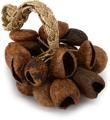
We’ll start our journey with shakers, or shaken idiophones. Easy to comprehend but just as easy to mishandle timewise, shakers are a great way to add some enticing sway to the pulse of any song. Larger banded shakers such as kenari, pala, and pangi lower the tone and expand sonic horizons with a fascinatingly nutty, organic style. Smaller egg shakers help get everyone involved in the beat, while more traditional and paired shaken idiophones like maracas offer plenty of crisp tones, extra playing comfort, and more projection that’s perfectly fit for genres like Latin and Caribbean music.
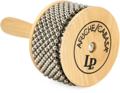
For a more refined and precise sound with less “swish” and more “chick,” check out some of the cabasas we carry! Not only an interesting addition to your onstage setup, cabasas make great wild cards and mid-song effects for orchestras, vocal ensembles, and much more! Additionally, a tambourine is a fantastic go-to for jingling rolls and some extra percussive emphasis that fits quite a few different genres, not to mention it’s great to have on hand for vocalists and bandmates filling empty roles during songs in live situations. Throw it on top of your hi-hats for an unlimited blend of rhythmic potential! And remember not to be fooled by traditional designs — shakers come in all shapes, sizes, and materials, so there’s no doubt you’ll find that perfect extra percussive touch you’re looking for!
Wood Percussion
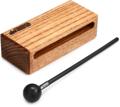
Auxiliary percussion can come in a lot of forms, but wood percussion is perhaps one of the most tonally unique. To begin with, wood blocks and tone blocks — along with their much more hollowed-out counterparts, temple blocks — are fantastic timekeepers that offer a higher-pitched and a deeper, more open woody sound, respectively. Claves, a relative of the wood block, are also a fantastic, lighter-sounding option with a bit more “click” and, as a result, have come to be synonymous with that classic metronome sound found in your recording DAW. But it doesn’t have to be so straightforward! The tones of these hammered instruments cut incredibly well, unearthing clear syncopation from within the mix to make following along for anyone, musicians or audience members, a fun and engaging experience.
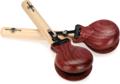
Things depart from normalcy a little bit as we venture into the land of castanets, or “clackers,” as they’re often playfully referred to. A variety of playing formats allows you to choose from single handheld, wooden-handled, and tabletop versions to accommodate any musical setting — from classical orchestral horse trots to traditional Flamenco performances. In recent years, we’ve even seen hard plastic versions introduced for a lighter playing feel while still matching that distinct woody “clack” that they’re known so well for. Guiros make for interesting additions, too, offering a characterful wooden scraping noise commonly used in Spanish folk, salsa, and even classic pop tunes like The Drifters’ “Under the Boardwalk.” And let’s push the envelope a little more and talk about the vibraslap while we’re at it! We guarantee you’ve heard it, even if the name doesn’t sound familiar — the intros to Ozzy’s “Crazy Train” and Cake’s “Short Skirt/Long Jacket” may give you a clue! When struck, the wooden ball transfers energy down the metal spine to the wooden casing of metal teeth that rattle in a decrescendo of ear-catching uniqueness that’s become just as popular in film soundtracks as it has in pop music.
Bells and Ringing Percussion
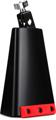
For a much more brilliant effect with plenty of metallic attack, you can’t go wrong with bells and ringing percussion. Handled 25-bell sleigh bells sound lush and are great for tossing in some extra holiday spirit during large formal ensemble performances, setting scenes while soundtracking, and occasionally complementing the mood of softer, balladic genres. Though quite contrasting in tone, cowbells actually fall under the same family name! With a greater emphasis on driving and syncopated rhythmic authority, as well as a more muffled sonic response with little sustain, cowbells can really come in handy. And, with a selection of mounting kits available, you’ll find its integration into your current kit configuration to be virtually effortless.
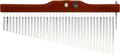
Back on the bright side of things, and with about as much sustain as you could ask for, ringing percussion like a set of premium chimes could be that missing piece to your outfit’s puzzle. Dazzling onstage and an ace up your sleeve in the studio mix, chimes deliver an extra burst of shimmer that, like a lot of other auxiliary percussion, is really a dual threat in terms of formal orchestral and informal band usage. Or, for less glittering sweep and more focused, percussively pleasing playability, triangles make great additions to your setup, too! They’ll hang from pretty much anything on your kit; are available in a bunch of sizes; and, much like chimes, are just about always a welcome voice for your audience!
Cymbals and Kit Auxiliary
We’ve already got a great article on effects cymbals that you can read here, but there are a few more auxiliary options that are certainly worth mentioning! Not all cymbals are a foot wide or larger — some fit right onto your finger! A nice set of finger cymbals, or zills as they are often called, are great for adding a bit of exotic texture to your rhythms and are awesome choices for complementing Middle Eastern musical genres and performances. On the complete opposite end of the size spectrum, gongs make for an excitingly explosive wash that will really catch your audience’s attention! These gargantuan cymbals can pair nicely with traditional Eastern music genres and rock-based Western genres alike and are even available in miniature form for achieving a characterfully trebly, totally unique, and quickly decaying splash sound.
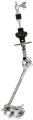
A couple other pieces that add to the drum kit–focused auxiliary percussion equation are auxiliary hi-hats and snares and the mounts and stands that accompany them, respectively. Auxiliary hi-hat mounts are generally quite space-efficient and typically work easily in conjunction with your existing stands. For drummers with large setups that call for greater locational focus, as well as those looking for multiple tunings and bronze settings/responses, a secondary hi-hat or snare drum (or both!) might just be the way to go!
So Many Choices!
The unending beauty of auxiliary percussion is that there is a seemingly infinite number of sound combinations to choose from, and our walkthrough offers only a start. From traditional folk to world music to heartland rock and roll, secondary percussion instruments aid in the complexity of some of the most loved and learned genres and rhythms across the globe. They’re a fantastic addition to professional setups; they’re great for classroom environments; and they help everyone get in on the rhythmic action in a relatively low-stakes manner from the studio to the stage.
Did you see something you liked? Call one of our Sweetwater Sales Engineers at (800) 222-4700 today and get your hands on the gear that speaks to you. Drum on, everyone!