Creative D’Will (a.k.a. DeAngelo Williams) is Sweetwater’s music producer/content creator and one of the newest creatives on our Marketing team. His background and specialty skew far away from the guitars, keyboards, and drums that we frequently cover. I wanted to find out more about D’Will and quizzed him about an “aha!” moment when he discovered a magic bullet in his musical career. Since he’s young, it wasn’t decades ago but just recently.
First, I should define what I mean by “magic bullet.” It’s a piece of hardware or software that makes things better or makes your workflow easier. It’s something that simplifies your creative process and frees you to create better beats, songs, or mixes faster. It’s like a magic key that unlocks the door to a better way. Every musician has experienced a moment like this, and I wanted to know when that was for D’Will.
Fuston: What’s your background in recording and beat production? How did you get your start?
D’Will: I’ve been making music for almost 15 years now. I was in high school, about 16. I started mixing in ACID Pro. I wasn’t using a controller, just mixing. For about seven years, I was just mixing and mastering, recording all my friends in my home recording studio. Then I got Pro Tools and started going to school to learn that, but I found a mentor who was utilizing Cubase, so I learned Cubase. I was mixing and mastering inside of Cubase, working with local churches and artists in Hampton Roads, Virginia.
What mic were you recording with?
What I started with? Oh, it was a little stick mic, one of those computer mics that you pick up at Radio Shack, and I plugged it straight into the computer, and that’s how I made all my music. I was in the 11th grade, and it sounded pretty good. Most people, when they came to the studio, would ask me, “Hey, do you produce music?” And I’d tell them no. But I got asked so much that I thought, “You know, I might need to start producing music.” (Laughs.)
What was your first big investment in producing?
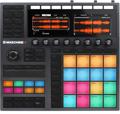
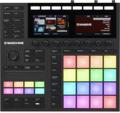
I picked up the first Maschine ever right when it first came out. I was choosing between the Maschine and the MPC. I came from a DAW background, so I wanted something that gave me the ability to produce with hardware and software. At the time, the Maschine was the first one to do that — versus the MPC, which was completely standalone hardware. I picked up the MK1 from Native Instruments, and I started learning how to produce on that.
I loved the workflow. I loved to produce inside the Maschine, and I would make beats, but it would take me forever to arrange them because my mindset for years was based on a linear timeline. I had to shift my mind to a sequence base, where you have sections and scenes, and append those to a timeline, more like stringing blocks together.
Did that come naturally to you?
When it comes to mixing, that linear timeline to me is everything. I was producing on that, making beats in Maschine with the MK1, then I started working in FL Studio. It was great, but I missed the hardware. FL Studio was faster, like if you’re just programming MIDI, but I like to hit stuff. I realized that I needed some kind of beat machine to bang out beats on — even MIDI keyboards didn’t really do it for me. I like pads. I like having buttons for start, stop, record — having all of that at my fingertips. When I’m making beats, I don’t even want to look up at the screen until I’m arranging. So, I went back to Maschine and figured out how to MIDI map everything and control it all in Cubase. Then I’d export that to Cubase; but sometimes my MIDI maps would get all messed up, and I’d have to go back and re-create and troubleshoot, which meant I was spending more time fixing than creating.
When did you decide to move to Ableton?
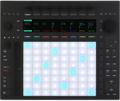
I’ve been wanting to dive into Ableton for years, and now that I’m at Sweetwater, I finally made that happen. Now I’m at the point where I’m actually finishing beats a lot faster. I finished a beat yesterday. I finished a beat the day before that, too. I make a beat every single day now. And the reason I can do that is I don’t have to move out of a certain DAW to do the arranging aspect. I can arrange, and I still have start/stop, everything. It’s one single environment where I can do everything.
Don’t get me wrong: when I’m creating, I love all different types of gear. But when I’m creating and I’m in a zone, I want one piece of gear. That’s the only thing that I want to touch. If I get an idea, I don’t want to move out of the creative mode I’m in to try something else. I can just do it right here inside of Ableton.
If I just want to cook up something on the go, I’ll grab the MPC. If I want to make a beat really quick and fast but don’t have time to arrange it, then I’ll reach for the Maschine, the MK3, or the Maschine Plus. If I want to dive deep and make a real polished-up track, I’ll start on the Maschine and then move into Cubase because I still love mixing in Cubase. I know Cubase. I’ve been using it longer than I’ve been married to my wife. I feel like I know Cubase better than I know my wife. It would take me years and years to get as proficient in Ableton as I am in Cubase.
What was your “aha!” moment?
The “aha!” moment for me came when I found a workflow that just works. Now, making beats is super-easy and fast. And for finishing and mixing, I love the linear timeline.
Finding the right tools is the biggest part about it. When it comes to hardware and software, most people think that it’s this or that. And I’m like, “It’s this and that,” depending on the creative mind state you’re in. It’s all about how you feel, how you want to make music today — all of that stuff. We’ve got the DAW wars; we got, “I like this over that.” At the end of the day, it’s not about which one is better. It’s about which one can get you from point A to point B the fastest. That was the big “aha!” moment — that’s what I learned recently. It’s not so much about the gear. All of this stuff is just tools. Just pick the one that you want to rock with and rock with it.
Let Us Help You Find the Perfect Tool!
Sweetwater has hundreds of Sales Engineers with years of experience in beat making, live music production, studio recording, guitar, bass, drums, DJing, keys, band and orchestra, and content creation. Put our experience to work for you. Just like D’Will finding a mentor who showed him better and easier ways to create, we’re here to share our gear knowledge and experience to help you find the best tools to accomplish your creative vision. Let the experts at Sweetwater lead you to your own “aha!” moment.