

Having your own synthesizer or other portable keyboard at home is a wonderful thing, but it pales in comparison to the excitement that comes when you use your equipment out on the road. When that time comes, you’ll find yourself having to decide what you’re going to use to carry the keyboard. At first, you might choose to just use the cardboard box and foam that came with the keyboard when you bought it, but it won’t take many trips in the rain, and being smashed in a car together with other gear, to realize that you need to find a better solution. The first major decision is choosing whether you need a gig bag, a semi-rigid case, a hard case, or a full-blown ATA (Air Transport Association) approved road case.
Gig Bag
 A padded gig bag may be right for you if you’re the only person carrying the bag — and — it’s being gently loaded into your vehicle into an area not surrounded by other heavy gear. They’re typically lower in cost and add very little extra weight or space. I would not recommend a gig bag if other people will be carrying and storing your keyboard, because it’s far too easy for the bag to be placed between other gear that can damage the keys and controls. Someone else may also set something heavy on top of the bag, not realizing how vulnerable it is.
Semi-rigid Case
 A semi-rigid case has a material outer covering with an inner structure of hard foam, and possibly some wood reinforcement. It is still relatively low cost and weighs just a bit more (and uses a little more space) than the soft bag. But it is much more protective of the keys, knobs, and sliders. It can be safely slid between heavier ATA cases and can handle the ordinary bumps you’d get in your personal car, van, or truck. It’s also fine if other people carry it as long as they know it’s not completely protected. Some of the semi-rigid cases also have external wheels and a handle to make it easy to walk them through an airport and the venue. It’s worth considering whether you typically spend more time on long, smooth surfaces, or going up and down stairs, as the wheels, handle, and frame add extra weight.
Hard Case
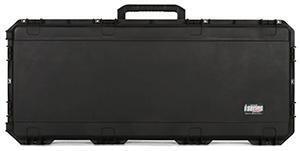 Most hard cases have a polyethylene molded exterior with soft foam interior padding. Some are even ATA approved. These offer a high level of protection without the weight associated with a professional road case. I have flown keyboards across the US in this type of case with no incidents of damage or wear, but they are no substitute for a fully reinforced road case. Wheels and a handle are definitely useful to have.
ATA-approved Road Case
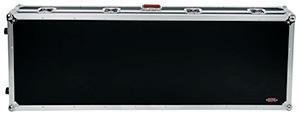
ATA-approved Road Cases are the kind you see when you watch a professional live band load in and out of a venue. They have a strong metal and wood frame with metal corner protectors and can withstand lots of case stacking. The interior is custom-fit with solid foam that does its best to protect the instrument from the daily rough treatment on the road. Wheels may be desired if you have to walk it a lot, but not if the case is getting tightly packed into a truck.
ATA Approved vs. TSA Approved
At first glance these two things may seem interchangeable, but they are two different types of approval. A case with ATA Approval has passed the Air Transportation Association’s requirements regarding the case’s construction to reduce/eliminate shipping damage.
For musical instruments, a TSA (Transportation Security Administration) approved case has key locks that can be (theoretically) unlocked by any TSA officer with a TSA master key. This presumes, of course, that the TSA personnel at the airport actually have that key available. (I mention this because one time a TSA officer threatened to break the locks if I didn’t run to where the case was to be inspected and unlock it myself.)
Sweetwater’s Online Case Finder
To help you find the right case for your keyboard, Sweetwater has taken the work out of the process. The Sweetwater Case Finder is a great way to quickly research all the available options and pricing and determine which case is best for your needs and your keyboard.
Hopefully this will help you decide which bag or case is right for you. You may find that it’s always nice to have a gig bag available for those local jams, along with a stronger case for your more serious gigs. If you have any further questions, please don’t hesitate to contact your Sweetwater Sales Engineer at (800) 222-4700.