
Like most guitarists, I’ve long been on a quest to find the ultimate guitar — an ideal combination of perfect tone, perfect playability, perfect comfort, and even a perfect look. Over the years, I’ve bought and sold a lot of guitars in search of truly great instruments. And I’m happy to say that I’ve arrived at a few that really nail it for me and fill the need for the “Essential Food Groups” of guitars: a great Strat, a great Les Paul, a great hollowbody, a great semi-hollowbody, and for good measure, a killer PRS that bridges several of those categories. Those guitars cover what I need for gigs and studio work in just about any style.
But that left me with one sort of “odd duck”: an inexpensive Fender Standard Telecaster that I bought to have as a strum-around-the-office guitar that I could also take on trips, etc., without worrying too much about banging it around or losing it. The thing is, I just couldn’t leave well enough alone — I had to make it even better!
Here’s the story of how that basic, simple, affordable guitar became a go-to instrument that I love playing, and that checks many of the “perfect guitar” boxes for me. But along the way, it also became a great example of the kind of things you can do to turn a stock instrument into the guitar of your dreams, with the help of a great team of experts. You may have seen this “Partscaster” guitar in some of my recent videos for Sweetwater, as well as in Instagram and Facebook posts, and even on the back cover of my new EP, Foundation.
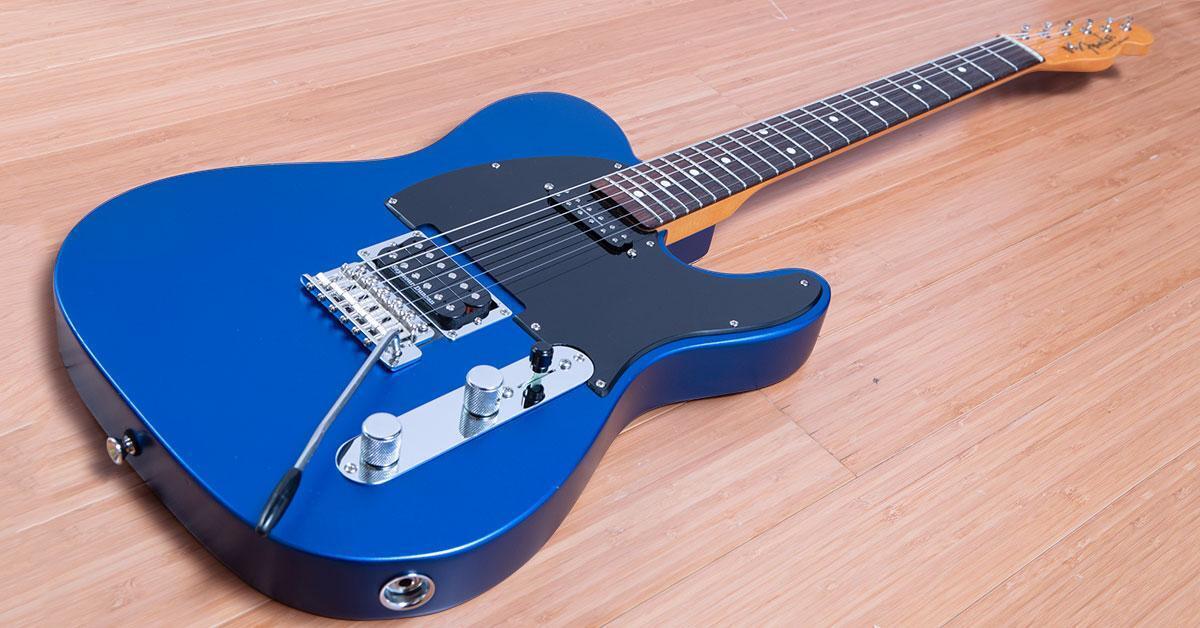
The Remodel Begins
One of the reasons I selected this particular Tele is that it had a gorgeous satin matte-blue finish. I loved the look of it. The stock neck was just fine, but I happened to have a neck from a mid-’90s Fender ’63 reissue Custom Telecaster hanging in my workshop; I had traded an old pedalboard for the neck a few years ago. That neck has a comfortable “C” shape I love, a rosewood fingerboard, and a nicely aged lacquer finish, and it had been played through the years by a really great player.
I bolted the “new” neck onto my blue Tele body, and wow — instant upgrade! (One of the beautiful things about bolt-on-neck guitars like Strats and Teles is that it’s super simple to swap out the neck for a new one.) I happen to believe that a lot of the tone and sustain of a solidbody guitar comes from the neck, more than from the body. And sometimes you find magic combinations of a neck and a body that just seem to resonate well together. All of that held true here. The Custom Telecaster neck on the blue Tele body was a perfect example of the whole being greater than the sum of the parts!
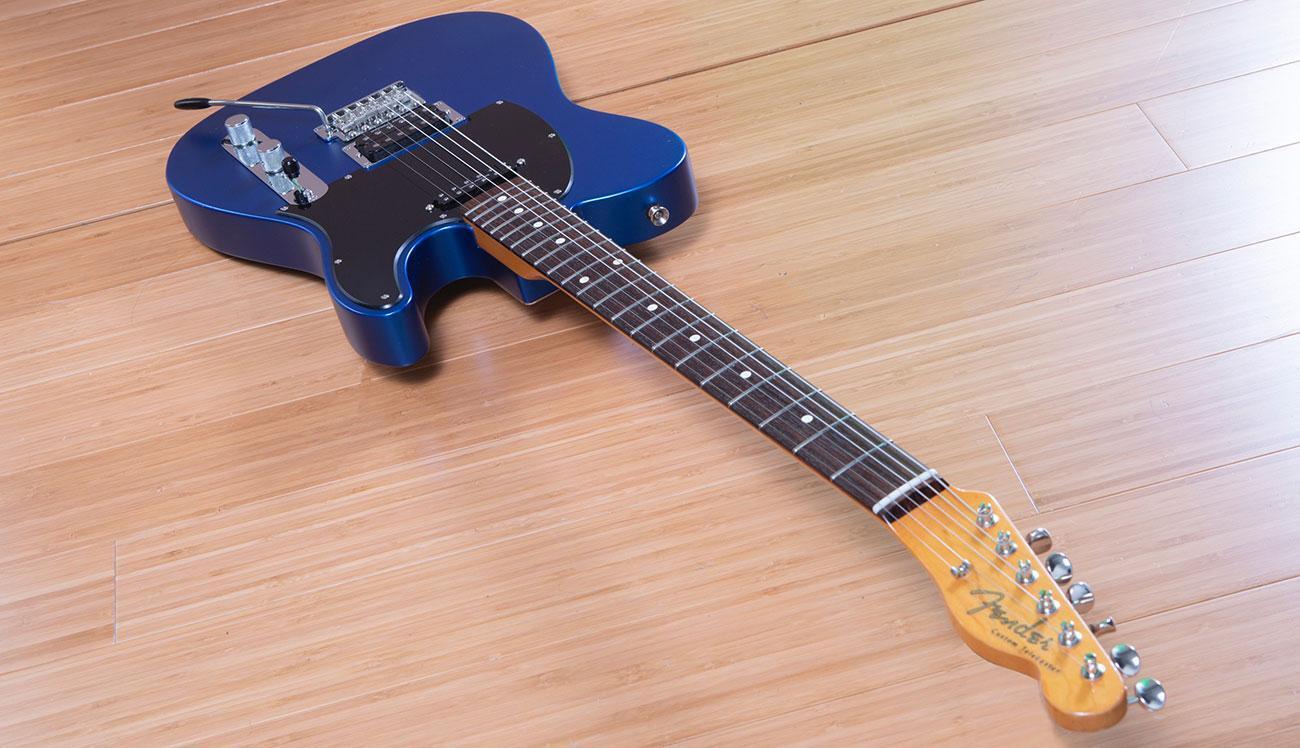
But there was still work to do; as mentioned, that neck had been played — the frets were well worn and the nut needed attention. I took the guitar to the Sweetwater Guitar Workshop, where I had Dunlop 6100 frets installed along with a new bone nut and a fresh set of tuners. Instant upgrade! The guitar now played like a dream and was incredibly loud when played unamplified, with great sustain and resonance you could really feel.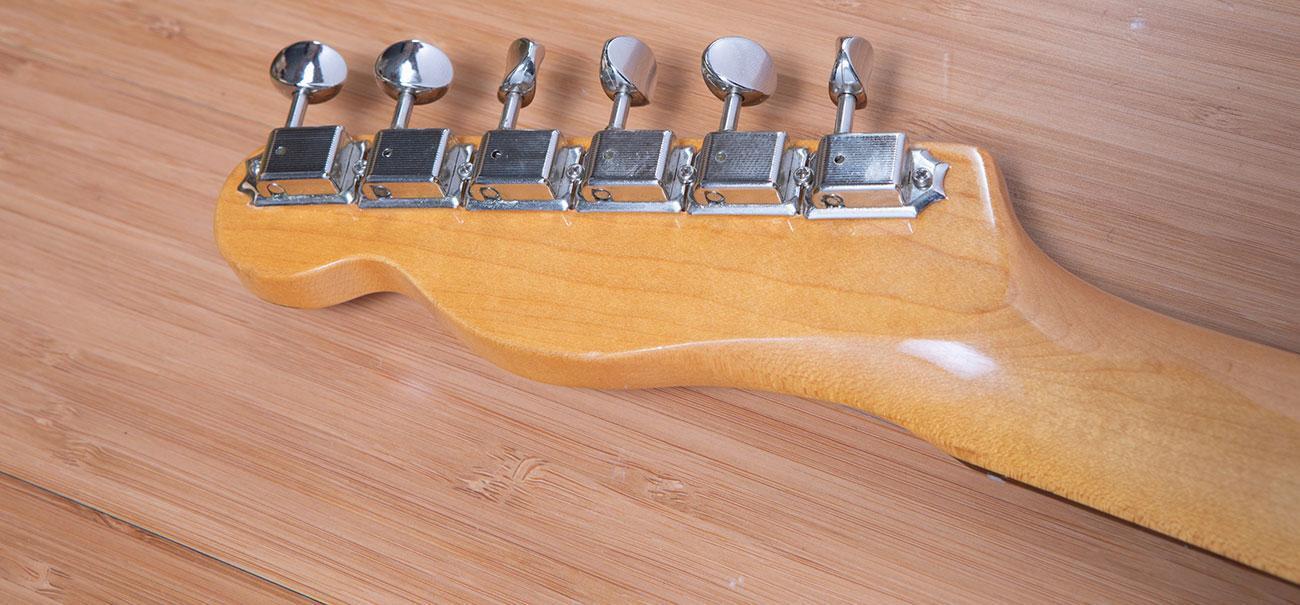
Translating the Tone
The next trick was to translate that “acoustic” performance into electric tone. The stock guitar had the traditional complement of a single-coil Telecaster pickup mounted into the bridge plate and a metal-can-covered single-coil neck pickup. Initially, I started exploring different options for replacement single-coil pickups, but I soon realized that I wanted to take the guitar in a different direction. I went through a variety of pickups that fit into the Telecaster cutouts (patiently installed by the Sweetwater Guitar Repair Shop luthiers), from single-coils to single-coil-sized humbuckers. There were good sounds to be had there, but I still wanted more.
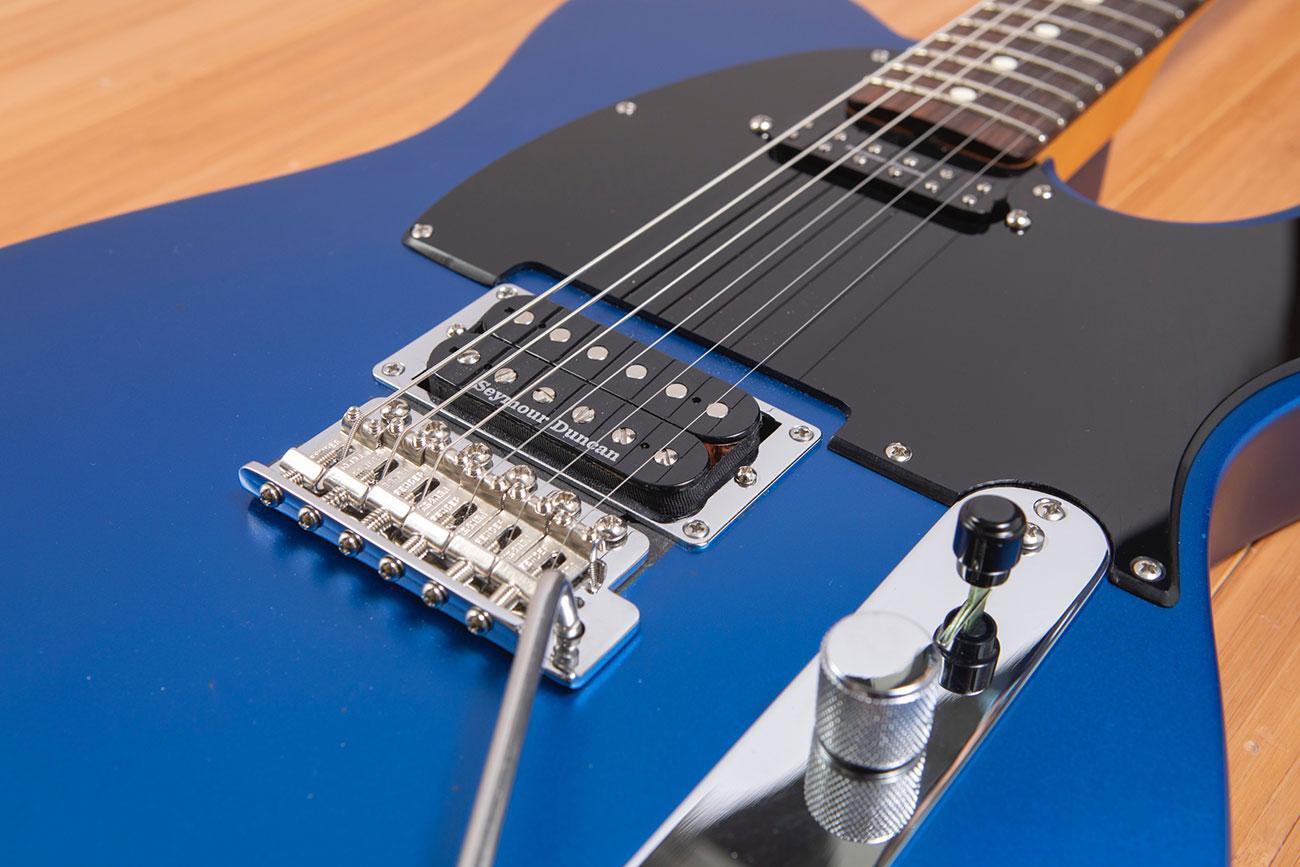
Eventually, I ended up with a Seymour Duncan Lil ’59 single-coil-sized pickup for the neck position. This gives me a round, warm, PAF-style tone with good clarity and pleasant bite and sparkle in the top end, but I can still dial it back for a thick, dark jazz tone when desired. In the bridge, I have a Seymour Duncan Fender-spaced Saturday Night Special, which is a beefy-sounding PAF-style humbucker — the Sweetwater Guitar Repair Shop routed out the guitar body and installed a new Telecaster bridge with a humbucker-sized cutout so we could drop that pickup in. I like this pickup a lot, but I’m still searching for a bit more beef and output. I’m happy now but may make a change at some point. (The tone quest truly never ends….)
Installing humbucking pickups required a change in the control harness. A stock Telecaster typically uses 250k potentiometers for volume and tone controls, which are designed to work well with single-coils. However, that resistance value can make humbuckers sound a bit dark. The Sweetwater Guitar Repair Shop put together a complete custom control harness for me using premium Emerson components, with 500k pots, which works much better with the humbuckers. The tone stays open and clear at all settings, with no treble loss when I turn down the volume.
The Big Rout
I played the Tele with this configuration for a while and was quite pleased with it. But I found myself wanting a vibrato bridge. It would have been fairly easy to add a Bigsby-style bridge to the Tele, but what I really wanted was a Strat-style bridge. With guitars, you can do pretty much anything you want; the question is how much surgery would be required — and would that surgery have a negative impact on the tone of the guitar? There was potential to cause real damage to the instrument’s tone and sustain by routing out a bunch of wood, but the potential was also there to add all the great stuff that a vibrato bridge would bring.
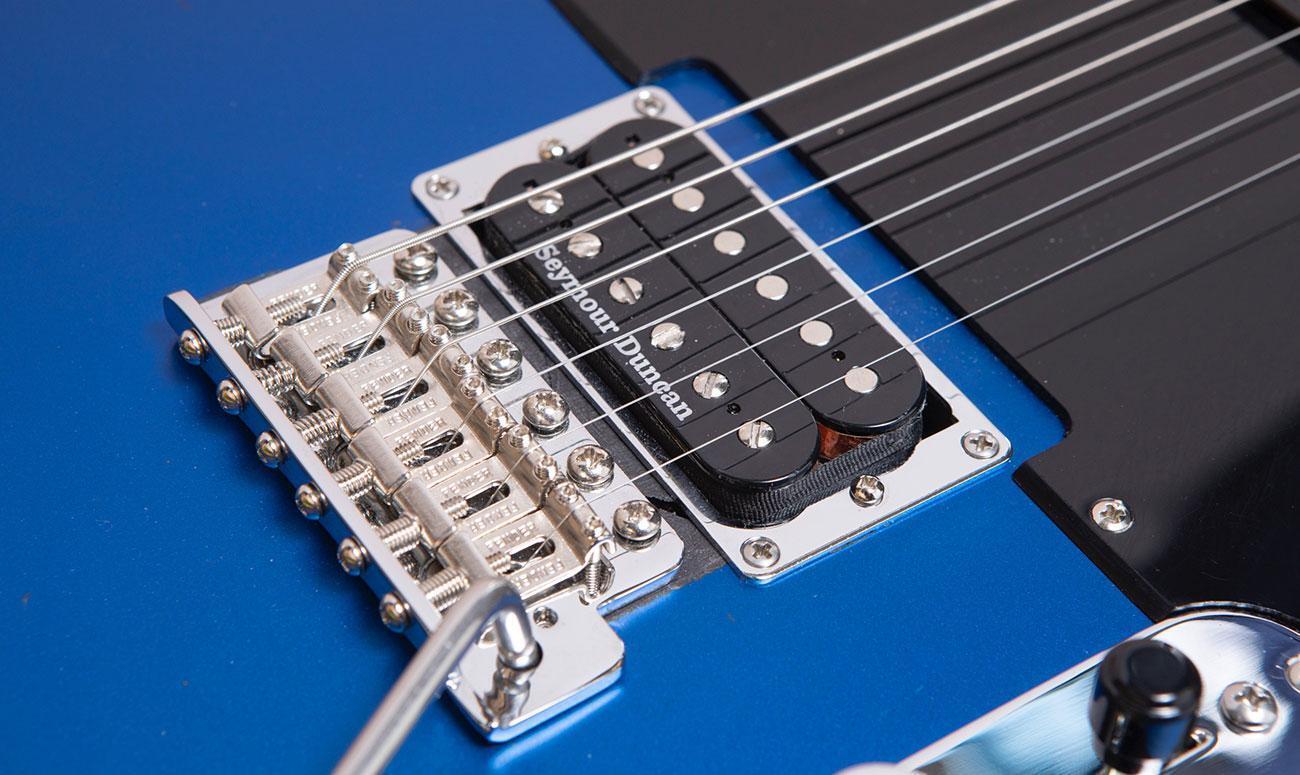
I deliberated for a while, then decided to take the plunge. With some trepidation, I once again dropped the Tele off at the Sweetwater Guitar Repair Shop and crossed my fingers. I needn’t have worried. The Guitar Repair Shop luthiers did a spectacular job installing the bridge! The install did indeed require major surgery. Not only was it necessary to extensively rout the front and back of the guitar body for the bridge and the spring/claw assembly, but a new block of wood also needed to be inlaid between the bridge pickup and the bridge to support the six-screw bridge plate, and all without messing up the guitar finish too much!
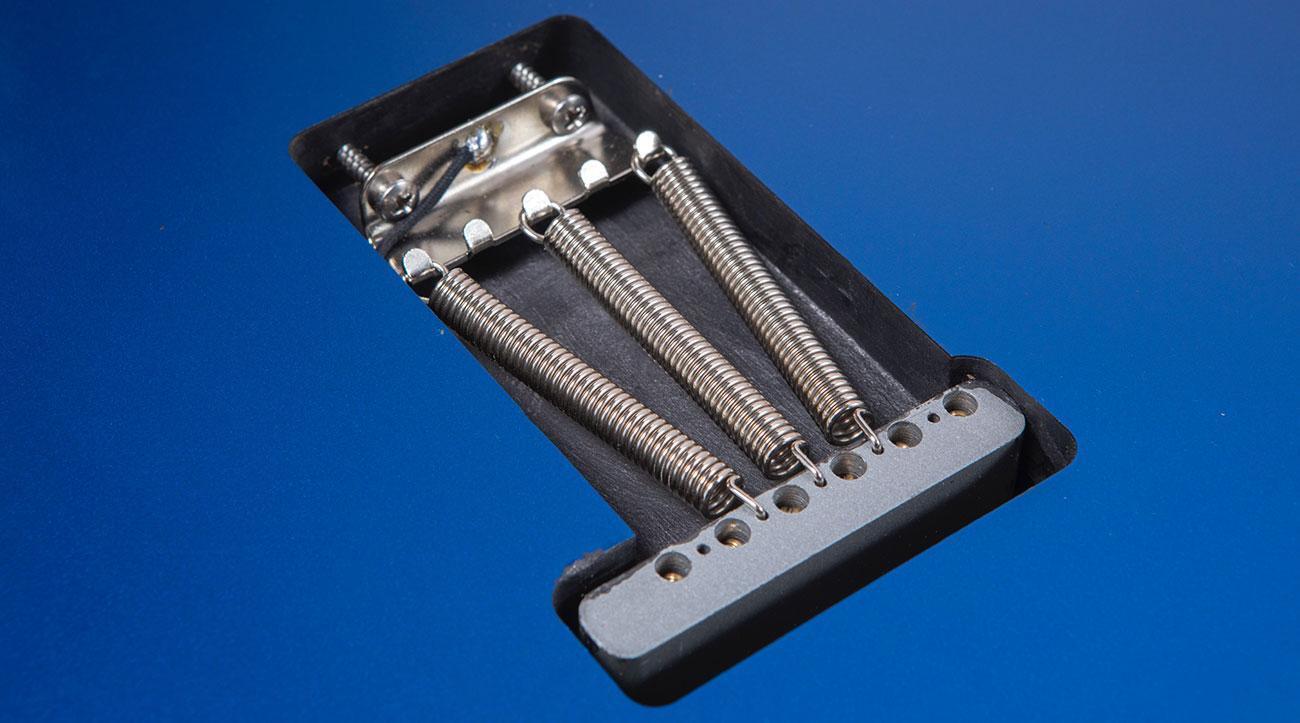
The new bridge is a vintage-style six-saddle Strat-type vibrato bridge with a pop-in arm with tension adjust. The Guitar Repair Shop luthiers even custom-bent the vibrato arm so that it angled properly and cleared the tone control when swung back.
Did the tone change? If so, it is minor. I really don’t hear much, if any, difference. All the sustain is still there. The neck still resonates and rings like a bell. The guitar is still surprisingly loud when played unplugged. But I’ve gained all the expressiveness of a Strat-style trem, which is a huge bonus.
In the End
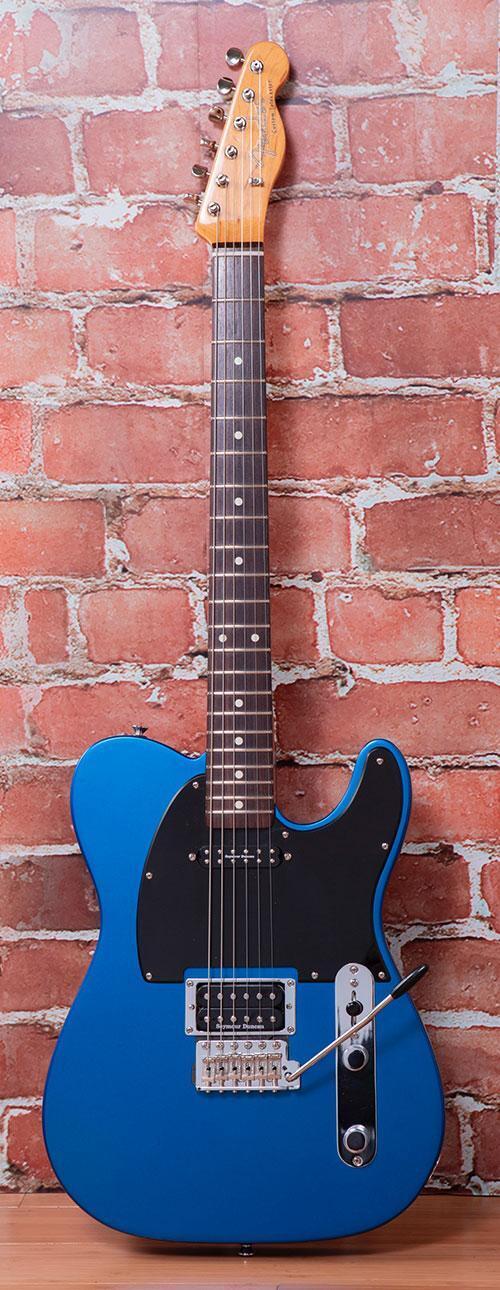
So where did I end up? Virtually every aspect of the guitar has been touched, from the tuners to the strap buttons, electronics, hardware, neck, frets, nut — in fact, it’s a totally different guitar. And it’s a true hybrid that simply isn’t available off the shelf. I’ve got a comfortable Tele body with an amazing neck, modern playability (the Guitar Repair Shop luthiers also Plek’d it for me), tones that are somewhere in the vicinity of a Les Paul but with more articulation, and a Strat vibrato. The guitar covers a ton of ground and works in a wide range of styles.
Was it worth it to put all that effort into what started as an inexpensive instrument? In my opinion, absolutely! The guitar fits me perfectly and is custom-built for what I want and need. I certainly invested some dollars into getting the Tele to this point — and heavily utilized the amazing skills of the Sweetwater Guitar Repair Shop luthiers — but the cost is still way less than it would have been to order a custom instrument from a boutique builder or custom shop. And I could do it one step at a time, which for me was critical in ending up where I wanted to be — I had no idea when I started that I would end up with humbuckers and a vibrato bridge. I simply could never have planned for that.
The moral of the story is, whether you have a guitar that’s nearly perfect for you or you want to turn an instrument into something completely different like I did, you have nearly endless possibilities for getting it done. Maybe it’s just a new pickup or a new control harness, or maybe it’s a major rebuild, whatever you want, you can do it. And the results speak for themselves: you end up with a customized instrument that’s uniquely designed and configured for you and your musical needs.
Check out the video accompanying this article to hear the guitar in action and to see the changes we’ve discussed here. And if you have questions about upgrading or modifying a guitar or bass, get in touch with the Sweetwater Guitar Workshop at (800) 222-4700. I can tell you from personal experience that they’re among the best in the world at what they do. I trust them with all my guitar maintenance and mods, from the most basic to the most intense.