With so many ways to ideate, write, arrange, compose, and record music, the workstation keyboard is hard to beat. Its workflow balances the scope of computer-based productions without distractions and the range of multi-artist projects without the cumbersome logistics and coordination. Still, with as much as workstation keyboards have to offer, more is sometimes better. The total number of features, patches, effects, or anything else only matters when you can utilize them to implement your sonic vision. Whatever that might be will surely make or break your decision, as obvious as that sounds, requiring a holistic evaluation of features in their own right and in the broader context of their use.
This inevitably begs the question: What will you be using a workstation to compose? Whether you’re playing solo or in sessions, arranging for bands and orchestras, or composing for film, TV, or video games, the best workstation keyboards will be a mix of sonic versatility, arrangement flexibility, and personal workflow preferences. From the classic to the contemporary, we’ve curated a robust array of options to help you find your next compositional workhorse.
Note: At Sweetwater, we know there's no such thing as "best" when it comes to music gear. Every player and artist has unique tastes, which is what makes selecting gear so fun! The items on this list feature some of our favorite products from top manufacturers to help you start your buying journey! Explore these recommendations and dive into Sweetwater's massive collection of gear on our online store. For personalized picks and expert advice, please contact our knowledgeable Sweetwater Sales Engineers at (800) 222-4700!
Want to learn how to buy the keyboard workstation for you? Check out our buying advice below.
Best Workstation Keyboards: Our Picks
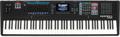
Kurzweil K2088 88-key V.A.S.T. Synthesizer Workstation
The K20 series keyboard workstations, including the K2088 and K2061, represent the definitive evolution of Kurzweil’s proprietary Variable Architecture Synthesis Technology. Honed over three decades of esteemed K2 synthesizers, V.A.S.T. provides 32 customizable layers per program, massive polyphony, and an array of intuitive, hands-on controllers that empower you to create expansive and nuanced sounds that transcend the boundaries of V.A.S.T. classics and forge entirely new soundscapes. The massive selection of over 2,000 factory programs are ready for instant deployment, plus an additional 2GB of user storage space enables loading custom sounds. With Kurzweil’s legendary V.A.S.T. modular synthesis architecture at its core, seamlessly integrated with a powerful 6-operator FM engine, KVA oscillators, creative arpeggiators and sequencers, and an extensive suite of customizable effects, the K2088 provides a comprehensive feature set for professional keyboardists who need a no-compromise instrument with flawless playability and virtually limitless creative potential.
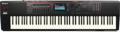
Roland FANTOM-08 Music Workstation Keyboard
More than two decades of refining its high-caliber workstations culminates in the Roland FANTOM-08, building on its great history of iconic synths and sound design technology. The FANTOM’s boundless sonics include state-of-the-art Behavior Modeling Chips, ZEN-Core, SuperNATURAL Acoustic, and VTW Organ engines — with built-in room to expand further. Numerous onboard effects supplement your sound with brilliant texturizing tools while its 16-part, 88-key, velocity-sensitive keybed gives you plenty of room to explore. Roland expands your rhythmic reach by adding a 16-pad, 4 x 4 matrix to easily ideate across its more than 90 drum kits. A detailed interface includes fully assignable parameters and a vivid, full-color touchscreen display, allowing deep editing to hone your tones. Extensive connectivity options let you easily integrate the FANTOM-08 into your stage or studio arrangement, with multiple pedal inputs and modulation controls adding even more expressivity to your performance. Available in 88-key, 76-key, and 61-key versions.
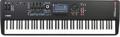
Yamaha MODX M8 88-key Performance Synthesizer
Take your performance to the next level with the MODX M8. Featuring an 88-key graded hammer-action keybed for authentic feel, intuitive hands-on controls, and three advanced Yamaha sound engines, this lightweight synth delivers everything from classic analog tones to cutting-edge FM synthesis and lifelike instruments—all in a sleek, road-ready design. Alongside the innovative Motion Control Synthesis system, which enables dynamic sound design through tools like Motion Sequences, the Super Knob, and an Envelope Follower, the AN-X engine delivers authentic vintage analog tones with extensive control options, including dual filters, multiple filter types, modulation capabilities, and adjustable aging parameters. Complementing this, the AWM2 sample-based engine offers up to 128 elements per part, providing a broad platform for creating richly layered, high-definition instrument sounds with exceptional realism and expressive detail. Also available as the 76-key MODX M7 and the 61-key MODX M6.
Kurzweil K2700 88-key Synthesizer Workstation
Picking up on the threads of the PC4, the Kurzweil K2700 expands its range to feature a fully realized production workstation on par with any DAW-based arrangement. Its fully weighted, 88-note keybed grants access to more than 1,500 presets that include ’70s electric pianos, acoustic grands, searing synths, lush orchestras, and more. Sounds are deeply customizable via the VAST architecture, offering 32 layers per program for endless sonic sculpting. Its powerful DSP handles everything from virtual analog synths to award-winning effects and premiere resonance modeling. Its 6-operator FM engine can handle SysEx files to augment the iconic FM experience. The 4 x 4 pad matrix allows for straightforward rhythmic ideation, fully utilizing its 256-voice polyphony. Its detailed interface is fully assignable, with extensive connectivity for CC and switch pedals, alongside MIDI and USB options. FlashPlay tech means zero load times on sounds, with pitch and mod wheel controls accompanied by a ribbon controller for endless expressivity.
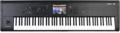
Korg Kronos 3 88-key Music Workstation
Whether you’re a professional or aspiring keyboardist, Kronos 3 is the definitive instrument for ultimate musical expression. With its intuitive control set and instant access to over 300 premium sound libraries, Kronos 3 completely redefines the concept of the keyboard workstation — an instrument category Korg created nearly four decades ago with the legendary M1 in 1988. Korg workstations have been fixtures in world-class studios and are heard on countless iconic recordings. Revered as the gold standard by professionals, Kronos has consistently set standards for sound quality, versatility, and sheer power. To suit a range of keyboardist preferences, Korg offers Kronos 3 with your choice of three keybeds. The 88- and 73-key models are fitted with Korg’s flagship Japan-crafted RH3 (Real Weighted Hammer Action 3) keybed, whereas the 61-key model features Korg’s smooth Natural Touch semi-weighted action with aftertouch. Whichever you select, you can be assured of flawless playability. While the classic features of Kronos carry forward, this next-generation design incorporates subtle yet striking updates. Its metal chassis boasts tour-tough durability and an upscale tactile feel, while the elegant black wooden end panels add a sophisticated touch. These enhancements ensure Kronos not only performs like a champ but also commands instant attention from your audience.
Keyboard Workstation Buying Advice
Keyboard workstations add performance and sonic versatility to any studio or live rig. This Sweetwater Buying Guide includes information that can help you choose a keyboard for your needs. Since there’s so much to consider when purchasing a keyboard workstation, don’t hesitate to call a Sweetwater Sales Engineer at (800) 222-4700 if you need assistance.
- What Is a Keyboard Workstation?
- What Is an Arranger Keyboard?
- What to Look for in a Keyboard Workstation
What Is a Keyboard Workstation?
A keyboard workstation is equipped with tools for both performers and composers alike. In addition to basic “bread-and-butter sounds” that professional keyboards typically come with, a workstation generally has more synth sounds, more effects, and other music creation, such as advanced patch editing and sequencing. Whether you’re a “one-man band,” performing in a group, or writing original music, the workstation can accommodate your musical needs.
Types of Synthesis
Keyboard workstations provide a greater palette for creating original sounds and effects than other professional keyboards. Workstations employ different methods of sound generation, such as analog modeling (great for electronic music) and sample playback (for realistic renditions of acoustic instruments). Many keyboards even offer sampling functionality, so you can record any sound and reproduce it in varying pitches across your keyboard. If you need to cover all the bases, consider a top-of-the-line workstation (such as the Korg Nautilus 88) that employs multiple synth engines. With a robust control set that allows you to modulate hundreds of presets or build patches from scratch, the keyboard workstation makes it easy to design and shape your sounds.
Combination Sounds
The best thing about a workstation is its ability to generate multiple sounds simultaneously. For instance, a film composer can sequence strings, brass sections, woodwinds, percussion, and grand piano patches for a cinematic orchestral score. If you’re a songwriter, then you might assemble a “band” that consists of a bass, organ, guitar, and drums. If your workstation records audio, then you can add vocals to the mix. For live performance, you might layer a synth pad, violin, choir, and piano for a unique composite sound you wouldn’t be able to achieve with any other type of keyboard.
Sequencing and Audio Recording
Whether performing live or writing music, MIDI sequencing is a valuable tool. With the push of a few buttons, you can record numerous accompaniment parts on your keyboard — and then play live parts with the sequenced backing tracks. Some workstations also have a mic/line input that lets you record audio, such as vocals or guitar, and incorporate it into your sequenced track. Also, if you are performing cover music and want to produce more authentic covers, then workstations give you options such as pre-programmed MIDI files for reproducing the music more accurately.
Effects Processing
Applying effects to a MIDI or audio track can turn an ordinary sound into something special. All keyboard workstations include onboard effects processors. Many feature effects that can be applied to individual tracks (insert effects) and the total mix (master effects). Additionally, workstations with audio recording capability usually provide important sound-shaping tools, such as EQ and dynamics processing. This will give you even more control over the final sound that you produce with your keyboard workstation.
What Is an Arranger Keyboard?
There is another type of professional keyboard called an arranger keyboard. Arrangers have evolved into a necessary tool for professional performing musicians and have even made their way into the studio. The main difference between a workstation and an arranger is that the arranger keyboard has built-in “auto accompaniment.”
In other words, with the push of just a few buttons, the keyboard will provide backing tracks that automatically match your playing style, rhythm, and tempo. These are unique tools for composers who must produce music quickly in a style they may not be familiar with. Even songwriters who can’t program drums or play guitar can use the arranger to hear their songs played by a band without calling in musicians. Finally, for the working solo performer, the arranger can add a new dimension to your sound by giving you the advantage of sounding like a full band.
What to Look for in a Keyboard Workstation
The Keybed
Pro keyboards come in a variety of sizes with various numbers of keys. Finding workstations with 88, 76, 73, 61, and even 49 keys are standard. You will also hear the words “hammer action” (which emulates the weight and feel of a real piano keyboard), “semi-weighted,” and “synth action” (which describes light, spring-loaded keys). Determine which combination of keybed action type and number of keys will provide the best combination of feel and functionality for you.
Type of Synthesis
The type of synthesis depends on the kind of music you want to make and what other sound sources you have. A sample-playback synth will work well if you want convincing piano, string section, brass, and percussion sounds. A workstation with analog modeling, wavetable, or FM synthesis might be more appropriate if your genre is electronic music. Once you determine the type of synthesis you prefer, choosing an instrument will be easier. However, consider a top-of-the-line workstation that employs multiple synth engines if you need to cover all the bases.
Sample Rate and Bit Depth
In a professional setting, one determiner of sound quality is the sample rate and bit depth of the samples, such as 24-bit/96kHz. With many workstations offering sounds recorded in world-class studios with premium vintage gear, the question of sound quality becomes an issue of whether the sounds that a particular keyboard produces inspire you.
Knobs and Controllers
The bare necessities are a functioning pitch wheel, mod wheel, or joystick controller. If a workstation has knobs and sliders, then ensure they transmit MIDI continuous controller (CC) messages. These become very useful as you find your way around the MIDI universe. You can use them to sweep filters and fade effects in the keyboard’s sound engine and control levels in your sequencer.
Removable Media
Removable media is vital for archiving or saving your patch information. Its purpose is twofold. If your keyboard goes in for repair and you have a backup copy of your patches, then you won’t lose your settings when the keyboard is reinitialized. Also, eventually, the number of patches you create may exceed the memory capabilities of the keyboard. Removable media allows you to organize your patches to match your performance needs. Modern workstations are often outfitted with connections for flash drives or SD cards for additional preset storage.
Computer Interface
Many keyboard workstations offer a USB interface for data transfer and archiving. If you are working with a computer-based DAW, then a USB port that passes bidirectional MIDI allows you to use your keyboard as a master controller for your favorite software and virtual instruments. A keyboard with a built-in audio interface can be a cost-effective way to get high-quality audio in and out of the computer without investing in additional gear.
Find Your Keyboard Workstation at Sweetwater
Clearly, there are many options to consider when choosing a keyboard workstation. With the knowledge and training to help you decide, your Sweetwater Sales Engineer can be a valuable resource. Give them a call at (800) 222-4700.