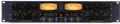
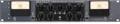
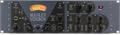
Few small equipment manufacturers in the pro audio industry are as well-known and highly regarded as Manley Labs. Coveted by top recording and mastering engineers, artists, and producers, Manley’s cutting-edge gear is meticulously designed and manufactured, right down to the component level. Their tube-driven hardware is the secret sauce behind countless hits made since the 1990s. Sweetwater’s relationship with Manley dates back to 1999, and in the ensuing decades, we have grown together as companies with a shared commitment to excellence. We were fortunate enough to catch Manley Labs President EveAnna Manley on a rare break, and she generously shared her thoughts on high-fidelity circuit design, the importance of subjective listening, and her company’s unique place in the audio industry.
Sweetwater: Hello EveAnna. Thanks for taking the time to speak with us. Manley Labs has a rich history that stretches back to the development of high-end tube hi-fi gear in the 1980s. How do those roots inform the audiophile sensibilities that are so evident in Manley Labs’ pro audio gear?

EveAnna: I feel really fortunate to have also started in my career when the brand was a year old and we were just beginning development of the first pro audio product, which was a microphone preamplifier. During the first few months that I started working for David Manley at Vacuum Tube Logic of America, Inc., I drove up to the Bay Area to help out the company at my first Stereophile show. At that time, I was still stuffing printed circuit boards, and I really didn’t have a handle on the whole product range or even what everything looked like as a finished product. I learned a lot during that show! I remember they had a listening test room set up to see if people could hear the difference between a VTL tube amp and a Bryston (I think it was) solid-state amplifier. That was my first blind listening test, and I picked the tube amplifier every time! I lived with David and Luke Manley, and we had a big hi-fi system set up at home with Infinity Beta speakers, a Studer tape machine, and one-off master tape copies. We spent many evenings listening to music, yes, but also listening to new designs and comparing different things. This experience taught me how to listen and how even little things can make an audible difference.
Manley’s Chino, California, facility was set up to manufacture both pro studio and hi-fi equipment. While your pro audio gear is a staple in top studios worldwide, Manley is still very much involved in high-end consumer audio. At what point did you sense an opening for golden-ear gear in the professional studio arena?
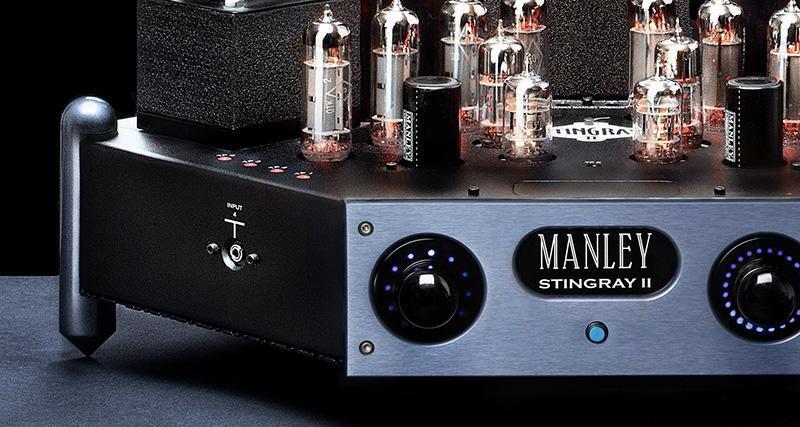 We had just supplied a famous mastering studio, Precision Mastering, with gobs of vacuum tube power amplifiers to power their speakers, and they became a beta-testing customer for all of our then-new product designs. And they usually bought some of everything we made! Shortly thereafter, Jackson Browne got some of our big tube amplifiers to run his Groove Masters studio nearfield and soffit speakers. This was during my first two years with the company, and Steve Haselton, an engineer from the Mastering Lab, was working part-time with us. Few people actually know that Steve designed more of the Manley circuits than David Manley did, many of which we still use today. I was inspired hanging around Steve. He’d tell me stories of how our heroes Doug Sax and George Massenburg would listen to silver switches versus gold contact switches or listen to different types of wires. One day I took a bag of capacitors down to Groove Masters, and we spent the day listening to what different output capacitor types sounded like in a certain output stage circuit, and the winning result of that listening test is what we still use today. Working closely with Precision Mastering was like straddling the fence between the recording and the audiophile camps. I remember listening to audiophile power cords there one afternoon and being amazed that we could hear the differences. I learned early on that music creators care as much about sound quality as music reproducers or hobbyists do. There shouldn’t be this great divide or mistrust between the recording and audiophile world. We should all embrace each other!
Manley gear is used in almost every major studio on the planet for adding glue, heft, and air to individual tracks and mixes. “Tubes rule” is your motto and design philosophy, along with your custom-wound transformers and beefy power supplies. How are these technologies from analog’s golden age integrated to produce the coveted Manley sound?
 While we might come around to it a little slower than I’d like, I must say that embracing modern production technologies, such as automated surface-mount technology, is working well for us. For instance, our new Switch Mode Power Supply was designed especially for us by Bruno Putzeys, who I consider to be THE worldwide master in that technology. Using classic technology, namely antique vacuum tube technology for the highest audio quality, and coupling that with modern build techniques and cutting-edge power supply design is how we produce The Manley Sound. We continue to LISTEN to every change we make along the way, every choice of capacitor, every strand of wire, to make sure that the circuit design and execution sound exactly how we intended. We embrace the future with careful reference to the past. It is always a balance of empirical scientific measurable and emotional listening results.
When designing a new product, do you start with a specific sonic target or market niche in mind — or do you just decide you’re going to develop the best, say, channel strip possible?

For many years, I think our engineering usually developed out of one person’s head, and that person might tinker and play with a design for quite some time and emerge with a concoction that sounded wonderful but perhaps was too tedious to construct, and usually was undisciplined in feature creep (yes, I’m guilty). Therefore, it would end up very expensive to the end user. In the last few years, we have taken a different approach to new product design by first studying the market and interfacing with our customers to hear what they are crying for from us, and what price they want to pay for it. Once we have the general product scope, and the retail price goal, we can use very simple math to set our build-cost threshold. With my nearly 30 years of manufacturing experience, I know we just can’t go find a bunch of cheap parts and save money that way, or we are highly likely to take a hit in product reliability from unproven inferior parts and worse — a huge sonic penalty. So instead, we have gotten smarter with the layout and how that product will be put together, and in America, to build in the most efficient manner.  This means designing the product from the onset to build easily and fast. Just making the chassis slightly shorter than it used to be means we can use the main PCB to hold the I/O connectors and eliminate hours of hand wiring, for instance. And a smaller board is going to cost less to buy. So simple! These days, we have a really talented draftsman on our team, Corey, who can exploit the software for the board layout to be able to fit all the components onto a smaller board. We have really evolved from decades ago when we used to lay out board artwork with black tape and sticky donuts onto clear film! Efficiency without sacrificing sonic delivery or reliability is the goal.
The Stereo Variable Mu limiter/compressor — now a modern classic — uses a relatively rare operating principle borrowed from the legendary Fairchild 670. To what degree are you inspired by iconic equipment of yesteryear?
 It’s funny that I am often inspired by iconic Manley equipment of yesteryear as the brand turns 30 years old in 2018! Seriously, designing the Manley CORE as a modern, less-expensive version of a Manley VOXBOX illustrates that! We also recently reworked the Manley ELOP and created the Nu Mu Stereo Limiter Compressor, inspired by the classic Variable Mu. Looking forward, we’ll be looking further back in our history for inspiration. The next project we are working on is a new stereo FET limiter to replace the expensive and hard-to-build Manley SLAM! Instead of scrubbing the SLAM! for build-ability and efficiency, I am also looking at more historic FET limiters to see if we can make the next product an 1176-on-steroids as it were… perhaps… watch this space…. We have a few pro audio products in the exploration stage currently. We are also releasing several new hi-fi designs this year.
Legions of world-class engineers rely on Manley gear for every stage of the recording and mastering process. Surely you get input from professionals all the time. How often is that feedback the impetus for new products — the Reference Silver mic, for instance? How does Manley Labs determine what new products to develop?

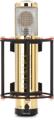
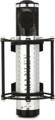
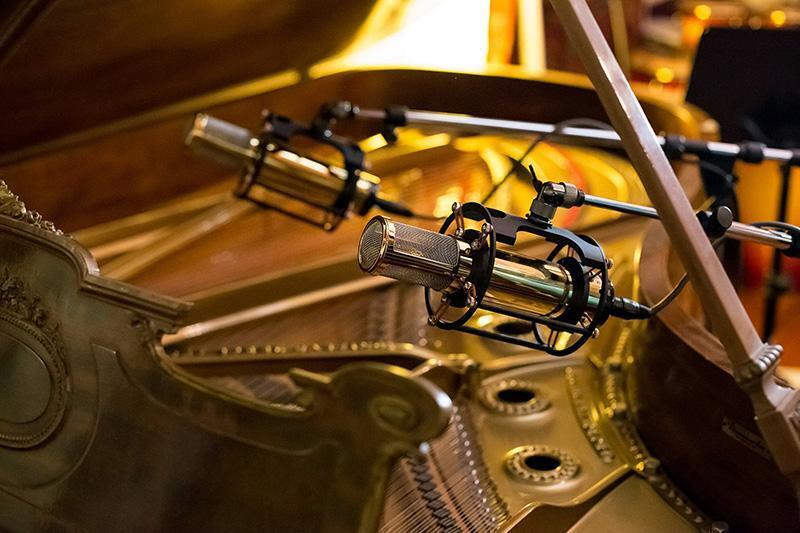
 Very often — I am hearing customer requests all the time. But sometimes I just put the concept together myself. With the new Manley Reference Silver Microphone, I knew one microphone “type” that wasn’t currently being produced or emulated, and that was the venerable Sony C-37. Several of my recording engineer buddies told me how much they loved their old Sony mics, but they were really old and hard to keep working. I also knew that David Josephson, who has been making our Manley Reference Gold capsule for us since 1990, also has been making a C-37 capsule design for many years. So I saw a place in the market for something new and different that we could fill. I also gave our engineering team the demand that we use a derivative of our supreme SMPS (switching mode power supply) design for this new mic. A twist! And guess what? It is better sounding, more reliable, quieter, and works at all voltages around the world. We are always improving, and you’ll see this superior power supply technology improve our legendary Reference Gold and Reference Cardioid Microphones in the near future as well.
“Made in Chino, not China” is another Manley mantra. What went into the decision to keep your manufacturing here in the States?
 First and foremost, I am proud to keep my manufacturing local and support our neighborhood, our schools, our employees, and numerous service shops’ employees and their families as well. This is one way to make America “great” and forms the tax base and structure of our local community, by having my company provide jobs here in So Cal. I am as loyal to my employees as they are to me. Many of us have been working together for 20, 25, and almost 30 years. We are like family. Beyond this, we can control what is in our hands and what we can see every day, and that means controlling the quality of our production to keep it the highest and most reliable it can be. The further away from us that production is, the harder it is to control. I can’t tell you how many times we have tried to get a part made in China, and it is good the first two runs, and then the third time we get the parts it’s like, what happened? Did they hire beavers to chew the holes in these knobs or what? They change something (or everything), and now your production is hamstrung with unusable parts and months of backorder to hopefully get corrected parts. While sometimes we do find a great overseas partner who can deliver improved quality with a lower cost, so many times we are disappointed and it’s just not worth it.
Manley and Sweetwater go back quite a few years. Why do you think our two companies are such a great match?
At the root of our two companies lives a soul based upon integrity. Honesty flourishes and excellence in all that we attempt grows out of this core. I am forever grateful for the devotion Sweetwater has shown to me over the years. Thank you! From my heart… -EveAnna
If you have any questions about Manley products, don’t hesitate to reach out to your Sweetwater Sales Engineer at (800) 222-4700.