

In no uncertain terms, Arthur Rizk is modern heavy metal’s secret weapon. If you don’t know him by name, then you know his work. A multi-hyphenate producer, songwriter, engineer, and multi-instrumentalist boasting over 300 credits to his name since 2006, Arthur’s career skyrocketed in 2013, thanks to his work engineering the debut full-length of Dallas-born thrash metal act Power Trip, Manifest Decimation. The likes of Soulfly, Kreator, Cavalera Conspiracy, Cro-Mags, Sacred Reich, Code Orange, Primitive Man, Turnstile, and Show Me the Body have benefited from Arthur’s distinctive expertise, and that’s barely scratching the surface. More recently, he brought his love of ’90s hip-hop full circle with his work on the breakout record and major-label debut of the genre-bending rapper and songwriter Ghostemane — a project of which Arthur is exceptionally proud.
When he’s not in the studio or handling live-sound duties abroad, Arthur writes and records for one of his two bands, Eternal Champion and Sumerlands. We’re here to focus on the latter. Arthur — alongside Brad Raub (bass), Justin DeTore (drums), John Powers (guitar), and Brendan Radigan (vocals) — has worked feverishly to bring about the band’s sophomore effort, Dreamkiller: an unrelenting sonic odyssey of anthemic leads, synthesizer soundscapes, chugging riffs, and electrifying vocals. Beneath the surface, however, is a complex cornucopia of influences preceded by a voltaic career of diverse clientele, inventive engineering, and existential concerns about what it means to be a band. Taking everything into each subsequent musical endeavor — all your experiences, skills, and lessons learned — forms an elusive identity that undergirds any sonic undertaking. Blurred at its edges, it is unmistakably yours. For Arthur, the scope of his career, the nature of his rise, and an unwavering dedication to remain true to himself led to forging the power metal album of his dreams.
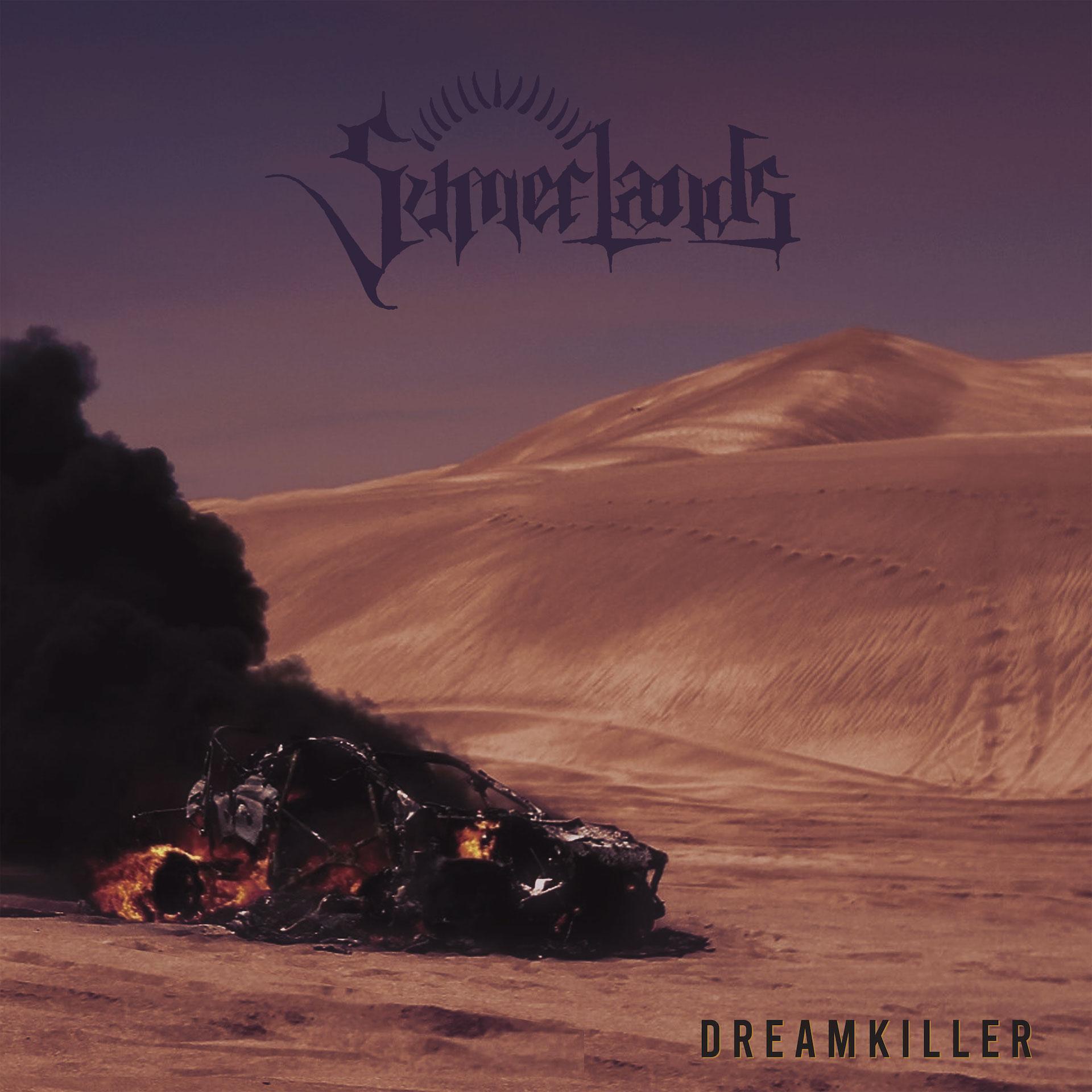
More Than a Follow-up: Dreamkiller and the Weight of Expectation
Six years between releases is a bold proposition, and that significance isn’t lost on Arthur. The momentum generated by his personal and professional growth is difficult to overstate. A bona fide studio scholar, Arthur is required to navigate two distinct yet overlapping states of musical being. We’ll call them “direct” (his bands and projects) and “indirect” (his work with other artists). He’s never not an artist, but the mercurial nature of these spaces asks for different versions of Arthur’s creative input, sometimes simultaneously. As he describes it,
“I learn something new every single day I go into the studio. There’s so much to absorb when every person has a million things in their heads.”
This ongoing symbiosis of mutual influence and information is exacerbated by the expansion of Arthur’s professional side: taking up the mantles of songwriting and production. Direct and indirect involvement become increasingly challenging to uncouple as more musicians have placed their trust in Arthur’s songwriting prowess, honing technical and recording abilities along the way that he identifies as the “biggest difference” in crafting the new record.
Dreamkiller picks up on the threads of late-’80s metal that he identifies as “big room drums and guitars that are clean yet totally chainsaw’d out” a la Black Sabbath’s Mob Rules. By contrast, their 2016 debut was “super cult,” Arthur says, “with crazy guitar, drum, and vocal sounds.” Arthur characterizes Dreamkiller‘s growth by the more focused nature of its conception. Still, the unconscious process of refining and distilling influences and experiences reflects a maturation that is just as potent. Of the first album, Arthur recounts,
“I just wanted to make a sick record that basement dwellers would love. I had nothing to lose.”
Making good on the evolution of the ensuing six years gives Dreamkiller a gravitas that is only possible through a precise blend of honesty, humility, and introspection. Put another way, this album — Sumerlands — has stakes.
New Metal or Nü Metal: Ghostemane, Church Hymns, and Musical Genealogy
Arthur proudly (and rightfully) displays the Lebanese flag hanging in his room. Heritage factors heavily into his creative disposition. This desire to challenge himself can be attributed to his upbringing with immigrant parents who risked it all to start a new life in Pennsylvania, opening a Lebanese deli in Eaton. Before being baptized in heavy metal, his musical influences were a menagerie of East and West institutions. On one side, you’ll find the likes of Lebanese legends Fairuz, Farid, and Asmahan al-Atrash. On the other, the “medieval and Dorian modes of Catholic hymns,” he informs Tape Op‘s Sam Retzer. His heavy metal roots can be ascribed to the latter while the former influenced his outlook on the profoundly personal nature of music.
The wide-ranging nature of Arthur’s formative artistic years has been integral to his work, stimulating his desire to uncover new and unorthodox solutions. Working alongside genre-bending rapper Ghostemane on his N/O/I/S/E and ANTI-ICON albums would test his creative mettle. A self-described “massive fan of rap from the ’90s,” Arthur points to works from Bun B and Three 6 Mafia to the underground tapes of the Houston and Memphis scenes as the point of reference that empowered him to rise to the occasion. Ghostemane’s challenge — “How do we melt six genres of music together and make it accessible?” — was undoubtedly daunting, but it would prove an immensely valuable learning experience. He lauds Ghostemane’s work before his involvement, using red-lining to achieve the severe, blown-out bass textures Arthur enthusiastically emulates in conversation. Still, he felt he “needed to clean it up,” allowing him to engage in plenty of what he dubs “experimental mixing.” He explains that he utilized parallel mixing techniques to blend distorted and clean channels to help him avoid “losing subs and overcompensating.”
My jaw nearly hits the floor when Arthur reveals they made the record in “six or seven days.” Describing sleepless nights and an incredibly good time, he affirmed that they tackled tracking, vocals, mixing, and more with nothing but nascent beats for a blueprint. Inextricably woven into Arthur’s DNA, dedication and resolve shone through in his experience with the multigenre rapper. “I didn’t want to let him down. This project was his big moment; this was the first record where he had the chance to break out into metal and hardcore, and he brought me along.” Arthur speaks with reverence and a sense of duty:
“He’s right on the brink of becoming huge. I’m not gonna let this dude down.” Beaming as he recalls the experience of hearing their music through a PA system fit for 30,000–40,000 people with kids knocked off their feet by the subs, it’s clear he succeeded.
Lines of Flight: Influences, Heterodoxy, and Nostalgia
Going into our interview, I understood that the sheer diversity of Arthur’s personal and professional musical encounters would factor into Dreamkiller. It was an inevitability. Still, his work with Ghostemane probes an interesting through line that neither of us is sure we want to flatten under the banner of “nostalgia.” Ghostemane’s electrifying blend of metal and hip-hop should resonate with some readers: nü metal? A divisive term, Arthur’s apprehensive in agreeing that there may be some cyclicality between Ghostemane and the genre. Pondering for a moment, he concedes, “You can definitely draw lines between them.”
Arthur recalls that close friend and nü metal godfather Ross Robinson was known for “pushing people to go out of their minds and do whatever it took to get the raw emotions on the record.” Ultimately, he invokes the “two-decade rule” vis a vis Gen Z and the 2000s. Appealing to this precedent, he decides Ghostemane is a part of this process, exposing new generations to the works of Slipknot or Korn, who influenced and came before Ghostemane.
What about Sumerlands? Scanning through Dreamkiller, it proudly wears its influences on its sleeve. Metal isn’t exactly known for its boundless evolution, but differentiating “influence” and “emulation” is a significant pillar in Arthur’s construction of band identity and the subsequent optics of writing and releasing material. Queensrÿche, Judas Priest, and Jake E. Lee–era Ozzy records (The Ultimate Sin, Bark at the Moon) comprise serious but obvious influences on Dreamkiller. Arthur’s concerns for the Platonic ideal of the “capital-B Band” are deeply embedded in Sumerlands. His lamentations of superficiality stem from a lack of scope or musical due diligence. He has no disrespect for the bands who want a rock ‘n’ roll good-time jam by directly parroting the likes of Judas Priest, but Arthur contends that it’s an incomplete comprehension of influence.
“I might want to write an epic song like Priest,” he remarks, “but they were influenced by other stuff that was going on around them. If you listen to Sad Wings of Destiny, it sounds like a Queen record. Rob Halford was influenced by tons of female folk rock.”
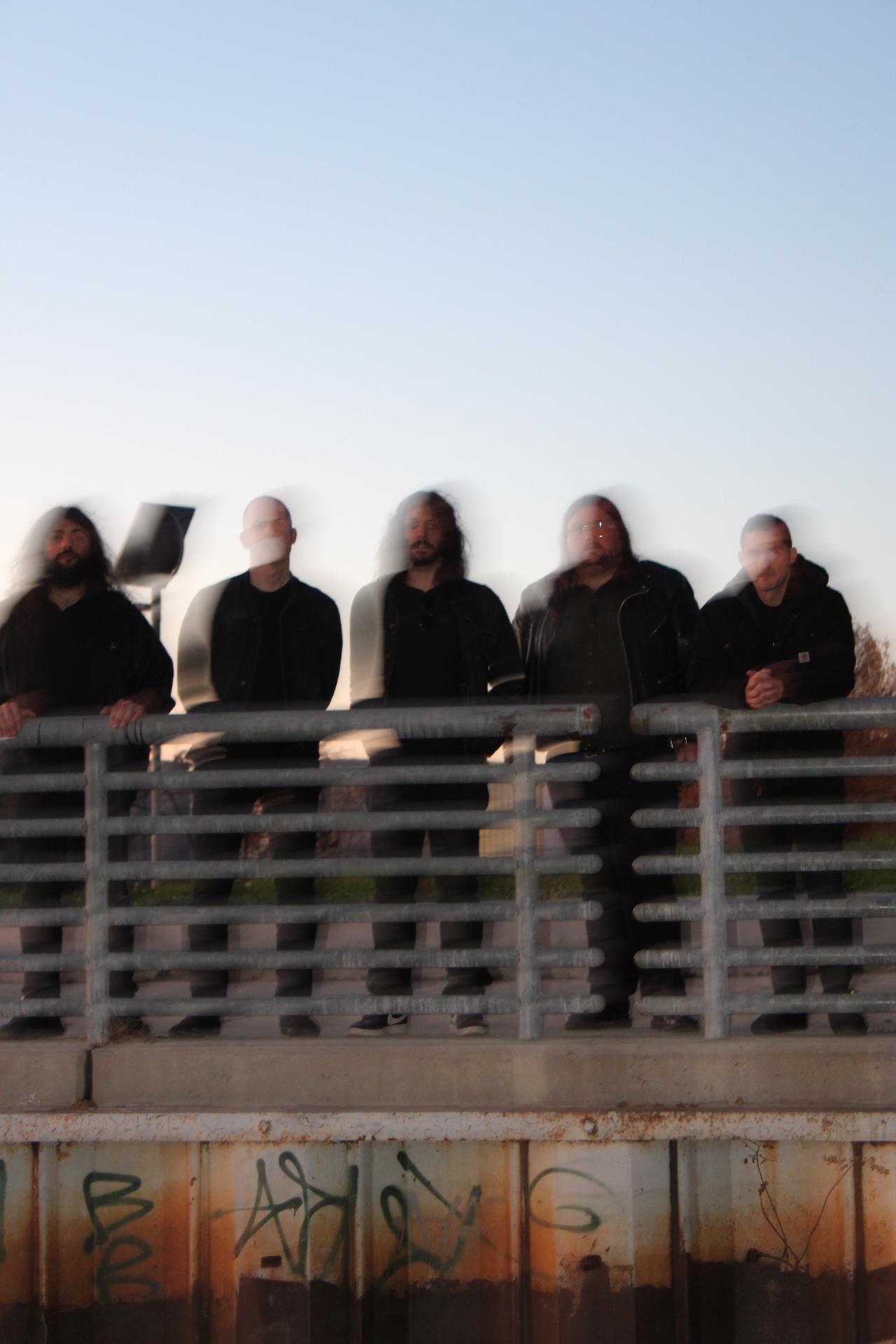
The power metal leanings of Sumerlands obscure their less apparent influences like Lionel Richie; Earth, Wind & Fire; the Bee Gees; and — Arthur’s personal favorite — ABBA. Of the widely varied assortment of artists to make it into what Arthur calls “the Sumerlands sausage grinder,” ABBA reveals two essential tenets of his musical approach. For one, xeroxing music from a one-dimensional perception of another band’s aesthetic is doomed to fail. This reflection of a reflection of a reflection uncouples itself from its musical genealogy and, by extension, its foundation. Arthur’s second treatise concerns how influences, perceptions, and projections culminate in a prism of “authenticity.” Well, three tenets if we include his assertion that ABBA might not be the ideal soundtrack for, he jokes, “getting in the car with your boys to take on the night.” Arthur tries to read reviews of his work to see if his intentions and ideas are landing accurately. He whimsically paraphrases one that criticized Sumerlands to the effect of, “These guys don’t sing about beer and chicks at all! It’s messed up; it’s not heavy metal!”
While this doesn’t bother him, it pinpoints a deeper concern with industry gatekeeping and the limitations of perception. Arthur contends that “there shouldn’t ever be any construct for what type of lyrics go with which type of music,” navigating the cloud of competing statements over the issue that strikes a chord. On ABBA and prescriptive assumptions, he emphasizes:
“That’s putting music into a box, and that’s why there’s so much boring music. People are too worried about the idea of what a song is. ABBA has an album called The Visitors, one of my favorite records. It’s when they all broke up with each other and did their last record. All the songs could literally bring chills to my arms and put me in a really sad mood. But it’s supposed to feel like, ‘Hey, this is a good time!'”
Juxtapositions of lyrical and musical themes of the same ilk abound on Dreamkiller, sans disco. Contrasted with Arthur’s sarcastic assertion that “chicks, beer, and worshipping Satan” are the expected lyrical fodder on a metal record, Sumerlands opts for elusive, darkly aspirational ideas like futility, twilight, and the ephemeral hope found in the bleeding hours between night and day. He attributes the successful execution of this to the band’s vocalist, Brendan. Arthur discloses that, before Brendan, he was ready to shut down Sumerlands following the departure of original vocalist Phil Swanson. Brendan was a longtime friend of the band. With Phil’s blessing, Brendan proceeded to “nail these concepts every single time,” Arthur boasts. Contrasted with its pulsing synths and searing solos, Dreamkiller trades in grim humor and nihilistic honesty.
“A lot of these songs are about desperation, about thinking you’re going two steps forward only to realize you’ve gone two steps back,” Arthur opines with a laugh. “It’s all depressing, but it’s just funny to us. It’s life! It’s dark humor.”
Making the Band: Identity, Cohesion, and the “Strats Only” Policy
Another sticking point for Arthur is differentiating a project from a band and the limitations of the former. A band has a discrete identity — as Arthur puts it, “It’s something to ‘get psyched on.'” These concerns stem from two distinct vectors. On the one hand, there’s the blink-and-you-missed-it era of ’80s US power metal that he describes as “bands that would just do one record, it would be amazing, and then they would just drop off.” Indifferent to their successes, he maintains that what matters to him is that “they always had a band.” From the other direction, his increased studio capacity, adding songwriter and producer roles, further distinguished a proper band from “the project of some dude you’ve never heard of,” he jokes. Sarcastic and self-deprecating, he imagines the “project” as “this producer doing a little band, a silly, little thing.”
His commitment to a cohesive presentation dates back to the inception of Sumerlands. Out of necessity, Arthur wrote and tracked most of the parts alongside bandmate John Powers. “I’d rather people not know we didn’t have a bass player at the time,” he elaborates. “I decided not to list one on the record.” Now, with a full band, he’s proud but admits that the desire for parity between recording and performance is a strictly personal hang-up. He insists he was wrong when he reflects on his festival experiences — kids losing their minds to rappers and other artists who don’t engage the band model. “It makes no difference to anybody,” he shrugs. It’s tempting to agree but with the caveat that some genres are more conducive to this than others. He recalls a recent incident when the band briefly contemplated adding bass parts through the PA on a few European shows (due to their bassist being absent) and ultimately decided that a fill-in was the only real option. The fact that it matters to Arthur is part of the quintessential Sumerlands experience.
Still, Arthur’s tenure at the helm of so many different bands’ records shouldn’t make him immune to the allure of studio magic. Amused, he confirms that he’s aware but not limited by how writing and recording might translate to performance. As they’ve taken a few tracks to the stage, they’ve kept it limited to the band: no synthesizers despite their presence on the album. “Force of the Storm,” with its notable presence of synths, will be the real proving ground for this approach. Ultimately, Arthur’s less concerned about the “purity” of supplemental tracks than he is about his playing. He confesses, “I practice so hard when it comes time to track everything. I get it done and go, ‘Phew, onto the next thing,’ and never think about it again.” He’s pantomiming stress. “I come back to relearn the songs, and I’m like, ‘What was I thinking? Why would I do that?'”
On the subject of guitars, there’s the rumored “Strats Only” policy. Bursting out laughing, Arthur admits that he didn’t name it, calling it a “boring story” that undergirds a running joke. Nevertheless, he indulges the curiosity. He gleefully proclaims that part of the joke’s lineage stems from a straightforward admiration for “one of the best heavy metal bands of all time: Satan from Newcastle, England.” The fact that their guitarist, Russ Tippins, only played a Strat was so cool to him. He insists the “more interesting” part of the story is a long-standing obsession with Iron Maiden’s Dave Murray’s Strat.
Arthur had wanted it since he was a kid, and his ability to immediately recount the story of Murray acquiring the original guitar from Paul Kossoff of Free and modding it to suit extinguishes any doubt. After years of yearning, a chance meeting with a Charvel representative led to the acquisition of his dreams — well, as close as possible. It may not be the guitar, but Fender’s offering is exactly what Arthur had envisioned. “It’s incredible,” he grins, radiating through the dim lighting of the Zoom call.
“It has three single-coils, a Floyd Rose, and it’s got the thin sounds, like the ‘Sweet Home Alabama’ tones that you can blast into an 800. Overdriven, it sounds so gnarly,” he waxes poetic. Arthur contends that “Twilight Points the Way” is the Dreamkiller track that best exemplifies its tonal beauty. It’s more than just a Fender, though; it’s essential to the band’s cohesion and his place within it. “It’s a solemn oath to me,” he vows. “The Word of the Lord.”
No Masters, No Kings: Staking Your Domain
Across and through the rhizomatic web of religion, ideology, studios, stages, and decades of genre-bending musical influences, Arthur has held an unwavering conviction to remain true to himself, introspectively reiterating what that means as he amasses a diverse array of experiences. He’s keenly aware of the transient nature of music and culture, noting, “Every time you think you know something, and you think that thing is bond, you just have to look away, and it’s gone.”
Arthur postulates that a lack of adherence to this causes people to fall out of touch, especially in music, contending that one of two things generally happens. On one side, people get stuck behind the curve of following what young people like without being true to their own interests. Conversely, people who are too true to themselves may fail to connect to a younger audience. Arthur insists that avoiding the “safe” route and doing what interests you “will at least make something that someone will want to hear.”
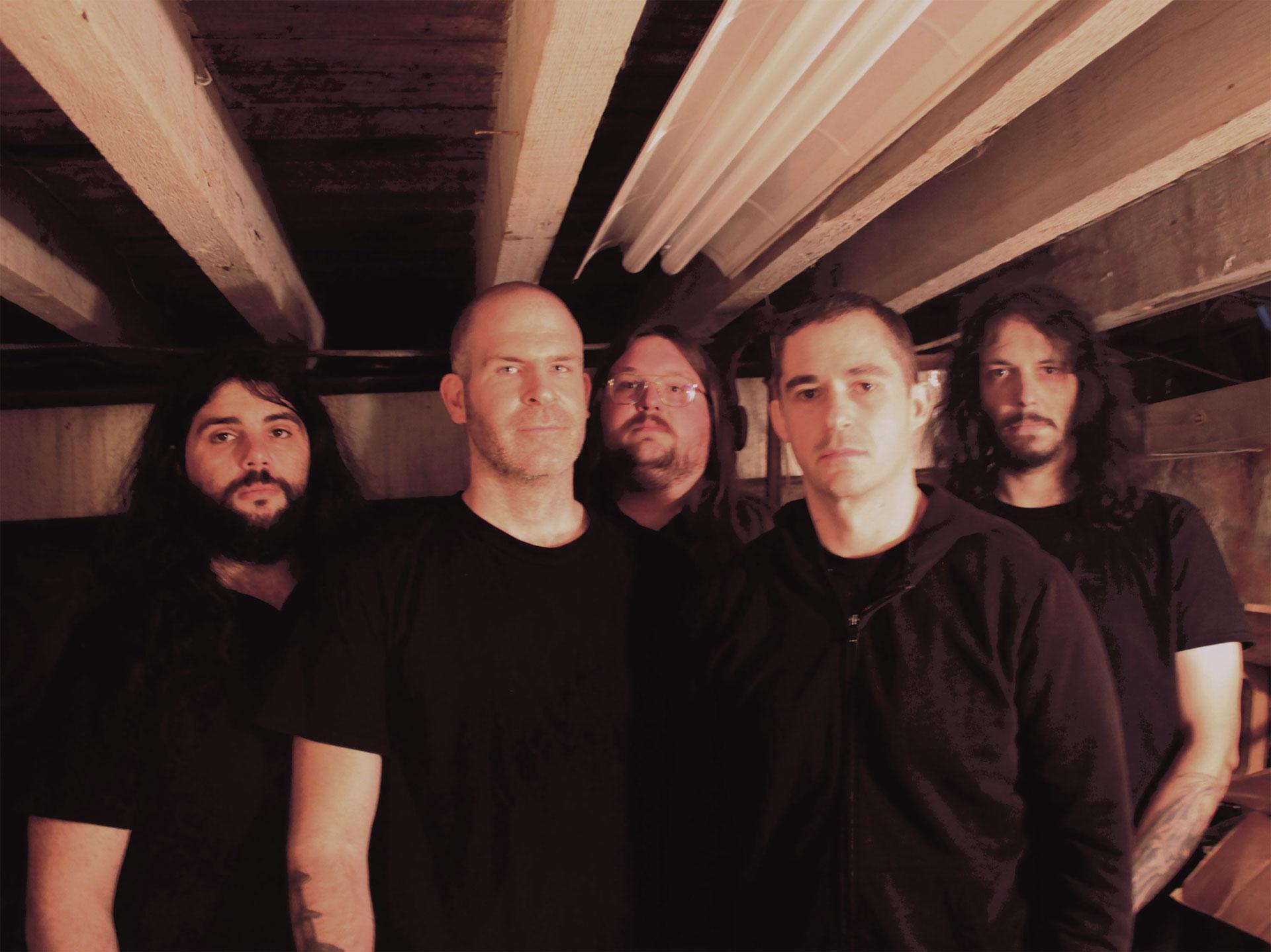
Knowing what to hold onto over time and how to let the future unfold has unequivocally shaped Arthur’s unique ability to navigate so many spheres while maintaining an immutable presence in all he touches. Imperative to his artistic identity, he identifies his resolve to take his musical journey on his terms as the most significant risk, offering the greatest payout:
“I never took on a studio. I made it so I would have a place to go if a band wanted me to record them. As opposed to taking on big-name projects or using my resume to get bigger stuff and always selling myself out, doing that has made me way happier.”
“Don’t take the easy dollar. Find what you want to do — what makes you happy — and go with it. Live virtuously, and you’ll be rewarded tenfold. I’m not rich, but I’m happy where I’m at. When I get on my computer at 2AM tonight and work ’til 8 in the morning, getting three hours of sleep, I might not be all there in the brain, but I’ll be happy. I’m happy with what I’m working on. I think that’s the big thing in life that people should figure out. Take that risk. That’s the risk you should take.”