

Recently, I had the pleasure of sitting down with guitarists Isaac Hale and Nicko Calderon, of hardcore band Knocked Loose, for a discussion of artistic process. I was looking to explore the evolution of the band, its sound, and how they’ve navigated the radical, undulating path that presented itself following the success of their previous album, A Different Shade of Blue. The more-ambitious-in-every-way follow-up EP, A Tear in the Fabric of Life, received unanimous critical acclaim, unexpectedly becoming an intervening force in shaping the band’s future. The release would cast a protective shadow that challenges them to venture out under the open sky.
I wanted to know more about the writing, how this massive undertaking — its success, its ambition, its creative reach — had influenced their approach to making music. Interrogating the strange, liminal space that preceded the EP could get at some of the thornier, more nebulous facets of music making. We’re often curious about the “hows” and the “whys” behind the work of artists we admire, even more so when they’re deemed to have made a serious move as Knocked Loose has. As you immerse yourself in the EP’s fury, recognizing its place within the context of the band’s discography, the shape of a thought emerges among the neural fireworks of that first listen: this is something different.
A Tear in the Fabric of Life Short Film
Before the Tear – Building from Blue
You released a short film to accompany the EP. In your Rock Sound interview, you said it was a “passion project” that was only possible because of the time off. Would you consider the proper art object that is A Tear in the Fabric of Life to be both the music and the film?
Isaac: Yeah, the whole idea was that it was always going to be both. We wrote it with the video and the story in mind. We jotted down one through six and said, “Okay, let’s have this type of song where this is in the story, etc.” We wrote maybe 15 songs and then matched them to the idea of each track. It was always written as a connected thing, and it was important to us that this would be a singular vision.
Now that you’ve gone through the process of making the EP — doing this new thing — did it change your perspective on writing moving forward?
Isaac: I’ll let Nicko answer this first because I want to know what his vibe on it is.
Nicko: [Laughs] Well, going into writing with Knocked, I felt like they’ve always been very intentional with their heavy parts. I write with a very melodic-esque, dark style. When they showed me the EP . . . it’s my favorite material that they’ve ever released. It suits my vibe very well. So, I want to be more intentional with those aspects and help grow them.
Isaac: Bringing Nicko into the fold has been great because we’ve always admired his writing from afar. There are a couple things I want to accomplish with the next record. Every Knocked Loose record is about one-upping what we’ve done before. We just did this crazy concept movie with a crazy, shock-drop release. A lot of people think it’s a big step up from what we’ve done before, and we have to one-up that.
Writing Versus Reiterating
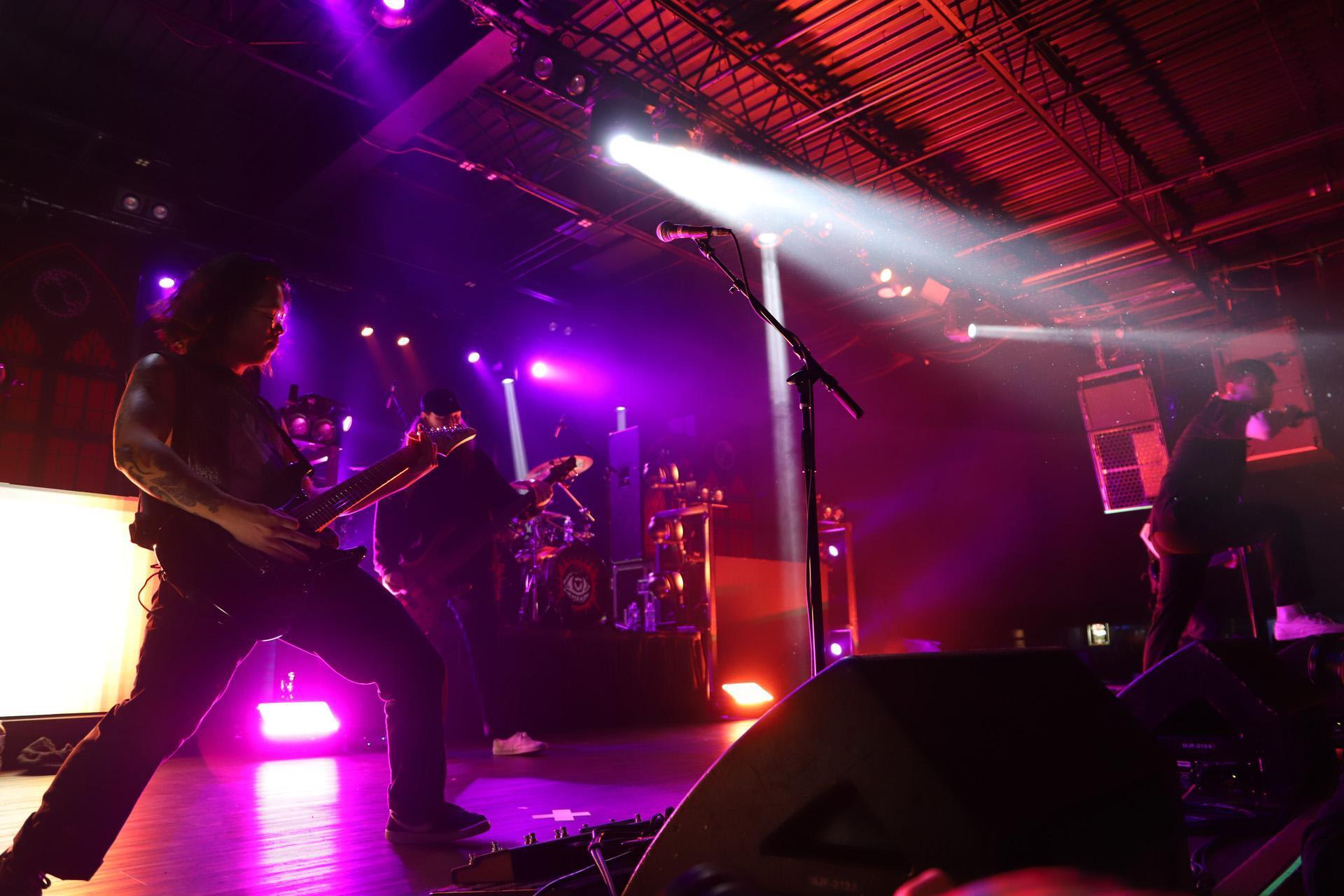
Historically, Knocked Loose has approached their writing in a “let’s jam and find out” method. Everyone contributes and everyone has ideas, but the track formation occurs as a group effort, which the band finds crucial. The multidimensional undertaking of crafting this EP marked a profound shift in how the band orient themselves to their own sound and how they recognize their presence within the current musical landscape. To that end, the band has always been cognizant of the scope of their artistic arc. In a previous interview, Isaac commented that “nothing gets removed” with respect to the band’s overall writing process.
Isaac: Yeah . . . I think “nothing gets removed” could be taken a couple different ways. Even if an idea doesn’t work out, we’re very good at taking from what we’ve done and improving on it for a song. There have been a million times where we’ve taken stuff from previous writing sessions, or stuff from previous records, and we’re like, “Let’s do something like this, let’s do something like that.” There’s nothing that’s wasted.
They’ll find new life in some other idea?
Isaac: Right, they’ll find new life in some way. There’s stuff during the EP writing sessions that we could use on our next, or another record. That’s exciting in and of itself.
New Blood, New Perspectives, and Contending with Identity
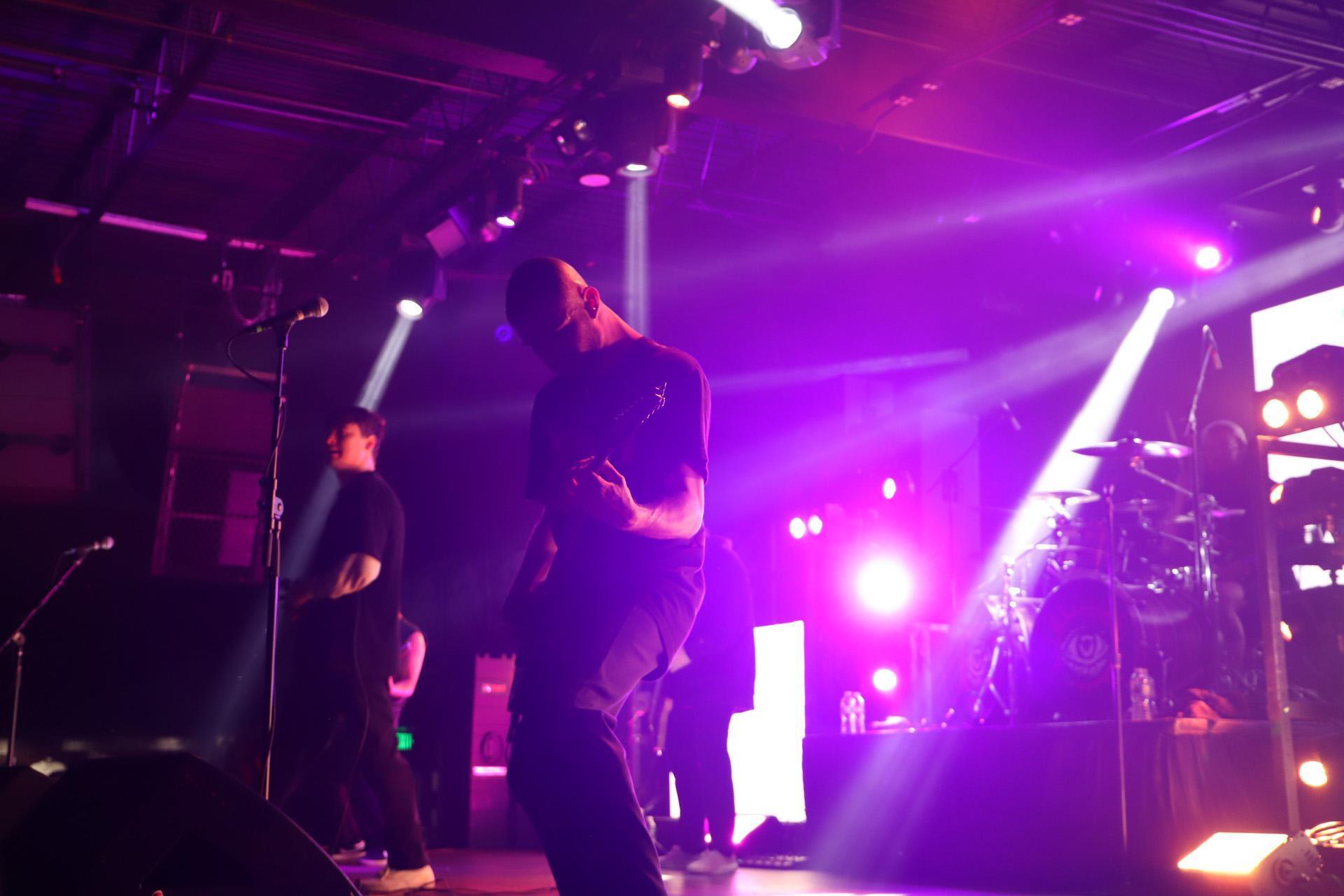
The EP had marked the first time the band engaged a singular, premeditated vision for a record. They certainly aren’t the first heavy act to go the route of a concept album, but it’s a bold, almost peculiar decision, delineating between two very different trajectories for the band.
It is, perhaps, Nicko’s own demi-outsider perspective that grants us some insight into this new direction: “It’s necessary to evolve,” he said. Nicko’s position is curious, not wanting to overstep while being simultaneously aware of the responsibility of his role. He’s filling the shoes of longtime rhythm guitarist Cole Crutchfield, who departed in 2020. Despite that, there’s clearly a mutual respect between him and Isaac, both grateful for the opportunity to grow and learn from each other’s respective repertoires.
The band’s lead vocalist and primary writer, Bryan Garris, stated in an AP interview that part of the goal of the recent EP was to “take the pressure off, following A Different Shade of Blue.” The full-length album was met with critical acclaim, delivering on the promise of 2016’s Laugh Tracks — that Knocked Loose would be an integral band to the evolution of guitar music and all its heaviest permutations.
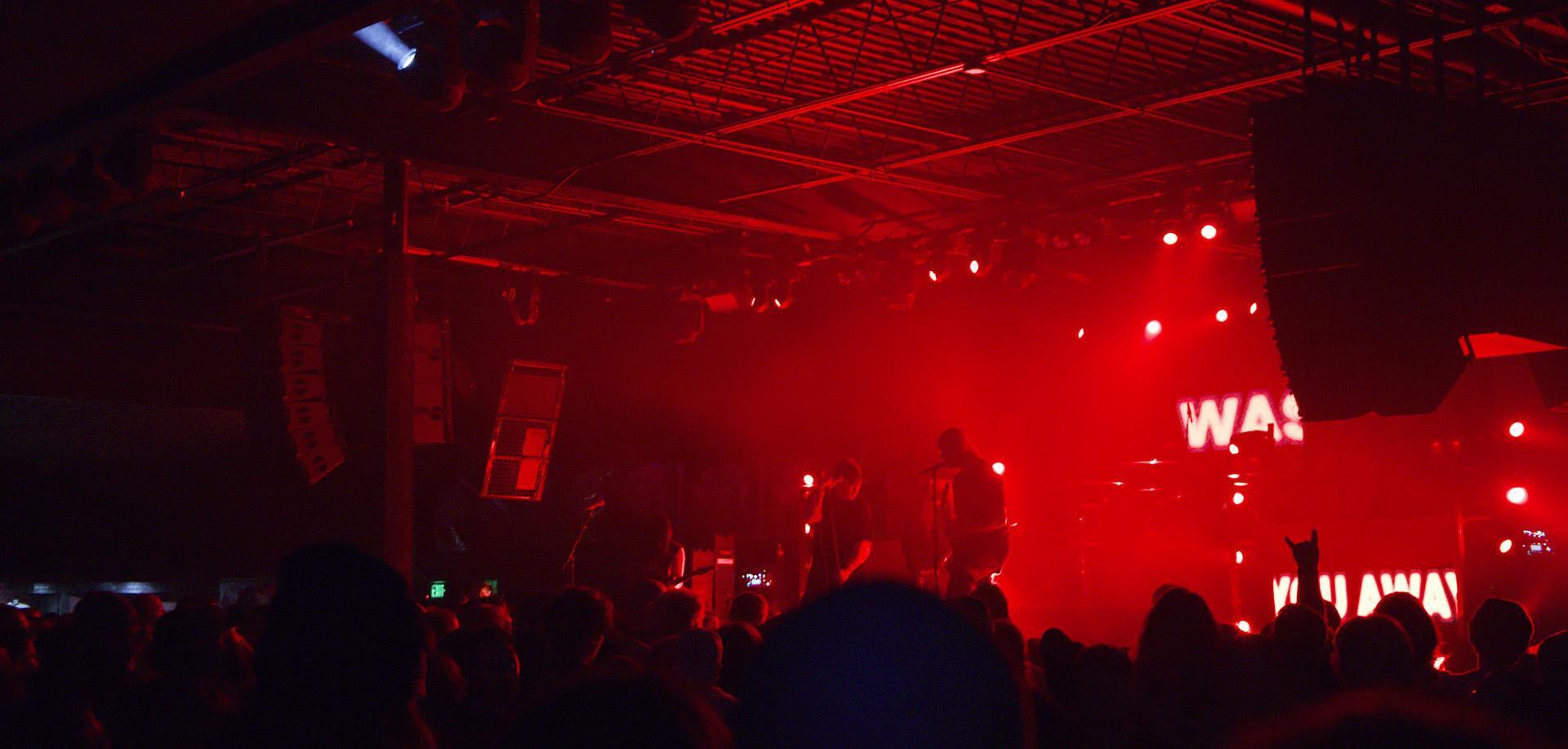
From this perspective, it might feel obvious that — if nothing else — the pressure was to be expected, that this is a garden-variety-success type of problem. So, what? Well, the band’s decision to craft a multimedia work described as “equal parts Phil Spector and death metal” was not only a tour de brutality, but it also has become a clear line between pre- and post-Tear and a turning point in terms of composition, recording, ideology, thematic exploration, and, most significantly, the band’s identity.
How has this concern for the pressures of the last album affected how you see the band throughout time? It seems like there’s this pre- and post-EP orientation. How do you position yourselves and the EP to the space that A Different Shade of Blue [ADSoB] occupies? Do you see the EP as a parallel move? Something that doesn’t have to be a follow-up but still influences your trajectory.
Isaac: The EP was supposed to be a part of the A Different Shade of Blue cycle. We didn’t want it to take away from the last album, but the material is so superior, and it’s such a stark move. It really has started its own era. But it was a COVID project; it was an idea that we had had before, then COVID happened, and we were like, “This is the perfect time to do this.”
No time like the present, right?
Isaac: Yeah, exactly. Touring wasn’t happening. We had a lot of time to work on this. So, if COVID didn’t happen, it’s a possibility that A Tear in the Fabric of Life wouldn’t have happened as soon as it did. We would’ve spent way more time just supporting A Different Shade of Blue. It’s really become its own thing, and I think that A Tear in the Fabric of Life has inspired us, and kind of scared us, but in a good way.
Nothing Left Un/Said
It became clear to me just how immensely the EP — from its initial ideation through the writing and recording of the tracks to the short film and the shock-drop of it all — hasn’t just influenced their overall approach to songwriting. It infiltrated nearly every crevice and pocket of the band’s musical character.
The artistic flourishes of this EP expanded the intensity of the band’s already-heavy style, reexamining it through a more sophisticated lens of contemplation and constructing a thematically rich concoction that marries the lyrics and the riffs into something that hits harder in more ways than just breakdowns. I asked what went into making this sort of conceptual move.
Isaac: There’s an emotional heaviness to it, and it’s mostly lyrical. Bryan is 100% responsible for all the themes and lyric writing. I’ll say on his behalf that this was a concept album about loss. It’s a story that he literally wrote. It expanded upon the themes of A Different Shade of Blue. That’s a record about loss in Bryan’s personal life. Being able to tell that story and explore those themes, metaphorically, grasped a different emotional thread.
Threading the Needle Between “New” and “Good”
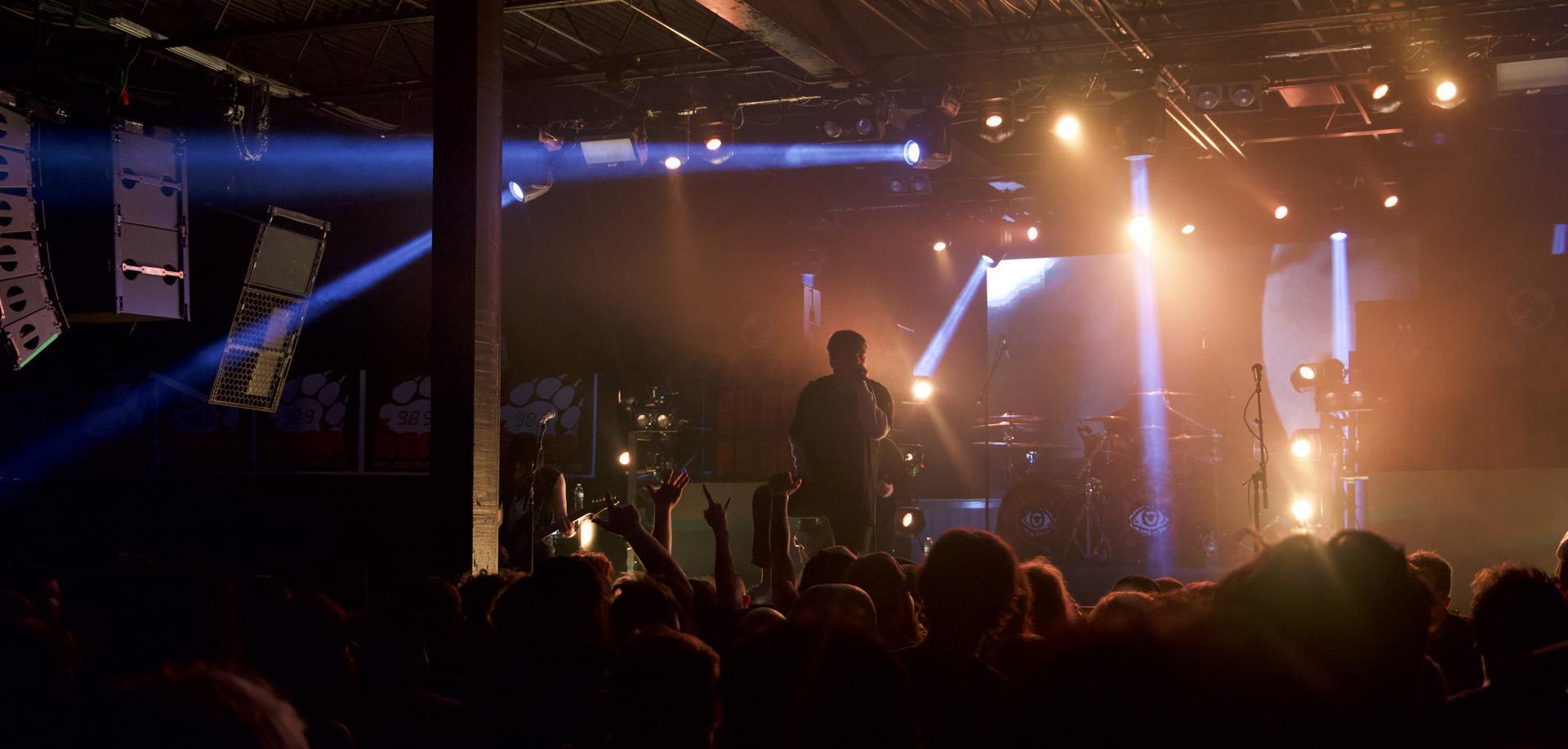
The therapeutic nature of conveying emotional breadth through a story opened a new type of door that the band is content to explore with whatever comes next. It may not mean another short film, but the months of hard work putting it together culminated in something that broke significant ground for them. Now, the band has found themselves on a new part of the map, where the preexisting self-awareness and contemplation of band identity are adopting new layers.
While Knocked Loose is never one to intentionally set limits on themselves, running up against them is all but inevitable. Whether they’re cultural, technological, social, or anything else — they’re a product of an ever-changing present, and that would invariably shape their post-EP line of flight. Yet, it was precisely the unexpectedness of it all that elevated the pressure that began with the breakout success of A Different Shade of Blue. The desire to one-up previous work is no longer a simple metric, and Isaac’s reservations seem rooted in the notion not only that they need to keep growing but also that the next release ought to be tantamount to the caliber of difference between the EP and the previous full-length. Undaunted by the fear of its explosive impact, Isaac and Nicko opened up about where they see their limitations.
Isaac: It’s very easy for me to write a similar song that I’ve written before. I’m such an avid music listener, and I’m always searching for a new idea. Listening to something and not feeling like it’s been done before is a big limitation for me. I’m always trying to push it to something new.
Nicko: What’s funny is that I have a really hard time writing heavy riffs.
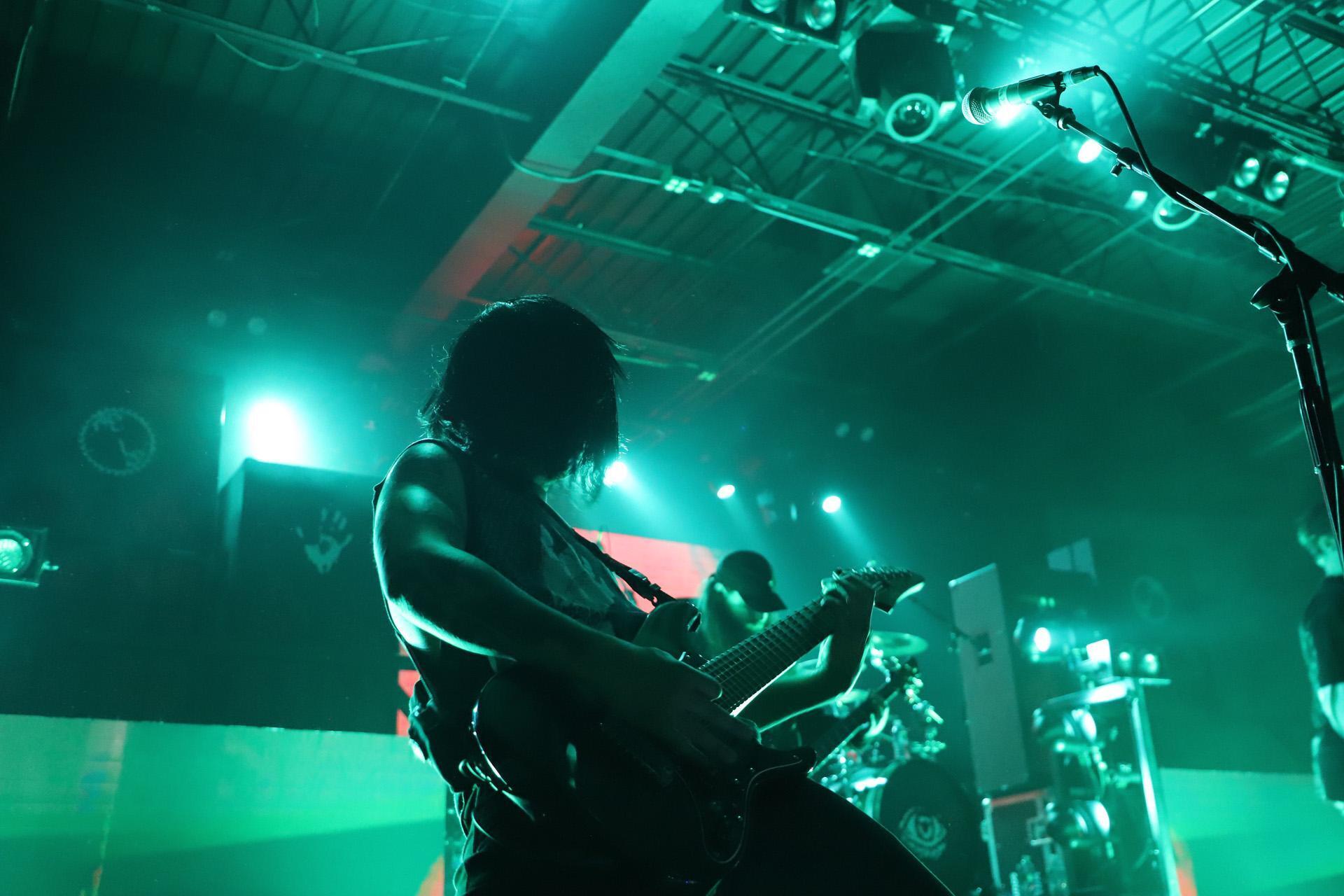
Isaac: He’s too creative! I think that our ways of playing are a great marriage because he has a lot of cool, dark, melodic, and artistic ideas that I want out of my writing. A lot of times, I just write stupid mosh parts. And he has, at multiple times, been like, “I wish I was better at writing mosh parts.” And I’ve been like, “Well, hey man, guess what? I’ve got that covered.”
Nicko: [Laughs] Straight up, learning the Knocked Loose songs has improved my guitar playing and writing. There are so many things that I never would’ve thought to add to my arsenal. Now that I’m part of the band, it’s really cool to see how Isaac writes. I never would’ve thought to put things in that context.
Isaac: Our new style — us learning to be more creative, learning riffs that he’s written, and seeing how he plays guitar — is changing the way that I think about my playing and, thus, changes how Knocked Loose thinks about how every member plays their instrument. It’s about growing together.
Does that give you any pause about band identity? Going back to the whole “not wanting to be in the shadow of ADSoB,” or not wanting the EP to be perceived that way, is there a point where it doesn’t matter how much things change? A point where it’s just “we’re always Knocked Loose because we’re Knocked Loose, and whatever we’re doing is the band?”
Isaac: We think about the identity of the band a lot when we’re writing. Especially Bryan because he’s such a huge part of the writing process, even though he doesn’t have an instrument in his hand. There are a lot of times where we’re writing a song, and we’re like, “Okay, what would Knocked Loose do?” or “Does this make sense in a Knocked Loose song?” And I think a huge part of writing the next record is going to be about us thinking too hard about that and then us taking a step back and being like, “It is whatever we want it to be,” you know? It really is. Knocked Loose has never taken a step where a bunch of people have been upset or anything like that.
Can you talk a bit about how this self-awareness of band identity has evolved? I don’t get the sense that managing it is intimidating.
Isaac: We started out being a simple down-tuned hardcore band. The first full-length was a little bit more creative with tempos but pretty much the same thing. ADSoB was a step up but a similar vibe. This EP was a huge step up as far as songwriting goes. The first song is just a breakdown the whole time. We’ve never done anything where anyone has been like, “That was a crazy move,” you know? If that happens on the next record, then we’ll totally embrace it. We’re very aware of the space we occupy, and we would never put something on a record that we think would sacrifice that identity. Knocked Loose is a heavy band, it’s an ___-beater band, it’s a hardcore band, it’s a metal band . . . anything we do, creatively, on the next records, it’s gonna be a way to expand that idea and make it cooler.
Reevaluating, Reimagining, and Re-presenting
One way that Knocked Loose has explored new territory is through intentional contrast — thematic exploration through mood setting. Sampling has been a significant part of that approach. With the full-length, Isaac tells me, the samples — while deliberate — worked to create a different sort of ebb and flow to the album, breaking it up with striking transitions. On the EP, however, the band learned from their previous experiments and improved upon them many times over, offering thematic depth and narrative augmentation that reinforce the story it’s meant to tell. Nicko agreed with Isaac, citing the “cohesion and intentionality” of ADSoB‘s samples as the basis for what he considers to be the “soundscape” and “movie soundtrack” atmosphere that matured into the EP.
This “soundtrack” comparison reinforces Isaac’s statements on how Nicko fits into the post-Tear Knocked Loose, a band that has seized the opportunity to grow through a self-awareness that recognizes its own consistency and natural cohesion as just the beginning. New blood is a great way to reevaluate what you’re doing, especially when you’ve toured as much as Knocked Loose has. This is what really drives the significance of the EP being a specific result of having a dedicated time to work something from top to bottom as opposed to building along the way.
I know we’re all sick of talking about COVID, but it’s impacted how we think about both enjoying and creating music. Do you feel like there’s less pressure to be putting out singles and having discrete releases that might make it easier to do something more conceptual or theme driven instead of a structure where singles must rely on their existence within a larger ecosystem?
Isaac: That’s an interesting question because Knocked Loose has never done an isolated single. That’s something I’m interested in doing. We’re very much into the idea of thinking about records thematically and putting it out all at once. The only reason we’re doing singles is to pick our favorites.
Right. Not because it’s an A&R move or something.
Isaac: Yeah, right. At the same time, the idea of the single is cool.
The Album As Opportunity
This probed a deeper inquiry into not only the band’s identity but also their relationship to their place in the larger orbit of musical culture. Isaac and Nicko were certain that the single-oriented model — no matter how business savvy and financially lucrative it can be — isn’t the direction for Knocked Loose. They lament the prospect that an album made with that approach wouldn’t bring anything new to the table by the time it is released. It would just be a compilation of tracks without any cohesion or conceptual through line.
Our discussion of identity continued with the subject of features since the band notably included Every Time I Die’s Keith Buckley as well as Dying Wish’s Emma Boster on A Different Shade of Blue.
It sometimes feels like this type of space doesn’t lend itself to features in the way that hip-hop and other genres do. It feels like there’s an expectation that it’s more cohesive as a band, where it’s just like, “You’re the guys.” So, if you have someone else in the mix, does it somehow betray that sentiment of cohesion? How do you view that?
Isaac: We usually think about it after the fact or while discussing lyrics, specific voices, or anything that we think would fit the part. We never want to rely on guest vocals. In the past, we’ve been like, “This voice would benefit this track,” or “This friend would benefit this.” It’s always been connecting people we know — vocalists we admire, friends that we admire. With the Portrayal of Guilt part, we didn’t really have a relationship with Matt King. We wanted an evil voice, and we went over a couple different evil voices, and we sent offers to multiple people. He responded, and he absolutely crushed the part! It’s incredible. Now there’s that relationship, and we love his band. But, in the future, I want to explore how unique of a voice we can get and how unique it can be in the context of a Knocked Loose record. We want to do some crazy stuff because, if it’s a guest vocal, then it’s not us, so it can be as weird as it wants to be.
It gives you more freedom to experiment.
Isaac: Yeah, it gives us more freedom. We’ve talked about a couple ideas, just random names for the next record, but we want to be able to pull off some crazy, out-of-genre stuff. And it’s exciting to think about that.
For sure. Would it be fair to say that it’s treating the guest voice as another instrument?
Isaac and Nicko: Yeah. Yeah.
The Radical Weight of Risk and the Height of Reward
Something “out of genre,” eh? The notion that anything could be “out of genre” is superficially obvious, but it hints at a much deeper, more pervasive consideration of how band identity exists in a symbiotic relationship with the larger musical ecosystem. At a macroscopic level, we can pretty confidently say when something is or isn’t heavy metal. Similarly, at the microscopic level, subgenres can turn the categorization of bands into multihyphenates whose musical output encompasses the furthest reaches of those subgenre labels. It’s in the middle ground where things get distorted as they relate to artistic integrity, sometimes making it difficult for bands — or entire genre spaces — to grow. Ironically, it’s the evolution of rock and metal into successively more-niche subgenres that has trickled back upward to challenge the limits of large, generic genre labels.
For better or worse, a band’s artistic identity is tied not only to the active market of fans and consumers but also to the decades of pop culture that precede it. The politics of genre-specific labels have far-reaching influences on the types of moves a band can make, not because they lack the creative depth or artistry but because a culmination of industrial and cultural forces pushes and pulls from numerous directions.
When the current model requires bands to constantly tour; engage in any number of forms of branding, merchandise, and social media; and still find time to not only write but also rewrite, record, and produce their music, every move must be carefully calculated. A band can only venture so far away from their center of mass before their musical constellation begins to disband and they’re no longer considered to be “authentic” ambassadors of a space that once championed their arrival. It is here where we find the significance of what happened — what had to happen — with A Tear in the Fabric of Life. The world needed to grind to a halt just to embark on this daring odyssey to outshine the ever-blooming shadow of A Different Shade of Blue with no guarantee of success.
The risk of making a concept album is difficult to articulate, especially since Knocked Loose has already inarguably succeeded. But that’s not really the issue; it’s about understanding what could have gone wrong, what was at stake. It’s challenging to branch out and try new things when the complicated musical spheres that define the terms of your early success would just as easily seek to downplay anything that deviates from that initial appeal. Conversely, it grants a sobering perspective on just how much Knocked Loose gained by coming out on top of this gamble, establishing themselves as a band who can almost paradoxically occupy the spaces of hardcore beatdown music and cerebral, concept-driven art. To take such a risk and be met with critical support can have a radical effect on how a band sees themselves. Their future suddenly has many new, previously unseen (or unavailable, depending on your perspective) doors, and the significance of every previous artistic decision influences which door is the right, next door. “What would Knocked Loose do?”
The Knocked Loose Sound
Foraying into new territory isn’t just a philosophically difficult venture; it rears its head at every level of being the band. Navigating the cryptic maze of doing something different, but not too different; reiterating a theme, riff, or idea without lazily rehashing something you’ve already done — it’s tough. To make a concept album/art film because it takes a global pandemic to shut everything down long enough to feel you have the time to properly explore a new idea illustrates how challenging it can be for some artists to maintain the integrity and adventure they want out of their work. Isaac and Nicko got to the core of how this question interfaces with their role as artists — that it’s about aesthetics. We don’t casually employ the term “rock star” for nothing. The appeal of the idea of what a rock star represents has been co-opted and reimagined since the earliest days of rock and roll. Whether rock is dead isn’t really the debate, but it’s hard to disagree that it no longer holds the same social and cultural weight it once did. Without being a touchstone of the modern musical landscape, there exists a temptation to hold on to the certainties of earlier iterations of a band, and this emphasis on safety only serves to stifle the growth of the very spaces we claim to hold so dear.
The guitar’s symbolic value has become a representation of this mythologized idea of capital-R “Rock” re-entering the pop-cultural zeitgeist, permeating every level of fame’s vertical hierarchy. A copy of a copy of a copy, ad infinitum. Identifying these layers of removal isn’t about igniting a gate-keeping debate over what constitutes “real” rock music, but it does allude to the downstream impact of what Isaac identifies as the “enormity of the rock trend.” Nicko points to his own early days in retail. “Seeing all the rock and punk merch that we would get and sell for 60 dollars is kinda like, ‘Ah, this really sucks,'” he says. “At the same time, it’s bringing in new faces and introducing people that maybe would have never heard this music otherwise, and that’s pretty cool.”
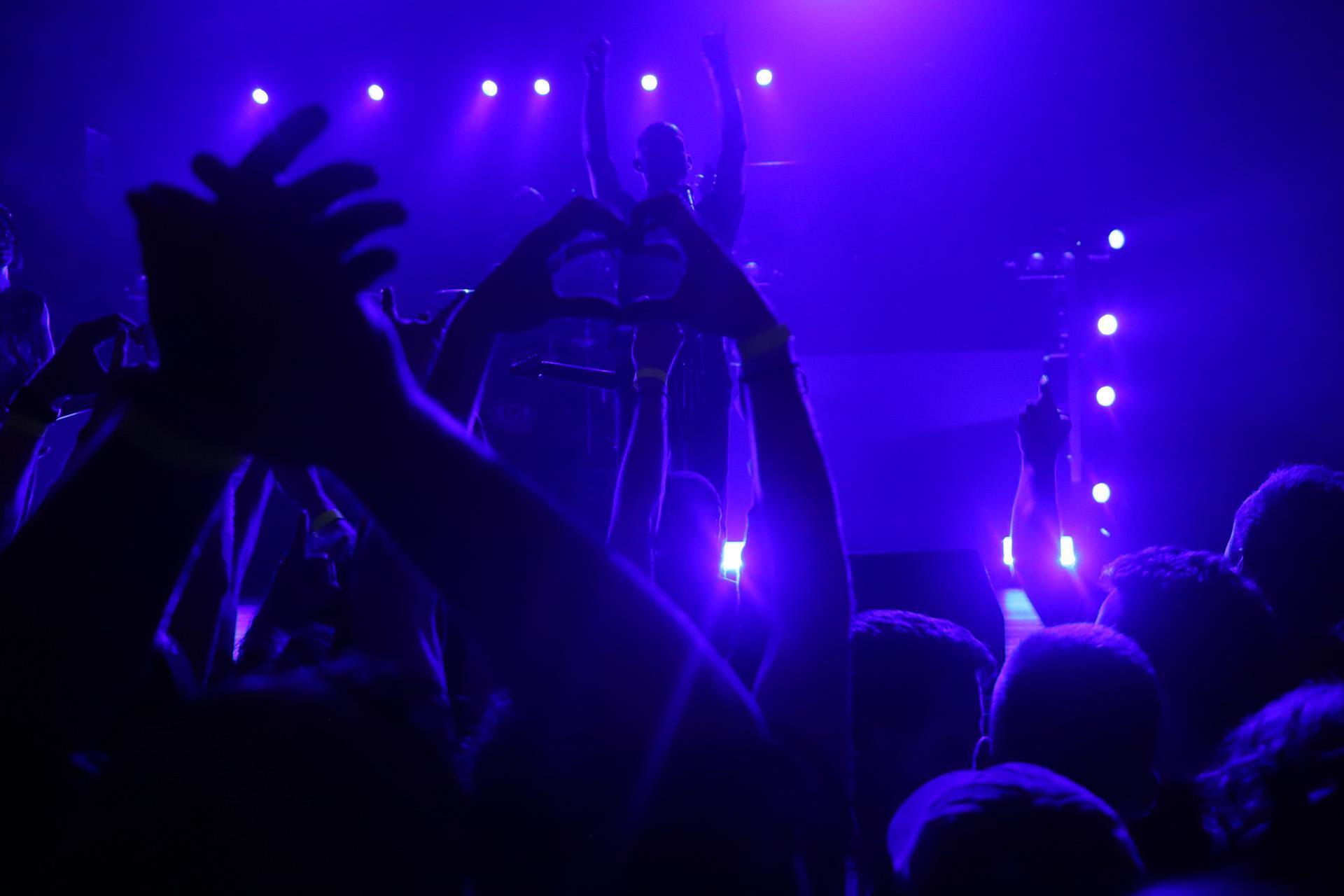
Isaac: An incredible way to grow your band is just to play all the time and make that leap to just do it. That’s what Knocked Loose did. We played a ton of shows, no one came to any of them, and it sucked. Our tours were bad, but we kept going. Eventually, people started coming. I think that that way of thinking is a lot less prevalent now. If you do that now, you’re striking while the iron’s hot.
Nicko: I think it’s important to play the middle of the US. I don’t think the Midwest gets enough love. It’s a lot of New York and California. It’s very important to tour and to play shows.
Touring Insights and New Horizons
Isaac and Nicko agree that, as much as touring accomplishes, what’s important is that you’re producing good work, regardless of whether it’s through TikTok, SoundCloud, or any other non-live, nonperforming-oriented approach to showcasing music. “If your music rocks,” Isaac says, “and you put effort into making a cool aesthetic and a good-sounding record, people do pay attention. It’s not fake.”
A Tear in the Fabric of Life has influenced the band beyond their pre-tour efforts. Designing the live experience — and the ensuing time on the road — has served as a spark of inspiration for future writing, recording, and performing. Though a host of technical changes have transpired to accommodate a broader range of live-sound flourishes, touring on the EP allowed the band to examine their musical evolution, leading to deeper revelations about this new era. Isaac and Nicko articulate the artistic fluency of the band’s live and recorded output as being interwoven threads of the larger Knocked Loose tapestry.
Isaac: I think the biggest takeaway is that Knocked Loose is finally a band where we have a lot going on, writing and effects-wise. All of it is very important to the show. There was a time where we could just plug and play and say, “Oh, the pedalboard doesn’t work? Crank up the gain on the amp, whatever,” like, it’s whatever: “We’re doing this with a TS9 and a noise gate, that’s it, let’s go.” Our new stuff has gotten to the point where it’s creative enough to put the effort into making sure that what we have going on really complements what the song is doing.

I’d imagine everything that’s gone into touring with this EP — introducing this more robust live arrangement — has been inspiring. How do you integrate that into your thought process going into the next project?
Isaac: I feel like we don’t really have any boundaries now. Tone-wise, we can do anything. I don’t want to think about performing stuff live until we have to. Nowadays, with modeling amps and the Kempers we use, we can take any tone, any sound, and get it live exactly how we want it. So, with the next record, I want to pull out all the stops. I don’t care if there’s a part that needs a specific tone for even just five seconds — I’m doing it. I will spend all day getting the tone right for that part because we can.
You feel like the blinders are fully off, no longer beholden to technological limitations.
Isaac: We used to be a band that was just like plug into the Peavey 6505+ and just go. Now, the doors are open. On A Tear in the Fabric of Life, we experimented a good amount with tones and stuff, and now I’m excited to keep that going for whatever we do next.
Awesome. So, last thing: I know that with “In the Walls,” there was a story with this idea of haunting and haunted spaces. Moving forward, are there any ideas like that that you want to keep pushing? I won’t quite call it “esoteric,” but anything similarly deliberate?
Isaac: That song was what inspired the whole EP. There’s no other specific situation that inspires something on the new record the way that that did. But I will say that it’s funny that that song is responsible for the whole EP cycle.
Nicko: Yeah, right.
Isaac: It affects how we think about darker themes moving forward. That song — and that experience, that funny haunting experience, that led to the funny, scary song — which led to the scary EP. It really changed the course of where the band could have gone. Now, we have this entire darker side that we want to embrace on the next record. I think the key is to find the balance. Part of Knocked Loose is, like, beatdown, punch-your-friends-in-the-face live music. Then, there’s this other side where, lyrically and thematically, it’s very serious. We put a lot of thought into this side. It’s about melding those two and putting it into a release where we have the creative and beatdown sides and then translating that into something that makes sense in the records and in the show — that it all works.
“In The Walls” – the inspiration for the new EP
Process and the Importance of Being Earnest
Knocked Loose doesn’t aspire to write the book on hardcore or what it should be. The importance of identity involves recognizing that growth is impossible without any fluidity but that doing so requires an awareness of the outer boundaries of the space the band occupies. Simultaneously, there’s an understanding that those same boundaries can be rewritten with a delicate consideration of how making that type of shift affects their orientation to that same space, looking both directions in time. Moreover, it’s about risk and believing in your art. A Tear in the Fabric of Life was a mammoth undertaking, requiring endless coordination, planning, writing, and recording for the EP as well as working alongside Magnus Jonsson and his crew to produce an entire short film. The band had to navigate these coexisting, parallel worlds, mutually planning, informing, modifying, and reinforming each other, to see this project through. This endeavor parallels the larger discussion of process, risk, and the conceptual artistic signature — that thing that persists through any creative avenue you travel, never failing to inform whoever takes in your art, it’s unmistakable that it was made by you.
Knocked Loose’s approach is straightforward: explore, learn, build, repeat. Keep it heavy and keep it going. Whatever the genre — or the medium, even — of your art, the honesty of being true to oneself shines through every technical and structural detail. To a casual observer, the recent EP might not seem staggeringly different, but the weight of those differences will always be a matter of perspective. Much like tracing colors along a gradient, the proximity to the work may overshadow just how different of a shade of blue you’ve reached. To believe in your art — to be willing to take the risk to try something different or embark on a new approach — this is where you step out from under the comfortable shadow of familiarity.
It may have taken the world shutting down, but Knocked Loose, with this EP, illustrates just how much you can grow if you’re willing to take that risk. Step out over the edge. Be willing to fail. Be ready to succeed. Like Isaac said: it’s scary, “but in a good way.” What you learn from doing so — musically or otherwise — could just be enough to cause a tear in the fabric of your life.