

Steve Ivey is a 17-time number one Billboard, multiple-award-winning and nominated songwriter, producer, musician, and recording engineer. He runs two companies: Ivey Music International, which distributes music in over 20 countries, and Simon Solar, one of the largest solar facilities in the United States. Recently, Steve was charged with reviving and rebuilding the historic Capricorn Sound Studios in Macon, Georgia. Despite his unbelievably hectic schedule (he was mixing a song during the interview), Steve agreed to chat with us about his involvement with the Capricorn project and how Sweetwater helped make it happen.
The Beginning of a Musical Journey
Steve’s musical journey is pretty straightforward. “I played sports my whole life,” he notes. “But I really jumped into music when I was a senior in high school.” Steve began writing songs his freshman year of college, graduating with a musical performance degree from Mercer University. While Steve’s formal education was firmly rooted in classical theory and performance, his nighttime activities focused on something else entirely. “I was singing opera and playing classical piano during the day and playing pop and country at night.” Steve also honed his songwriting skills, churning out genre-spanning songs at a blazing-fast rate.
Steve learned the arts of recording and producing at the now-legendary Capricorn Sound Studios under the tutelage of esteemed southern-rock pioneer Paul Hornsby. While he was mostly interested in the production side of things, Steve still performed to support himself. “That wasn’t necessarily my end goal, but it was a means to make money with my music,” he recalls. This road-tramping period proved fruitful nonetheless, honing Steve’s proficiency on guitar, bass, keyboard, piano, and vocals — skills that would demonstrate their usefulness in future endeavors.
Steve eventually completed his master’s degree, majoring in marketing. For his thesis, he wrote a tutorial on how to conceptualize and write songs, work with artists, produce a record, mix it, and then distribute it.
The Road to Success
During his junior year of college, Steve formed a company he dubbed Ivey Music International, or IMI for short. The company’s goal was to offer a complete package, including writing, producing, recording, and distribution — the whole kit and caboodle. IMI covers the full gamut of musical outlets: commercials, television shows, artists, and more, but at the beginning it was more artist focused. “I was doing production mostly for individual artists,” Steve recalls. “I was signing the artist, and I would go make the deal with distributors.”
Steve’s approach was to drop a full project roadmap right in an artist’s lap. He would devise a project concept, approach retail outlets, get a distribution deal, then present it to the artist. “I learned early on that once I had the budget, I could get just about any artist I wanted,” he explains. “Most of them were looking for opportunities.” One of Steve’s first big, artist-related achievements was Crystal Gayle’s 2000 album, In My Arms. Steve wrote the songs, put together a distribution deal with Walmart via Madacy Entertainment, then presented the concept to Crystal, who was highly receptive to the project.
This model remains Steve’s way of doing business, and it’s been a successful one. “There would be times during the holidays that there would be eight CDs sitting on a display at Target, all competing against each other, that were all mine,” he exclaims.
Revisiting the Past
After speaking with Steve for a while, one thing becomes abundantly clear: he’s proud to be a Mercer alumnus. “I’m still very involved in the school’s music program,” he explains. “I owe a lot to Mercer. I learned everything there — music theory for starters.” He continues, “I’m sitting here with charts that I made — I learned all that at Mercer.”
In 2019, as Steve was donating a small Pro Tools rig to Mercer’s music school, he received a surprising call from the university’s senior vice president, Larry Brumley. Steve found out that Mercer University had partnered with city developers to rebuild and restore Capricorn Sound Studios. And, thanks to Steve’s long-standing relationship with his alma mater plus his past experience with Capricorn, they knew he was just the person to do it. “And so, of course, I said yes,” Steve exclaims.
A Massive Undertaking
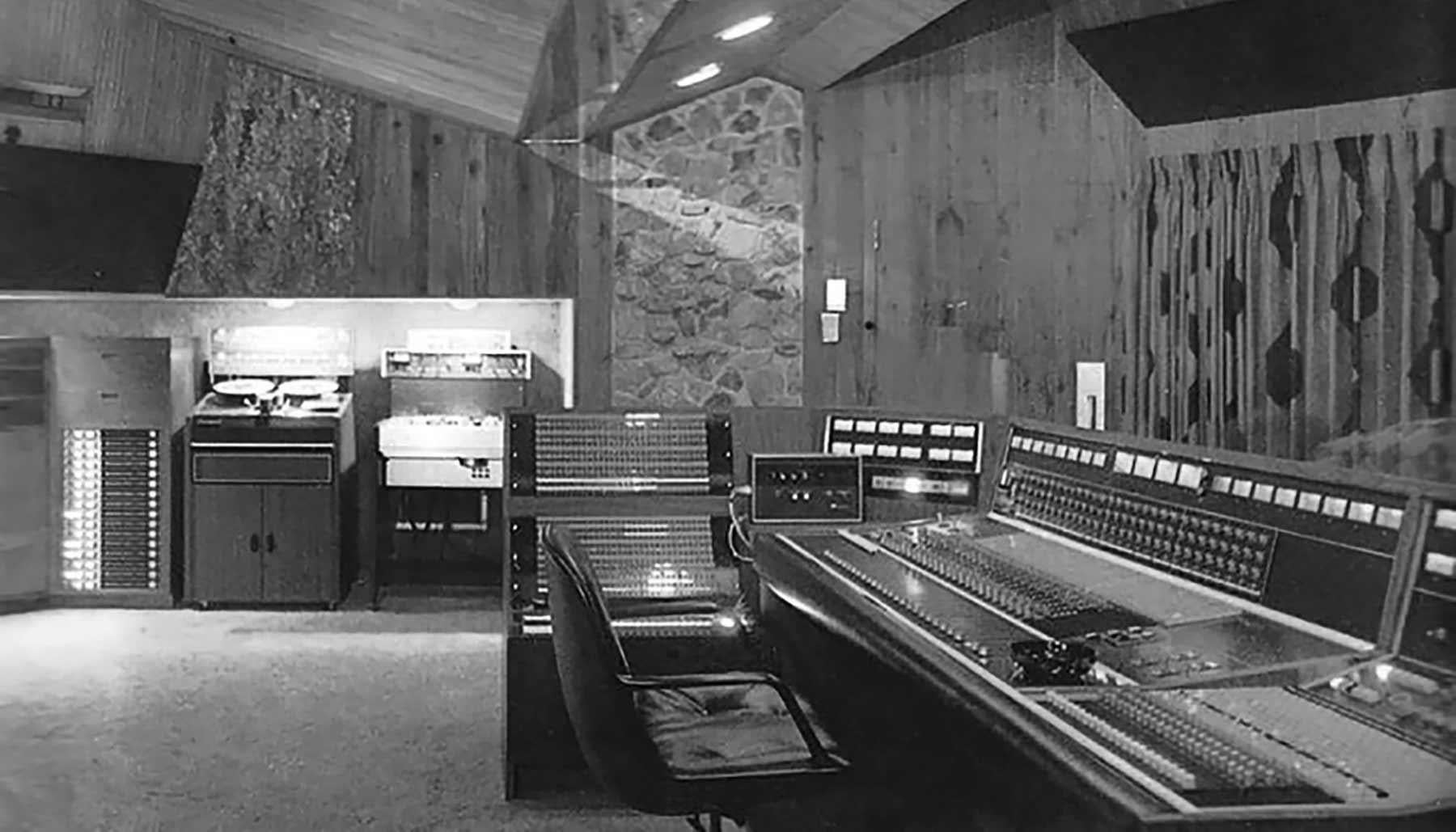
Capricorn Sound Studios is legendary. It’s the birthplace of southern rock. The Allman Brothers Band, The Marshall Tucker Band, Charlie Daniels, and scores of others recorded their biggest hits there; but it had been sitting vacant for decades and was in a state of grave disrepair. In fact, its neighboring buildings were destroyed in a fire some years earlier (though the studio itself remained miraculously untouched). How does one go about restoring a dilapidated recording studio to its former glory? “My slogan from the very beginning was ‘preservation meets innovation,'” proclaims Steve. “I wanted to preserve what was there but, at the same time, make it a viable studio.”
According to Steve, preserving what was there all started with the console. “Historically, the studio was built around an API,” he indicates. “It’s what the Allman Brothers and The Marshall Tucker Band recorded through — it’s in almost every picture of Capricorn.” Steve continues, “To respect the sound and tradition of the original studio, we put in a custom-built API console.” Steve emphasized that the console is the most important piece of gear in a studio. “Nobody comes and asks, ‘What kind of headphones do you use?'” he jokes. “So, I knew that the marquis piece had to be the console.”
In order to find the perfect console for the retooled Capricorn, Steve contacted API’s Dan Zimbelman and configured a one-of-a-kind, 40-input 2448 custom console. The console is divided with a large display in the middle for Pro Tools — a perfect example of Steve’s “preservation meets innovation” ethos. Steve explains the modern addition, stating, “You can’t teach college students to record and not teach them the modern way to record — that’s how people do it these days.”
Getting Your Hands Dirty
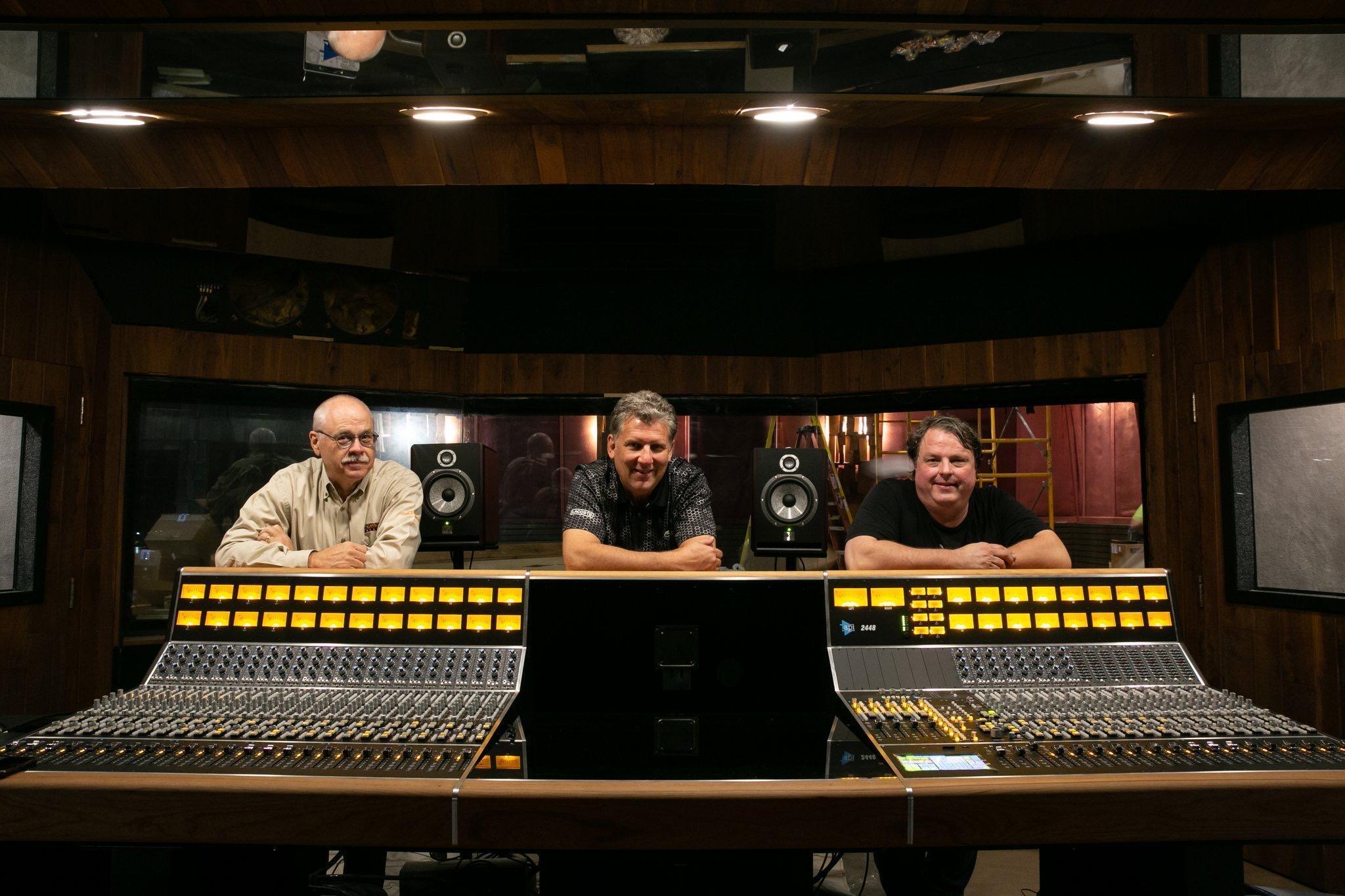
During the rebuilding process, Steve wasn’t a mere spectator — he was totally hands-on. He, along with the studio’s chief engineer Rob Evans, bought the gear and installed it with their own two hands. “He and I literally put this thing together with our own hands and wired it ourselves,” Steve emphasizes. “With the exception of the console,” he admits. So, how did they get a massive, 1,000-pound API console into the building? “It took six members of Mercer’s football team,” Steve recalls.
So, what did they do next? After donating a few pieces of gear from his personal arsenal to get the ball rolling, Steve contacted Sweetwater’s Brandon Eden for direction. “Everything [except the console] was bought from Sweetwater,” proclaims Steve. “Right down to the MIDI cables.” Steve continues, “Brandon and Sweetwater really stepped up, and I can’t tell you how much I — and the university —appreciate it.”
Steve’s involvement wasn’t limited to consoles and cables, though. He’s also remained on hand to ensure the studio’s financial success. “It’s tough to make a commercial recording studio successful,” he notes. “There are a lot of studios — especially big studios — that have fallen by the wayside. Making a studio survive in this climate is difficult,” he continues. “College kids are buying gear and making great records in dorm rooms.”
Bringing Capricorn Sound Studios into the 21st Century
The new Capricorn Sound Studios is simply breathtaking. The complex boasts two top-shelf studios. Studio A is Capricorn’s historic studio — the one that produced the studio’s biggest hits — carefully restored to working condition. “If you step in there right now, you’d think you’re in 1975,” claims Steve.
The larger 1,400-square-foot Phil Walden Memorial Studio, also known as Studio B, is a state-of-the-art room. This space is ideal for film work. It’s armed with 5.1 capabilities plus projectors to accommodate scores and meticulously tailored acoustics, thanks to wood floors and bright-sounding walls. “It’s a very live space,” states Steve. Both studios are tied together by the same control room, which houses the API 2448 console.
There’s also a small mixing space centered around an Avid C|24 plus two iso-rooms to complement the main rooms. As for monitoring, both the main control room and the mix room boast a Genelec 8020.LSE Espresso 5.1 system, Yamaha HS8 speakers with an HS8S sub, and a pair of Focal Solo6 Be monitors. This redundant configuration enables you to work in the main room for the recording then work on the mix in the other room with full consistency. The complex includes Pro Tools along with 2-inch tape — another fine example of “preservation meets innovation.”
The studio’s mic locker is impressive, with a Neumann U 87 Ai, a matched pair of AKG C414s, a Royer R-121, and an Electro-Voice RE20 on hand plus a cache of industry-standard microphones from Shure, Audio-Technica, and others. Aside from its 40-input API, Capricorn Sound Studios sports two Vintech 473 channel strips and two Midas XL48 8-channel microphone preamps for added I/O. Twenty sets of Shure SRH440 headphones, five Behringer Powerplay P16-D distribution modules, and 20 Behringer Powerplay P16-M personal mixers round out the studio’s enviable gear list.
Capricorn Sound Studios is built to tackle any project. “You can track a large string section and mix it to 5.1 for film and television,” Steve begins, “but at the same time have a great room for an artist project.” According to Steve, artist projects are the heart and soul of the studio. “They’re the meat and potatoes of the whole operation,” he elaborates. “We’ve already had some major artists in there recording.” Indeed, Blackberry Smoke recorded a critically acclaimed EP there, aptly titled Live from Capricorn Sound Studios, and the studio has only been open since December of 2019!
A Multifaceted, Multipurpose Facility
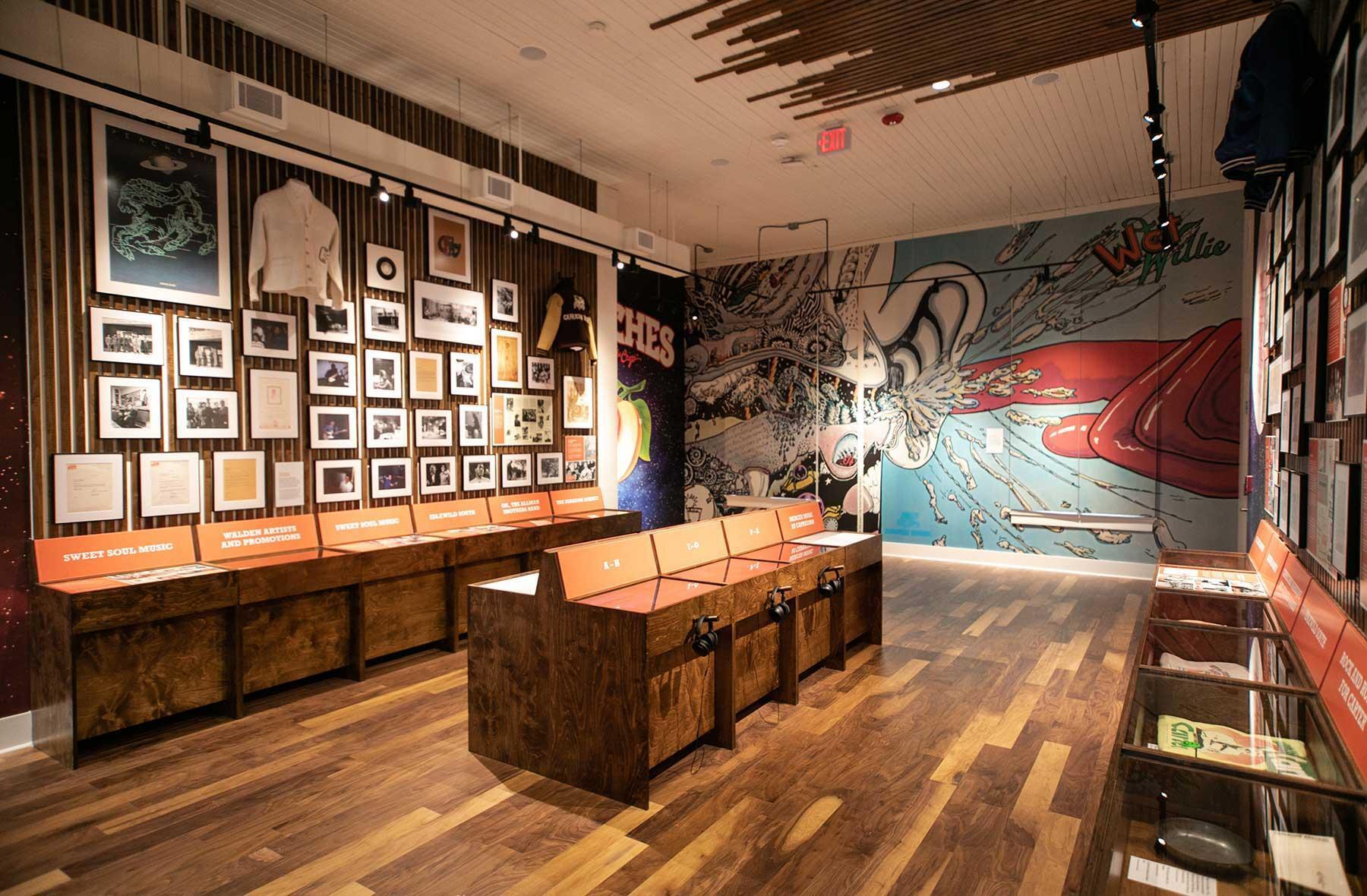
The Capricorn Sound Studios complex is much more than a simple recording studio. It houses a museum with interactive kiosks, music incubator spaces for musicians to collaborate and store their gear, special event spaces, offices, and a bar/lounge area that opens up to Studio B, enabling the facility to host concerts and other events.
The Museum at Capricorn offers 1,200 square feet of artifacts, murals, and stimulating, interactive digital kiosks that explore Macon, Georgia’s rich musical heritage with music, videos, and more that really bring the Capricorn’s history to life. A digital record bin enables visitors to sample the studio’s history of southern-fried soul, jazz fusion, and, of course, southern rock. The Capricorn Music Incubator includes rooms that are rented out to artists and songwriters. The spaces are reserved for legitimate artists — you have to earn your spot — and are designed to help budding musicians level up their craft by cultivating important industry connections. The facility’s office spaces are targeted toward nonprofits but are also great for arts organizations, solo practitioners, and entrepreneurs. These well-appointed workspaces include a shared break room and three technology-laden conference rooms.
Keeping It Green
Steve is a savvy businessman. He also loves geeking out on technology. He’s also cognizant of the world’s energy crisis and endeavors to be part of the solution. So, when he wanted to diversify his businesses, he decided to dive into alternative energy. The result was Simon Solar. The company has achieved a great many successes, including a 30-megawatt solar array that powers about 8,000 homes in Social Circle, Georgia — the largest solar array east of the Mississippi River — and other solar projects all around the southern United States.
Since he’s such a huge proponent of green energy, Steve wanted the new Capricorn to be energy efficient. Therefore, he donated an array of six solar panels and installed it on top of the building. “We wanted to show innovation,” Steve explains. “That an old building has been revived.” Each panel is 500 watts, so the entire array has a 3,000-watt capacity — enough to offset the power consumed by the console. “It will be enough to power the recording going on here at Capricorn Sound Studios,” Steve says. Since Sweetwater is a US Green Building Council LEED Platinum-certified company, we can certainly get behind that!
Nurturing Macon’s Music Scene
Steve is proud of Macon, Georgia’s and Central Georgia’s music scene and its rich musical history. And it is a rich history with names like Little Richard, Otis Redding, and The Allman Brothers Band woven into its abundant musical tapestry. According to Steve, the tradition continues to this day. “Thanks to the Robert McDuffie Center for Strings, we have students that are some of the best string players in the world,” Steve notes. “I use them for film scoring because of all the film work that’s going on in the state of Georgia. We’re very committed to finding great artists like the Allman Brothers and The Marshall Tucker Band,” he continues. “We’re committed to finding those artists in this area, and we want them to record at Capricorn.” Steve notes that they have already discovered some prime talent and that the future looks bright for Macon. “I’ve found a few that are really good, so I’m excited,” he exclaims. “Not just people who sing, but really great players and songwriters — great artists.”
Working with Sweetwater
All throughout the interview, Steve had nothing but praise for Sweetwater, in general, and his Sales Engineer, Brandon Eden, in particular. Steve had a fixed budget for the Capricorn project — a little over $5 million — and Sweetwater helped on pricing to meet the budget. Brandon’s classical music training and film scoring experience were an added bonus. “I was able to do some extra special things to this place because of you guys helping us out with pricing,” Steve indicates. “Without Brandon and Sweetwater stepping up, it would have been impossible — I thanked him a hundred times.”
- To learn more about Steve, visit https://www.steveivey.com/
- To learn more about Capricorn Sound Studios, visit https://capricorn.mercer.edu/