Your studio’s mic locker is like an artist’s palette that lets you paint with sound. A grand simile, perhaps; but true. Different mics have different sonic characteristics, and knowing where (and how) to deploy them is a talent perfected by successful recording engineers. But with so many mics to choose from (Sweetwater carries hundreds of microphones from over 40 different manufacturers), how do you know which one to use on what? Back in the day, engineers learned by trial and error, or by landing a job in a studio and finding a mentor worthy of emulating before blazing their own creative paths. Today, we have the Internet and forums and informative articles galore. With an eye toward helping make your mic selection process a little easier, get ready to dive into Mics of the Masters, Part 2!
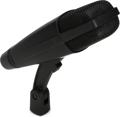
Bob Clearmountain: Sennheiser MD 421
 When a recording industry icon chooses to use a certain mic, it is wise to take note, which is why we’re starting this article with Bob Clearmountain and the Sennheiser MD 421.
In the 1970s, the large-diaphragm condenser mic played a major role in the huge-sounding tom-toms heard on countless hit records of the era. Bob Clearmountain changed all that. As the Power Station’s first chief engineer, he preferred the Sennheiser MD 421 on toms. A dynamic mic, the 421 captures a more compact sound that is easier to place in a thick rock arrangement. It’s also an extremely punchy mic with great bottom end and upper-midrange presence (which makes it an excellent bass drum mic as well). Today, the MD 421 II is perhaps the most popular choice for toms. It can take tons of level and features a 5-position bass roll-off switch, making it equally adept at capturing a cranked guitar or bass amp, percussion such as congas or marimba, blaring brass, voice-overs, and more.
Basically, I use a lot of 421s…on the bass drum, and on the tom-toms…
Take a listen to classic Clearmountain recordings such as Roxy Music’s Avalon, David Bowie’s Let’s Dance, or Bryan Adams’s Cuts Like a Knife. You’ll be hearing a 421 on kick as well as above and below the toms, (reversed polarity on the bottom mics). Here’s Bob from a 1984 Recording Engineer/Producer interview:
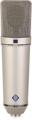
“Well, I really think everybody should experiment and develop their own thing with mic technique. But basically, I use a lot of [Sennheiser] 421s: a 421 on the bass drum, and on the tom-toms, top and bottom. I usually use a Shure 57 and 81 on the snare, both on the top. Sometimes I’ll use just one, sometimes both. I use AKG 452s on the cymbals, although I’ve just discovered the new AKG 460, which seems to be an improved version. It seems to have a little more body to it, more depth. I’ll usually stick up a couple [Neumann] 87s for room mikes and aim them at the walls or the ceiling.”
The interview revealed several additional Clearmountain nuggets, including the fact that Bob always used his own Ludwig Black Beauty snare drum and tuned the drums himself on all his recordings. Delightfully modest about his many achievements, Bob Clearmountain to this day remains open to suggestions and new recording techniques — an attitude that is likely one of the keys to his success. That plus his innate musicality!
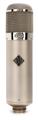
Bob Fine: Telefunken U47
 The Telefunken U47 needs no introduction, but Bob Fine probably does. In 1950, engineer C. Robert “Bob” Fine was planning his first recording for Mercury Records’ fledgling classical label. This was a time of rapid innovation in the recording industry. Stereo disc mastering was not yet ready for prime time, but the monaural 12″ long-playing record (LP) and magnetic tape, a technology that came from Germany at the end of the war, were new. Introduced in 1947, so too was the Telefunken U47, the tube condenser microphone that was to play a key role in the development of Bob Fine’s Living Presence recording technique.
Fine performed a level check of the score’s loudest passage; after that, there was no manipulation of the dynamic range, no highlighting of individual instruments, and no compression…
In April 1951, Mr. Fine arrived in the Windy City to record Mercury’s first sessions with the Chicago Symphony, under the baton of Rafael Kubelik. Having experimented with single-microphone recordings in his New York studios and other spaces, Fine had with him a Telefunken U47, which at that point was still relatively unknown on the US side of the pond. His plan was utterly simple, if a bit audacious: to record Mussorgsky’s Pictures at an Exhibition with a single omnidirectional U47 suspended approximately 25 feet above the conductor’s podium in Orchestra Hall, its exact positioning having been determined at rehearsals. Fine performed a level check of the score’s loudest passage; after that, there was no manipulation of the dynamic range, no highlighting of individual instruments, and no compression. The performance was recorded exactly as the conductor conceptualized and directed it.
From the hushed passages of Pictures’ “Catacombs” movement to the thundering fortissimo crescendos of “The Bogatyr Gates,” this historic recording captured the awesome dynamic range of Maurice Ravel’s orchestration and the power and grace of a great American orchestra in its prime. The sound of the record so pleased New York Times music critic Howard Taubman that he wrote, “one feels oneself in the living presence of the orchestra.” And so the Mercury Living Presence series was born. As stereo gained traction in the mid-’50s, the Mercury team started using three spaced omni ’47s, directly recording the left, center, and right microphones to a 3-track 1/2″ Ampex tape recorder, which could then be mixed down to 2-channel stereo and mono as required for concurrent vinyl release.
The core concept of the Living Presence stereo technique was to begin with a strong, focused center: a single-source soundstage that literally stood on its own as a definitive monophonic documentation of a live acoustical event. The final placement of this center mic was crucial and hence time-consuming, involving meticulous listening and incremental adjustments. Once the center mic image was set, Fine built out the wings with the other two mics. In a venue with good acoustics, these side mics were more or less on an even plane with the center mic. Fine worked with the conductor, and occasionally switched musicians’ seating arrangements to better balance the orchestral sections. Musical dynamics were entirely in the hands of the conductor and the orchestra. No recording techniques were used to alter the dynamics; and indeed, the Mercury remote truck was not equipped with outboard gear of any kind.
When Bob Fine started recording for Mercury, the U47 was really the only serious choice for high-fidelity music applications. Several years later, when the Schoeps M 201 came on the market, Bob found that he preferred it. The U47’s presence peak — accentuated by using three of them — had a tendency to unbalance the orchestra by intensifying the focus on individual instruments and sections. The 201s’ higher sensitivity and less intrusive presence peak allowed Fine to capture more ambience by hanging them higher and further back in the hall, while still capturing the strings and woodwinds clearly.
But it was the U47’s bold, authoritative sound that endeared it to Frank Sinatra, who, once he had tried it, would not use any other vocal mic. From Miles Davis and John Coltrane to the Beatles and Michael Jackson, countless legendary artists owe their sound, in part, to the U47. In Mics of the Masters, Part 1, we promised to reveal which company — Telefunken or Neumann — actually made the U47 (and its dual-pattern cardioid/figure-8 stablemate, the U48). Drum roll: they were designed and manufactured by Georg Neumann GmbH, re-badged and distributed by Telefunken.
Joe Barresi: Royer R-121
 Renowned electronics guru David Royer began building ribbon mics in 1998, and his R-121 was the mic that put ribbons back on the map. John Jennings, VP of Sales and Marketing for Royer Labs, recalls the 121’s baptism of fire at the hands of engineer Joe Barresi:
“This mic’s first trip out was with the great rock engineer Joe Barresi. He put this weird mic with no name on the guitars of a new band he was working with that didn’t have a name either. The first thing this no-name mic ever heard was this band’s guitars. Those R-121 recorded tracks made it onto the record. The mic became the Royer R-121, and the band became Queens of the Stone Age.”
Joe put the 121 through the wringer and became one of Royer’s earliest and most enthusiastic evangelists.
Today, countless engineers, producers, and artists rely on ribbon mics for their electric guitar sound — in the studio and onstage. It wasn’t always that way. By the 1930s, ribbon microphones (invented in the ’20s) were the industry standard for high-fidelity applications such as radio shows, motion pictures, and phonograph records. But ribbon mics were also notoriously delicate and unable to withstand high sound pressure levels without damage to the fragile ribbon elements. As electric guitar amps were becoming progressively louder during the 1960s, most top recording studios had vintage RCA 44s and 77s in their mic lockers — but they were not used on electric guitar.
Flash forward to 1998 and Royer’s first ribbon mic (and still its flagship), the R-121. Here was a mic that delivered the warm, velvety, forgiving sound of a traditional ribbon, along with state-of-the-art specs and tour-tough durability. It required no special handling, and you could use it on anything. Joe Barresi was a pioneer, putting the ‘121 through the wringer and becoming one of Royer’s earliest and most enthusiastic evangelists. Racking up an impressive list of credits since then that includes Tool, Bad Religion, the Melvins, L7, and Weezer, Joe continues to use Royer ribbon mics, session after session.
Today, ribbons are part of every well-equipped mic locker and live sound rig. The Royer lineup has been fleshed out into a range of passive and active, mono and stereo ribbon mics. Other companies have joined the ribbon party as well. But in ’98, it was Royer — and Joe Barresi — who put ribbons back on the map.
So back to the question: which mic do you use on what? We wholeheartedly agree with Bob Clearmountain’s advice to experiment and do your own thing. With so many good mics to choose from, the only real limitation is your imagination. Start simply, and methodically build a respectable mic locker that fits your needs and budget. Now grab your mics and get to work!