Musicians and producers can easily get sucked into the pattern of making 8-bar loops and single-riff jam sessions. Many times, this is due to a lack of solid transitions to new sections of a song. Having a strong transition in a song can keep it flowing to new sections without feeling disjointed. In this article, we will take a look at five transition effects you can use to spice up your music.
Big Reverb Out
Reverb is essential in mixing; it gives the song a space to live in. When used (or abused) for transitions, it can deliver incredibly smooth results to ease into a new section without a jarring feeling. The idea behind a big reverb transition is to bring up the level of the reverb on an element in the mix to wash or blur the sound into the background. A reverb plug-in with a lot of presets, such as Altiverb 7, is wonderful for this trick, as you can choose from a variety of timbres for your reverb. Using this technique in a transition can be a great way to carry over an element from one section of a song to the next.

An example of this can be found in the bridge of “Break My Heart” by Dua Lipa. At the end of the chorus going into the bridge, the reverb on her voice is bumped up significantly so that it trails into the bridge. Another example can be found in the bridge of “A Beautiful Lie” by Thirty Seconds to Mars. This example is a bit more prominent; the vocal is completely drowned out in reverb to help the song drop down in energy without seeming to be overly jarring to the listener.
Highpass Filters and Removing Low End
Another way to transition from section to section within a song is to play with the frequency spectrum of the song by removing low end. Sometimes artists will do this in an arrangement by having the bass player play an octave higher just before a chorus or by having the drummer use less kick drum to ensure more power once the new section arrives. This can also be done in the engineering world by using filters and equalizers. Filtering out the bass frequencies in a song can help achieve a more powerful transition. Waves’ MetaFilter or FabFilter’s Volcano plug-ins can be great tools to use for this trick. Simply select a highpass filter and automate the cutoff frequency to be higher before a new section of your song.
One example of this trick can be found in the song “Cupid’s Chokehold” by Gym Class Heroes. Going into the second chorus, the kick drum becomes slightly less powerful just before the chorus hits. This gives the downbeat of the chorus more emphasis. A more drastic example can be found in “Closer” by The Chainsmokers. In the chorus, the piano and bass are drastically filtered out just before the drop to add more impact to that first hit. You can easily achieve this effect by automating the frequency of a highpass filter. You can also dial in more resonance to the filter for a more pronounced sweeping effect.
Bass Drops and Sub Hits
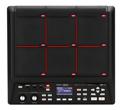
Similar to highpass filters, using bass drops and sub hits can add more impact when a new section arrives. Rather than removing low end before a new section, additional low end is added at the top of a section to emphasize that the listener has entered a new part of the song. Bass drops and sub hits can be achieved easily with a synthesizer like Native Instruments’ Massive X or a sampler for live performance such as the Roland SPD-SX. The idea is to play the root note of the new section at an extremely low octave. Sometimes the pitch can drop to land on the root note (hence bass “drop”). Be sure to use a simple waveform such as a sine wave or an 808 bass sample so as not to bring unwanted muddiness into your mix.
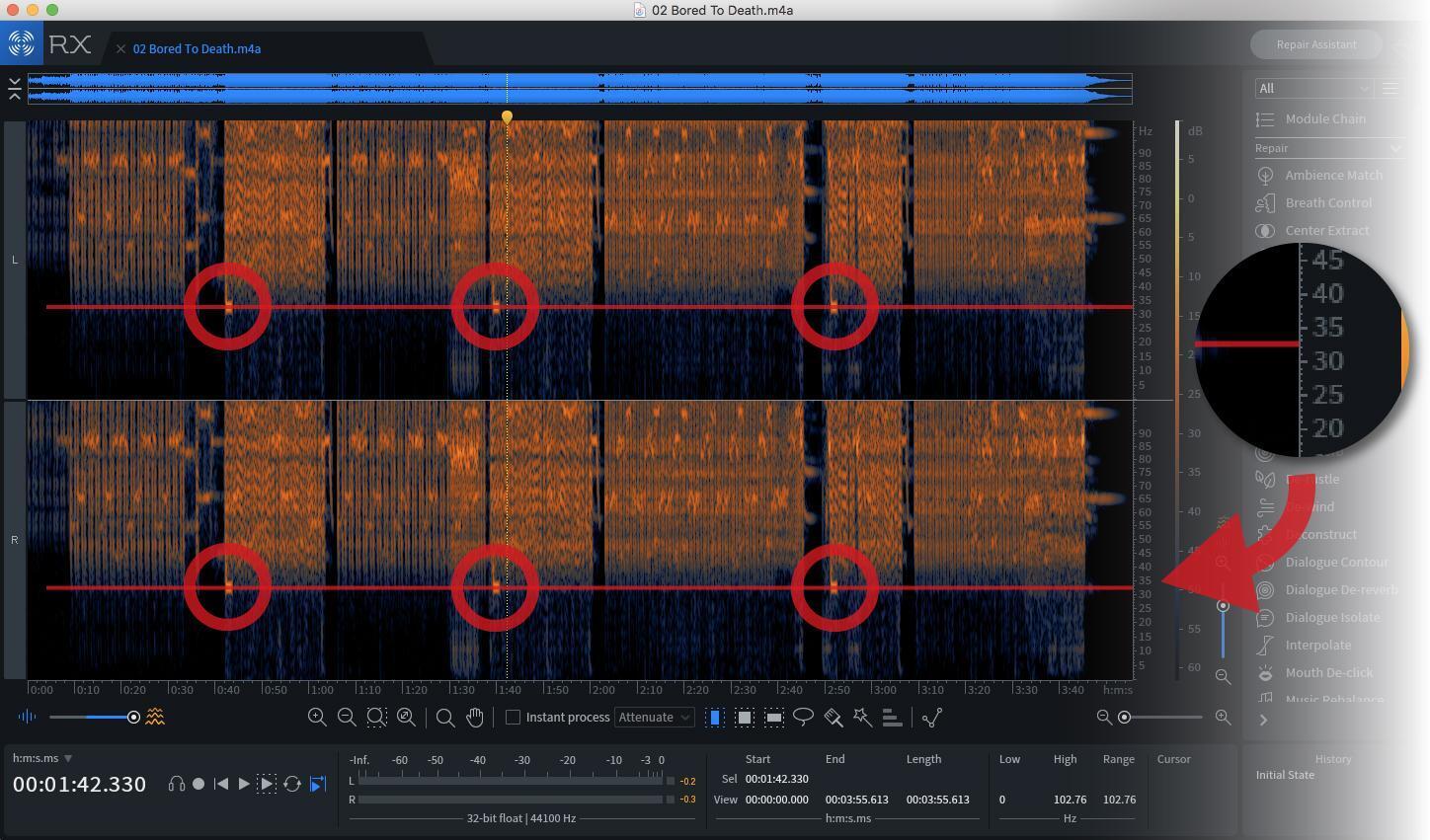
These have been a staple in metal for years but have been sneaking more subtly into many other genres. A great example can be found in the “crabcore” classic “Stick Stickly” by Attack Attack! Bass drops can be heard at the top of almost every heavy section within the song. A subtler example can be found in Blink-182’s song “Bored to Death.” At the top of every chorus, there is a hit at about 35Hz to give the chorus more energy. These hits are not meant to be prominent in the mix but simply to add power to the beginning of the choruses.
Reverse Reverbs
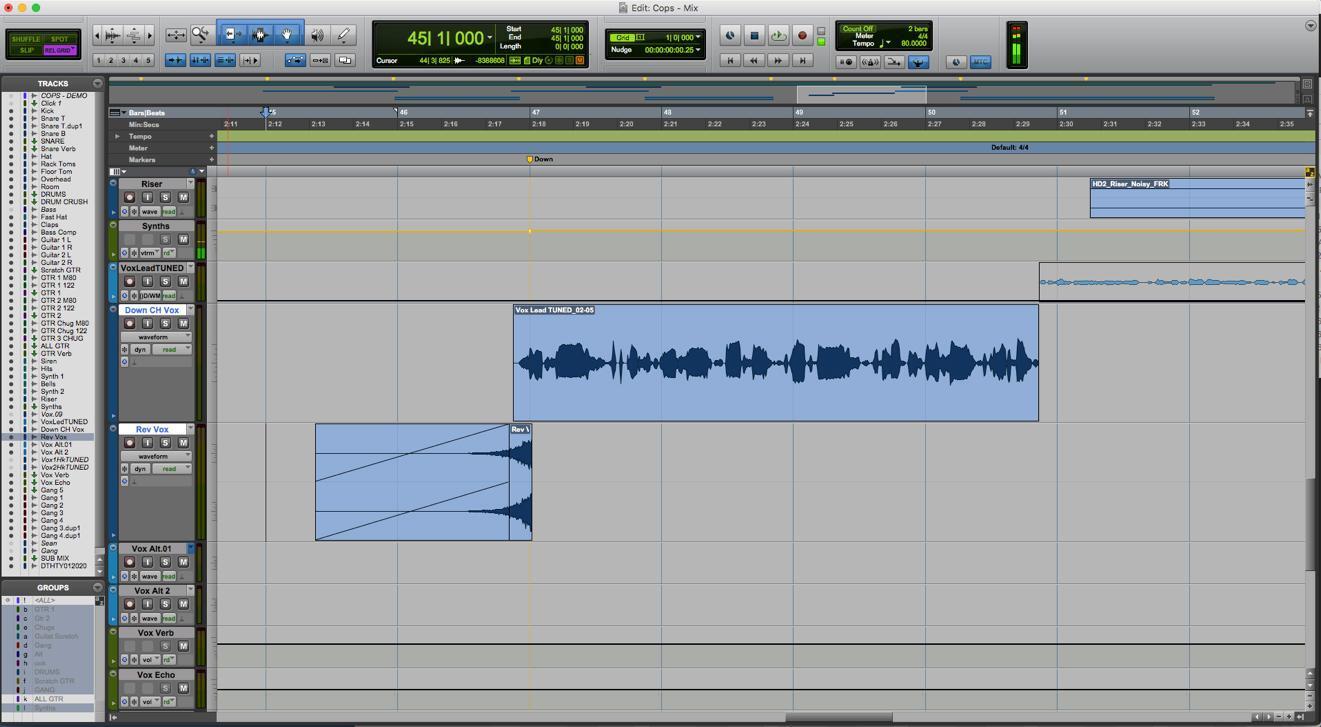
Reverse reverbs are essentially what they imply: reverb, but it’s backwards. These can be great for transitions, as they can hint at what will be happening in the next section of a track just before it actually happens, thereby creating a nice, smooth transition. Commonly used on vocals, reverse reverbs can be done by rendering reverb to audio and reversing the rendered reverb. In Pro Tools, this is easily done using a reverb from the AudioSuite menu and Pro Tools’ built-in reverse function. It is also common to manually fade in the reverb for added control. Another great tool is Zynaptiq’s Adaptiverb plug-in. This has a freeze function that pauses the reverb to give you full control over the sound.
One of the first instances of this effect is in The Yardbirds’ song “Ten Little Indians.” It is used to introduce the horns in the left channel. This swelling effect is great for hinting at new instruments before they actually enter. A modern take on this can be heard in “Bow Down” by I Prevail. Throughout the intro and first verse, there are only distorted vocals with the clean vocals arriving in the chorus. Just before the chorus, the clean vocals are teased with a reverse reverb. This helps create a cohesive transition from distorted vocals to clean.
Uplifters and Downlifters
Many times, songs can benefit from adding tension and release in energy. Risers, uplifters, and downlifters are wonderful for achieving this effect. An uplifter is a sound that goes up in pitch or amplitude when going into a new section to build tension, while a downlifter is at the start of a new section and does the opposite, goes down in pitch or amplitude. Using white noise, cymbals, or synthesizers, you can easily create a unique effect to smooth over transitions in your music.
An example of an uplifter can be found in the song “You’re Going Down” by Sick Puppies. White noise sweeps in just before the top of each chorus to pull the listener in. You can easily re-create this effect by using a signal generator and a lowpass filter with a high resonance to create the sweep. An example of a downlifter can be heard at the top of each chorus as well as in the bridge of “California Gurls” by Katy Perry. In this example, the downlifter is acting similar to a cymbal to accent the top of sections, but this obviously isn’t a cymbal sound. Using a synthesizer with a noise generator, oscillator, and a couple of envelopes, such as Roli’s Equator, you can re-create this sound by pitching down the oscillator while fading out the white noise.
Creating smooth transitions is essential in writing a song that flows organically. By adding some of the tricks in this article, you can create effective transitions that keep the listener interested and engaged throughout your entire song.