
Yamaha has a rich history in the world of digital mixers. It all began with the introduction of the DMP7, a digital mixer for DX7 players with recallable presets and motorized faders, in 1987. From there, Yamaha never looked back. Offerings like the 02R and the 03D would soon grow Yamaha’s legacy of great sound and near-limitless operational flexibility. To this day, Yamaha digital mixers are known for their exceptional preamps, impressive onboard effects, and nearly indestructible design. And the rest, as is so commonly said, is history.


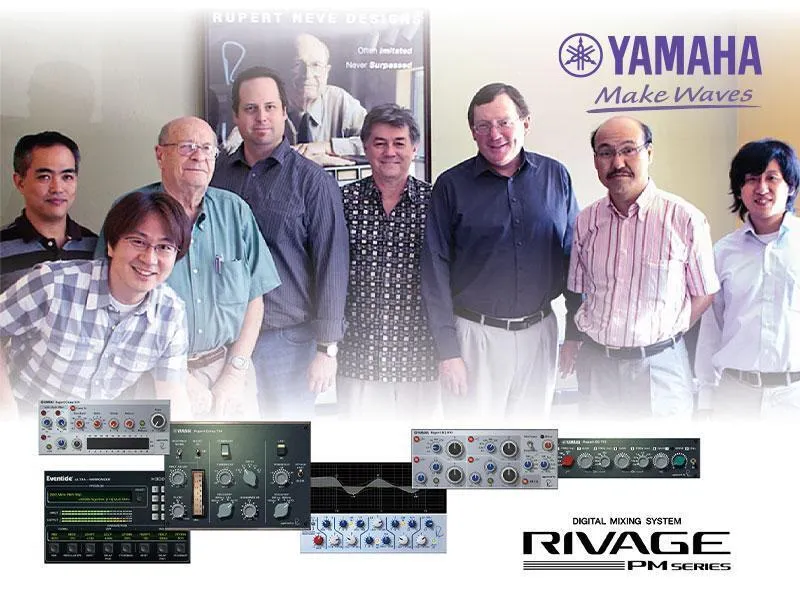
Yamaha VCM plug-ins are among the most well-respected console-based plug-ins out there. VCM (Virtual Circuitry Modeling) resulted from a years-long project spearheaded by Dr. Toshifumi Kunimoto. He assembled a team of modeling experts and set to work in what is now known as K’s Lab. The team’s first software creations were models of iconic processors designed by industry legend Rupert Neve. Mr. Neve was impressed by their initial designs and forged a close partnership between his company, Rupert Neve Designs, and Yamaha. The two companies worked together to create plug-ins, such as the Rupert EQ 773, Rupert Comp 754, and Portico 5033, that sound identical to the real-world hardware units. Today, Yamaha offers various plug-ins that emulate classic hardware from Rupert Neve Designs and Eventide alongside a bevy of other iconic gear.
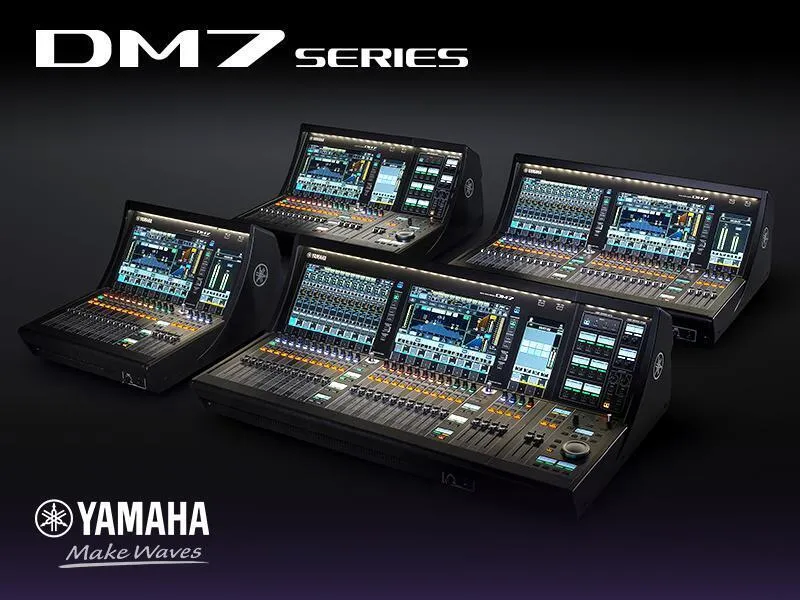
DM7 series consoles represent another step forward for digital mixing technology. This series of mixing consoles combines elegant form and functionality with incredibly intuitive user interfaces, compact footprints, and a whole suite of powerful features that outperform other offerings in their class. DM7 consoles’ advanced capabilities and natural sound make them the ideal choice for broadcasting, livestreaming, music production, and live concert performances. Plus, the simple and effective workflow makes them insanely easy to operate. Every innovative DM7 series digital mixer boasts easy operation and exceptional reliability. They are the perfect way to unite engineers, artists, and audiences with unparalleled sound quality. That’s not all, though: this series is highly scalable and flexible enough to adapt to any recording or mixing application. A DM7 setup can help you take on any project in any environment.
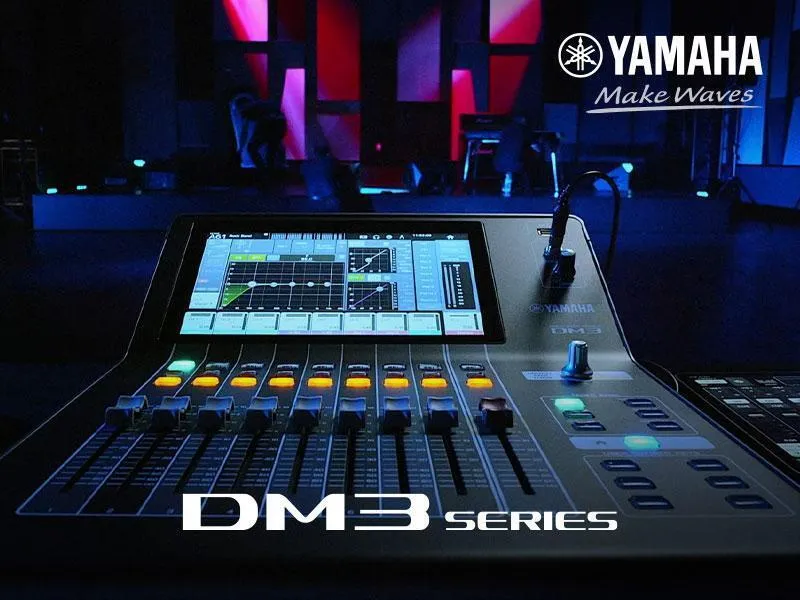
The DM3 series is a new and exciting addition to the family of Yamaha digital mixers. For far too long, compact mixers and consoles have been labeled as “limited.” The DM3 series shatters that stigma. These advanced mixers deliver on their promise of amazing sonics, easy operation, and a small form factor. Currently, two versions of the DM3 are available. The DM3-D features full Dante connectivity for networked audio. Meanwhile, the simplified DM3S foregoes Dante connectivity but retains all the other features. Whichever you choose, the 22-channel digital mixers operate at 96/48kHz and come with super-smooth faders. The unique Touch & Turn knob handles most of the action, cleaning up your workflow and reducing the risk of accidental changes to your fine-tuned settings. And under the hood, tons of user-focused features improve your quality of life. The DM3 series is your perfect platform for live mixing, recording, and livestreaming.
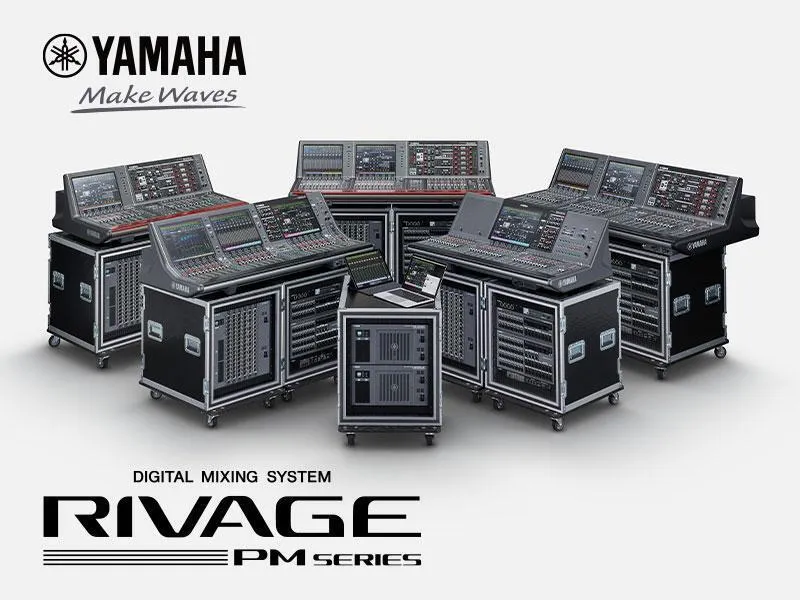
Built in Japan by Yamaha’s talented team, the Rivage PM family stays faithful to the company’s philosophy of pure sound. These digital consoles come loaded with Hybrid Microphone Preamplifiers with analog input stages before being digitized with immaculate VCM technology and SILK processing circuitry for enhanced musicality when you want it. The consoles also come with an arsenal of built-in plug-ins that faithfully model gear from Rupert Neve Designs, Eventide, and other top names. Rivage PM series products flaunt a streamlined and intuitive layout that’s instantly accessible without sacrificing the surgical control required to run complex productions. Rivage consoles are available in various sizes and channel counts, from the baby of the family, the Rivage PM3, all the way up to the granddaddy of them all, the Rivage PM10. Rivage PM digital mixing consoles are far more than pieces of gear: they’re outstanding tools that enable engineers to deliver high-quality musical productions.
The acclaimed CL and QL Series consoles offer prestigious sound quality and effortless usability. Both the CL and QL mixers come with powerful processing tools, Dante, VCM technology, and premium faders. With one of these consoles, you’ll enjoy full remote control via your iPad or computer, 300 scene memories, ample EQ and dynamics processing, and so much more. So, what’s the difference between the CL and QL series mixing consoles? CL series digital mixers have a streamlined I/O layout with a sparse collection of mic and line preamps that are expandable via stage boxes. By contrast, the QL series consoles have robust I/O onboard and function as compact, all-in-one units. Three CL consoles are on offer: the 72-channel CL5, 64-channel CL3, and 48-channel CL1. The QL series is comprised of two mixers, the 64-channel QL5 and the 32-channel QL1.

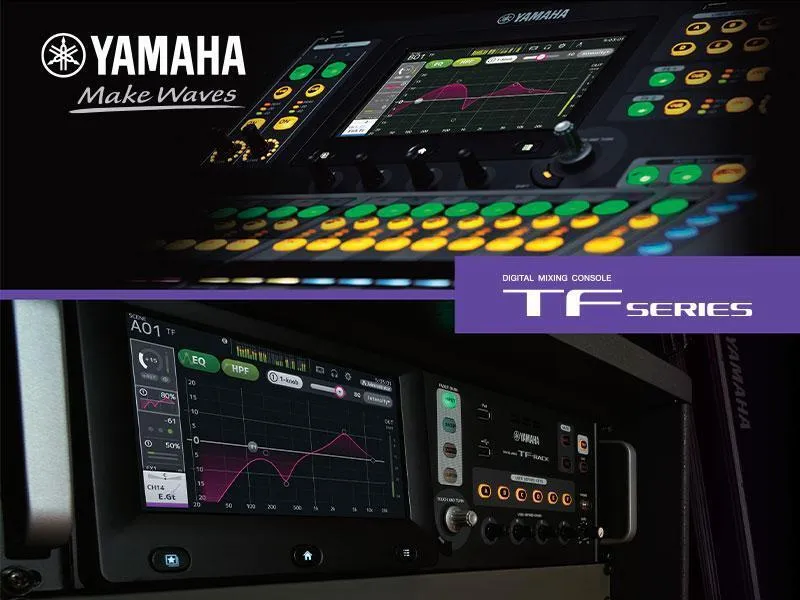
Yamaha TF digital mixing consoles utilize TouchFlow Operation, which helps professional live sound engineers respond to events onstage faster than ever before. Each mixer in the TF family features a large, full-color touchscreen for making tweaks and adjustments. Setup and operation are easy and effortless, thanks to the library of excellent presets, recallable scenes, and seamless software integration. Plus, the mixers have Yamaha’s acclaimed D-PRE preamps. The TF family of mixers includes the TF5 (48 channels, 33 motorized faders), the TF3 (48 channels, 25 motorized faders), the compact TF1 (40 channels, 17 motorized faders), and the rackmount TF-RACK (40 channels). Multiple accessories are available to expand your input count or add Dante capability. Yamaha TF mixers offer a totally new experience in console operation.