New Fender '62 Deluxe Brown Panel Amp

Practice & Mini Amps

Read our Acoustic Guitar Amps Buying Guide
What's the Difference Between a Practice Amp and a "Regular" Guitar Amp?

Practice amps are smaller, lower in wattage, and designed to sound their best at home-friendly volumes. Gigging amps are built to project across larger spaces and often reach their sweet spot at much higher volumes.

What Size Amp Do I Need for Home Practice?

For most home players, 20 watts is plenty. Choose 10 to 20 watts for more clean headroom (or to be heard above a drummer), or 1 to 5 watts for natural amp breakup and touch-sensitive response at lower volumes.

Can I Use a Mini Amp for Gigs?

Yes, depending on the venue. Well-miked practice amps can sound huge in certain recordings and smaller venues. Larger stages without PA support may require more power, but many mini amps work well for coffee shops, studio sessions, and even light busking.

What's the Best Apartment-friendly Guitar Amp Setup?

Choose an amp with a high-quality headphone output and speaker-emulated DI for silent practice. Onboard effects, Bluetooth, and a 1- to 5-watt power section provide an excellent home-friendly setup.

Get More at Sweetwater

Refine Your Search

Availability

Brand

Price Range

Financing

Type of Deal

Series

Number of Channels

Height

Width

Depth

Weight

Related Searches

You can only compare four products at a time.
If you want to compare another product, please remove one of your earlier choices.
Please select more items to compare.

Practice & Mini Guitar Amps Sound Great in Any Space


Great tone isn’t reserved for the big stage. Whether you’re jamming late at night, relaxing by a campfire, or warming up backstage, a practice or mini guitar amp delivers trusted tone wherever inspiration strikes. In fact, today’s small combo amps offer such satisfying tone and touch sensitivity that you may not even miss your stage rig for the night. Shopping for your next portable amp? Sweetwater can help you find the right fit for your playing style, space, and budget.


What to Look For in a Practice Amp


Wattage and Real-World Volume at Home


For home practice, you rarely need more than 20 watts. Even low-wattage tube combos like the Fender Blues Junior can be surprisingly loud in apartments, often requiring restrained master-volume settings. Lower-wattage amps often reach their tonal sweet spot at more manageable volumes. That’s why 1- to 5-watt amps are popular with bedroom players and home studios, delivering power-amp breakup and harmonic richness without excessive volume.


Tube vs. Solid-State vs. Modeling Amps


Mini amps generally fall into three categories:


  • Tube: Low-watt tube amps deliver a classic touch-sensitivity and harmonic richness, with a natural compression and bloom that’s hard to replicate. Note that tube amps typically require more maintenance and cost more.
  • Solid-State: Reliable, consistent, and often more affordable, modern solid-state circuits deliver punchy cleans and a tight response that some players prefer for sparkling cleans and modern rhythm work.
  • Modeling: Modeling amps combine multiple amp voices, built-in effects, and cab simulations into a compact practice rig. A single modeling mini amp may cover surfy California cleans, vintage British chime, and modern high-gain muscle in a single unit.

Speaker Size and Cabinet Design


Speaker size plays a major role in a mini amp’s sound characteristics:


  • 4” and 5” drivers: Focused and punchy at desktop levels, but can sound boxy at louder volumes.
  • 8” speakers: Tight mids and enhanced low-end make these a versatile middle ground for many styles.
  • 10” and 12” drivers: Larger drivers create a fuller sound that works well for recording and traditional combo tones.
  • Stereo speakers: Hear enhanced stereo reverb and modulation effects for a more immersive experience.

Cabinet design also impacts tone. As a rule of thumb, open-back cabinets sound more spacious, closed-back designs emphasize punch and depth, and ported cabinets improve bass response.


Other Features Worth Considering


  • Headphone and DI outputs: A cab-emulated output or speaker-emulated headphone jack lets you practice and record silently. These outputs send your guitar tone to a soundboard or interface with the speaker sound “baked in,” taming the harsh top end of direct tones without an external cab IR.
  • Bluetooth and aux connectivity: Bluetooth streams backing tracks, lessons, and music through your amp for convenient practice. Many smart amps include companion apps with backing tracks, chord charts, and AI-generated practice tools. If Bluetooth isn’t needed, an aux input offers a reliable wired alternative.
  • Portability and battery power: Look for a lightweight chassis and sturdy carry handle if you’re covering ground around town. Battery-powered amps with rechargeable or AA/DC options work well for outdoor playing. A battery life of four hours is fine for shorter sessions, but look for an amp with 8–10 hours for day-long outings.

Popular Mini Guitar Amp Types


Small amps are here to stay. Teachers dig them for lessons, touring players use them for green-room warm-ups, and content creators rely on them to post quick clips to social media. Wondering which type is right for you? Here are the main categories:


  • Low-wattage tube combos: Low-watt tube combos deliver authentic tube tone and inspiring feel while remaining suitable for home practice and recording. They’re often louder than they look, and even 1- to 5-watt amps can sound huge in the context of a mix. That’s why folks like Rhett Shull keep vintage low-watt gems like the Gibson Skylark within easy reach when the light turns red.
  • Compact solid-state and hybrid combos: These workhorses of the amp world are well regarded for their reliability and simple operation. Many include gain, EQ, and reverb for an all-in-one practice setup. They also make respected recording tools. Artists and producers from Josh Homme (QOTSA) to Barrett Jones (Foo Fighters) have credited amps like the Peavey Decade and SLM “Gas Can” as secret weapons behind some of their most iconic recorded tones.
  • Modeling mini amps and smart amps: Modern modeling amps typically cover everything from vintage cleans to high-gain chugs, often with onboard effects, app integration, presets, and jam features. They’re a strong all-in-one solution for practice, learning songs, and content creation.
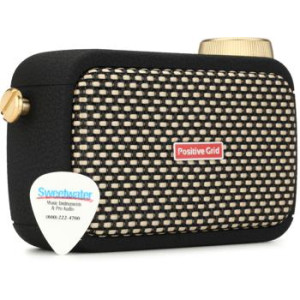
  • Ultra-portable battery-powered amps: Compact battery-powered amps like the JBL BandBox Solo and Positive Grid Spark GO combine impressive guitar tone with Bluetooth speaker functionality. Their portability makes them favorites among traveling songwriters, guitar teachers, and players who want great tone anywhere.

Conclusion


Whether you’re after low-wattage tube magic, a modeling powerhouse that fits on your desk, or a battery-powered amp you can take on the road, there’s a mini guitar amp at Sweetwater built for the way you play. Need help choosing? Your Sweetwater Sales Engineer can recommend the right option based on your playing style, space, and goals. Give us a call at (800) 222-4700 and let’s find the right fit together.

Learn More

Why shop Practice & Mini Amps at Sweetwater.com?


With a massive selection of Practice & Mini Amps, free shipping, a free 2-year warranty, 24/7 access to award-winning support - and more - Sweetwater gives you more than any other retailer! If you have any questions about Practice & Mini Amps, make sure to give your personal Sales Engineer a call at (800) 222-4700.