
















Humble Beginnings
S. N. Shure founded the Shure Radio Company as a radio parts retailer in downtown Chicago in 1925. Within three years, the company had expanded to 75 employees — including S. N.'s brother, Samuel — and earned a loyal following of regional and national customers. But the newly named Shure Brothers Company dwindled as factory-built radios became the norm following the Great Depression and DIY kits fell out of vogue. Samuel moved to St. Louis to begin his own business, leaving S.N. to run the company. It was around this time that S. N. crossed paths with Ralph Glover, Shure's eventual chief engineer, who would lead the development of Shure's first microphones and change the company's course forever.


The First Shure Microphone
By 1932, Shure was one of only four major microphone manufacturers in the US. In a market dominated by bulky, costly electronics, Shure made a name for itself with its affordable, high-performance carbon and crystal mics. Following the release of Shure's first broadcast condenser mic, the Model 40D, Shure and Glover set their sights on challenging the multi-element cardioid microphone.
The Unidyne Model 55
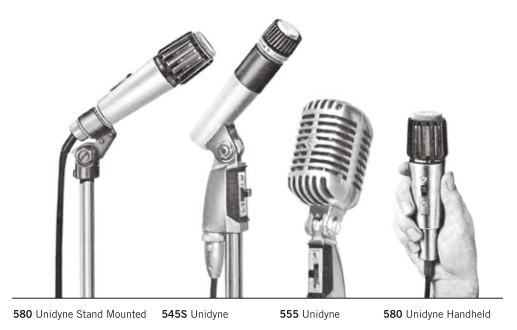
Until the late 1930s, the most common way to make a microphone directional was to pair omnidirectional and figure-8 elements and combine their signals electronically. This caused early cardioid microphones to be large, inconsistent, and expensive. Then, in 1939, Shure unveiled the Unidyne Model 55: the world's first single-element directional microphone. The concept was developed by Shure engineer Ben Bauer (Baumzweiger), a star student from Glover's alma mater. Ben recognized that by allowing sound waves to reach both sides of the microphone's diaphragm through a system of front and rear ports, delay cancellations would create a directional pickup. The affordable Model 55 (just $45 in 1939) allowed future microphones to become not just smaller and better performing, but more directional, too, paving the way for the supercardioid and hypercardioid microphones of tomorrow.

The Unidyne III Revolution
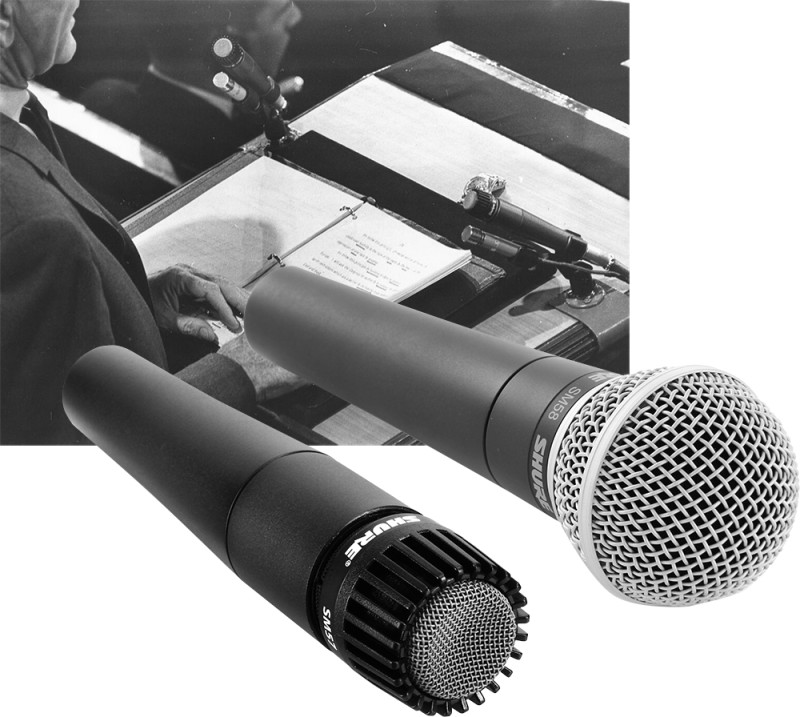
The 1940s and '50s were halcyon days for Shure. The US military contracted the company to supply its microphones during World War II. Meanwhile, performances by Elvis, Sinatra, and Patsy Cline were making Shure's distinctive Model 55 microphone a household name. Yet not even these successes could have predicted the renown that Shure would achieve through its Unidyne III 545 microphone in 1959. Ernie Seeler's tubular, end-firing 545 yielded a uniform pickup and much improved gain before feedback, giving live sound engineers greater control over their audio in venues, stadiums, and arenas. This allowed concert holders to assemble bigger crowds and larger shows. The Unidyne III's groundbreaking design eventually led to the release of the iconic SM57 and SM58.
The SM57 and SM58 "Studio Microphones"
Capitalizing on the momentum of the Unidyne III, Shure debuted the Studio Microphone series of dynamic broadcast mics in the mid-1960s — the most famous of these being the SM57 (1965) and SM58 (1966). Unlike the public-address Unidyne series, Shure's Studio Microphones shed their on/off switches and donned attractive new dark gray matte finishes. But the broadcast industry wasn't ready for Shure's new brand of studio mics, and sales trickled for the next half-decade. It wasn't until Shure switched tactics and began marketing the SM57 and SM58 to live sound engineers and entertainers in Las Vegas in the 1970s that the change took hold. Both mics became instant classics, eventually finding their way into major recording studios and onto hit records everywhere.
Shure Today
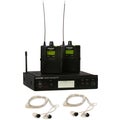
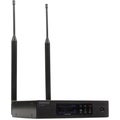
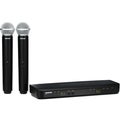
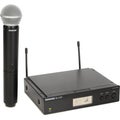
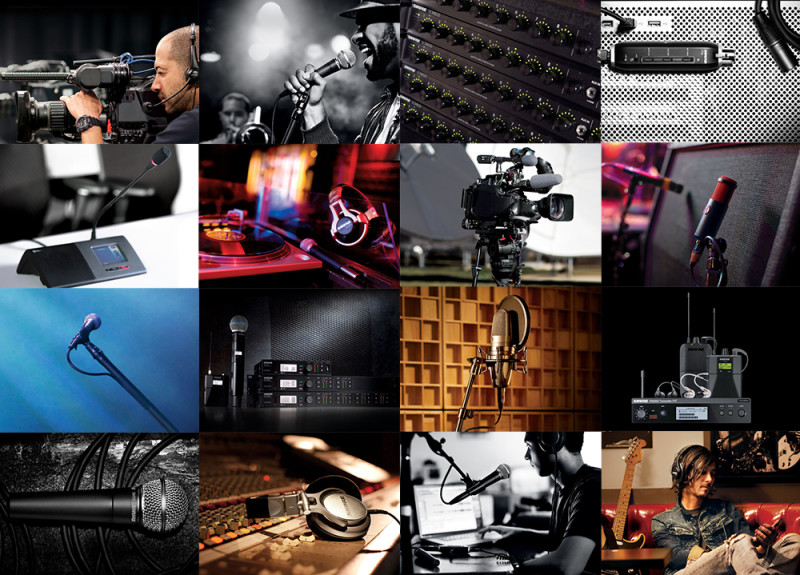
For 80 years now, the Shure name has been synonymous with cutting-edge microphones. The Shure company thrives today as a leader in not only stage and studio mics, but a diverse set of communication electronics as well: wireless systems, headphones, in-ear monitors, and mobile accessories. Sweetwater congratulates Shure on all its achievements, and we're proud to have a place in this part of its success story.