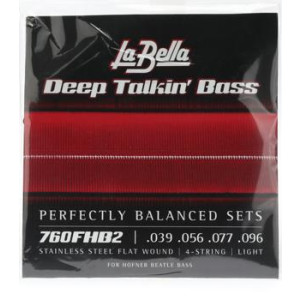
Does bass string material change your sound?
Yes, bass string material can have a significant impact on tone, sustain, and feel, which is why bassists choose different alloys to match their playing style and genre. Here’s how the major players stack up:
- Stainless steel: Bright and punchy strings with strong sustain and corrosion resistance. Well-suited to rock, metal, funk, and slap playing.
- Nickel-plated steel: A popular all-around choice. Warmth from the nickel plating pairs with brightness from the steel core for a balanced, versatile tone.
- Pure nickel: Vintage-voiced strings with a mellow top end and softer attack. A favorite for classic rock, Motown, blues, and jazz tones.
- Nylon tape: Smooth, low-tension strings with a thumpy, upright-like tone and shortened decay. Great for reggae, dub, and old-school flavors.
- Iron/cobalt: High-output strings with a strong magnetic response and a silky, pliable feel. The result is added clarity, punch, and wide dynamic range.
- Phosphor bronze: Rich, full-bodied strings most commonly found on acoustic bass guitars, prized for their warm lows and shimmering highs.
- Type 52: Black polymer-coated strings known for long life and enhanced midrange punch.