

Ride Cymbals
Get More at Sweetwater
Refine Your Search
Availability
Brand
- Paiste (121)
- Meinl Cymbals (83)
- Sabian (77)
- Zildjian (61)
- Dream (54)
- Wuhan (9)
- Evans (1)
- Schlagwerk (1)
- Turkish Cymbals (1)
Price Range
- $25 to $50 (1)
- $50 to $100 (6)
- $100 to $200 (17)
- $200 to $300 (47)
- $300 to $500 (144)
- $500 to $750 (152)
- $750 to $1000 (40)
- $1000 to $1500 (1)
Financing What is this?
Type of Deal
Series
- Meinl Cymbals Byzance (45)
- Sabian HHX (30)
- Paiste Signature (22)
- Paiste Color Sound 900 (21)
- Paiste Masters (20)
- Sabian AAX (19)
- Meinl Cymbals Classics Custom (16)
- Paiste Formula 602 (16)
- Dream Bliss (13)
- Meinl Cymbals Pure Alloy (13)
- Dream Energy (11)
- Zildjian K Zildjian (11)
- Dream Contact (10)
- Paiste Giant Beat (10)
- Zildjian A Zildjian (10)
- Zildjian K Custom (10)
- Zildjian K Constantinople (9)
- Paiste 2002 (8)
- Paiste 2002 Big Black Beat (8)
- Meinl Cymbals HCS (7)
- Dream Vintage Bliss (6)
- Sabian XSR (6)
- Dream Dark Matter (5)
- Paiste 900 (5)
- Sabian HH (5)
- Zildjian A Custom (5)
- Paiste RUDE (4)
- Zildjian I Series (4)
- Zildjian S Family (4)
- Dream Dark Matter Bliss (3)
- Dream Dark Matter Energy (3)
- Paiste PST 7 (3)
- Sabian AA (3)
- Sabian B8X (3)
- Sabian FRX (3)
- Wuhan KOI (3)
- Zildjian Kerope (3)
- Zildjian Z Custom (3)
- Dream Eclipse (2)
- Meinl Cymbals Artist Concept Model (2)
- Paiste PST 3 (2)
- Sabian Artisan (2)
- Sabian Paragon (2)
- Sabian SBR (2)
- Sabian Stratus (2)
- Zildjian L80 Low Volume (2)
- Dream Dark Matter Vintage Bliss (1)
- Evans dB One (1)
- Paiste PST 5 (1)
- Paiste PST X (1)
- Turkish Cymbals Classics (1)
- Wuhan 457 (1)
- Wuhan Outward Reduced Audio (1)
Type What is this?
Size What is this?
Finish What is this?
- Traditional/Natural (199)
- Brilliant (48)
- Raw (36)
- Dark (11)
- Hybrid (11)
- Patina (5)
- Matte (2)
- Sandblasted (2)
Weight What is this?
- Extra Thin (9)
- Thin (42)
- Medium Thin (70)
- Medium (110)
- Medium Heavy (35)
- Heavy (42)
- Extra Heavy (12)
Material
- B20 Bronze (204)
- B12 Bronze (23)
- B8 Bronze (51)
- MS63 Brass (8)
- Brass Alloy (3)
- Bronze Alloy (54)
- Steel (1)
Bell Size What is this?
Related Searches









If you want to compare another product, please remove one of your earlier choices.
Shop Ride Cymbals by Sound, Style, and Genre
Looking to lock in your groove or boost your "ping" power? A great ride cymbal pulls a performance together and enhances every aspect of your playing, from straight-ahead spang-a-langs to expressive flourishes. Whether you're jazzing it up or holding down the pocket, Sweetwater has the perfect ride to match your style. Here's what to keep in mind as you browse our wide selection.
Start by determining the kind of sound you’re after and the styles you play. Rock and pop? You'll want a focused ride with strong definition. Swing and boom bap? Dark, smoky tones shaped by traditional cymbal-making techniques will feel right at home in your setup.
The good news? There's no right or wrong when it comes to your sound. Whether you prefer a woolly wash or a clear, cutting bell, the perfect ride cymbal is waiting at Sweetwater. Use the tips below to help narrow your search and find your next favorite ride, fast.
Ride Cymbal Construction Techniques Explained
Cast vs. Stamped Rides
Cast ride cymbals tend to produce warm and complex tones, each offering its own unique character. They’re more expensive to manufacture but are sought out by players who appreciate the response of traditional cymbalcraft techniques. Sheet (or stamped) ride cymbals, by contrast, are generally more consistent from cymbal to cymbal, which can simplify the process of replacing rides and matching tones across the kit.
Lathing Techniques
Lathing cuts the record-like grooves into the playing surface of a ride cymbal. While most rides are lathed to some degree, the depth, width, pattern, and uniformity of the lathing — whether done by hand or machine — can dramatically affect the cymbal’s complexity and appearance. For a look at unlathed rides, see our "Cymbals in the Raw" buying guide.
Hand-Hammering vs. Machine-Hammering
Hammering gives cymbals their dimpled appearance. Although most rides are hammered, the method used makes a difference. Hand-hammered rides are prized for their nuanced, irregular tones and harmonic complexity. Machine-hammered rides, by contrast, are sought for their consistency and predictability.
Ride Cymbal Diameters: Which Size Is Right for You?
Ride cymbals typically range from 18–24 inches in diameter, with 20–22 inches being the most common size. Smaller rides (18–20 inches) tend to sound tighter and higher with a quicker decay, making them ideal for compact kits and controlled settings. Larger rides (22–24 inches) often offer lower tones, longer sustain, and a darker wash that won't mask lead instruments.
While size alone doesn’t determine tone, it does influence how a cymbal responds to your playing. Bigger cymbals generally provide more dynamic range and projection, while smaller ones offer precision and articulation. Consider your playing environment and preferred feel when choosing the right diameter.
How Cymbal Weight Affects Tone
Weight and profile contribute to how a ride cymbal speaks. Heavier rides tend to yield greater stick definition and a higher pitch overall. These qualities make them top choices for louder genres such as rock and metal. Lighter (thinner) rides, on the other hand, tend to sound lower and softer with a darker wash, which suits them well for jazz ballads and ambient styles.
Weight also impacts a ride cymbal’s crashability. Lighter rides with less edge tension crash more easily, offering a smooth transition between ride and crash roles — great for hybrid setups and club kits. Heavier rides are often better at maintaining clarity under aggressive playing, but usually offer less flexibility as crash cymbals.
Brilliant and Traditional Ride Finishes Compared
Ride cymbal playing surfaces come in a variety of finishes, each with a distinct look and sound. Traditional finishes have a natural matte appearance and are favored for their complex tones and controlled high-end sparkle. Brilliant finishes are polished to a mirror-like shine and often sound brighter and more cutting, with enhanced sustain and projection.
Additionally, some rides may have raw, patina'd, or sandblasted playing surfaces to help pre-age the sound and add visual character. While finish alone doesn’t determine sound, it can influence how a ride interacts with your playing style and the rest of your kit.
Why Bell Size Matters More Than You Think
Bell size also contributes to a ride cymbal’s sound. Larger bells enhance overall projection and focus your bell strikes (the better to nail those Neil Peart flourishes and Tommy Lee power choruses). Smaller bells offer a more integrated sound, making them versatile options for many genres.
Need Help? Get Personalized Ride Cymbal Suggestions at Sweetwater
At the end of the day, ride cymbals are a key part of your drum voicings, so choosing the one that matches your drumming style and musical genre is essential. Looking for one-on-one support? Sweetwater’s Sales Engineers are here to help you make the right decision. Give us a call and we’ll help you find the ride cymbals that are best for you!
What are the most popular brands for Ride Cymbals on Sweetwater.com?
What are the most popular Ride Cymbals on Sweetwater.com?
-
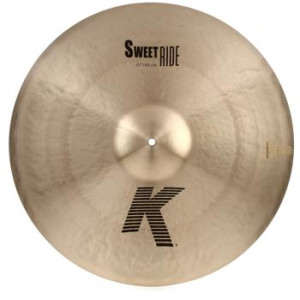
Zildjian K Zildjian Sweet Ride Cymbal - 21 inches
5 out of 5 stars 13 reviews
$444.95 -
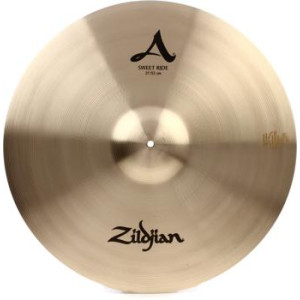
Zildjian 21-inch A Zildjian Sweet Ride Cymbal
5 out of 5 stars 12 reviews
$414.95 -
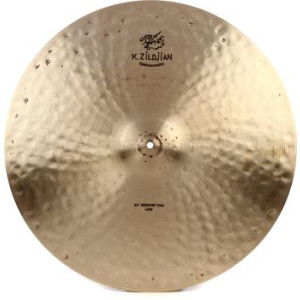
Zildjian 22-inch K Constantinople Medium Thin Ride Cymbal - Low Pitch
5 out of 5 stars 6 reviews
$724.95 -
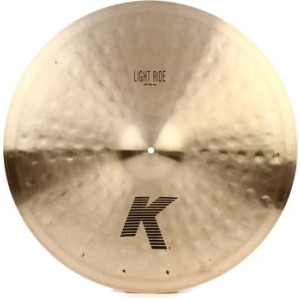
Zildjian 24-inch K Zildjian Light Ride Cymbal
5 out of 5 stars 5 reviews
$684.95 -
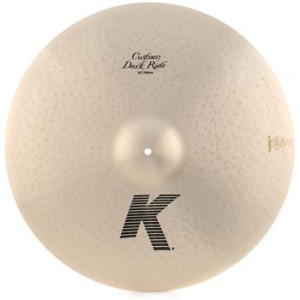
Zildjian 22-inch K Custom Dark Ride Cymbal
5 out of 5 stars 5 reviews
$589.95
Why shop Ride Cymbals at Sweetwater.com?
With a massive selection of Ride Cymbals, free shipping, a free 2-year warranty, 24/7 access to award-winning support - and more - Sweetwater gives you more than any other retailer! If you have any questions about Ride Cymbals, make sure to give your personal Sales Engineer a call at (800) 222-4700.
