Learn How to Earn $50 in Bonus Bucks**

Drumsticks & Brushes

What do the numbers and letters on drumsticks mean?

Drumstick sizes and weights are often represented by an alphanumeric code: “5A,” “5B,” “7A,” “2B,” and so on. Lower numbers mean thicker sticks (similar to cable gauges). Higher letter values indicate a heavier weight class: “A” being lighter duty, “B” being heavier duty.

This naming convention was established by William F. Ludwig in the mid-20th century. Though far from standardized, the underlying principles remain: “A” represents thinner orchestral sticks, “B” indicates chunkier sticks suitable for live band settings, and “S” denotes heavyweight street or marching sticks.
Which drumstick size is right for me?

Many players consider 5A drumsticks (diameter: 0.550–0.585 inches) to be the drum set gold standard and a great all-around choice for beginners and developing drummers. For lighter stages and jazz combos, sticks in the 7A range (diameter: 0.510–0.540 inches) tend to offer a lighter touch for greater dynamic control. For loud rock and metal, sticks in the 5B range and up (diameter: 0.590 inches+) give heavy hitters added durability and projection.

What are drumsticks made of?

Most drumsticks are made from hickory, maple, or oak, although non-wood materials such as bamboo, aluminum, carbon fiber, and polyurethane are popular alternatives.

Tough, durable hickory is the benchmark for modern wood drumsticks. Hickory’s weight and density yield a level of balance and durability that many drummers find comfortable. Alternatively, if you drum in a jazz combo or orchestral pit and need a stick that’s lighter in the hands and softer on the skins, lighter maple is your go-to choice. If you’re a heavy hitter, you may prefer the superior durability and projection of oak or heat-tempered hickory.

Looking for sticks with a little more giddy-up? Sweetwater also carries Ahead drumsticks for the heaviest hitters on the planet. These sticks are made with light, durable aerospace-grade aluminum cores designed to last significantly longer than traditional wood sticks.
Wood tips vs. nylon tips: which is better?

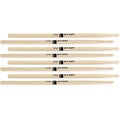
Many drumsticks are available with your choice of wood or nylon tips. Wood tips are celebrated for their organic attack and natural harmonics, making them the standard for many drummers. Wood tips also tend to exhibit the most linear dynamic response, which makes them perfect for beginners.

If you don’t mind sacrificing some control for greater volume, nylon tips offer cleaner cymbal definition and better stage projection, making them a favorite for stadium rock and unmiked concert venues.

Get More at Sweetwater

Refine Your Search

Availability

Brand

Price Range

Financing

Type of Deal

Sale

Series

Type

Material

Tip Material

Size

Length

Diameter

Related Searches

You can only compare four products at a time.
If you want to compare another product, please remove one of your earlier choices.
Please select more items to compare.

Why shop Drumsticks & Brushes at Sweetwater.com?


With a massive selection of Drumsticks & Brushes, free shipping, a free 2-year warranty, 24/7 access to award-winning support - and more - Sweetwater gives you more than any other retailer! If you have any questions about Drumsticks & Brushes, make sure to give your personal Sales Engineer a call at (800) 222-4700.