|
PA Speaker Topics:
» Powered Speakers - So, What's The Big Deal?
» Bi-Amplification Explained
» Understanding Crossovers
» When Do I Need to Use a Subwoofer?
» Speaker Connectors Explained
» What to Look For In PA Speakers
When you only have one opportunity to get your message out to your audience, choosing the right speaker for your application is paramount. This Sweetwater Buying Guide includes information that can help you choose a PA Speakers for your needs. Since there's so much to consider when purchasing PA Speakers, don't hesitate to call us at 1-800-222-4700 for more information.
Powered Speakers – So, What’s The Big Deal?
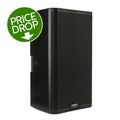
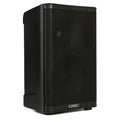
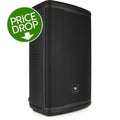
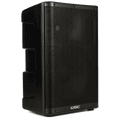
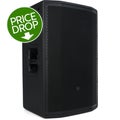
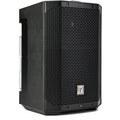
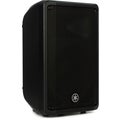
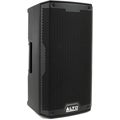
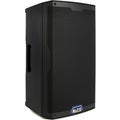
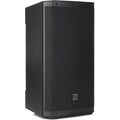
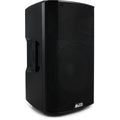
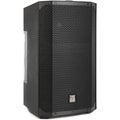
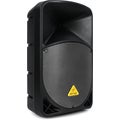
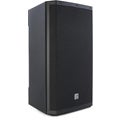
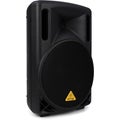
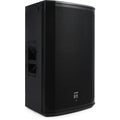
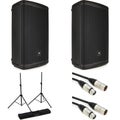
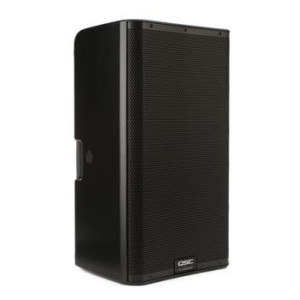
The "Big Deal" with Powered PA speakers comes down to convenience and sound quality. Before the affordable active speaker, sound engineers and gigging musicians had to haul around heavy, bulky amplifiers and accompanying cables and speakers - all of which have been replaced with the active speaker! If you're not familiar with active PA speakers, the idea is that the power and all connections are simply built into the same cabinet as the speaker. This all-in-one design also takes the heat off of those of us who don't really know how to marry the right power amp with the right speaker, which can lead to degraded sound quality at best and damaged gear at worst.
» View all Powered / Active PA Speakers
Bi-amplification Explained
Bi-amplification is the process of dividing a single audio signal into two frequency ranges, which are then sent to two separate amplifiers that in turn drive separate loudspeakers. An active crossover network is used to divide the audio into frequency ranges that are more suitable for the drivers that will be used to reproduce them. Bi-amping also allows the amplifier(s) to be chosen or designed specifically to match the speakers and enclosures. Bi-amping, tri-amping, and beyond have been used in sound reinforcement systems for years and have become quite common in active studio monitors as well.
Understanding Crossovers
A crossover is a device that divides an audio signal into separate frequency ranges to route to different transducers (speakers, tweeters, horns, etc.) in an audio reproduction system. This is accomplished by running the audio through a set of filters. For example, a 2-way crossover may comprise a lowpass filter that passes a signal with low frequencies to a woofer and a highpass filter to pass frequencies appropriate for the tweeter.
Crossovers can be "passive" or "active" designs. Passive crossovers are usually found inside speaker cabinets along with the speaker components, but can be purchased as outboard equipment also. These often connect to the outside world via a single jack, but sometimes each speaker component also has its own jack in case you want to bypass the passive crossover. Active crossovers are placed before the power stage and route each frequency range to its own power amp and its own transducers. This is where the terms "bi-amp" and "tri-amp" come from.
There are a number of different types of filter configurations used in crossovers and they each produce subtly different results. One of the big variables is how steep the roll-off - or the rate of attenuation - is at the cutoff frequency. Common configurations are 12, 18, or 24dB per octave. Each design has its own strengths and weaknesses, but in general steeper roll-offs are considered better in modern applications.
» View all Crossovers
When Do I Need to Use a Subwoofer?
Looking to add some low-end thump to your PA system without having to upgrade all the existing gear you're using? Then you want a subwoofer ("sub" for short) - a speaker that's dedicated to producing the lowest of the low notes.
Generally subwoofers handle reproducing audio signals in the 20-100Hz range - sometimes a bit higher and occasionally a bit lower. Basically (no pun intended) a sub is used to pump out the lowest octave or two, below where many "full-range" speakers can effectively operate. It takes a great deal of amplifier power and a large speaker to produce those low tones at room-filling volumes. If a sub were incorporated into a full-range speaker, the cabinet would likely get unwieldy.
So when do you need a subwoofer? When the kick drum goes "tick" instead of "thump," when the low notes on your bass guitar, piano, synth, or electric tuba are sounding decidedly anemic, when your beats aren't inciting dance-frenzy in the masses - in any of those cases you may be a candidate for some low-end reinforcement. But there's another reason to use a sub. Having a sub's big low-end response often means that you can run your PA at a lower volume level while still retaining a fat, full sound.
You can buy subs that "match" with most popular full-range speakers; they have their frequency response and crossover specifically tailored to provide a smooth transition between what the sub is doing and what the full-range speaker is doing. There are also subs that are designed to work with any PA system.
As with full-range speakers, you can get powered and un-powered subwoofers. Powered models are very convenient - just plug in and go. Un-powered models will require a separate power amplifier (with LOTS of power) and possibly an external crossover.
» View all Subwoofers
Speaker Connectors Explained
The basic concept of speaker cables is simple: They're wires that connect the output of your mixer, powered mixer, or power amplifier to the input of your loudspeaker(s). Choosing the right connector type is critical; be sure to refer to your owner's manual for your speakers if you're not sure what type of connector to use. There are a number of factors to take into consideration before actually connecting your speakers. The first determination is whether your connection is "balanced" or "unbalanced."
Balanced
Balanced refers to a "3-legged" type of AC electrical signal having two "legs" independent of ground. One is generally considered positive (+) and the other negative (-) in voltage and current flow with respect to ground. Both carry the signal. There is no "signal" carried in the shield or ground connection. The benefit is that any noise that gets induced into the line will be common to both the positive and negative sides and thus canceled when it arrives at its destination, assuming the destination is balanced. This phenomenon is called "Common Mode Rejection." It happens because the receiving device sees the common noise in the signal as out of phase with itself, and cancels it. Balanced lines are generally best for long cable runs due to their ability to reject induced noises. Cables with XLR and TRS type connectors are designed to transmit balanced audio from one balanced device to another.
Unbalanced
An audio signal requires two wires or conductors to function. In an unbalanced situation, one of those conductors is used to carry both the audio signal and ground (shield). Unbalanced circuits tend to be less expensive to construct, but they are much more susceptible to induced noise problems than their balanced counterparts. This is because any induced noise in one conductor is not canceled by similar noise in the other conductor and may be carried with the signal into connected equipment. In general, unbalanced lines should be kept as short as possible (under 25-30' maximum) to minimize potential noise problems. Two-conductor cables with TS or banana plug connectors are the normal cables for unbalanced audio.
Once you have determined whether your connection is balanced or unbalanced, the issue of speaker connectors can be addressed. There are six common types of connectors: TRS and XLR for balanced connections; TS, Speakon, banana plugs, or bare wire for unbalanced connections.
 |
Speakon is a type (and brand) of multi-pin connector developed by Neutrik which is commonly found on speakers and amplifiers with high wattage ratings. Speakon connectors offer a very reliable connection, can handle extremely high power, are very durable, and are relatively low cost compared to other connectors. |
 |
TRS is the abbreviation for Tip-Ring-Sleeve. This is the accurate term that describes 1/4" (or 1/8") balanced connectors. A TRS plug can be found at the end of most headphone cords if you want to know what one looks like. It looks like a standard 1/4" plug with an extra "ring" on its shaft. The three sections of the shaft are called the tip, ring, and sleeve. TRS connectors are used wherever you need to have two conductors plus a ground (shield) in one plug. |
 |
XLR is the trademarked name for circular 3-pin connectors developed by Cannon (now owned by ITT). XLR has since evolved into a generic industry term, and many manufacturers now make this style connector. In audio, XLR connectors have positive, negative, and ground pins and are normally used for transmitting balanced mic- and line-level signals to mixers or audio to speakers. |
 |
TS is the abbreviation for Tip-Sleeve and refers to a specific type of 1/4" connector that is set up for 2-conductor unbalanced operation. The tip and sleeve are separated by an insulator. The tip is generally considered the "hot," or where the signal is applied, while the sleeve is where the ground or shield is connected. |
 |
A binding post is a type of electrical terminal most commonly found as the output connector on a power amplifier, or as the input connector on a speaker cabinet. A binding post is a versatile connector, accepting banana plugs, alligator clips, bare wire, and other types of connectors. Generally, binding posts are color coded, with the black connection going to ground, and the red connecting to hot. Binding posts offer fast, easy connections, and provide reasonably good surface area contact for good conductivity. |
 |
A banana plug is an electrical connector designed to join audio wires such as speaker wires to the binding posts on the back of many power amplifiers or to special jacks called, of course, banana jacks. A common configuration of banana plugs is to have two of them molded together and spaced 3/4" apart, which is also the spacing of the binding post receptacles on the back of power amps. Technically this assembly is referred to as a "double-banana" plug. |
 |
Bare wire is the most basic (and least recommended) way to connect audio. It consists of dual-conductor cable, stripped of insulation at the ends to expose the individual conductors. These can be inserted into binding posts or hooked around screw terminals that are then tightened down. Besides the general "messiness" of bare wire, you must always make sure to match the "hot" and "ground" conductors of the cable on the outputs of the amp and the inputs of the speaker. |

|
With today's multitude of options for loudspeaker selection the choice of the right speakers for your application can seem a bit overwhelming. The best way to start is to create a checklist of your needs. It's important, however, to be as flexible as your gigs are - and your budget can stand. Having an extra pair of bi-amped boxes on that important gig could turn an underpowered setup into a monster!
» Big, small, or in-between?
Without getting into the math of room volume in cubic feet to speaker size/numbers, you can quickly narrow down your list by recognizing that a small coffeehouse doesn't need multiple big boxes carry your voice and guitar. Conversely, a 1000-seat (or larger) showroom needs the power and air-moving ability that only multiple pairs of 15" woofers and high-powered HF transducers can fill.
» How many (sets of) speakers do you need?
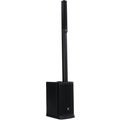
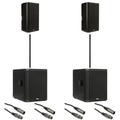
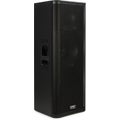
Again, this depends on your venues. If you play a lot of small,150-seat clubs that demand significant volume levels, you might be best served by a pair of column-type speakers, one standing on either side of the stage. If you have more real estate to cover you could use a quartet of stand-mounted 2-way powered speakers. You could add a subwoofer to a set of stand-mounted 2-ways to effectively cover both a larger space and the full frequency range. Do multiple rooms require extra speakers? If so, they probably also require extra power.
» Powered or un-powered?
See the powered speaker section above for more information. Remember that powered speakers require access to extra electrical outlets; do you have that access in the rooms you play? Or the extension cables?
» How much power do you need?
See the Power Amplifiers section of this buying guide. Fortunately, you can determine this without having to do (much) math. JBL recommends that, in general sound reinforcement situations, you use an amp that delivers equal to or up to double the IEC power rating of the loudspeaker, i.e., a speaker rated at 300 watts capacity needs a 300- to 600-watt amp. Contrary to popular belief, you're more likely to damage your speakers with an underpowered amp than with one that has too much power, so don't scrimp here!
» Do you need a Subwoofer?
A subwoofer can significantly increase the low-frequency capability of your system. It can also help "clean up" your sound by taking some of the low-frequency load - and the accompanying distortion - away from your other speakers, which can actually let you run at lower volume levels while still maintaining the "punch" of your performance. However, there are practical reasons (such as space, weight, and budget) for staying out of the subwoofer scene.
|
|