Choose Your Taylor Giveaway: Enter Now

Dynamic Microphones

What is a dynamic microphone?

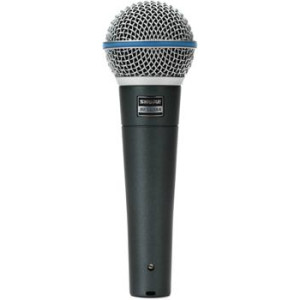
A dynamic microphone is a rugged and often passive mic prized for its durability, high volume handling, and clean separation between sources. Dynamic mics have been a go-to choice for artists and engineers for the better part of a century, and today they’re a top pick for touring vocalists, home podcasters, and sound engineers working with loud sources like guitars and drums.

What are some famous dynamic mics?

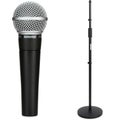
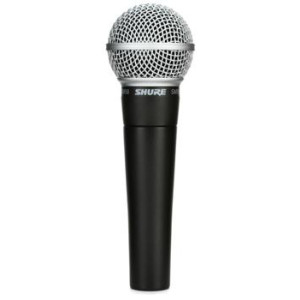
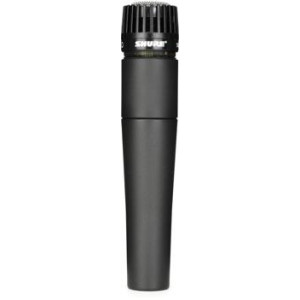
Iconic examples of dynamic mics include the Shure SM57 (the President’s mic), the Electro-Voice RE20 (the “Frasier mic”), and the Shure Super 55 (the “Elvis mic”).

How does a dynamic microphone work?

Dynamic microphones operate on the electrodynamic principle of induction. They generate electric current as sound waves move a copper coil suspended in a magnetic field. As sound enters the mic capsule, it’s converted (or transduced) into an electric current we know as audio signal. You can think of a dynamic mic like a tiny loudspeaker wired in reverse: instead of an electric signal moving a coil to produce sound, the mic harnesses sound to generate electricity.

Dynamic vs. condenser mic: what’s the difference?

Dynamic and condenser microphones may share space in many mic lockers, but their internal designs are quite different. dynamic mics generate signal as sound waves move a coil through a magnetic field, producing voltage proportional to the incoming sound. Their lower sensitivity makes them great at handling loud sources without distorting, soaking up preamp character, and rejecting room noise in untreated spaces. Condenser microphones don’t rely on magnetic induction. Instead, they generate signal electrostatically using two conductive plates, one of which is a moving diaphragm. This gives higher-sensitivity condenser mics the edge for capturing delicate top-end detail on sources like cymbals, acoustic guitar, and vocals in quiet studio settings. To learn more about when to reach for each mic type, check out “What Is the Difference Between Dynamic and Condenser Microphones?

What are the advantages of a dynamic microphone?

Thanks to their price and simplicity, dynamic mics offer several key advantages onstage and in the studio:

  • Cost: Dynamic mics are among the most affordable options in pro audio, making it easy to stock a venue or home studio without blowing the budget.
  • Serviceability: Simpler circuitry makes dynamic microphones easier to repair, mod, and maintain.
  • Durability: Certain dynamic stage mics have literally been used to hammer nails. Try that with your prized studio ribbon!
  • SPL handling: Few mics can withstand the blast of a brass snare or non-master-volume Plexi without overloading the way a dynamic can.
  • Sound rejection: A dynamic’s sensitivity drops off fast with distance, making cardioid dynamics ideal for taming room reflections and stage bleed.
  • Coloration: Dynamic microphones are sponges for preamp character, which makes them valuable tools for adding textures to a mix.
  • Passive design: Unless you’re using an inline mic booster or an active dynamic with a built-in preamp circuit, no phantom power is required. Just plug in, crank up, and create.

Get More at Sweetwater

Refine Your Search

Availability

Brand

Price Range

Financing

Type of Deal

Series

Polar Pattern

Connector

Max SPL

Application

Related Searches

You can only compare four products at a time.
If you want to compare another product, please remove one of your earlier choices.
Please select more items to compare.

Why shop Dynamic Microphones at Sweetwater.com?


With a massive selection of Dynamic Microphones, free shipping, a free 2-year warranty, 24/7 access to award-winning support - and more - Sweetwater gives you more than any other retailer! If you have any questions about Dynamic Microphones, make sure to give your personal Sales Engineer a call at (800) 222-4700.