



New from Synergy: Marshall JCM800 Module

Sorry, all Certified Open Box models of this item have been sold.

Since Certified Open Box items are such a great deal, they often sell within hours of showing up on our web site. Order a new one below, or browse every currently available Certified Open Box item here.

Source Audio True Spring Reverb w/ Favorite Switch Pedal

Reverb and Tremolo Effects Pedal with 3 Spring Reverb Modes, 3 Tremolo Modes, Expression Input, Stereo I/O, Software Editor, and Included Tap Tempo Switch
Share
Item ID: TrueSprRevWSw
Source Audio True Spring Reverb w/ Favorite Switch Pedal
Price:$259 and 00 cents
$44.00 suggested monthly payments with 6 month financing‡ 36 month financing available* with $399.00 minimum purchase on one invoice.

In Stock!

Only 2 left in stock! Order Soon!
Add to Cart
Sales engineer photo
Ask An Expert

Our expertly trained Sales Engineers are ready to help!

What is a Sales Engineer?
Sweetwater Gear Exchange

Have one to sell?
Check out Sweetwater's Gear Exchange!
Learn More

Source Audio True Spring Reverb w/ Favorite Switch Pedal
In Stock!
Price:$259 and 00 cents
Add to Cart
Add to list
Skip to Description
Most Popular Accessories & Related Items
Back to navigation

This article was Written By

Our Product Research Team

Get to know them!

Definitive Spring Reverb Tone and Three Sweet Tremolo Modes

The Source Audio True Spring Reverb pedal packs some of the most realistic spring reverb tones you'll find in a pedal. And if that isn't magical enough for you, it also boasts three vibrant tremolo effects. From short ambient bursts to splashy tank-style surf reverb, the True Spring Reverb pedal delivers definitive spring sound, and you can tweak the spring tone to an astonishing degree with the free Neuro Editor software. Once you've created your custom tones, you can save up to three presets on the pedal for instant recall. And this Source Audio True Spring Reverb pedal even comes with the Source Audio Tap Switch for toggling the tremolo effect and setting your tremolo rate.

Three spring modes

The True Spring Reverb pedal's three spring modes — Short, Long, and Tank — cover a lot of sonic territory. The Short setting "offers a taut sound with a quick decay and smooth trails," inspired by '60s Blackface amps. The Long mode "produces long and deep reverb decays with noticeable 'drip' and highly animated trails." Finally, Tank mode is based on the sound of classic tube-driven reverb units, "characterized by their 'drippy' attack and animated trail." We've heard a lot of spring reverb pedals here at Sweetwater, and the True Spring Reverb is one of the most accurate emulations we've ever experienced.
Three tremolo modes

By holding the Control Input button on the True Spring Reverb pedal, you gain access to controls for the tremolo effects. In this mode, the toggle switch selects between Opto Tremolo, Harmonic Tremolo, and Bias Tremolo. Opto mimics a photocell tremolo effect with its distinct choppy character. Harmonic mode is based on early-'60s Brownface amplifiers, alternately modulating bass and treble frequencies. And Bias mode delivers the smooth, overdriven sound of tube-saturated tremolo.

Customize your tone with the Neuro Editor

Right out of the box, the True Spring Reverb pedal delivers authentic spring reverb tone — the icing on the cake is Source Audio's Neuro Editor software. Available for your smartphone as well as your desktop computer, Neuro takes you inside the pedal's powerful 56-bit Sigma DSP and allows you to fine-tune all sorts of parameters, from number of springs and spring length to pre-delay, diffusion, and much more. Once you've created your ideal effects, you can save up to three of them on the True Spring Reverb pedal for instant recall, without ever having to open the editor again.
Source Audio True Spring Reverb Pedal Features:

  • Reverb and tremolo effects pedal with stereo I/O
  • Includes Source Audio Tap Switch for controlling tremolo rate and tremolo on/off
  • 3 reverb modes cover the range from short amp-like spring reverb to tube-driven reverb tanks
  • 3 tremolo modes include Opto, Harmonic, and tube Bias tremolo
  • Free Neuro Editor allows you to fine-tune your effects and save up to 3 custom presets
  • Neuro Editor offers a total of 9 reverb engine types: Short, Long, Tank, Space Spring, Drip Machine, Spring Hall, Trash Spring, Ventris True Spring, and Ventris Outboard Spring
  • Stereo routing options include stereo to stereo, mono to mono, mono to stereo, stereo sum to mono, and external loop mode
  • Switchable bypass modes — choose from buffered or true bypass
  • Expression control input can control up to 3 simultaneous parameters
  • MIDI compatible when used with the Source Audio Neuro Hub (sold separately)

Resources

Warranty Info

Sweetwater's FREE 2-Year Total Confidence Coverage Warranty

Extra peace of mind at no extra cost.

  • Save money with FREE parts and labor
  • Get back to making music with the industry's fastest turnaround time
  • Fix it the first time with our award-winning, factory-certified Service Department
Learn More about Total Confidence Coverage
Back to navigation

Tech Specs

  • Pedal Type: Reverb, Tremolo
  • Analog/Digital: Digital
  • Presets: 3 x Reverbs, 3 x Tremolos
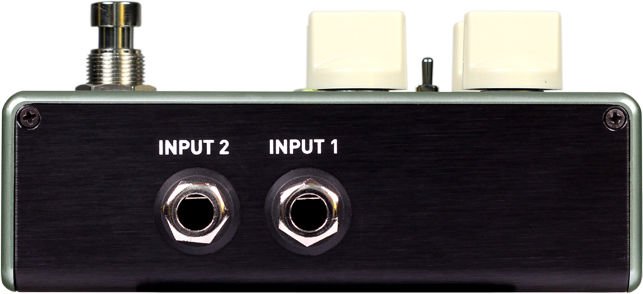
  • Inputs: 2 x 1/4"
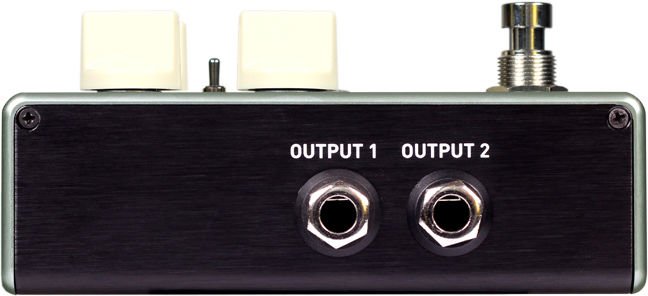
  • Outputs: 2 x 1/4"
  • MIDI I/O: USB
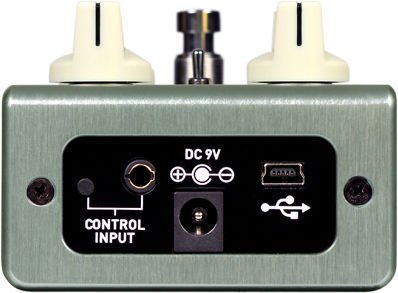
  • Other I/O: 1 x 1/8" (control pedal)
  • USB: 1 x Mini-B
  • True Bypass: Yes, switchable to analog buffered
  • Features: Tap Tempo Footswitch included
  • Software: Neuro Desktop Editor (Mac, Windows), Neuro Mobile App (iOS, Android)
  • Power Source: 9V DC power supply (sold separately)
  • Height: 2.21" (including knobs)
  • Width: 2.75"
  • Depth: 4.58"
  • Weight: 0.62 lbs.
  • Manufacturer Part Number: SA247S

What Makes Our Sales Engineers Great?

Sweetwater Sales Engineers are a world-class team of experts dedicated to you. Hand selected from across the globe, each brings a wealth of experience and expertise in the world of music gear to provide you with unparalleled service completely free of charge. Friendly relationships, real trust, and the right gear are only a call or a click away!

Back to navigation

Reviews

Excellent Spring Reverb Emulation
I love to put some Surf and Rock Instrumentals in my setlist. In the Surf guitar world, reverb is a matter of deep study, the standard being the vintage 6G15 Fender tank. For a lot less money, the True Spring will provide great reverb drip and a sound that is as good as any reverb pedal I've ever played.

But that's not the whole story. The True Spring has three great tremolos. There is an optical tremolo, that sounds like a mid '60s Fender amp, which is a sharp, staccato tremolo we've all heard on many classic recordings. The second in an harmonic tremolo that sounds like the complex tremolo of the larger Fender amps of the early '60s. The sound is a throbbing that gives the guitar an almost organ-like sound, and is perfect for Surf. The third tremolo is the bias tremolo found on the tweed Vibrolux, or the early '60s Princeton. This is a deep, pulsing tremolo that makes for a very smooth ride. All three are great sounds, and can be used in a lot of situations, but each is the perfect added touch for music of their respective periods.

The optional Tap Tempo makes these tremolos much easier to synchronize to the tempo of the song. This is a major advantage, and was one of the things which sold me on this pedal. There is also the ability to create presets in the Neuro Editor, including presets using other reverbs, such as the spring reverb and external reverb effects from the Ventris pedal. For my purposes, I like to use the "Short" reverb, which reminds me of a Deluxe Reverb's onboard reverb, but with the rich bias tremolo. I also use the "Short" reverb with optical tremolo for that classic mid '60s sound. The "Tank" reverb, to my ear, is a perfect copy of the 6G15 Fender tank, and sounds great for Surf; especially with the harmonic tremolo. The "Ventris True Spring" reverb is a bit deeper and livelier than the Short reverb, with longer trails. Likewise, the "Ventris Outboard"bears a similar relationship to the True Spring's Tank emulation. Bit of these Ventris emulations are useful, but to be honest, I prefer the reverbs native to the True Spring pedal.

The controls have a wide range of authority, and this pedal can be used for subtler applications, and not only Surf. I've played any number of reverb pedals and owned quite a few. There are any number of good choices, but this is my favorite, and the pedal I feel most closely captures the essence of the 6G15 tank. Strongly recommended for people that love spring reverb.
Music background: Player for 57 years.
The absolute best spring reverb pedal ever made!
I picked this up about 7 weeks ago and now that I have played with it for a while, I thought I would write a review.

I am not a gigging musician and just play at home. I like to run in stereo and play with headphones most of the time. When I am amped, I have a Vox AC30 (that is way too loud for our home and neighbors) and a Strymon Iridium running into a Line6 Powercab 112+ (which is awesome at allowing cranked tone at lower volumes). I also have an HX Stomp that I sometimes use instead of the Iridium.

I previously had a Strymon Flint and loved the tremolo side of it but never really loved the reverbs. They were good, but I just never LOVED them. I bought it years ago and for the longest time, it was my only pedal going into the AC30. I think I wanted to make the AC30 sound more like a blackface Fender. Honestly, I think my main criticism of the Flint is the stereo routing through the TRS jack was a pain.

A while back I picked up a Source Audio Collider and I absolutely loved it. Lots of usable reverbs and delays with easy stereo inputs and outputs and routing. The only thing that was missing was that vintage-ish drippy spring reverb sound. Since I love the Collider I thought I would give the True Spring a try. Again, it has easy stereo ins and outs and makes cabling and wire management easy.

The Reverbs:

They sound great. I think I watched every video on Youtube and they do a great job of capturing the three main preset sounds. The controls are interesting in that there is no reverb time control on the knob by default. There is just Mix, Level, Dwell, and Tone. The controls are set up to be the controls of an old Fender reverb tank. Out of the box, the three basic reverbs (Short, Long, Tank) sound great but I do wish they had included another knob for decay/time.

So on the surface it looks like there are just these 3 reverbs and 4 controls.

But then you plug in the Source Audio desktop app (I haven't really tried the mobile app) and it unlocks lots of options. You can reassign the knobs however you want. And these assignments can be saved to presets. So if you like the dwell level and don't anticipate changing it much, reassign the Dwell knob to be the reverb time or pre-delay. You can tweak the diffusion and modulation. It is a great app because it lets you have as much or as little control over the pedal as you want.

The other thing that almost nobody mentioned in the YouTube videos is that there are more reverb engines than just the three default ones. There are 8 more that you can choose. My favorites are the "Hall S" engine that is a combination of 80s Lexicon hall and a spring reverb. I love the "Trash Can Spring" which sounds as you would expect.

You can also assign three additional engines to a second bank of presets giving this pedal 6 presets to easily choose from. This is another thing none of the youtube reviews mentioned.

So yeah… it sounds great. You want old drippy reverb tank sounds in a small package, you got it. Mono or stereo? No problem. Weird spacy and character reverbs? Yep. Subtle reverb that emulates an old blackface Fender? Yep.

There is way more here than at first glance.

I love the reverbs on this pedal. It is by far the best spring reverb pedal on the market. Between it and the Collider, I don't think I will need any other reverb pedal.

Tremolo:

This is where I am a slightly disappointed. I bought the extra foot switch so I could control the tremolo independently of the reverb. That works well, but the rate and depth are adjusted as secondary functions to the Dwell and Tone knobs.
One nice thing about the Flint is that it had its own dedicated knobs for the tremolo side.

It has the same three tremolo options as the Flint (Optical, Bias, Harmonic) but they just sound more distinctly different in the Flint than they do in the True Spring. The one thing the True Spring has over the Flint is that the Tremolo has a Stereo control where you can control the stereo offset/panning. This is a great function. If you want it to fully ping-pong between left and right, it can. Want it more subtle? Just turn it down.

Having the extra switch is tremendously helpful.

Summary:

I think this pedal has finally given me my completed dream pedal board. I can get almost any sound I want. I can play in mono or stereo, through amps or headphones.

I think people often skip over this pedal thinking it may be just a one-trick pony, but it is a hugely versatile small pedal with 6 onboard presets controlling 11 possible reverb engines and 3 tremolo engines. Adding in the stereo component makes it even better. The desktop software is killer.

I like it so much, I ended up selling my Flint.
Fantastic but needs tweaking
I owned this pedal for 1-2 years and could not find a convincing "Fender" spring reverb sound. The android phone app does not have the same settings as the desktop/windows app. Within minutes of connecting to the desktop app I immediately found THE BEST "Fender" spring reverb in a pedal available. (Better/more convincing than the Strymon Flint.) I suggest any users do the following.


1 - connect to desktop app
2 - start with the Long engine an select the "Large" spring type
3 - assign Decay time to replace the Dwell control (also set Dwell very low)
4 - reduce Decay time to suite your preference (presetting is WAY TOO long)

BONUS Tips

1 - buy the SA tap switch (used to activate tremolo on/off)
2 - re-assign Dwell and Tone to control tremolo Depth and Speed
3 - re-assign Decay Time to the secondary Dwell control
4 - re-assign the secondary function of the Dwell knob to be the Decay Time.

Now you have tremolo Depth/Speed without needing to use the secondary (hidden) functions. This is useful because typically you would not need to adjust your spring reverb Dwell/Tone settings during a gig. It is sometimes useful to adjust the Decay Time and this is why I suggest to assign this to the secondary control for the Dwell knob. The mix knob is crucial therefor I would not suggest to re-assign this knob to other functions.


If you do all of this you will end up with the most convincing Fender spring reverb available. It is actually astonishing how accurately this pedal models the spring drip where most pedals lack.
Music background: 20+ years experienced musician
Great if you don't mind the tweaking
Overall, this is a great spring reverb/tremolo pedal. It obviously won't beat a real spring tank but I think it's close enough for what it is.

The default sounds are kind of meh, and you absolutely have to use the app editor to really tweak the sounds more to your liking. You can swap functions of the knobs (such as changing the Dwell for the tremolo depth), but it's a trade off and you have to remember what function that knob then controls. There also was no instruction manual for the editor that I could find - most of it was self-explanatory, but for a real beginner (or a person who just isn't app proficient) it might be a bit confusing.

The only way to make the pedal recognize the tap switch so I could assign it to turn the tremolo on and off separately from the reverb was to use the editor. The way to do this as described in the manual (but without using the editor) was not completely correct and did not work at all. Granted it was a simple "check box" in the app, but that could affect the ability to make quick changes at a gig. I would also recommend updating the firmware immediately when you get the pedal before you do anything, as I think that was tied to the issue with the tap switch not synching correctly.

There is a very well done "hidden features" video put out by Source Audio that was oddly not on their own website, but on You Tube... that was very helpful for various functions, settings, and using the editor.

The biggest issue to me though is that they just tried to put too much into a little pedal with only one 3-way switch and 4 knobs on it. I would have rather paid extra for a "dual" pedal version like the Ventris pedal, with reverb on one side and trem on the other. I'm fully computer proficient, but at the end of the day I'd rather reach over and twist a knob than be clicking buttons on a screen.

So again, it works for my purposes just fine. For those on the fence, I'd say give it a shot and absolutely connect it to the editor for deep tweaking before you give up on it entirely.

Side note: I also have the Vertigo Tremolo pedal, and as far as I can tell, the tremolo sounds between that pedal and the True Spring are completely identical, if that makes any difference to you.
Music background: Musician for 35 years
Great if you don't mind the tweaking
Overall I am very pleased with this reverb pedal. It does a reasonable job of simulating a spring reverb in short, long, and tank styles.

Now, I know there are a lot of surf guitar players out there who immediately want to know the answer to the "Does it drip?" question. The answer again is yes, it does so "reasonably" well - the mix, dwell, and tone knobs pretty much behave like a real reverb tank unit and have a decent range of sound options. The classic pingy/echoey sounds are definitely present in the sound and all of it can be driven fairly hard with the Dwell knob just like a real tank.

As for the tremolo sounds, the opto, harmonic, and bais modes each sound very nice. I freely admit there is a certain vibe to the harmonic version that is most pleasing to me. Default controls for those work via holding down a little button on the top edge of the pedal and then working the Dwell and Tone controls for tremolo depth and speed.

Overall sound quality is very nice, and as far as I can tell it's pretty much dead silent with no noticeable hiss or noise.

The only real concerns are that it packs in too many options in too small of a package, requiring you to do more serious tweaking via their app. Additionally, the provided manual doesn't correctly explain how to make the pedal work with the provided tap switch (look for a "hidden features" demo out there). Some of the best sounds of the pedal are hidden in the app settings, so if you get one of these pedals and don't immediately like the sounds, give the editor a try before giving up completely. And there appears to be no help file available for the editor, so unless you're app proficient beginners might want to look elsewhere.

Regardless, I really dig this pedal and it suits my needs perfectly. It's far cheaper than an actual reverb tank and I doubt the average listener would know the difference anyway.
Music background: Musician for 35 years