



Your Bridge to Top-shelf Cables
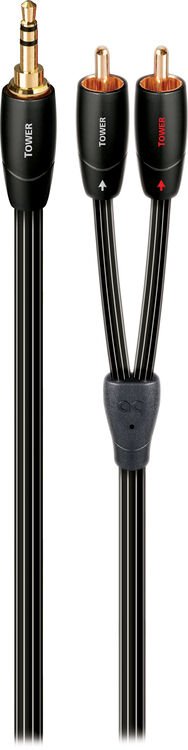
Rather, they’re propping your home audio system up! Named in honor of the famous Tower Bridge in England, this cable’s solid long-grain copper (LGC) conductors provide clearer sound than standard oxygen-free copper (OFC) conductors, in addition to being direction-controlled to reduce radio frequency interference (RFI). Next, their foamed polyethylene insulation stores less energy than typical wire insulation and, therefore, minimizes distortion. Next, the AudioQuest Tower cable’s gold-plated terminations are created using a high-pressure technique instead of conventional soldering, thus further minimizing distortion. The Tower cable’s asymmetrical double-balanced geometry also separates the ground and shield signals for a cleaner, smoother performance. Finally, AudioQuest’s metal-layer noise dissipation shield system absorbs and drains RFI before it reaches the ground signal.
Note: Per AudioQuest, if the L and R inputs of your components are more than three inches apart, then cables from the Rivers or Elements series might better suit your system. Please consult your Sweetwater Sales Engineer if you have any questions.
Go with the grain
Solid long-grain copper (LGC) conductors provide a smoother, clearer sound than standard oxygen-free copper (OFC) because of fewer impurities, fewer grain boundaries, and fewer oxides within the conducting material. Plus, the Tower cable’s conductors control the direction of radio frequency noise. Sweetwater's verdict: it all adds up to higher-quality audio.
Foamed polyethylene insulation with high air content
Solid material adjacent to a conductor is part of an imperfect circuit because it absorbs energy — some of which gets stored and eventually released as distortion. The AudioQuest Tower's foamed polyethylene insulation has a high air content, which doesn’t absorb energy and hence doesn’t introduce additional distortion into your audio signal.
Lack of solder equals lack of noise
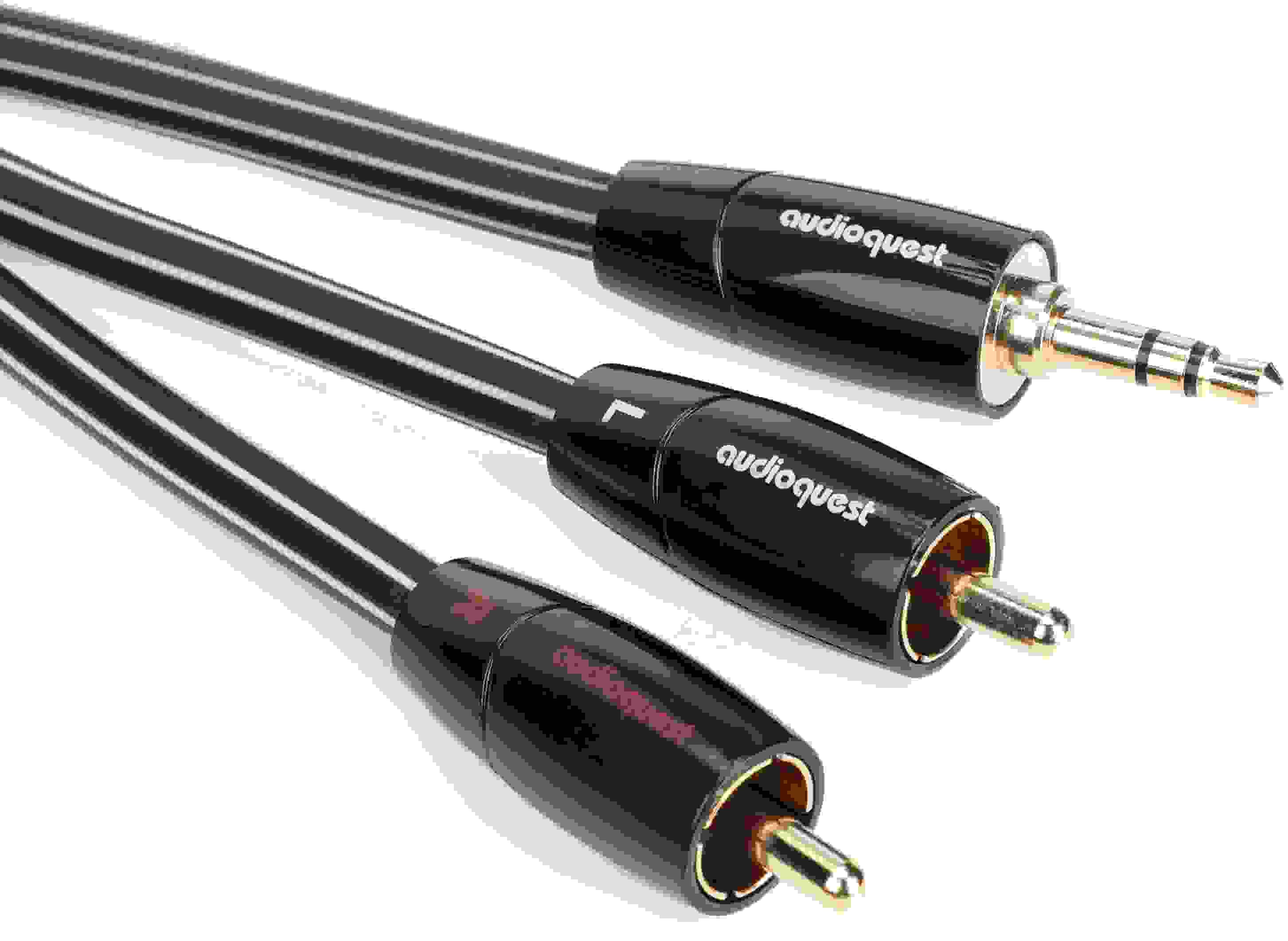
Another common source of distortion in an audio signal is the solder joint. The AudioQuest Tower cable avoids this problem by avoiding soldering altogether! Instead, its gold-plated terminations are created by a high-pressure stamping technique.
Stay grounded
The Tower's asymmetrical double-balanced geometry separates the ground and shield signals, whereas many other cables have a single path for both. Additionally, AudioQuest’s metal-layered Noise Dissipation shield system absorbs and reflects most RFI before it reaches the ground layer.
Jolly ole cables, indeed!
The AudioQuest Tower cable is named after the Tower Bridge in London (not to be confused with the London Bridge). Straddling the River Thames and originally constructed to connect West London to East, AudioQuest views the Tower Bridge as the perfect namesake for their Tower cables — themselves the perfect bridges for your home audio system components.
AudioQuest Tower Cable Features:
- Top-quality 3.5mm mini to RCA analog audio interconnection cable made with premium tech and components
- Solid LGC conductors provide better sound than standard OFC conductors and control the directionality of RFI
- Foamed polyethylene insulation has a high air content that won’t absorb and release energy back into your audio signal
- Stamped, gold-plated terminations lack a solder joint, which is a common source of distortion in typical cables.
- Asymmterical Double Balanced Geometry separates the ground and shield signals instead of combining them like many conventional cables
- AudioQuest’s Noise Dissipation shield system absorbs and reflects most RFI before it reaches the ground layer