Frequently Asked Questions about DJ Headphones
1. Why don't DJs wear headphones anymore?
Many modern DJs have shifted towards using in-ear monitors (IEMs) or don’t use headphones continuously due to advancements in DJ software and technology. Some reasons include:
- Sync and Visual Cues: DJ software like Serato and Rekordbox provide visual waveforms, beat grids, and sync functions, which make it easier to match beats without needing to rely on audio cues as heavily.
- In-Ear Monitors: Some DJs prefer IEMs for their compact design, isolation, and custom fit, which can be more comfortable than headphones over long periods.
- On-Stage Monitors: Many DJ booths are equipped with high-quality stage monitors that allow DJs to hear the music clearly without headphones.
2. How to choose headphones for DJing?
When choosing DJ headphones, it is important to consider your venue and your needs:
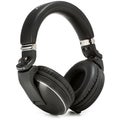
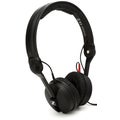
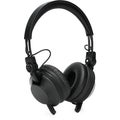
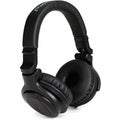
- Sound Isolation: Closed-back, over-ear designs are best for blocking out ambient noise, allowing DJs to hear their mixes even in loud club environments.
- Bass Response: Look for headphones with strong bass response, as it helps with beatmatching and cueing tracks.
- Comfort and Durability: Since you will have to wear headphones for extended periods, it's important to get a pair that's comfortable and flexible enough for how you prefer to wear them (on one ear, with a swivel cup, etc.)
- Swivel and Foldable Design: Swiveling ear cups make it easy to monitor with one ear, and foldable designs are ideal for portability.
- Durability: DJ headphones should be able to withstand frequent use and travel. Look for models with reinforced cables and replaceable ear pads and parts.
3. How do DJs not lose their hearing?
DJs face a significant risk of hearing damage due to critical listening at high-volume for extended periods of time. There are precautions most professionals take to protect their hearing:
- Volume Control: Keeping headphone and monitor volume as low as possible while still being able to hear the mix can help reduce strain on the ears.
- Earplugs: Many DJs use custom-fitted earplugs that reduce overall sound levels without distorting the music.
- Breaks and Recovery Time: Taking regular breaks from loud music and allowing for quiet recovery time after gigs helps minimize the impact on their hearing.
- In-Ear Monitors (IEMs): IEMs provide better isolation, allowing DJs to listen at lower volumes while still hearing their mix clearly.
4. What's the difference between studio headphones and DJ headphones?
- Sound Profile: Studio headphones are designed for accurate, flat sound reproduction to help engineers and producers hear details precisely, making them ideal for mixing and mastering. DJ headphones, on the other hand, often emphasize bass to help with beatmatching and may have a more varied sound profile with boosted lows and highs.
- Design and Comfort: DJ headphones are typically built for one-ear monitoring, with swiveling ear cups and comfortable padding for extended wear. Studio headphones often prioritize comfort but are not necessarily designed for one-ear use.
- Durability: DJ headphones are designed to withstand the demands of live performances and frequent travel, with reinforced materials and detachable cables. Studio headphones are usually used in controlled environments, so they may not be as rugged or reinforced as DJ headphones.
- Noise Isolation: DJ headphones often have excellent noise isolation to block out club noise, while studio headphones may be open-back for a more natural sound, though there are closed-back studio options for noise isolation as well.