

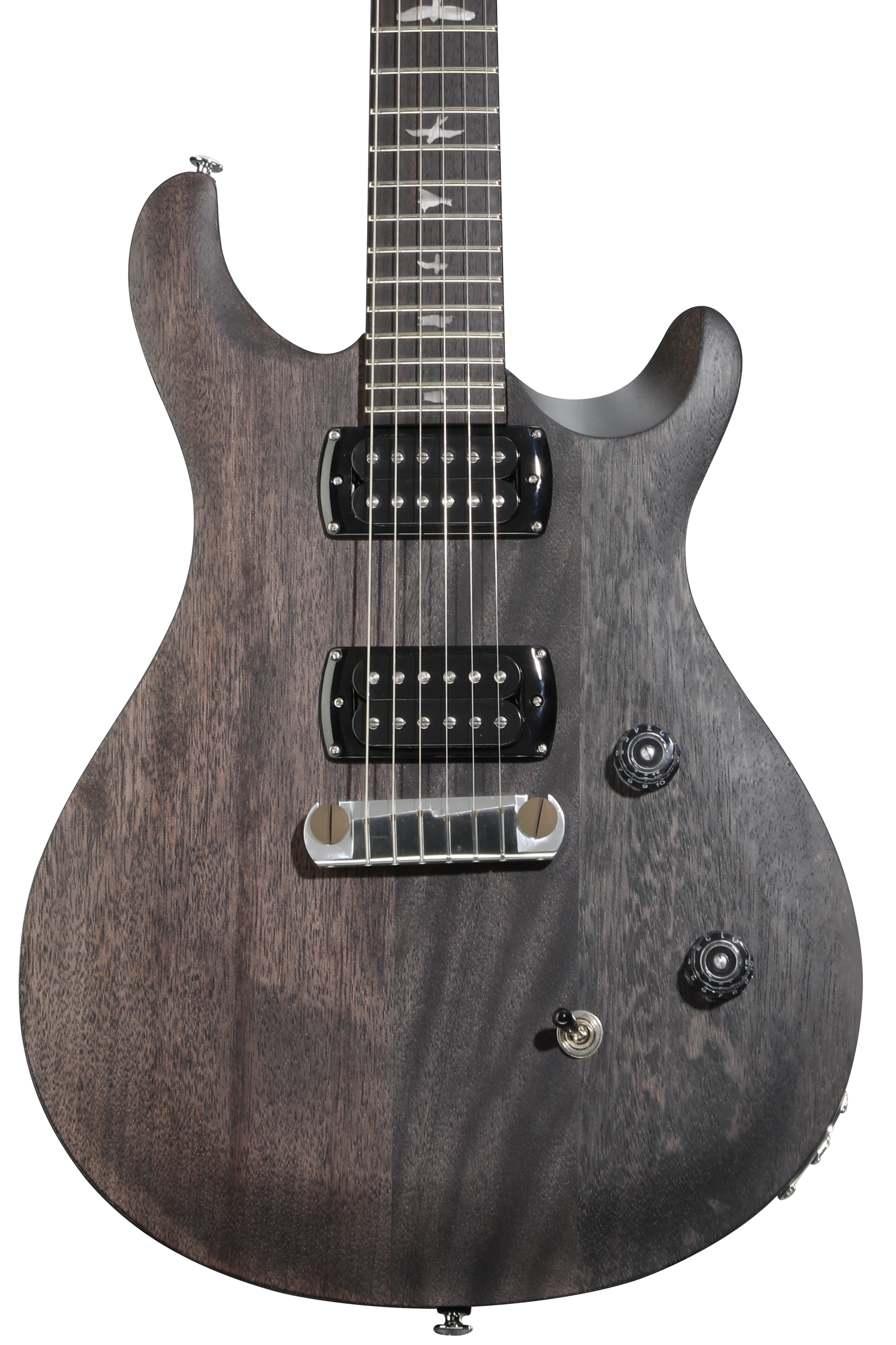
PRS SE CE 24 Standard Satin Stoptail Electric Guitar - Charcoal
PRS SE CE 24 Standard Satin Stoptail Electric Guitar - Charcoal Reviews
The PRS SE line is famous for punching above its price point, and the new satin-finished SE CE 24 Standard Satin Stoptail electric guitar intensifies that trend with an unassuming all-purpose electric guitar value that both hobbyists and pros will appreciate. A traditional mahogany body supplies flexible tonal foundations and lasting sustain that paves the way for the unfettered genre range of the PRS-designed humbuckers onboard. What's more, the SE CE 24 features a bolt-on maple neck with a Wide Thin profile, just like its USA-made counterparts. A long-anticipated recent refinement of the CE 24, a maple neck adds brightness and a slight percussive energy to your playing. Pair that with a roomy 24-fret rosewood fingerboard and PRS’s stoptail bridge with brass inserts, and prepare to be astonished by the potent features of the SE CE 24 Standard Satin Stoptail.
We expect more from PRS in just a few days. Order today to reserve yours now, risk-free. Estimated by April 28.
Very solid
Plays great right out of the box. Very solid guitar. I wanted an SE with a stop tail. I've been waiting for this model for some time now. PRS does not disappoint.
Best $500 guitar that I've tried
I had been doing some research before buying this guitar, the PRS SE C24 Stoptail. I wanted a solid body fixed bridge in the $ range. It came down to 4 guitars: This one,the PRS SE McCarty 594, Yamaha Revstar Element, and the Schecter C-6 Plus. Here's what I discovered:
PRS SE McCarty: Nice, and I liked the fact that it had the tuneomatic bridge. It has a shorter neck and this made the strings feel like a heavier gauge for me. I found myself getting tired quicker when playing this guitar, even though it had the same light gauge strings as the other guitars. The individual tone and volume controls per pickup and the split switches per pickup do provide a lot of flexibility in tone, but I found myself spending more time messing with the controls than actually playing the guitar. Sometimes having a lot of options is not a good thing and simpler is easier. The other thing I didn't like about the McCarty was the location of the toggle switch. Some may consider that convenient for mid song changes, but it seems like an accident waiting to happen.
The Schecter was... ok I guess, but just felt like a beginner guitar. Not as fun to play. I also question the neck/body stability as it took very little back pressure on the body to cause everything to go sharp. Makes me wonder how stable that will be. Good looking guitar though, shape and finish wise. I'm told that this an entry level metal guitar for shredders. (I would have thought the fixed bridge would rule it out for metal heads, but in any event, this guitar just felt like it wasn't that great. Perhaps it just needed a setup, but it clearly wasn't ticking any boxes for me.
The Yamaha wasn't bad but it wasn't the prettiest guitar. It's chambered, meaning that it's a solid body with a hollow chamber (but no sound holes) which is supposed to help with sustain. I didn't notice an appreciable difference there, but for having a hollow chamber, this guitar was heavy. When I picked it up and sat down with it, it didn't feel "at home". That's the best way to describe it for me. Other than that, I did like the sound and playability. The balance just felt a bit off and the body felt clumsy. That's a personal opinion, you may love it.
So I kept coming back to the C24 and every time I picked it up, it just felt right. Playable. Sounded great. Nicely balanced. Just felt comfortable. I play alt rock. I don't need shredding distortion, nor do I need sustain that allows you to go out to grab a bite to eat. My effects cover the range from clean, to slight overdrive, and chorus/flange/delay effects. I also use alternative tunings a lot, which means a floating bridge is out of the question. I love that fixed bridge for the rock stable tuning and intonation stability. (My old Ibanez with the full floating bridge would take me over an hour to tune whenever I wanted to change the strings or tuning. I hated it for that reason. Unless you know you are going to be NEEDING the whammy bar, I would say stick with a fixed bridge electric. They are so much more reliable from a tuning standpoint. Nothing worse than hearing someone play a guitar that isn't tuned or has poor intonation because the bridge is not set up properly. Anyway, I tried two of the CE24's, the metallic blue and the charcoal. The charcoal seemed to play and sound better. I think the blue just needed a slight setup tweaking, but I also liked the look of the charcoal better.
So anyway, I hope this helps for someone looking for a fixed bridge solid body without a 4 digit price tag. I deducted a half star because twice I found the high E string had been stretched while hard strumming and got hung up on the side of the neck pickup. It's a show stopper when it happens. This may be due to my tuning (this was a 10 gauge string that I tuned down to a D) or maybe my right hand strumming isn't correct (never had any formal training). But I'm aware of it now, and just compensate by a slight boost in the volume knob so I'm not hitting the strings as hard.
Really impressed with this guitar. I see it's back-ordered out until April 2026 so that also says something.
Read MoreHave Questions About the SE CE 24 Standard Satin Stoptail Electric Guitar - Charcoal?
Or call us at (800) 222-4700
Sweetwater's Sales Engineers are regarded as the most experienced and knowledgeable professionals in the music industry, with extensive music backgrounds and intense training on the latest products and technologies. They are available to offer you personalized product advice any time you need it.