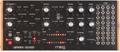
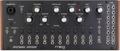
Hot synth summer has arrived and is off to a sizzling start this year with offerings from heavy hitters such as Moog, Yamaha, Pittsburgh Modular, Oberheim, and Roland, to name a few. We considered rerouting all the breakers to the Sweetwater Pavilion for a summer of maximum synth-sizzling insanity, but on secondary consideration, we’re going to need that power for AC. That’s because, along with the summer heat, the searing heat of leads, beats, pads, soundscapes, and more is filtering through the airwaves right now from the various offerings our synth experts compiled below. Our hot synth summer list is an excellent look at what’s possible with synthesis today.
- Semi-modular Scorchers
- Keyboard-centric Synth Sculpting
- Fire Beats and Samples
- Hybrid Heat Wave
- Piping Hot Polyphonic Machines
Semi-modular Scorchers
Moog Spectravox Semi-modular Analog Spectral Processor
Reshape the sounds you love
A hot offering from Moog, the Spectravox semi-modular analog spectral processor offers a comprehensive patchbay and 10-band filter bank that’s ready to send your sound to a dusk-filled realm. The Spectravox stands alone given its built-in Moog oscillator and white-noise generator, but it can also transmute into a powerful vocoder when connected to a microphone. Next, its 10 filters with variable resonance can sculpt lively drones, colorful tonal sweeps, precise pads, shimmering choral effects, and more! Although, beware, the filters of the Spectravox are not moored to a single point! Rather, they shift and swell in their frequency spaces — culminating in supernatural sonic creations.
Intellijel Cascadia Monophonic Semi-modular Analog Synthesizer
Expansive flexibility with a small footprint
The Cascadia monophonic semi-modular analog synthesizer is a masterpiece of Intellijel engineering. The Cascadia synthesizer overflows with connections, direct controls, pro-quality analog sound, and over 100 patch points. This flexible semi-modular synthesizer bridges the gap between East and West Coast synthesis, and its bevy of features, such as two VCOs, two envelopes, 6-channel waveform mixer, LFO, envelope generation, sample and hold, and more, breaks open the synth-summer sky for nearly endless possibilities. Not to mention, the Cascadia takes up about as much space as a laptop. This precise machine blows the doors of synthesis open wide itself, but with full Eurorack compatibility, synthesists can choose to integrate the Cascadia into an even vaster modular system.
Moog Labyrinth Semi-modular Parallel Generative Analog Synthesizer
Your lightning in a bottle
Moog aren’t ones to shy away from the depths of synthesis, and the Labyrinth semi-modular parallel generative analog synthesizer proves that’s still their MO. The Labyrinth features a dual-generative-sequencer design that makes for sounds that bloom over time and puts the reins in your hands to control the sounds’ evolution and scale. The Labyrinth can stand as an impressive synth in its own right or join forces with the rest of your modular system to add a unique flavor. Other facets such as West Coast-style wavefolder control; dual oscillators; state variable, resonant voltage-controlled filters; and a comprehensive patchbay make the Labyrinth a veritable sonic fortress.
Pittsburgh Modular Taiga Keyboard Semi-modular Analog Synthesizer
Analog sound with famed filter
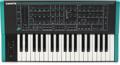
The Pittsburg Modular Taiga keyboard semi-modular analog synthesizer is a dream for synthesists seeking to explore new realms of sound. The Taiga has three Pittsburgh innovations to thank for its impressive sonic qualities: a triad of analog oscillators, the signature Pittsburgh “No Dead Spots” filter, and the Dynamics Controller. Over its Taiga predecessor, the Taiga keyboard semi-modular analog synth offers a 37-key keyboard complete with velocity and aftertouch to capture every nuance of your noodling. With 64 points of patchable controls, there’s plenty of room for experimentation and expansion internally and externally! Plus, a 24HP Eurorack modular expansion bay ups the ante even more.
Erica Synths Bullfrog XL Analog Desktop Synthesizer
Straightforward yet powerful educational tool
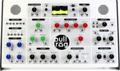
It’s hot synth summer, and we can hear the bullfrogs croaking — the Erica Synths Bullfrog XL analog desktop synthesizer, to be precise. This synth is the brainchild of Erica Synths founder Girts Ozolins and famed DJ Richie Hawtin. Operating through subtractive analog synthesis, the Bullfrog XL is supersized to function as an educational tool or as a studio must-have. Equipped with nine voice cards, including three blank DIY, Acid Bassline, LFO, Hipass Filter, and more, the Bullfrog XL offers a unique opportunity to experiment with signal-chain routing and tone sculpting. Other features including CV-controlled wave shaping, a streamlined interface, individually switchable envelope generators, USB-C, and 5-pin DIN MIDI input solidify this spot on our list.
Keyboard-centric Synth Sculpting
Arturia PolyBrute 12 Polyphonic 12-voice Morphing Analog Synthesizer
Unheard-of sonic possibilities
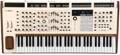
The PolyBrute 12 polyphonic 12-voice morphing analog synthesizer from the masterminds at Arturia is a hotbed of versatile control and sublime sonic character. With a 12-voice architecture, 61-key Fulltouch MPE keyboard, modulation matrix, Morphee pad, ribbon control, and bi-timbral morphing presets, the Arturia PolyBrute 12 is as sensitive and powerful a beast as they come. There’s also a wealth of tactile controls to keep you on the right path. Furthermore, ladder and Steiner filters, three LFOs, envelope generators, analog VCOs, and digital effects blow open the doors of synthesis sculpting. The PolyBrute 12 holds up to the rigors of demanding professional musicians and has tremendous character that appeals to enthusiasts, too.
Arturia AstroLab 61-key Stage Keyboard
Classically modern merger of synthesis and performance
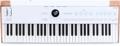
Another hot summer synth from Arturia, the AstroLab 61-key stage keyboard approaches synthesis from a hybrid perspective. Arturia’s merger of hardware and software culminates in the AstroLab, making an intuitive, stage-worthy instrument that combines favorite sounds from the past with developments of the modern day. Packed into this stage keyboard capable of advanced virtual synthesis is a galaxy of sounds that includes 34 instruments and presets from their Analog Lab, V Collection, and Pigments software instruments. The 61 semi-weighted keys are equipped with aftertouch for expressive sonic creation in the studio or during performance. Bluetooth, Wi-Fi, footswitch support, MIDI 2.0, and layering combine for a captivating synth experience that’s an instant favorite.
Roland FANTOM 7 EX Synthesizer Workstation
Cutting-edge creative hub
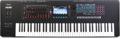
Let your creativity run wild with the Roland FANTOM 7 EX synthesizer workstation. The 76 semi-weighted synth-action keys and comprehensive interface lay the perfect groundwork for advanced music production, performance, and sonic exploration. The FANTOM 7 EX is packed with an incredible collection of premium sound engines including ACB, ZEN-Core, V-Piano, and SuperNATURAL with expansions for legacy synths such as the Jupiter-8, SH-101, and JX-3P. Through ACB (Analog Circuit Behavior) and the ZEN-Core Synthesis System, Roland is able to bring all these sounds to you with lifelike richness in the digital sphere. The FANTOM is also fortified with dozens of simultaneous effects, real-time controls, a color touchscreen, an analog filter, 16 pads, deep DAW integration, and much more.
Fire Beats and Samples
Yamaha Seqtrak Mobile Music Ideastation
Portable synthesis and beat station
Slim, portable, and jam-packed with 2,000 presets, the Yamaha Seqtrak mobile music ideastation had our synth heads in a vise grip when it dropped. This compact contraption can go from beats to synths to sound design to sequencing. Thanks to a straightforward interface design, Yamaha brings users a vast array of sonic possibilities in the footprint of a computer keyboard. The Seqtrak leverages the power of two versatile sound engines — Advanced Wave Memory 2 provides lifelike sound and 128 notes of polyphony while the 4-operator FM engine steals the show with stunning pads and more. It also boasts a rechargeable battery, USB-C MIDI capabilities, a built-in mic for sampling, and an advanced sequencer to be the ultimate ideastation on the go.
Polyend Tracker+ 16-track Stereo Sampler, Drum Machine, and Synthesizer
Comprehensive creation options in a compact package
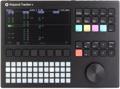
The Polyend Tracker+ 16-track stereo sampler, drum machine, and synthesizer has a little something for everyone. Building on the success of its predecessor, the Tracker+ is primed for sonic creation, thanks to its 16 tracks, synthesizers, drum machines, audio via USB, stereo sampling, MIDI, and expansive onboard memory. The compact form factor and comprehensive connectivity options are sure to appeal to gigging musicians. Explore ACD, FAT, VAP, and WTFM synth engines along with granular and wavetable synthesis from the previous Tracker. As for percussion, the PERC — the Tracker+’s dedicated drum machine — can perform up to five simultaneous drum sounds per voice, and sampled sounds can be layered with digital synthesis.
Elektron Digitakt II 16-track Stereo Drum Computer and Sampler
Powerhouse of percussive precision
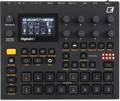
Synthesists seeking a more beat-oriented device will find their eyes and ears opened by the Elektron Digitakt II 16-track stereo drum computer and sampler. This precise machine builds on its previous incarnation and offers sequencing, sampling, and music-making capabilities through its 16-track stereo architecture and variable assignment options. Synthesis explorers can get as complex or as laid back as they desire with the Digitakt II. Each track is capable of mono, stereo, and MIDI performance modes, and assignable per-track LFOs, effects, and filters are present for deep tone sculpting. The expansive onboard memory and immense processing power allow you to explore, save, rewrite, and do it all over again.
Hybrid Heat Wave
PWM Mantis Hybrid-analog Duophonic Synthesizer
Powerful hybrid action
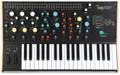
If hybrid-analog synthesis is more your speed, then the PWM Mantis hybrid-analog duophonic synthesizer will enthuse with its dual oscillators generated via DSP and its all-analog signal processing. PWM’s Paul Whittington joined forces with the late, lauded synth designer Chris Huggett to craft a modern synth with touches of the past. Fitted with unique ADSR envelopes, dual LFOs, an onboard effects module, 37 semi-weighted keys, and sine, triangle, saw, and pulse waveforms, the Mantis is set to realize your synthesis dreams! It’s sure to find a place in your production rig or DAW, thanks to additional features such as its auto-clock and USB MIDI tempo syncing.
Piping Hot Polyphonic Machines
Dreadbox Murmux 8-voice Polyphonic Synthesizer
Vintage character, modern twist
Hardcore synthesists will remember the Dreadbox Murmux from 2014; the Murmux Adept Edition 8-voice polyphonic synthesizer builds on the Murmux’s legacy by merging rich, warm analog sound quality with cutting-edge, modern features to put incredible power at your fingertips. Limited to 300 units, the Murmux Adept Edition offers immense sound-shaping tools such as two wave-shapable oscillators for each of its eight voices. The Murmux further conquers sonic realms with features including its LFOs, dynamic filters, spatial stereo control, and analog bucket-brigade effects. From transportive soundscapes to searing leads to lush pads, the Murmux Adept Edition reaches new realms of sound by putting the power in your hands.
Oberheim TEO-5 Compact Polyphonic Analog Synthesizer
Modern synth, analog soul
To craft the TEO-5 compact polyphonic analog synthesizer, Oberheim distilled the spirits of the famed OB-X, Four Voice, and TVS synths into a modern marvel. Birthed from the mind of the master himself, Tom Oberheim, the TEO-5 is a 5-voice polyphonic synthesizer that packs two analog oscillators with thru-zero FM synthesis, monophonic and polyphonic multi-waveform LFOs, hallmark Oberheim effects, a polyphonic step sequencer, and more. Synth heads can also utilize five-stage envelopes modeled after the OB-8 and the legendary SEM state-variable filter to create unheard-of sonic landscapes combined with thru-zero FM synthesis.
Join Us for Some Sizzling Synthesis This Summer
We’re greatly enthused here at Sweetwater to have so many new synths to play around with, and we know synth heads and synthesis beginners alike will enjoy these new toys. Depending on your workflow, sonic requirements, and desired functionality, there’s a synth in this article just for you. In case you don’t see what you want here, Sweetwater carries even more favorite standards and compact designs. Just give your Sweetwater Sales Engineer a ring at (800) 222-4700 and live out your hot-synth-summer dreams!